Free Daily Podcast Summary
The Upward Call!: Daily Summaries Delivered
by Dan DeVitis at UFS Ministries
Get key takeaways, quotes, and insights from The Upward Call! in a 5-minute read. Delivered straight to your inbox.
Latest Episodes
The most recent episodes — sign up to get AI-powered summaries of each one.
- Mar 2, 202635 min
S6.E1. Spiritual Warfare
The Church is not just an ambassador for the Kingdom of God, the Church is the Kingdom of God in the earth; where the Church is, there is the Kingdom; where the Church is not, there is not the kingdom of God but the dark domain of the devil. The Church consists of the children of God, in whom the power and influence of the enemy has been broken; and they are now the means by which Satan’s works will be unraveled, broken apart, one by one and held in restraint until the appearing of Christ; at which point the devil and all his dominions will be cast into the Lake of Fire. Rev. 20.10 “10The devil, who deceived them, was cast into the lake of fire and brimstone where the beast and the false prophet are. And they will be tormented day and night forever and ever.”For other episodes, find us at https://ufsministries.com/podcast/Watch the episode on Youtube: https://www.youtube.com/watch?v=V9wTVZgZhD0
- Feb 16, 202644 min
S5.E11. Practical Advice to Young Believers
Oftentimes a new believer is only focused on one thing, and that is their relationship with Jesus Christ. Their hearts have been apprehended and they are exuberant about wanting to talk about Him and to come to know Him in greater measure. But at the same time they find themselves with the Bible in one hand, and as a member of a church in the other hand and they really don’t know how to properly relate to either. Following are five useful tips for a young believer…as well as to the not-so-young believer.For other episodes, find us at https://ufsministries.com/podcast/Watch the episode on Youtube: https://www.youtube.com/watch?v=MDVZCV7jBbs
- Feb 2, 202640 min
S5.E10. Q.5. The Adam Covenant
Covenants are most serious agreements to enter into. They represent binding agreements between God and man. The Bible emphasizes the importance of keeping covenants but also cautions against making such agreements lightly or not aligned with the will of God. It reminds us of the seriousness of broken promises and the consequences of violating covenants, both with God and man. The covenant between man and woman of marriage is also such a covenant to be taken with all soberness and commitment. Failure of Adam to keep his covenant with God had consequences that echoed down through ages unto this day.For other episodes, find us at https://ufsministries.com/podcast/Watch the episode on Youtube: https://www.youtube.com/watch?v=yzTvz-zacY8
- Jan 20, 202639 min
S5.E9. Q.5. Regarding Religion and Covenants
One cannot really understand Biblical covenants, and especially the distinction between to Old Testament covenant and the New Testament covenant, without first clearly understanding the difference between two fundamental truths that may serve as the foundation for all covenants; and those are the principle of ‘religion’ and the principle of ‘life.’ Quite simply, religion is a bondage to a system of Divine worship, while life is spontaneous and the freedom to experience Divine fellowship; religion is what you ‘do’, life is what you ‘are;’ Why is it so important to understand this distinction? It is because God and man covenants and their promises are given and fulfilled upon the basis religion or life; and that the world as a whole has a propensity for religion while knowing little of the principle of life.
- Jan 5, 202644 min
S5.E8. Q4. Old Man New Man esv2 90p bg 10p
Here, the Conclusion has become the Introduction: In conclusion, if we therefore abide in Him, and He in us⎯ which is the essence of salvation for now and all eternity⎯ we are a “new man,” one that has never existed before but now is, and we are becoming His “disciples.” By abiding means we are being taught and refined daily. The perfection of our maturity as a new man, and the end of our discipleship is never reached on earth. There is a perfection by grace as we stand before God clothed with Christ, not to be mistaken with the perfection or completion of His transfiguring work in us transforming us and conforming us to His will. We never so much “are” as we are in the process of “becoming” Christ’s true followers and servants and sons of God.This has been a heavy lesson. It is the meat of the word, not its milk. (1 Cor. 3.2, Heb. 5.12-14) It is intended to challenge to the highest calling of God in Christ Jesus. Milk is easily swallowed, meat must be chewed and entertained before ingesting, but is much more satisfying and enduring.
- Dec 8, 202538 min
S5.E7. Q4. Pt.4. Gentleness, Self-Control
Of course the opposite of self-control is the lack of self-controlled, which includes behavior that is unrestrained and undisciplined. These words are often interchanged in the Bible, and especially with various translations. And so, I will take some liberty here in the Biblical use of these words to describe the vice of being unrestrained and undisciplined, therefore lacking of self-control. Note that Gal. 5.23 after stating the fruit of “self-control,” the verse ends with “Against such there is no law.” The importance of this is extremely significant. Why is it so significant? Because it brings to the surface the distinction between the Law of the Old Testament written on scrolls to restrain the people, with the moral law of the Spirit written on the hearts of New Testament believers. For example comparing two scriptures:Prov. 29.18 “Where there is no revelation, the people cast off restraint; But happy is he who keeps the law.”This scripture clearly show the legalism of the Old Testament and how it “restrains” the people, serving as a covenant between God and Israel, revealing God’s character and standards, but also revealing man’s sinfulness. So it established a legalistic framework of how to worship,, practice certain rituals, proper social behavior, and moral standards. Without this revelation, it is written that “the people cast off restraints,” they become undisciplined, and their behavior breaks the covenant and is unacceptable to God. The disciplinary component of the covenant is then Divinely applied. Now consider the “covenant” of the New Testament as revealed in Rm. 8.1-8,...
- Nov 21, 202539 min
S5.E6. Q4. Pt.3. Faithfulness
The wisdom of the world says the root cause of unfaithfulness are personal issues like: a feeling the something is missing in the relationship; a lack of emotional connection, unmet needs, self-esteems issues, or an opportunity suddenly arises and you feel your desires will be met in another God, or another mate or a different friend, or a different place. This is all the deeper the world can go in understanding unfaithfulness⎯summed up in self-centered wants and fantasies. All those supposed root causes have one thing in common, and that is “you,” otherwise known as: I, me, myself or the ego. In a true relationship the “I” is lost in the union with another, thus becoming we and us. In regards to marriage, it is written “a man shall leave his father and mother and be joined to his wife, and the two shall become one flesh.” (Mt. 19.5); In regards to our heavenly Father, Jesus prayed, “that all of them may be one, as You, Father, are in Me, and I am in You. May they also be one in Us,” (Jn. 17.21), and in regards to other believers, it is written, “for you are all one in Christ Jesus.” (Gal. 3.28)
- Nov 10, 202543 min
E5. Q4. Pt.2. Longsuffering, Kindness, Goodness
The essence of worship extracted from this verse is that worship must be “in spirit and truth.” Spiritual worship in the New Testament is quite different than the physical worship of the Old Testament and the two must not be intermixed, even though they very much are today. Those of the Old Testament had never been born anew of the Spirit therefore they only know the worship of the natural man in temples, at sacrificial altars and holy places, but having known nothing of spiritual worship. All worship involves coming into God’s presence in humility and surrender, with an open heart of praise and thanksgiving. However, worship of the Old Testament involves elements of the natural man not found in the New Testament. For instance, Ps. 150.4“Praise Him with the timbrel (tambourine) and dance; Praise Him with stringed instruments and flutes!” Using instruments and dance are of the natural man and are not of the spirit. The New Testament does not mention instruments and dance in worship, or are there any doctrinal statements giving advice on what kind or music may accompany worship. There are no examples of instruments and dance ever being used in any of the early churches. Christians have no Biblical or prophetic command from God to introduce musical instruments or dance in the worship of God. The early church, from which I personally pattern the whole of my spiritual life, used only prayer and singing for both personal and public praise and worship.
Get The Upward Call! summaries in your inbox
Free AI-powered daily recaps. Key takeaways, quotes, and mentions — in a 5-minute read.
Get Free Summaries →Free forever for up to 3 podcasts. No credit card required.
You Might Also Like
Listeners also like.
Welcome to the 411
Raymond Brown, Clarence Matthews, North Clinton Ave Church of Christ

The Spirit Calls
The Spirit Calls
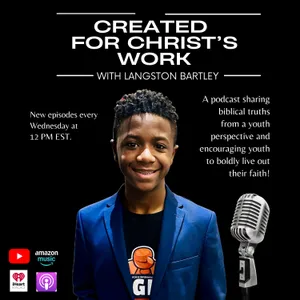
Created for Christ’s Work
Langston Bartley
Fresh Fire Podcast
Eric Speir

Word of Life Study Series
Brice C. Craig
First Love Conversations
First Love Church HQ
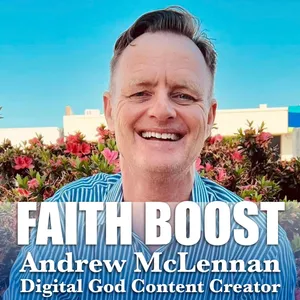
Faith Boost
Pastor Andrew McLennan

Focused Faith
Sitch Radio

Unveiled by Grace Podcast
Ronald Major
Messages by Desiring God (Video)
Desiring God
The All About JESUS Podcast
Jerome Brazier-Carter
The Pursuit of Calling
Thomas Carney
About The Upward Call!
Welcome to The Upward Call Podcast! For far too long, the Christian Church has settled for the most fundamental Gospel of salvation and eternal life. It has failed to recognize the Gospel’s call for maturity as sons and daughters of God and for spiritual preparation for the Kingdom to come. This podcast lays the foundation for understanding the ultimate purposes of God in salvation. It will then endeavor to build upon that foundation toward the upward call of God to spiritual maturity. If this is your heart’s desire, too, then listen on,More here: https://ufsministries.com/podcast
Customized Recaps
AI-powered recaps with compact key takeaways, quotes, and insights.
Straight to Your Inbox
Get key takeaways from The Upward Call! in a 5-minute read.
Save Hours Every Week
Stay current on your favorite podcasts without falling behind.
Frequently Asked Questions
What is Podzilla's The Upward Call! daily summary?
It's a free AI-powered email that summarizes new episodes of The Upward Call! as soon as they're published. You get the key takeaways, notable quotes, and links & mentions — all in a quick read.
How does the The Upward Call! podcast summary work?
When a new episode drops, our AI transcribes and analyzes it, then generates a personalized summary tailored to your interests and profession. It's delivered to your inbox every morning.
Is this an official The Upward Call! product?
No. Podzilla is an independent service that summarizes publicly available podcast content. We're not affiliated with or endorsed by Dan DeVitis at UFS Ministries.
Can I get summaries of other podcasts too?
Absolutely! The free plan covers up to 3 podcasts. Upgrade to Pro for 15, or Premium for 50. Browse our full catalog at /podcasts.
How often does The Upward Call! release new episodes?
The Upward Call! publishes biweekly. Our AI generates a summary within hours of each new episode.
What topics does The Upward Call! cover?
The Upward Call! covers topics including Religion & Spirituality, Spirituality, Christianity. Our AI identifies the specific themes in each episode and highlights what matters most to you.
Start getting The Upward Call! summaries tomorrow morning.
Free forever for up to 3 podcasts. No credit card required.
Free forever for up to 3 podcasts. No credit card required.