Free Daily Podcast Summary
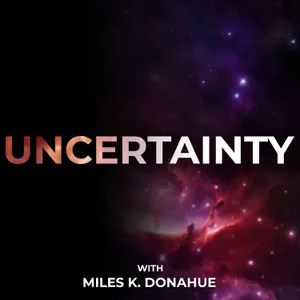
The Uncertainty Podcast: Daily Summaries Delivered
by Miles K. Donahue
A philosophy Ph.D. student working his way, with the world's leading thinkers, through the problems of philosophy, religion, science, and the existential struggle with irritable bowel syndrome (IBS) - similar to Alex O'Connor, but more American. Who wants to come along for the ride? mileskdonahue.substack.com
Latest Episodes
The most recent episodes — sign up to get AI-powered summaries of each one.
- 1 weeks ago1h 26m
#99 An Oxford Philosopher Investigates the Meaning of Life - Tim Mawson
Tim Mawson, professor of philosophy at Oxford, discusses the contours of the newly emerging philosophical investigation into the meaning of life. What does it mean to say that life's meaning is subjective versus objective? Would life be meaningful if we were immortal? And what difference does God make, and not make, to whether life means anything?Video of this interview is available on YouTube.To support the channel, do please oh please consider donating, either via PayPal or Buy Me a Coffee.Follow me on X because you’re awesome.EPISODE CHAPTERS:00:00:00 Introduction00:02:55 Open theism and God's relationship to time00:11:09 Returning to the meaning of life00:12:06 Why philosophers neglected the meaning of life00:15:48 What does it mean for life to have meaning?00:19:20 Objectivism, subjectivism and hybrid theories00:28:23 Objective meaning, subjective states and purpose00:35:00 Can there be no meaning to life?00:39:47 What can God add to life's meaning?00:43:25 Vocation, purpose and meaningfulness00:50:50 Does God give some people more meaningful lives?00:59:20 Death, immortality and the meaning of life01:00:25 Would eternal life become unbearably boring?01:07:48 Does infinite time destroy urgency?01:13:23 Would praising God forever become boring?01:18:14 What God cannot add to life's meaning01:21:55 Can God's existence make a life less meaningful?01:24:18 What is the meaning of life? Get full access to Miles K. Donahue at mileskdonahue.substack.com/subscribe
- 2 weeks ago2h 13m
#98 Every Argument for God, Refuted - Kevin Scharp
Kevin Scharp comes back on the podcast to discuss William Lane Craig’s eight-part case for the existence of God: contingency, cosmology, mathematics, fine-tuning, consciousness, morality, miracles, and experience.Video of this interview is available on YouTube.To support the channel, do please oh please consider donating, either via PayPal or Buy Me a Coffee.Follow me on X because you’re awesome.EPISODE CHAPTERS:00:00:00 Introduction00:01:20 Behind the scenes: Kevin vs. William Lane Craig00:14:11 Craig on probability & inference to the best explanation00:23:07 Divine psychology and fine-tuning00:27:06 Argument #1 - Contingency00:43:30 Does everything need an explanation?00:49:48 Argument #2 - Kalam cosmological argument00:51:35 Actual infinity and Hilbert’s Hotel01:03:06 Argument #3 - Fine-tuning01:09:53 What does the Big Bang actually tell us?01:11:53 Divine psychology01:27:08 Argument #4 - Applicability of mathematics01:35:08 Argument #5 - Consciousness01:40:47 Does consciousness really get us to God?01:45:41 Argument #6 - Morality01:54:43 Argument #7 - The resurrection of Jesus01:58:27 Miracles and the laws of nature02:08:25 Argument #8 - Experience of God Get full access to Miles K. Donahue at mileskdonahue.substack.com/subscribe
- 3 weeks ago1h 35m
#97 Why Belief in the Soul Makes Sense - Ralph Stefan Weir
Ralph Weir answers all my questions about the mind-body problem, how we define "physical," whether I can conceive of philosophical zombies, and where panpsychism fits into all this.Video of this interview is available on YouTube.To support the channel, do please oh please consider donating, either via PayPal or Buy Me a Coffee.Follow me on X because you’re awesome.EPISODE CHAPTERS:00:00:00 Introduction00:02:35 How Ralph got into philosophy of mind00:05:52 Eliminativism: do mental states exist?00:09:00 What is illusionism?00:10:56 What is phenomenal consciousness?00:17:53 What are qualia?00:21:33 What does “physical” actually mean?00:29:03 Is panpsychism a form of physicalism?00:35:45 Mapping the mind-body problem00:45:16 Property dualism vs. substance dualism00:53:10 What is the strongest case against physicalism?01:00:32 Philosophical zombies and modal skepticism01:10:23 Can science settle the mind-body problem?01:18:20 Mental causation and physical anomalies01:22:31 Does the evidence favor physicalism?01:34:07 Which philosophical view is Ralph most uncertain about? Get full access to Miles K. Donahue at mileskdonahue.substack.com/subscribe
- Aug 20, 20261h 38m
#86 Does God Exist? - Michael Huemer vs. Joshua Rasmussen
You do NOT want to miss this debate on the perennial question that human beings have wondered about for thousands of years: does God exist? Josh presents both a cumulative case for theism, as well as his signature argument from arbitrary limits. Mike presents his novel argument against God's infinite attributes.Video of this interview is available on YouTube.To support the channel, do please oh please consider donating, either via PayPal or Buy Me a Coffee.Follow me on X because you’re awesome.EPISODE CHAPTERS:00:00:00 Introduction00:01:48 Joshua Rasmussen’s opening statement00:17:05 Michael Huemer’s opening statement00:33:26 Moderated discussion begins00:35:43 Infinity and the nature of God00:45:18 What grounds an eternal reality?00:48:13 God, consciousness, and omniscience00:54:18 Platonism, infinity, and the digits of π01:01:18 Can God have unlimited power?01:07:29 Does theism best explain reality?01:14:08 Fine-tuning and the multiverse01:20:27 Does a multiverse actually explain life?01:26:39 Suffering and the problem of evil01:32:56 Closing statements Get full access to Miles K. Donahue at mileskdonahue.substack.com/subscribe
- Aug 13, 20261h 22m
#85 Does Buddhism Teach Annihilation? And Other Questions - Emily McRae
Emily McRae, professor of philosophy at the University of New Mexico, offers an overview of Buddhist philosophy. In particular, we discuss the different traditions within Buddhism - Theravada, Mahayana, Tibetan, and Zen - the doctrine of emptiness, the Four Noble Truths, and the ontology of Nirvana: annihilation, eternal bliss, or a state of mind in the here and now?Video of this interview is available on YouTube.To support the channel, do please oh please consider donating, either via PayPal or Buy Me a Coffee.Follow me on X because you’re awesome.EPISODE CHAPTERS:00:00:00 Introduction00:02:55 Moral ignorance in Buddhist philosophy00:06:47 What drew Emily to Buddhist philosophy?00:10:36 Analytic philosophy vs. Buddhist philosophy00:13:41 What kind of ethical theory is Buddhism?00:21:26 Is Buddhism a religion or a philosophy?00:24:37 The major schools of Buddhism00:29:56 Emptiness and the Buddhist theory of the self00:37:47 Why the Buddha refused to answer some questions00:43:02 The Four Noble Truths00:46:01 The first Noble Truth: suffering00:51:04 The second Noble Truth: the causes of suffering00:53:43 The third Noble Truth: the end of suffering00:56:10 What is nirvana?01:00:14 Does Buddhism ultimately teach annihilation?01:07:15 Buddhism vs. Christianity on desire01:12:18 The fourth Noble Truth: the Eightfold Path01:16:16 What reason is there to believe Buddhism is true? Get full access to Miles K. Donahue at mileskdonahue.substack.com/subscribe
- Aug 6, 20261h 34m
#94 Everything Wrong with the Case for Eternal Hell - Randal Rauser
In my recent discussion with Ethan Muse, he made a case for the compatibility of God's perfect love and the doctrine of eternal conscious torment. Randal Rauser returns to the channel to respond. Are we far more wicked than we realize? Does any sin merit infinite punishment? What should we do if we struggle with fear of eternal hell? We discuss these questions and much else besides.Video of this interview is available on YouTube.To support the channel, do please oh please consider donating, either via PayPal or Buy Me a Coffee.Follow me on X because you’re awesome.EPISODE CHAPTERS:00:00:00 Introduction00:02:06 Randal’s approach to YouTube00:03:08 Initial reactions to Ethan Muse’s defense of hell00:08:34 Is the problem emotional or intellectual?00:16:07 The authority of the Catholic Church00:22:16 The three Christian views of hell00:25:00 Are human beings wicked enough to deserve hell?00:31:02 Does every sin merit infinite punishment?00:36:29 Moral culpability and ignorance00:43:08 Is rejecting God an infinitely serious sin?00:47:08 Will most people go to hell?00:53:19 Would creation be a net moral failure?00:56:30 Did Jesus teach eternal conscious torment?01:03:29 The central moral argument against eternal hell01:07:18 Do the noetic effects of sin undermine moral intuition?01:12:19 Should we trust the moral judgment of Catholic saints?01:20:48 Does moral disagreement undermine our intuitions?01:24:07 Different degrees of suffering in hell01:28:16 How should Christians cope with the fear of hell? Get full access to Miles K. Donahue at mileskdonahue.substack.com/subscribe
- Jul 30, 202634 min
#93 Your Favorite Philosopher Answers All Your Questions - Miles K. Donahue
This week's interview features...me! I have finally gotten around to answering all the questions you sent me when we hit 3,000 subscribers. Yes, this video is v late. Yes, it is v worth the watch. Prepare for a more informal, cheeky side of me.Video of this interview is available on YouTube.To support the channel, do please oh please consider donating, either via PayPal or Buy Me a Coffee.Follow me on X because you’re awesome.EPISODE CHAPTERS:00:00:00 Introduction00:00:20 Which guest has challenged you the most?00:01:12 Are the fundamental constants independent?00:02:44 What are your hobbies outside philosophy?00:03:49 Were you ever an atheist?00:03:52 Why is there something rather than nothing?00:05:18 Have you ever considered becoming a model?00:05:22 How much do you think about modality?00:05:52 Have you ever had a religious experience?00:06:13 What are the best arguments for theism?00:07:27 What are the chances that universalism is true?00:08:16 Were you always smart?00:08:19 Paul Draper’s understated evidence objection00:10:50 Will theism grow among philosophers?00:11:43 An empirical approach to religion00:12:42 The aesthetic argument for God00:13:55 Will philosophy ever abandon materialism?00:15:08 How have your views on theism evolved?00:17:45 Is universalism true or theism false?00:18:44 What is your journal acceptance rate?00:18:57 What do you think about TAG?00:19:27 How can someone find their life’s purpose?00:20:00 Does universalism weaken the problem of evil?00:21:56 What makes you doubt Christianity?00:23:50 Has Paul Draper weakened your theism?00:25:34 Which dead philosophers would you speak to?00:27:46 Do theistic arguments depend on modality?00:29:30 Where do you hope to be in ten years?00:29:38 What if fine-tuning gave no support to theism?00:29:54 Why does God exist?00:31:02 Can you publish without a philosophy degree?00:31:19 What does it mean to exist?00:32:09 Are theistic arguments more technically vulnerable?00:34:32 Who are you? Get full access to Miles K. Donahue at mileskdonahue.substack.com/subscribe
- Jul 22, 202655 min
#92 - A.I. Agents Are Here, and the Future Is Not Bright - Kevin Scharp
Philosopher Kevin Scharp discusses his experience working with A.I. agents, and what it portends for the future.Video of this interview is available on YouTube.To support the channel, do please oh please consider donating, either via PayPal or Buy Me a Coffee.Follow me on X because you’re awesome.EPISODE CHAPTERS:00:00:00 Introduction00:01:10 What AI agents are00:03:22 Why AI agents remain under the radar00:06:07 Creating research-level AI agents00:08:44 How AI agents work00:11:06 Are AI agents conscious?00:17:59 Have AI agents already achieved AGI?00:21:40 Embodied agents and what comes next00:24:57 Automation, unemployment, and social unrest00:27:05 AI as an unprecedented capacity for harm00:28:46 Could governance and AI rights slow development?00:32:00 Has ChatGPT become less useful?00:39:34 AI, human extinction, and theism00:43:08 Does AI favor naturalism over theism?00:46:35 How to live under existential uncertainty00:49:31 Atheism, agnosticism, and changing your mind Get full access to Miles K. Donahue at mileskdonahue.substack.com/subscribe
About The Uncertainty Podcast
A philosophy Ph.D. student working his way, with the world's leading thinkers, through the problems of philosophy, religion, science, and the existential struggle with irritable bowel syndrome (IBS) - similar to Alex O'Connor, but more American. Who wants to come along for the ride? mileskdonahue.substack.com
Customized Recaps
AI-powered recaps with compact key takeaways, quotes, and insights.
Straight to Your Inbox
Get key takeaways from The Uncertainty Podcast in a 5-minute read.
Save Hours Every Week
Stay current on your favorite podcasts without falling behind.
Frequently Asked Questions
What is Podzilla's The Uncertainty Podcast daily summary?
It's a free AI-powered email that summarizes new episodes of The Uncertainty Podcast as soon as they're published. You get the key takeaways, notable quotes, and links & mentions — all in a quick read.
How does the The Uncertainty Podcast podcast summary work?
When a new episode drops, our AI transcribes and analyzes it, then generates a personalized summary tailored to your interests and profession. It's delivered to your inbox every morning.
Is this an official The Uncertainty Podcast product?
No. Podzilla is an independent service that summarizes publicly available podcast content. We're not affiliated with or endorsed by Miles K. Donahue.
Can I get summaries of other podcasts too?
Absolutely! The free plan covers up to 3 podcasts. Upgrade to Pro for 15, or Premium for 50. Browse our full catalog at /podcasts.
How often does The Uncertainty Podcast release new episodes?
The Uncertainty Podcast publishes weekly. Our AI generates a summary within hours of each new episode.
What topics does The Uncertainty Podcast cover?
The Uncertainty Podcast covers topics including Science, Physics, Philosophy, Culture, Society & Culture. Our AI identifies the specific themes in each episode and highlights what matters most to you.
Start getting The Uncertainty Podcast summaries tomorrow morning.
Free forever for up to 3 podcasts. No credit card required.
Free forever for up to 3 podcasts. No credit card required.