Free Daily Podcast Summary
The True Crime Tapes: Daily Summaries Delivered
by Bobby Capucci
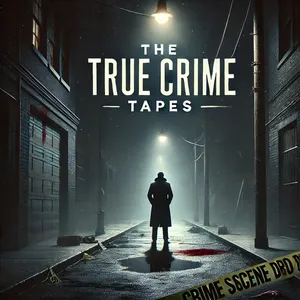
The True Crime Tapes pulls you into the shadowy depths of the criminal underworld, where the line between justice and chaos is razor-thin. Each episode dissects the minds of history’s most infamous serial killers, unravels the inner workings of organized crime syndicates, and investigates baffling missing person cases that still haunt the public’s imagination. From the bloody reign of ruthless mob bosses to the chilling patterns of elusive predators, the show delivers gripping, deeply researched storytelling that leaves no stone unturned. With a relentless pursuit of truth, it goes beyond the headlines, diving into the psychology, motives, and investigations behind the world’s most shocking crimes. You’ll hear firsthand accounts, expert analysis, and rare archival material that shed new light on cases both well-known and obscure. Whether it’s the brutality of cartel wars, the sinister precision of serial murderers, or the eerie last-known moments of
Latest Episodes
The most recent episodes — sign up to get AI-powered summaries of each one.
- Today12 min
Murder In Moscow: Ethan Chapin's Parent's Discuss Their Memories Of Their Son
Nearly a year after Ethan Chapin was murdered alongside Xana Kernodle, Madison Mogen and Kaylee Goncalves, his parents, Stacy and Jim Chapin, described how their family had tried to survive an unimaginable year of grief without allowing the murders to completely define Ethan’s life. They spoke about the devastating reality of losing one of their triplets, the effect Ethan’s death had on his brother Hunter and sister Maizie, and the deliberate choice they made to focus on the person Ethan had been rather than the brutality of how he died. Stacy and Jim said they had largely stayed away from the constant media cycle surrounding Bryan Kohberger and the criminal case because they believed endlessly consuming developments would only deepen their pain. Instead, they tried to move forward by keeping Ethan present in their daily lives, talking about him openly and finding ways to turn their grief into something positive.That effort included Stacy’s children’s book, The Boy Who Wore Blue, which was created to capture Ethan’s personality, warmth and love of the color blue while giving younger readers a way to understand loss and remembrance. The family also established the Ethan’s Smile Foundation, which provided scholarships for students from their home community in Skagit County, Washington, and continued supporting the “Ethan’s Smile” tulip project that had been created in his honor. Jim and Stacy said those projects gave them something constructive to build from the devastation and allowed Ethan’s name to become associated with opportunity, generosity and joy rather than only with the Moscow murders. Their message was not that the grief had disappeared, but that they had chosen to carry Ethan forward by emphasizing how he lived instead of allowing his murder to become the final definition of who he was.to contact me:bobbycapucci@protonmail.com
- Today11 min
Murder In Moscow: Ethan Chapin's Fraternity Brothers And Their Plan To Honor Ethan
One year after the murders of Ethan Chapin, Xana Kernodle, Madison Mogen and Kaylee Goncalves, members of the University of Idaho’s Sigma Chi fraternity described how deeply Ethan’s death had affected the chapter and how they were trying to heal while keeping his memory alive. His fraternity brothers remembered Ethan as energetic, dependable and the kind of person who could lift the mood of an entire room, describing him as someone they could always count on. The chapter had largely avoided the spotlight in the immediate aftermath of the killings, choosing instead to grieve privately and support Ethan’s family while cooperating with investigators. As the anniversary approached, members spoke more openly about the emotional toll of losing one of their own and about the strange experience of trying to return to normal college life after such a devastating loss.Sigma Chi also worked to create a lasting memorial to Ethan through the Ethan Chapin Memorial Scholarship, which was established to be awarded annually to a member of the Gamma Eta chapter who reflected the qualities Ethan brought to the fraternity. The first scholarship was awarded to Ethan’s triplet brother Hunter, who was also a Sigma Chi at the university. For the fraternity, the scholarship became a way to make sure Ethan was remembered for more than the circumstances of his death. His brothers emphasized his humor, generosity and loyalty, and said the chapter’s focus was on carrying those traits forward while continuing to support the Chapin family and one another.to contact me:bobbycapucci@protonmail.com
- Today11 min
Tyler Robinson Preliminary Hearing Transcripts (Day 2 Part 4) (9/20/26)
Day two of Tyler Robinson’s preliminary hearing focused heavily on prosecutors’ effort to connect Robinson to the Utah Valley University campus and to the physical evidence recovered after Charlie Kirk was shot. Investigators introduced additional surveillance footage they said showed Robinson moving around UVU before and after the shooting, while the State also turned to forensic evidence recovered along the alleged escape route. A screwdriver found on top of the Losee Center and a towel recovered from a wooded area near the rifle became major points of testimony. The State Bureau of Investigation introduced an FBI laboratory report concluding that DNA from both Robinson and his roommate, Lance Twiggs, was present on the screwdriver and towel, evidence prosecutors argued helped connect Robinson to the rooftop area and to the abandoned rifle. The hearing also featured argument over the State’s allegation that Kirk had been targeted because of his political and religious views, an issue relevant to the victim-targeting enhancement prosecutors had attached to several chargesThe defense spent much of the day attacking how strongly the forensic evidence could actually be interpreted. FBI forensic examiner Amanda Bakker was questioned for roughly three hours as defense attorney Michael Burt dug into the technical details of the DNA testing, mixtures, statistical interpretation and the limitations of what the results could establish about when or how DNA was deposited on the objects. Robinson’s lawyers also pushed back against the State’s motive theory, challenging the attempt to characterize the killing as being driven by Kirk’s religious beliefs in addition to political disagreement. By the end of day two, prosecutors had added important physical evidence to the surveillance case presented on day one, but the defense had begun laying out the approach it would use throughout the hearing: concede that certain items contained Robinson-associated evidence while aggressively challenging what that evidence actually proved about possession, timing, motive and the circumstances of Kirk’s killing.to contact me:bobbycapucci@protonmail.com
- Today16 min
Tyler Robinson Preliminary Hearing Transcripts (Day 2 Part 3) (9/20/26)
Day two of Tyler Robinson’s preliminary hearing focused heavily on prosecutors’ effort to connect Robinson to the Utah Valley University campus and to the physical evidence recovered after Charlie Kirk was shot. Investigators introduced additional surveillance footage they said showed Robinson moving around UVU before and after the shooting, while the State also turned to forensic evidence recovered along the alleged escape route. A screwdriver found on top of the Losee Center and a towel recovered from a wooded area near the rifle became major points of testimony. The State Bureau of Investigation introduced an FBI laboratory report concluding that DNA from both Robinson and his roommate, Lance Twiggs, was present on the screwdriver and towel, evidence prosecutors argued helped connect Robinson to the rooftop area and to the abandoned rifle. The hearing also featured argument over the State’s allegation that Kirk had been targeted because of his political and religious views, an issue relevant to the victim-targeting enhancement prosecutors had attached to several chargesThe defense spent much of the day attacking how strongly the forensic evidence could actually be interpreted. FBI forensic examiner Amanda Bakker was questioned for roughly three hours as defense attorney Michael Burt dug into the technical details of the DNA testing, mixtures, statistical interpretation and the limitations of what the results could establish about when or how DNA was deposited on the objects. Robinson’s lawyers also pushed back against the State’s motive theory, challenging the attempt to characterize the killing as being driven by Kirk’s religious beliefs in addition to political disagreement. By the end of day two, prosecutors had added important physical evidence to the surveillance case presented on day one, but the defense had begun laying out the approach it would use throughout the hearing: concede that certain items contained Robinson-associated evidence while aggressively challenging what that evidence actually proved about possession, timing, motive and the circumstances of Kirk’s killing.to contact me:bobbycapucci@protonmail.com
- Today18 min
Hillary Clinton And The Transcript From Her Epstein Related Talk With Congress (Part 16) (9/20/26)
Hillary Clinton’s February 26, 2026 deposition before the House Oversight Committee centered on how much she knew about Jeffrey Epstein, Ghislaine Maxwell and Bill Clinton’s relationship with them. Clinton repeatedly testified that she had never met Epstein, never flew on his plane, never visited Little St. James and knew nothing about his crimes before they became public. She described Maxwell as no more than a “casual acquaintance,” said she did not consider her a friend and attributed Maxwell’s presence around the Clinton family largely to her relationship with longtime Clinton friend Ted Waitt. Clinton acknowledged that Maxwell attended Chelsea Clinton’s 2010 wedding, but said she had no specific recollection of speaking with her there and believed Maxwell attended as Waitt’s guest. She also said she did not remember Maxwell visiting the Clintons’ Chappaqua home, despite Maxwell later saying she had been there several times, and said she had no knowledge of Epstein having connections to American or foreign intelligence services.The questioning became much more contentious when lawmakers turned to Bill Clinton’s documented relationship with Epstein. Hillary characterized her husband’s relationship with Epstein as “limited” and primarily connected to his use of Epstein’s airplane, said she had no knowledge of Bill visiting Little St. James and maintained there was no evidence connecting him to Epstein’s crimes. When lawmakers pressed her about photographs showing Bill Clinton with Epstein, Maxwell and young women during trips, Clinton acknowledged seeing some of those photographs but said she had not become curious enough to investigate the circumstances herself, calling it simply “unfortunate” that her husband ever had dealings with Epstein. She also denied personally soliciting money from Epstein and said she was unaware of anyone doing so on her behalf, while acknowledging she knew little about whether Epstein played any role around Clinton Foundation or Clinton Global Initiative activities. The transcript therefore presented a consistent Clinton defense: she said she personally had essentially no relationship with Epstein and only a peripheral relationship with Maxwell, while repeatedly separating herself from questions about Bill Clinton by telling lawmakers that he would have to answer for his own conduct.to contact me:bobbycapucci@protonmail.com
- Today14 min
Hillary Clinton And The Transcript From Her Epstein Related Talk With Congress (Part 15) (9/20/26)
Hillary Clinton’s February 26, 2026 deposition before the House Oversight Committee centered on how much she knew about Jeffrey Epstein, Ghislaine Maxwell and Bill Clinton’s relationship with them. Clinton repeatedly testified that she had never met Epstein, never flew on his plane, never visited Little St. James and knew nothing about his crimes before they became public. She described Maxwell as no more than a “casual acquaintance,” said she did not consider her a friend and attributed Maxwell’s presence around the Clinton family largely to her relationship with longtime Clinton friend Ted Waitt. Clinton acknowledged that Maxwell attended Chelsea Clinton’s 2010 wedding, but said she had no specific recollection of speaking with her there and believed Maxwell attended as Waitt’s guest. She also said she did not remember Maxwell visiting the Clintons’ Chappaqua home, despite Maxwell later saying she had been there several times, and said she had no knowledge of Epstein having connections to American or foreign intelligence services.The questioning became much more contentious when lawmakers turned to Bill Clinton’s documented relationship with Epstein. Hillary characterized her husband’s relationship with Epstein as “limited” and primarily connected to his use of Epstein’s airplane, said she had no knowledge of Bill visiting Little St. James and maintained there was no evidence connecting him to Epstein’s crimes. When lawmakers pressed her about photographs showing Bill Clinton with Epstein, Maxwell and young women during trips, Clinton acknowledged seeing some of those photographs but said she had not become curious enough to investigate the circumstances herself, calling it simply “unfortunate” that her husband ever had dealings with Epstein. She also denied personally soliciting money from Epstein and said she was unaware of anyone doing so on her behalf, while acknowledging she knew little about whether Epstein played any role around Clinton Foundation or Clinton Global Initiative activities. The transcript therefore presented a consistent Clinton defense: she said she personally had essentially no relationship with Epstein and only a peripheral relationship with Maxwell, while repeatedly separating herself from questions about Bill Clinton by telling lawmakers that he would have to answer for his own conduct.to contact me:bobbycapucci@protonmail.com
- Today15 min
Hillary Clinton And The Transcript From Her Epstein Related Talk With Congress (Part 14) (9/20/26)
Hillary Clinton’s February 26, 2026 deposition before the House Oversight Committee centered on how much she knew about Jeffrey Epstein, Ghislaine Maxwell and Bill Clinton’s relationship with them. Clinton repeatedly testified that she had never met Epstein, never flew on his plane, never visited Little St. James and knew nothing about his crimes before they became public. She described Maxwell as no more than a “casual acquaintance,” said she did not consider her a friend and attributed Maxwell’s presence around the Clinton family largely to her relationship with longtime Clinton friend Ted Waitt. Clinton acknowledged that Maxwell attended Chelsea Clinton’s 2010 wedding, but said she had no specific recollection of speaking with her there and believed Maxwell attended as Waitt’s guest. She also said she did not remember Maxwell visiting the Clintons’ Chappaqua home, despite Maxwell later saying she had been there several times, and said she had no knowledge of Epstein having connections to American or foreign intelligence services.The questioning became much more contentious when lawmakers turned to Bill Clinton’s documented relationship with Epstein. Hillary characterized her husband’s relationship with Epstein as “limited” and primarily connected to his use of Epstein’s airplane, said she had no knowledge of Bill visiting Little St. James and maintained there was no evidence connecting him to Epstein’s crimes. When lawmakers pressed her about photographs showing Bill Clinton with Epstein, Maxwell and young women during trips, Clinton acknowledged seeing some of those photographs but said she had not become curious enough to investigate the circumstances herself, calling it simply “unfortunate” that her husband ever had dealings with Epstein. She also denied personally soliciting money from Epstein and said she was unaware of anyone doing so on her behalf, while acknowledging she knew little about whether Epstein played any role around Clinton Foundation or Clinton Global Initiative activities. The transcript therefore presented a consistent Clinton defense: she said she personally had essentially no relationship with Epstein and only a peripheral relationship with Maxwell, while repeatedly separating herself from questions about Bill Clinton by telling lawmakers that he would have to answer for his own conduct.to contact me:bobbycapucci@protonmail.com
- Today36 min
Mega Edition: Breaking Down The April 9th 2025 Kohberger Hearings (9/20/26)
On April 9, 2025, Bryan Kohberger appeared in a Boise, Idaho court for a hearing addressing multiple pre-trial motions ahead of his upcoming trial for the 2022 murders of four University of Idaho students. The defense sought to exclude several pieces of evidence, including Amazon records allegedly showing Kohberger purchased a Ka-Bar knife and sheath, testimony from a surviving roommate who described an intruder with "bushy eyebrows," 911 call recordings, Kohberger's academic writings on crime scenes, a selfie taken in front of a shower, and weather data potentially undermining his alibi. Additionally, the defense requested the death penalty be removed from consideration, citing Kohberger's autism diagnosisProsecutors, on the other hand, confirmed their intention to call several of Kohberger's family members as witnesses during the trial. They also sought to prevent the defense from suggesting Kohberger was framed and to prohibit portraying the state's pursuit of the death penalty as an attempt to kill him. Judge Steven Hippler addressed these motions, preliminarily ruling that terms like "psychopath," "sociopath," or "murderer" should not be used during the evidentiary phase. He also indicated that Kohberger's autism diagnosis could be presented as a mitigating factor if convicted but not as an aggravating one. Specific rulings on these motions are expected to be issued at a later date.to contact me:bobbycapucci@protonmal.comsource: Bryan Kohberger makes bombshell claim about TWO Idaho murders killers as judge considers if family will testify | Daily Mail Online
Get The True Crime Tapes summaries in your inbox
Free AI-powered daily recaps. Key takeaways, quotes, and mentions — in a 5-minute read.
Get Free Summaries →Free forever for up to 3 podcasts. No credit card required.
You Might Also Like
Listeners also like.
True Crime Tonight
Five nights a week, a deep dive into true crime cases, celebrity scandals, and trials with analysis and listener discussions.

True Crime Garage
Two hosts analyze real crime cases weekly, blending detailed research with casual conversation over beer.

Dateline: True Crime Weekly
Andrea Canning examines current true crime cases weekly with reporters, legal experts, and field updates.

Crimehub: A True Crime Podcast
Examines disturbing and unbelievable true crimes from modern history with in-depth storytelling and new cases released weekly.

Murder: True Crime Stories
A true crime podcast examining notorious murders and their impact on victims, families, and communities.

Crime Junkie
A weekly true crime podcast that explores infamous and lesser-known cases, from cold cases to missing persons, hosted by Ashley Flowers.

Crime Weekly
Retired detective and true crime creator analyze high-profile and personal cases with insights and safety advice.

True Criminals
Investigative journalists revisit high-profile and overlooked crime cases with firsthand sources and deep reporting insight.

True Crime All the Time: Police Interrogations, Bodycams, and Investigations
A deep dive into true crime cases through police interrogations, bodycam footage, and investigative details.

Crime, Conspiracy, Cults and Murder
Explores notorious historical figures, bizarre murders, conspiracy theories, and unsolved mysteries with deep-dive true crime storytelling.

Moms and Mysteries: A True Crime Podcast
Two Florida moms examine true crime cases from Florida and beyond, exploring how each event occurred with candid, conversational analysis.

Murder In America
A true crime podcast exploring infamous homicides in each U.S. state, blending investigative analysis with paranormal insights.
About The True Crime Tapes
The True Crime Tapes pulls you into the shadowy depths of the criminal underworld, where the line between justice and chaos is razor-thin. Each episode dissects the minds of history’s most infamous serial killers, unravels the inner workings of organized crime syndicates, and investigates baffling missing person cases that still haunt the public’s imagination. From the bloody reign of ruthless mob bosses to the chilling patterns of elusive predators, the show delivers gripping, deeply researched storytelling that leaves no stone unturned. With a relentless pursuit of truth, it goes beyond the headlines, diving into the psychology, motives, and investigations behind the world’s most shocking crimes. You’ll hear firsthand accounts, expert analysis, and rare archival material that shed new light on cases both well-known and obscure. Whether it’s the brutality of cartel wars, the sinister precision of serial murderers, or the eerie last-known moments of
Customized Recaps
AI-powered recaps with compact key takeaways, quotes, and insights.
Straight to Your Inbox
Get key takeaways from The True Crime Tapes in a 5-minute read.
Save Hours Every Week
Stay current on your favorite podcasts without falling behind.
Frequently Asked Questions
What is Podzilla's The True Crime Tapes daily summary?
It's a free AI-powered email that summarizes new episodes of The True Crime Tapes as soon as they're published. You get the key takeaways, notable quotes, and links & mentions — all in a quick read.
How does the The True Crime Tapes podcast summary work?
When a new episode drops, our AI transcribes and analyzes it, then generates a personalized summary tailored to your interests and profession. It's delivered to your inbox every morning.
Is this an official The True Crime Tapes product?
No. Podzilla is an independent service that summarizes publicly available podcast content. We're not affiliated with or endorsed by Bobby Capucci.
Can I get summaries of other podcasts too?
Absolutely! The free plan covers up to 3 podcasts. Upgrade to Pro for 15, or Premium for 50. Browse our full catalog at /podcasts.
How often does The True Crime Tapes release new episodes?
The True Crime Tapes publishes daily. Our AI generates a summary within hours of each new episode.
What topics does The True Crime Tapes cover?
The True Crime Tapes covers topics including News, Commentary, Daily News. Our AI identifies the specific themes in each episode and highlights what matters most to you.
Start getting The True Crime Tapes summaries tomorrow morning.
Free forever for up to 3 podcasts. No credit card required.
Free forever for up to 3 podcasts. No credit card required.