Free Daily Podcast Summary
The Smart Marketer Podcast: Daily Summaries Delivered
by Smart Marketer
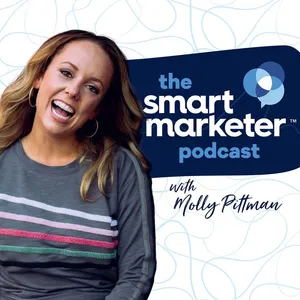
Join hosts Molly Pittman, Ezra Firestone, and John Grimshaw as they share their proven paths to success (for your business, brand, and personal life). These Veteran marketers and educators have taught thousands of business owners how to build, manage, and scale successful companies (while growing their own multi-million dollar brands). This weekly podcast will blend tactical marketing tips and strategies with helpful insight and personal stories. This podcast will help you 'Serve the world unselfishly and profit.'
Latest Episodes
The most recent episodes — sign up to get AI-powered summaries of each one.
- 1 weeks ago1h 0m
Episode 299: Longer Together: How We Built a Pet Brand From Scratch
Episode Description What actually goes into building an ecommerce brand from zero? In this episode, Smart Marketer CEO Molly Pittman takes you behind the scenes of Longer Together Pet Company, one of her favorite projects from 15 years in the industry. She shares why the Smart Marketer ownership team decided to build something new, the four things they wanted the business to have before they even knew what it would be, and how the Longer Together opportunity appeared just hours later. Molly also breaks down the brand's first 90 days, including $130,000 in sales, its growing subscription base, Meta ad performance, conversion rates, profitability, and why the team is deliberately waiting for more subscription data before pushing harder on scale. But this episode is about more than numbers. Molly explains why the right partners matter, how real founder stories can become powerful marketing, and why she believes great brands need a combination of story, logic, heart, and feeling. As Molly puts it: "If fun is not the currency of what you're doing and how your team feels, your business will eventually probably fail." You Will Learn Why the Smart Marketer team chose to launch a new business instead of simply making the existing business bigger The four things they wanted their next business to be: fun, meaningful, ecommerce, and sellable How the idea for Longer Together came together What the brand accomplished during its first 90 days Why Meta ads became the primary customer acquisition engine How subscriptions change the economics of acquiring a customer Why complementary business partners can create a much stronger company How Molly's experience with her dog Larry became part of the brand story Why authority combined with contradiction can create a powerful advertising hook How story, logic, heart, and feeling work together to build a stronger brand Why the team is waiting for subscription churn data before scaling more aggressively How new products can increase LTV and open new parts of the market Links & Resources Longer Together Pet Company: https://longertogetherpet.com/ Smart Marketer: https://smartmarketer.com/ Free Trainings & Resources: https://smartmarketer.com/free-resources/ Smart Marketer Agency: https://smartmarketeragency.com/ Omnisend: https://omnisend.com/smart Time Stamps 00:17 – Anthony's introduction and a look back at Smart Marketer Live 00:54 – Omnisend sponsor message 01:13 – Molly introduces the Longer Together story 03:30 – How the idea began during Smart Marketer's 2025 planning 07:40 – Why bigger isn't always better in business 11:51 – Deciding to launch a brand from scratch 14:16 – The four things the new business needed to have <p dir="ltr" role="presenta
- 2 weeks ago47 min
Episode 298: Ask Ezra Anything: Growth, AI, Retail & Scaling Smarter
Episode Description Where do you look when growth keeps stalling? Which AI tools are actually worth getting your team to use? When does retail make sense, and how do you know whether your business is truly growing or just getting bigger? For this episode, we pulled some of the best questions from an early-October Mentor Table session with Smart Marketer Founder Ezra Firestone, with Sam and Pep from the Smart Marketer team joining the conversation along the way. Ezra gets into the fundamentals he looks for when evaluating a business, why offers and repeat customers matter so much, how his teams are using AI, what's working with TikTok Shop creators, and why he thinks most ecommerce brands should be careful about expanding into retail too early. And underneath all of it is a theme that comes up again and again: focus on what's working, build the infrastructure to support it, and stay in the game long enough to compound the results. As Ezra puts it: "That's one of my secrets is I just keep working as best I can for as long as I can, pleasurably." You Will Learn Where Ezra looks first when an ecommerce business stops growing Why changing the offer or target customer can unlock growth without changing the product How Ezra evaluates a business after an acquisition Why AI tools should amplify specific workflows instead of becoming another distraction How Smart Marketer is using GrowthOS and other AI tools across the team Why Ezra prefers a more selective approach to TikTok Shop creator outreach When to focus on the US before expanding internationally Why Ezra generally wants a strong DTC business before making a major move into retail How team infrastructure can become the difference between growth and operational chaos Why EBITDA and cash conversion both matter when determining whether a business is actually getting healthier Links & Resources Mentor Table: https://smartmarketer.com/mentor-table/ GrowthOS: https://smartmarketer.com/growthos/ Smart Marketer Live 2026: https://smartmarketer.com/sml-2026/ Smart Marketer: https://smartmarketer.com/ Free Trainings & Resources: https://smartmarketer.com/free-resources/ Smart Marketer Agency: https://smartmarketeragency.com/ Omnisend: https://omnisend.com/smart Time Stamps 00:14 – Introduction: Ask Ezra Anything 00:56 – Smart Marketer Live 02:31 – Omnisend sponsor message 02:52 – Why growth keeps stalling and where to look first 07:13 – What Ezra looks at after buying a business 10:52 – Which AI tools are worth getting your team on 15:11 – Using AI for TikTok Shop creator outreach 21:39 – US growth versus international expansion <li dir="lt
- 3 weeks ago45 min
Episode 297: The Invisible Salesperson: How AI Is Changing the Way Customers Shop
Episode Description What happens when your website starts acting less like a catalog and more like a salesperson? In this Mentor Table session, Molly Pittman sits down with Ankit Minocha and Ashish Khurana, co-founders of Atomz AI, to explore how AI is changing product discovery, search, and the way customers make buying decisions online. They look at what big platforms like Amazon and Walmart are already doing well, why shoppers are becoming more comfortable asking questions instead of digging through product pages, and how ecommerce brands can bring that same kind of guided experience onto their own sites. A big part of the conversation comes down to reducing friction. If a customer has to leave your site, open Google or ChatGPT, and go hunting for an answer, you may lose them. But if you can answer those questions in the moment, you have a better chance of keeping that customer moving toward the right product. As Molly puts it: "Communication is not what you say, it's what they heard." The larger takeaway is that AI-powered shopping experiences are not just about adding a chatbot. They are about understanding customer intent, structuring product data more clearly, answering objections faster, and creating a more useful path from discovery to purchase. You Will Learn Why AI search and shopping are becoming more important for ecommerce brands How customer expectations are changing as people get used to ChatGPT-style interactions Why every extra step in the shopping journey can create friction How guided product discovery can help customers find the right product faster Why answering objections directly on your site can keep shoppers from leaving for Google or ChatGPT How Amazon and Walmart use AI to surface questions, recommendations, and product information Why structured product data matters for AI search, filters, and AEO How better product categorization can improve the shopping experience Why customers may be more comfortable asking an AI assistant certain questions than a human support rep How AI-generated prompts can reveal new information about what shoppers actually want Why brand voice and grounded product data matter when training an AI assistant How voice AI could become part of the ecommerce shopping experience Links & Resources Atomz AI: https://www.atomz.ai/ Mentor Table: https://smartmarketer.com/mentor-table/ Smart Marketer Live 2026: https://smartmarketer.com/sml-2026/ Smart Marketer: https://smartmarketer.com/ Free Trainings & Resources: https://smartmarketer.com/free-resources/ Smart Marketer Agency: https://smartmarketeragency.com/ Omnisend: https://omnisend.com/smart Time Stamps 00:14 – Introduction: The invisible salesperson 00:56 – Smart Marketer Live 02:34 – Omnisend sponsor message <p dir="ltr" role="presentati
- 4 weeks ago26 min
Episode 296: Email Automation: The Flows That Do the Heavy Lifting
Episode Description Automated email flows are easy to set up and easy to forget. That's exactly why they deserve a regular check-in. For this episode, we're pulling a conversation from Smart Ecommerce, a Smart Marketer course featuring Molly Pittman, John Grimshaw, and Laura Palladino. They break down where automation fits into the customer journey, which flows deserve your attention first, and how to keep those systems from getting stale after you build them. You'll hear why Laura recommends starting with the post-purchase flow, how the team approaches monthly flow audits, when it makes sense to create product-specific automations, and why a smaller engaged list can be more valuable than a larger disengaged one. As Molly puts it: "Email is the most profitable channel, but it's not the only channel." The bigger takeaway is to think beyond individual emails. Your flows, broadcasts, SMS, paid ads, and other touchpoints should work together to create one consistent customer experience. You Will Learn When an email should become an automation instead of a broadcast Why automated emails work best when they respond to customer behavior Why the post-purchase flow is a strong place to start Why the post-purchase flow is about more than getting the next sale Why "set it and forget it" can become a problem with automation How to audit and optimize one email flow each month Why stale or seasonal content should be refreshed regularly How to turn winning broadcast emails into evergreen flow content When a product deserves its own post-purchase sequence Why your best sellers are the logical place to start with personalization Why an engaged email list matters more than a large list How email should work alongside SMS, paid ads, and the rest of the customer journey Links & Resources Smart Marketer Live 2026: https://smartmarketer.com/sml-2026/ Smart Marketer: https://smartmarketer.com/ Free Trainings & Resources: https://smartmarketer.com/free-resources/ Smart Marketer Agency: https://smartmarketeragency.com/ Omnisend: https://omnisend.com/smart Time Stamps 00:18 – Introduction: Getting your automated email flows ready for Q4 00:57 – Smart Marketer Live 02:33 – Omnisend sponsor message 02:53 – Molly, John, and Laura kick off the email automation discussion 03:40 – Using email to move customers through the journey 04:39 – Automated emails vs. broadcasts 04:59 – When customer behavior should trigger an automation 05:37 – Why automated email is similar to retargeting 06:13 – Responding to customer intent with more relevant messaging 06:59 – How automation supports d
- Sep 30, 202622 min
Episode 295: What Does Work-Life Balance Actually Mean?
Episode Description What does work-life balance actually look like when you're building businesses, leading teams, and trying to make room for the rest of your life? For this episode, we went back into the Smart Marketer archives and pulled three conversations from Balanced Being, a course Molly Pittman created around burnout, relationships, fulfillment, and building a healthier relationship with work. Molly asks Ezra Firestone, John Grimshaw, and Colleen Taylor the same question, and each of them comes at it from a completely different angle. Ezra talks about measuring balance by how life actually feels, not just by the number of hours you work. John challenges the idea that our jobs should define who we are and makes the case for investing just as intentionally in relationships and life outside of work. Colleen focuses on intuition, burnout, comparison, and why the things that matter outside of work need a place on your calendar too. As John Grimshaw puts it: "You need to remember that you are not your job." Same question, three very different answers. Together, they give you a practical way to think about whether work is taking too much, what deserves more attention, and how to make room for the people and parts of life that matter. You Will Learn Why work-life balance can look different during different seasons of your life How Ezra evaluates balance by asking how things actually feel Why outside perspective can help you recognize when work is taking over Why your job should not become your entire identity How relationships and communication contribute to a more fulfilling life Why being digitally connected is not the same as spending meaningful time with people How intuition can help you recognize burnout before it gets worse Why putting personal time on your calendar can make it more likely to actually happen How comparison can push you toward someone else's version of success Why playing the long game sometimes means making choices based on fulfillment instead of ego Links & Resources Smart Marketer Live 2026: https://smartmarketer.com/sml-2026/ Smart Marketer: https://smartmarketer.com/ Free Trainings & Resources: https://smartmarketer.com/free-resources/ Smart Marketer Agency: https://smartmarketeragency.com/ Omnisend: https://omnisend.com/smart Time Stamps 00:13 – Introduction: Revisiting the Balanced Being archives 01:08 – Smart Marketer Live 02:44 – Omnisend sponsor message 03:03 – Molly asks Ezra what work-life balance means to him 03:10 – Why periods of intense work or intense life are not necessarily a problem 04:41 – Looking at balance as a relationship between work and life 05:37 – Making room for health, relationships, hobbies, and fulfillment 06:30 – Using outside perspective to evaluate your relationship with work 07:18 – Ezra's first question: "How does it feel?" 07:44 – Molly asks John what work-life balance means to him 08:49 – Why you are not your job 09:10 – Protecting the part of yourself that exists outside of work 10:31 – Why life deserves as much attention as work 11:17 – Investing in relationships and making time for people 12:08 – Digital connection vs. actually being with the people you love 13:22 – Smart Marketer Live mid-roll 13:56 – Molly asks Colleen what work-life balance means to her 14:11 – Trusting your intuition when you are doing too much 15:05 – Why personal time needs to go on the calendar 15:42 – Taking care of yourself so you can continue showing up 17:00 – Molly on recognizing burnout through intuition 17:53 – Why comparing yourself to other people can pull you off course 18:46 – Letting intuition show you opportunities, not just problems 19:31 – Colleen's decision to join Ezra's team full-time 20:38 – Choosing
- Sep 23, 20261h 22m
Episode 294: Q4 Planning Workshop: Smarter Offers, Stronger Margins, Better Timing
Episode Description Q4 can be one of the biggest revenue opportunities of the year, but only if you know when your customers are most likely to buy, how much you can afford to spend to acquire them, and which offers actually protect your profit. In this Mentor Table workshop, Smart Marketer CMO John Grimshaw walks through a practical Q4 planning framework built from real client data. He breaks down what changed from last year, what still works, and where ecommerce brands should be adjusting their strategy going into the holiday season. A big part of the conversation is learning how to identify your brand's demand curve so you know when to push budget harder, when to pull back, and how to avoid spending aggressively in the wrong window. John also challenges one of the most common Q4 habits: "Discounting is not your strongest lever [...] Your strongest lever is how do we boost the value of the cart." From lead generation and acquisition timing to gifting, product depth, margin, and offer structure, this episode gives you a clear way to think about Q4 as a full-season strategy, not just a Black Friday promotion. You Will Learn How to identify whether your brand is gift-led, occasion-led, or self-purchase-led Why your biggest demand window should influence where you allocate budget What changed in Black Friday and Cyber Monday traffic strategy Why dedicated holiday sales pages may not always be the best destination for cold traffic How early lead generation can increase the value of your Q4 audience Why launching a completely new product during Black Friday can work against you How to think about vertical vs. horizontal product depth Why repeat purchase opportunities matter when planning your product mix How to calculate an acquisition ceiling based on margin Why more aggressive discounting can reduce profitability How gift-with-purchase offers can increase perceived value without sacrificing as much margin Why post-holiday demand can be a major opportunity for many brands Links & Resources Smart Marketer: https://smartmarketer.com/ Free Trainings & Resources: https://smartmarketer.com/free-resources/ Smart Marketer Agency: https://smartmarketeragency.com/ Smart Marketer Live 2026: https://smartmarketer.com/sml-2026/ Omnisend: https://omnisend.com/smart Time Stamps 00:22 – John introduces the Q4 planning workshop 01:03 – Mapping customer demand across the season 01:20 – Setting acquisition ceilings for Q4 01:39 – Rethinking discounting and protecting margin 03:05 – What John learned from analyzing client Q4 data 05:09 – Creative graduation and building a stronger ad bench 07:28 – Discounting dead zones and where brands give away margin 09:17 – What changed with Black Friday sales pages
- Sep 16, 20261h 4m
Episode 293: Why AI Is Becoming the Operating System for Ecommerce
Episode Description AI is moving beyond writing copy, generating images, and helping marketers complete isolated tasks. The bigger shift is what happens when AI becomes part of the operating system of the business itself. In this episode, Molly Pittman sits down with Devyn Merklin to talk about the evolution of Growth OS powered by Gary, the agentic system they're building and already using across real ecommerce businesses. Devyn shares how his experience growing ecommerce brands eventually led him into agentic AI, and why the real opportunity is not simply having better technology. It's connecting your brand knowledge, historical performance, strategy, team communication, and execution into one ecosystem. As Devyn puts it: "It's less about the tech [...] it's more about the ecosystem we created that raises everybody up over time." Molly and Devyn also walk through how they're already using Growth OS to analyze years of campaign data, build and improve websites, manage projects, execute marketing tasks, and surface strategic recommendations that would previously have taken teams days or weeks to uncover. If you're trying to understand what agentic AI could actually look like inside an ecommerce company, this conversation gives you a look at where the technology is headed and how businesses are beginning to operate differently because of it. You Will Learn How Devyn went from building ecommerce brands to developing agentic AI systems Why AI is evolving from a collection of tools into an operational layer How Growth OS combines brand knowledge, Smart Marketer IP, business data, and broader AI intelligence Why strategy, not just execution, may be the biggest opportunity with AI How Molly is using Growth OS to analyze years of Black Friday performance in minutes Why existing AI agents and systems do not necessarily need to be rebuilt from scratch How agents can work inside tools like Slack alongside human teams Why project management becomes more powerful when the system understands the actual marketing context How ecommerce businesses can use agents to identify and execute everyday operational tasks Why Devyn believes the long-term advantage is the ecosystem around the technology, not simply the technology itself How a network of businesses can make the underlying system smarter over time while keeping proprietary data separate Links & Resources Growth OS powered by Gary: https://smartmarketer.com/growthos/ Smart Marketer Live 2026: https://smartmarketer.com/sml-2026/ Smart Marketer: https://smartmarketer.com/ Free Trainings & Resources: https://smartmarketer.com/free-resources/ Smart Marketer Agency: https://smartmarketeragency.com/ Omnisend: https://omnisend.com/smart Time Stamps 00:16 – Anthony introduces the episode 01:18 – A quick message from Omnisend 01:36 – Molly welcomes Devyn Merklin 04:10 – Devyn's beginnings in ecommerce and marketing <p dir="ltr" role="presentati
- Sep 9, 202648 min
Episode 292: Why Effort Makes Marketing More Valuable
Episode Description Why do some marketing experiences stick with us while others disappear almost immediately? In this episode, Molly Pittman sits down with Phill Agnew, host of Nudge, to explore the psychology behind how people judge value, remember experiences, and respond to marketing. Phill breaks down the peak-end effect, why the final moments of a customer experience can shape how the whole experience is remembered, and how even small touches like a handwritten thank-you note can influence loyalty and repeat purchases. One of the biggest ideas in the conversation is simple: "We use effort as a proxy for quality." - Phill Agnew From personalized outreach and costly signaling to AI-generated messages and social proof, Phill explains why visible effort can make marketing feel more valuable, credible, and human. The conversation also goes beyond marketing tactics into learning, creativity, and business growth, including Phill's 95/5 approach to protecting time for exploration and his practice of making 50 small bets to increase the odds of finding an outsized opportunity. You Will Learn What the peak-end effect is and why it matters for customer experience Why the end of an experience can influence how people remember the whole thing How personalized touches can increase perceived value Why people use effort as a proxy for quality How time and cost can act as signals of quality and importance Why overly automated or formulaic outreach can be easy to recognize How to show instead of tell when using social proof Why visible effort can make online marketing more persuasive How Phill uses a 95/5 approach to make room for learning and exploration Why making 50 small bets can create outsized opportunities How behavioral science can help marketers better understand human decision-making Links & Resources Nudge Podcast: https://www.nudgepodcast.com/ Nudge Podcast Reading List: https://nudge.kit.com/readinglist Smart Marketer: https://smartmarketer.com/ Free Trainings & Resources: https://smartmarketer.com/free-resources/ Smart Marketer Agency: https://smartmarketeragency.com/ Omnisend: https://omnisend.com/smart Time Stamps 00:15 – Anthony introduces the episode 01:03 – A quick message from Omnisend 01:22 – Molly welcomes Phill Agnew 03:03 – Phill's path from studying marketing to behavioral science 07:02 – The peak-end effect and why endings matter 13:00 – Applying the peak-end effect to ecommerce 14:41 – Why handwritten thank-you notes can increase repeat purchases 18:08 – The peak versus the end of a customer experience 23:0
Get The Smart Marketer Podcast summaries in your inbox
Free AI-powered daily recaps. Key takeaways, quotes, and mentions — in a 5-minute read.
Get Free Summaries →Free forever for up to 3 podcasts. No credit card required.
You Might Also Like
Listeners also like.
Marketing Made Simple
Strategies for crafting clear marketing messages that connect with customers and grow businesses.

Everyone Hates Marketers | No-BS Marketing & Brand Strategy Podcast
A marketing podcast offering practical insights on branding, strategy, and customer research from industry professionals.

Your Brand Amplified
Explores the strategies and mindsets of successful entrepreneurs in business growth, marketing, and personal branding.

Right About Now - Legendary Business Advice
Raw business insights from founders and industry leaders, revealing real wins, failures, and actionable strategies without the fluff.

Marketing Happy Hour
Real marketing career advice and strategies from industry pros, with honest conversations on growth, leadership, and balance.

Growth Triggers: Content Marketing & AI
A marketing podcast teaching business owners how to use podcasting to generate leads, sales, and authority across competitive niches.

BiggerPockets Business Podcast
Real entrepreneurs share practical advice on starting, growing, and selling businesses, covering hiring, marketing, and raising capital.
The Entrepreneur DNA
Entrepreneurs share lessons on building businesses and personal growth through real experiences and mistakes.

The Revenue House
Examines ethical marketing and business growth for purpose-driven companies through expert interviews and real-world strategies.

The $100 MBA Show
Short, actionable business lessons from a serial entrepreneur on starting and growing companies with minimal resources.
Do Small Business Like a Big Boss Podcast
A lawyer offers practical legal and business strategies for small business owners to scale and compete effectively.
Proven Podcast
Charles Schwartz
About The Smart Marketer Podcast
Join hosts Molly Pittman, Ezra Firestone, and John Grimshaw as they share their proven paths to success (for your business, brand, and personal life). These Veteran marketers and educators have taught thousands of business owners how to build, manage, and scale successful companies (while growing their own multi-million dollar brands). This weekly podcast will blend tactical marketing tips and strategies with helpful insight and personal stories. This podcast will help you 'Serve the world unselfishly and profit.'
Customized Recaps
AI-powered recaps with compact key takeaways, quotes, and insights.
Straight to Your Inbox
Get key takeaways from The Smart Marketer Podcast in a 5-minute read.
Save Hours Every Week
Stay current on your favorite podcasts without falling behind.
Frequently Asked Questions
What is Podzilla's The Smart Marketer Podcast daily summary?
It's a free AI-powered email that summarizes new episodes of The Smart Marketer Podcast as soon as they're published. You get the key takeaways, notable quotes, and links & mentions — all in a quick read.
How does the The Smart Marketer Podcast podcast summary work?
When a new episode drops, our AI transcribes and analyzes it, then generates a personalized summary tailored to your interests and profession. It's delivered to your inbox every morning.
Is this an official The Smart Marketer Podcast product?
No. Podzilla is an independent service that summarizes publicly available podcast content. We're not affiliated with or endorsed by Smart Marketer.
Can I get summaries of other podcasts too?
Absolutely! The free plan covers up to 3 podcasts, any in the catalog. Basic raises that to 15, Pro to 40 and Max to 100. Browse our full catalog at /podcasts.
What topics does The Smart Marketer Podcast cover?
The Smart Marketer Podcast covers topics including Business, Marketing, Entrepreneurship. Our AI identifies the specific themes in each episode and highlights what matters most to you.
Start getting The Smart Marketer Podcast summaries tomorrow morning.
Free forever for up to 3 podcasts. No credit card required.
Free forever for up to 3 podcasts. No credit card required.