Free Daily Podcast Summary
The Skincarma Pod: Daily Summaries Delivered
by CARMINE MONTALTO
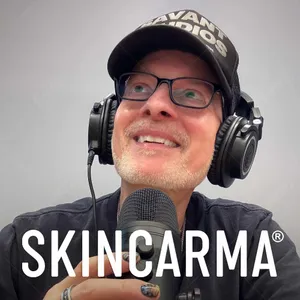
The Skincarma Pod is where indie beauty meets fearless curiosity. Hosted by Carmine Montalto—creator of the Skincarma Blog and unapologetic skincare truth-seeker—his podcast pulls back the curtain on the beauty industry with sharp insights, candid interviews, and a healthy dose of irreverence. From deep dives into ingredient science to raw conversations with dermatologists, brand founders, and industry insiders, each episode is a no-BS exploration of what really matters in skincare: how to attain and maintain healthy skin. If you're obsessed with products, passionate about transparency, and love calling out hype, this is the place to learn, question, and glow smarter.
Latest Episodes
The most recent episodes — sign up to get AI-powered summaries of each one.
- Today1h 0m
Have We Over-Activated Our Skin? Alpyn Beauty Founder Kendra Kolb Butler on Wild Plants & Barrier Health
What happens when decades of clinical skincare expertise meet the wild plants of Jackson Hole — and what can that teach us about how aggressively we’re treating our skin?This week, Carmine sits down with Kendra Kolb Butler, founder of Alpyn Beauty, the Jackson Hole skincare brand pairing clinically proven ingredients with sustainably harvested mountain plants.Before founding Alpyn, Kendra spent nearly two decades inside clinical and luxury beauty — including 15 years working alongside dermatologist and formulator Dr. Dennis Gross. In 2015, she left a successful New York career and moved with her family to Jackson Hole, where a short reset became a permanent reinvention.After opening the Alpyn Beauty Bar, Kendra discovered that even highly regarded skincare formulas struggled to address the dryness, irritation and moisture loss associated with the mountain climate. When her own skin began experiencing the same problems, she questioned for the first time whether clinical ingredients alone were enough.Her search for an answer led to the wild plants flourishing under the same extreme conditions. Working with local botanists and naturalists, Kendra began exploring how these stress-adapted plants could complement proven actives — eventually transforming locally tested formulas into Alpyn Beauty.Together, Carmine and Kendra examine beauty’s escalating “active ingredient bonanza,” why another person’s viral routine may be entirely wrong for your skin and whether the industry’s barrier-repair boom signals that consumers have pushed their complexions too far.Kendra also takes Carmine inside Alpyn’s new 3-in-1 Barrier Repair Serum, pairing Azelaic Acid and the SNAP-8 peptide complex with wild-harvested Ghostberry to address visible redness, hyperpigmentation and expression lines through a barrier-first approach.Along the way, they discuss sustainable harvesting, the origins of Alpyn’s Melt Moisturizer and why Kendra no longer believes hard work alone guarantees success.Key TakeawayClinical science and botanical skincare do not need to exist in opposition.Kendra’s philosophy is rooted in balance: clinical actives can produce meaningful change, but their effectiveness depends on skin that is calm, hydrated and capable of tolerating them. When aggressive routines repeatedly destabilize the moisture barrier, pursuing faster results may ultimately move the skin further away from health.The lesson extends beyond formulation. Building Alpyn required expertise and relentless effort, but Kendra no longer believes hard work alone creates success. Connection, timing, luck, self-belief and the courage to act on an original idea matter, too.Sometimes reinvention begins not with a perfect plan, but with trusting the feeling that the life you have built is no longer the life you are meant to keep living.In this episode, you’ll learn:Why Kendra left a successful 20-year beauty career in New York and moved her family to Jackson Hole;How the Alpyn Beauty Bar exposed a gap between conventional skincare and the realities of an extreme mountain climate;Why seeing clinical formulas fail in Wyoming forced Kendra to reconsider everything she believed about skincare;How stress-adapted wild plants develop secondary metabolites that differ from those of plants grown under controlled conditions;How samples of the original Melt Moisturizer generated local demand before Alpyn Beauty officially became a brand;Why Kendra believes prescription tretinoin, high-percentage acids and social-media routines are contributing to over-activated skin;And, why Kendra now believes success depends on far more than working harder than everyone else.Connect with Kendra Kolb Butler on Instagram at @kendrakbutler and learn more about her story here. Follow Alpyn Beauty on Instagram at @alpynbeauty and explore the complete collection at alpynbeauty.com.Carmine’s featured product is the Alpyn Beauty 3-in-1 Barrier Repair Serum, formulated with Azelaic Acid, SNAP-8 peptide, Centella asiatica and wild-harvested Ghostberry.—Follow Skincarma on <a target="_blank" href="https://www.instagram.com/skincarma?igsh=d2JmemE3aXo0a3Fw&utm_sou
- 1 weeks ago51 min
How Do You Keep a 78-Year-Old Skincare Brand Relevant? — with Margot Grant Witz
What does it take to inherit a skincare brand — and then prove that its future belongs in your hands?This week, Carmine sits down with Margot Grant Witz, Vice President and third-generation steward of Elizabeth Grant Skin Care, the family- and female-led Canadian beauty company founded by her grandmother in 1948.Elizabeth Grant’s remarkable story began after a World War II injury left her with significant damage to her skin. Her search for a solution ultimately led to the creation of Torricelumn™, the proprietary marine-derived complex that remains at the heart of the company catalogue today. Decades later, Margot’s mother, Marion Witz, persuaded Elizabeth to revive the business — transforming it from a deeply personal formula into an international skincare brand.Margot’s own path was anything but automatic. After resisting the family business, moving to France and earning her MBA, she returned ready to begin at the bottom — working in customer service, public relations and eventually live television before earning her place as a leader within the company.Together, Carmine and Margot explore why inheriting a name doesn’t automatically earn respect, how she learned to introduce change without abandoning the brand’s history, and what it means to disagree with your mother when she is also your boss.They also examine why Gen X and women over 50 remain overlooked by much of the beauty industry, how skincare can promise visible improvement without turning aging into the enemy, and why getting older should be understood as an opportunity rather than a loss.Finally, Margot takes Carmine inside the brand’s new Collagen Re-Inforce 3D MarineDNA collection featuring PDRN — sharing what attracted the company to one of skincare’s most talked-about ingredients, how the complete formula shapes the consumer experience, and why hydration remains foundational to healthy-looking skin.Along the way, they discuss true resilience, manufacturing skincare in-house, the importance of earning your team’s trust, and why holding too tightly to who you once were can prevent you from discovering who you are becoming.Key TakeawayA heritage brand remains relevant neither by discarding its past nor by preserving everything exactly as it was.For Margot, stewardship means understanding why customers trusted Elizabeth Grant Skin Care in the first place — then evolving its identity, formulations and conversations without sacrificing that trust. It also means recognizing consumers whom beauty has too often made invisible, particularly Gen X women over 50.The most meaningful form of reinvention may not be looking younger. It may be learning to see aging as movement, possibility and the privilege of becoming someone new.In this episode, you’ll learn:How a wartime injury ultimately inspired Elizabeth Grant to create Torricelumn™ and launch her skincare company;Why the brand experienced a remarkable second beginning decades after its original founding;How Margot went from packing boxes in the family basement to representing the company on television around the world;Why inheriting a family name did not automatically earn her authority inside the business;What working alongside her mother and grandmother taught her about leadership, disagreement and generational change;Why Margot believes Gen X and women over 50 have become largely invisible to the beauty industry;How skincare brands can advocate for visible improvement without presenting aging as failure;And what Margot hopes her own generation will contribute to the Elizabeth Grant legacy.Connect with Margot Grant Witz on Instagram at @margotgrantwitz and learn more about her story here. Follow Elizabeth Grant Skin Care on Instagram at @egskincare and explore the complete collection at elizabethgrant.com.Carmine’s featured products include the Collagen Re-Inforce 3D MarineDNA Day Cream and <a target="_blank" href="https://go.skimresources.com?id=153039X1618868&xs=1&url=https%3A%2F%2Felizabet
- 1 weeks ago50 min
What If We've Been Thinking About Hair Loss All Wrong? — with Jared Reynolds
Hair loss is often treated as a cosmetic problem—or simply accepted as an unavoidable consequence of genetics. But what if we’ve been asking the wrong questions all along?This week, Carmine sits down with Jared Reynolds—biochemist, molecular biologist, founder of Zenagen and ACTIIV, and a scientist whose research has focused on inflammation, receptor biology and scalp health for more than two decades.After experiencing significant hair loss himself while in medical school, Jared began questioning why so many traditional approaches focused on stimulating hair growth rather than understanding why healthy hair stops thriving in the first place. That journey led him into the biology of inflammation, the scalp’s role in supporting healthy hair, and the emerging science that may reshape how we think about aging itself.Together, they explore why inflammation has become one of the most important concepts in both skincare and hair science, how genetics and environment work together to influence hair loss, why the scalp deserves the same thoughtful care we give our facial skin, and how advances in regenerative medicine—including Yamanaka factors, cellular reprogramming and AI-driven research—may eventually transform the future of hair health.Along the way, they discuss the gut-brain-inflammatory axis, why hair loss isn’t simply “genetic,” what AI is already changing inside scientific research labs, and why maintaining healthy tissue may ultimately prove more important than forcing hair to grow.Key TakeawayHair loss may be one of the earliest visible signs that something deeper is happening beneath the surface.Rather than viewing thinning hair solely through the lens of genetics or cosmetic correction, Jared encourages us to think more broadly about inflammation, tissue health, hormones and the biological environment that supports healthy follicles. As our understanding of regenerative medicine and longevity continues to evolve, the future of hair care may depend less on forcing growth and more on preserving the health of the scalp itself.In this episode, you’ll learn:Why Jared believes hair loss is often a scalp health issue rather than simply a hair problem;How inflammation influences hair shedding and long-term scalp health;Why genetics alone don’t fully explain hair loss;How hormones, environmental exposures and lifestyle contribute to inflammatory signaling;Why reducing inflammation may be more effective than simply stimulating hair growth;What scientists currently understand about Yamanaka factors and cellular reprogramming;Why the gut microbiome may influence inflammation throughout the body—including the scalp;Why cleansing the scalp consistently may be more important than many people realize;And why the future of hair health may increasingly resemble the future of longevity medicine.Connect with Jared Reynolds on LinkedIn here and on Instagram at @zenagenhair and @actiiv. Learn more about Jared's research, Zenagen's science-driven approach to scalp health, and ACTIIV's professional hair care solutions at zenagen.com.—Follow Skincarma on Instagram and on TikTok. Catch product reviews of Carmine’s top picks of the best skincare on the Skincarma Blog. You can also connect with Carmine on Substack and LinkedIn – and explore his extensive work in beauty on the Carmine Montalto INK website here.If you enjoyed this episode, please subscribe, rate and/or leave a review on Apple Podcasts, Substack, or <a target="_blank" hre
- 3 weeks ago57 min
The Truth About Glutathione, the Body’s “Master Antioxidant” — with Dr. Nayan Patel
If you’ve spent any time exploring longevity, healthy aging or premium skincare lately, you’ve probably heard of glutathione. Often called the body’s “master antioxidant,” it’s become one of the most talked-about molecules in wellness. But what exactly is glutathione—and why does the body manufacture it in the first place?This week, Carmine sits down with Dr. Nayan Patel—pharmacist, educator, founder of Auro Wellness and adjunct faculty member at the USC School of Pharmacy—to explore the biology behind one of the body’s most important endogenous defense systems. After spending more than three decades studying glutathione, Dr. Patel explains why this remarkable molecule is far more than another antioxidant, how it protects cells from oxidative stress, and why supporting the body’s own antioxidant defenses may be one of the most important investments we can make in healthy aging.Together, they unpack how glutathione works alongside Superoxide Dismutase (SOD) and other endogenous antioxidant systems, why oxidative stress begins inside the cell, what causes glutathione levels to decline over time, and why conventional oral and intravenous approaches have struggled to deliver glutathione where it’s actually needed.They also explore the philosophy of prevention versus treatment, how diet and lifestyle influence our antioxidant defenses, and the decades-long scientific journey that led Dr. Patel to develop a novel topical glutathione delivery technology.In this episode, you’ll learn:Why glutathione is often called the body’s “master antioxidant”;Why every healthy cell manufactures glutathione—and what essential jobs it performs;How glutathione works alongside Superoxide Dismutase (SOD), catalase and other antioxidant defense systems;Why oxidative stress begins inside the cell—and why that matters for aging;Why glutathione levels naturally decline as we get older;Why getting glutathione into the bloodstream isn’t enough—it has to reach the cell;Why Dr. Patel believes prevention should become a central focus of modern medicine;And how nutrition, lifestyle and reducing toxic exposures may help preserve the body’s own antioxidant defenses.Key TakeawayGlutathione isn’t simply another supplement—it’s one of the body’s own essential defense systems.Produced inside every healthy cell, glutathione helps neutralize oxidative stress where it begins while also supporting the body’s natural detoxification pathways. As Dr. Patel explains, healthy aging isn’t about finding a miracle molecule. It’s about preserving the body’s remarkable ability to protect, repair and restore itself—and giving those innate systems the support they need to keep doing the jobs they were designed to do.Connect with Dr. Nayan Patel on Instagram at @dr_nayan_patel and on LinkedIn here. Learn more about Dr. Patel's work, his bestselling book The Glutathione Revolution, his podcast The Vitality Pharmacist, and Auro Wellness's topical glutathione technology at aurowellness.com.—Follow Skincarma on Instagram and on TikTok. Catch product reviews of Carmine’s top picks of the best skincare on the Skincarma Blog. You can also connect with Carmine on Substack and LinkedIn – and explore his extensive work in beauty on the Carmine Montalto INK website here.If you enjoyed this episode, please subscribe, rate and/or leave a review on A
- 4 weeks ago52 min
What Healthy Skin Really Needs: The Barrier, Microbiome & Beyond — with Dr. Brent Ridge
Healthy skin doesn’t necessarily need more products, stronger actives or the latest trending ingredient. Sometimes, what it needs most is consistency—and a healthy environment in which to function.This week, Carmine sits down with Dr. Brent Ridge, physician and co-founder of Beekman 1802, the goat milk skincare brand he built with his husband, Josh Kilmer-Purcell. Before entering beauty, Dr. Ridge practiced medicine at Mount Sinai and served as Vice President of Healthy Living at Martha Stewart Living Omnimedia. Today, he brings that medical background to a philosophy Beekman has championed for years: supporting skin health rather than constantly trying to correct it.Together, they explore why the skin barrier went from an obscure scientific concept to one of beauty’s biggest conversations—and how over-cleansing, over-exfoliating and simply using too many products can leave otherwise healthy skin sensitized. Dr. Ridge explains why he still considers cleansing the foundation of healthy skin and how the surface microbiome contributes to the remarkable resilience that allows our skin to adapt to changes in its environment.They also go deep on the science of goat milk, including how its oligosaccharides may help nourish microorganisms such as lactobacillus, why Beekman’s Bloom Cream was actually named for the concept of a microbial “bloom,” and the surprising oncology research that first led Dr. Ridge to investigate goat milk-derived exosomes years before exosomes became one of skincare’s buzziest technologies.Carmine and Dr. Ridge also tackle one of beauty’s enduring assumptions: that expensive skincare must work better. Dr. Ridge explains why price and efficacy aren’t directly correlated, when paying more may be worthwhile, and why the texture, sensory experience and pleasure of using a product can still matter if they encourage something far more important—consistency.Finally, they examine the increasingly blurred boundaries between medicine, wellness and beauty; the promise and risks surrounding peptides, supplements and emerging health trends; and why scientific language can empower consumers to understand their bodies while also making it easier to sell them things they may not need.In this episode, you’ll learn:Why Dr. Ridge believes consistency is one of the most important principles in both health and skincare;How over-cleansing, over-exfoliating and using too many products can compromise the skin barrier and contribute to sensitization;Why the skin’s microbiome plays an important role in skin resilience and its ability to respond to a changing environment;How goat milk oligosaccharides may help support microorganisms such as lactobacillus on the skin;The unexpected oncology research that led Dr. Ridge to begin investigating goat milk-derived exosomes years before they became a skincare trend;How Beekman approaches innovation without chasing every trending ingredient;And, where Dr. Ridge sees both opportunity and risk as medicine, wellness and beauty increasingly borrow from one another.Key TakeawayHealthy skin isn’t necessarily the result of doing more to it. Dr. Ridge makes the case that the fundamentals—thoughtful cleansing, protecting the skin barrier, supporting the microbiome and, above all, consistency—may matter more than constantly chasing stronger actives or the newest technology.Innovation still matters. But price, novelty and scientific-sounding claims don’t automatically translate into better results. The best skincare product may ultimately be one that respects the biology of the skin, delivers what it promises and feels good enough that you’ll actually use it consistently.Connect with Dr. Brent Ridge and his husband and Beekman 1802 co-founder Josh Kilmer-Purcell on Instagram at @joshandbrent. Follow Beekman 1802 on Instagram at @beekman1802 and learn more about the brand’s pioneering work in goat milk skincare, skin barrier health and the microbiome at beekman1802.com.—Follow Skincarma on Instagram and on TikTok. Catch product reviews of Carmine’s top picks of the best skincare on the Skincarma Blog. You can also connect with Carmine on Substack and <a target="_bla
- Aug 16, 202641 min
What “Ozempic Face” Really Is and Why Filler Isn’t Always the Answer—with Dr. Daniel Gould
GLP-1 medications have transformed weight management—and introduced “Ozempic face” into the aesthetic conversation. But are GLP-1s themselves changing the face, or are we seeing the natural effects of significant weight loss unfolding faster than the skin can adapt?This week, Carmine sits down with Dr. Daniel Gould, a board-certified plastic surgeon with a PhD in bioengineering and Section Editor for Regenerative Medicine at Aesthetic Surgery Journal. Dr. Gould has coauthored published research examining both facial changes associated with GLP-1 use and the role facial vectors play in natural-looking face and neck lifts.Together, they unpack what “Ozempic face” really is, including the loss of facial volume and structural support that can leave skin looking deflated, crepey or lax. Dr. Gould explains why nutrition, protein and essential vitamins become especially important when appetite and calorie intake decrease—and why patients may need to give their bodies considerably more time to adjust before pursuing an aesthetic treatment.They also explore why adding filler can sometimes make the face larger without correcting descended tissue; how surgeons decide between filler, fat transfer, energy-based treatments and surgery; and why the direction in which facial tissue is repositioned can mean the difference between restoration and the unnatural, pulled look patients fear.Finally, Carmine and Dr. Gould examine the beauty industry’s rush to turn the visible effects of weight loss into another problem consumers are told they need to fix—and why a healthier body, loose skin and all, should still be recognized as an extraordinary accomplishment.In this episode, you’ll learn:What “Ozempic face” actually is—and whether GLP-1 medications uniquely affect facial fat;Why rapid weight loss can leave the face looking deflated, crepey or lax;How inadequate protein and nutrient intake may affect the skin and the body during weight loss;Why Dr. Gould recommends allowing time for weight and facial tissue to stabilize before considering surgery;Why adding facial volume doesn’t necessarily correct tissue that has shifted or descended;What a facial vector is and why it matters for natural-looking facelift results;Why the aesthetic industry was so quick to market solutions for “Ozempic face”;And, how patients can approach aesthetic changes without diminishing the health achievement that weight loss may represent.Key Takeaway“Ozempic face” is not a single condition with a single solution. Significant weight loss can affect facial volume, structural support, skin quality and nutrition—and those changes may continue evolving long after the weight comes off. Before rushing toward filler, devices or surgery, patients should allow time for their weight to stabilize, protect their nutrition and determine whether the concern is truly lost volume, descended tissue or both.As Dr. Gould emphasizes, the goal should not be to create a different face. It should be to restore the face naturally—if the patient decides anything needs to be corrected at all.Connect with Dr. Gould on Instagram at @faces_by_dr_gould and at dr.gouldplasticsurgery. Discover his groundbreaking work at Gould Aesthetics on YouTube here.—Follow Skincarma on Instagram and on TikTok. Catch product reviews of Carmine’s top picks of the best skincare on the Skincarma Blog. You can also connect with Carmine on Substack and LinkedIn – and explore his extensive work in beauty on the Carmine Montalto INK website here.If you enjoyed this episode, please subscribe, rate and/or leave a review on Apple Podcasts, Substack, or <a target="_blank" href="https://youtube.com/playlist?list=PL7bGZdDAmYChhO1-WsRyu26P
- Aug 9, 20261h 0m
What Haircare Innovation Actually Looks Like — with Nathan Puksta
One of the biggest blind spots in beauty isn’t a new ingredient, procedure, or technology—it’s what happens after.Every year, millions of people undergo cosmetic procedures, reconstructive surgeries, C-sections, cancer treatments, and other operations that leave lasting scars. Yet despite the emotional and physical impact scars can have, scar care has remained surprisingly overlooked by both the beauty industry and, in many cases, medicine itself.This week, Carmine sits down with Jadis Montijo, founder and CEO of Motivo Scar Care, to explore why recovery deserves a much larger place in the conversation around healthy skin.After undergoing gender-affirming top surgery, Jadis found himself frustrated by the scar-care products he was prescribed. When those products ultimately failed—leading to scar revision surgery—he partnered with renowned plastic surgeon Dr. Jonathan Keith to rethink an entire category from the ground up.Together, they explore why scars are far more than cosmetic; how they shape confidence, identity, and healing; and why recovery may represent one of beauty’s next major frontiers.Along the way, Jadis shares his personal journey of transitioning, the unexpected path that led him into entrepreneurship, and why building Motivo has become about far more than improving scars—it’s about helping people move forward after some of life’s most significant moments.In this episode, you’ll learn:Why scar care has remained one of beauty’s most overlooked categories;How Jadis’s experience with gender-affirming surgery led to the creation of Motivo Scar Care;Why recovery often falls into the gap between medicine and beauty;How scars can affect confidence, identity, and emotional healing;What differentiates modern scar-care products from traditional approaches;Why nutrition, consistency, and overall health influence how scars heal;How plastic surgeons and dermatologists are beginning to rethink post-procedure care;And, why the future of beauty may be just as focused on recovery as transformation.Key TakeawayScars tell deeply personal stories, but they shouldn’t define how we see ourselves. As cosmetic procedures, reconstructive surgery, and aesthetic treatments continue to grow, recovery deserves far more attention than it has historically received. This conversation reminds us that healing doesn’t end when the procedure is over—and that caring for a scar is ultimately about supporting the person behind it.Connect with Jadis on LinkedIn here and on Instagram at @jadismontijo. Explore Motivo Scar Care’s innovative scar-care products and brand ethos at motivoscarcare.com.—Follow Skincarma on Instagram and on TikTok. Catch product reviews of Carmine’s top picks of the best skincare on the Skincarma Blog. You can also connect with Carmine on Substack and LinkedIn – and explore his extensive work in beauty on the Carmine Montalto INK website here.If you enjoyed this episode, please subscribe, rate and/or leave a review on Apple Podcasts, Substack, or Spotify to help Carmine reach more curious listeners.Explore more:<p
- Aug 1, 202650 min
Why Scar Care Is Beauty's Most Overlooked Category — with Jadis Montijo
One of the biggest blind spots in beauty isn’t a new ingredient, procedure, or technology—it’s what happens after.Every year, millions of people undergo cosmetic procedures, reconstructive surgeries, C-sections, cancer treatments, and other operations that leave lasting scars. Yet despite the emotional and physical impact scars can have, scar care has remained surprisingly overlooked by both the beauty industry and, in many cases, medicine itself.This week, Carmine sits down with Jadis Montijo, founder and CEO of Motivo Scar Care, to explore why recovery deserves a much larger place in the conversation around healthy skin.After undergoing gender-affirming top surgery, Jadis found himself frustrated by the scar-care products he was prescribed. When those products ultimately failed—leading to scar revision surgery—he partnered with renowned plastic surgeon Dr. Jonathan Keith to rethink an entire category from the ground up.Together, they explore why scars are far more than cosmetic; how they shape confidence, identity, and healing; and why recovery may represent one of beauty’s next major frontiers.Along the way, Jadis shares his personal journey of transitioning, the unexpected path that led him into entrepreneurship, and why building Motivo has become about far more than improving scars—it’s about helping people move forward after some of life’s most significant moments.In this episode, you’ll learn:Why scar care has remained one of beauty’s most overlooked categories;How Jadis’s experience with gender-affirming surgery led to the creation of Motivo Scar Care;Why recovery often falls into the gap between medicine and beauty;How scars can affect confidence, identity, and emotional healing;What differentiates modern scar-care products from traditional approaches;Why nutrition, consistency, and overall health influence how scars heal;How plastic surgeons and dermatologists are beginning to rethink post-procedure care;And, why the future of beauty may be just as focused on recovery as transformation.Key TakeawayScars tell deeply personal stories, but they shouldn’t define how we see ourselves. As cosmetic procedures, reconstructive surgery, and aesthetic treatments continue to grow, recovery deserves far more attention than it has historically received. This conversation reminds us that healing doesn’t end when the procedure is over—and that caring for a scar is ultimately about supporting the person behind it.Connect with Jadis on LinkedIn here and on Instagram at @jadismontijo. Explore Motivo Scar Care’s innovative scar-care products and brand ethos at motivoscarcare.com.—Follow Skincarma on Instagram and on TikTok. Catch product reviews of Carmine’s top picks of the best skincare on the Skincarma Blog. You can also connect with Carmine on Substack and LinkedIn – and explore his extensive work in beauty on the Carmine Montalto INK website here.If you enjoyed this episode, please subscribe, rate and/or leave a review on Apple Podcasts, Substack, or Spotify to help Carmine reach more curious listeners.Explore more:<p
Get The Skincarma Pod summaries in your inbox
Free AI-powered daily recaps. Key takeaways, quotes, and mentions — in a 5-minute read.
Get Free Summaries →Free forever for up to 3 podcasts. No credit card required.
You Might Also Like
Listeners also like.

Skin Anarchy
Explores the science and stories behind skincare, makeup, haircare, and fragrance through interviews with beauty industry innovators.

Skincare Podcast
Explores skincare routines, acne solutions, and the emotional and holistic aspects of body care and well-being.

Breaking Beauty Podcast
Two veteran beauty editors review products, discuss skincare and makeup trends, and interview industry insiders weekly.

Fat Mascara
A beauty industry insider interviews top names and unpacks trends with candid, down-to-earth conversations.

Beauty Bytes with Dr. Kay: Secrets of a Plastic Surgeon
A plastic surgeon breaks down trends in cosmetic procedures, skincare, and wellness with expert and influencer guests.

Gloss Angeles
Two beauty journalists analyze makeup, skincare, and wellness trends through pop culture and celebrity influence.

Skinquiries
A deep dive into skin health, exploring how lifestyle, nutrition, and mindset reflect in the body's largest organ.

The Beauty Brains
Scientists answer consumer questions about beauty products and ingredients.

Just Ingredients
Explores whole, non-toxic ingredients for nutrition, wellness, and daily living with expert guests discussing health and natural product choices.

Beyond The Beauty with Bobbi Brown
Bobbi Brown explores the beauty industry by interviewing top makeup artists and brand founders about their careers and challenges.

Real Pod
A conversational podcast exploring authenticity, relationships, and self-growth through candid personal stories and vulnerable discussions.
Between Both Cheeks
Four women share candid, unfiltered conversations about beauty, business, and taboo topics with humor and honesty.
About The Skincarma Pod
The Skincarma Pod is where indie beauty meets fearless curiosity. Hosted by Carmine Montalto—creator of the Skincarma Blog and unapologetic skincare truth-seeker—his podcast pulls back the curtain on the beauty industry with sharp insights, candid interviews, and a healthy dose of irreverence. From deep dives into ingredient science to raw conversations with dermatologists, brand founders, and industry insiders, each episode is a no-BS exploration of what really matters in skincare: how to attain and maintain healthy skin. If you're obsessed with products, passionate about transparency, and love calling out hype, this is the place to learn, question, and glow smarter.
Customized Recaps
AI-powered recaps with compact key takeaways, quotes, and insights.
Straight to Your Inbox
Get key takeaways from The Skincarma Pod in a 5-minute read.
Save Hours Every Week
Stay current on your favorite podcasts without falling behind.
Frequently Asked Questions
What is Podzilla's The Skincarma Pod daily summary?
It's a free AI-powered email that summarizes new episodes of The Skincarma Pod as soon as they're published. You get the key takeaways, notable quotes, and links & mentions — all in a quick read.
How does the The Skincarma Pod podcast summary work?
When a new episode drops, our AI transcribes and analyzes it, then generates a personalized summary tailored to your interests and profession. It's delivered to your inbox every morning.
Is this an official The Skincarma Pod product?
No. Podzilla is an independent service that summarizes publicly available podcast content. We're not affiliated with or endorsed by CARMINE MONTALTO.
Can I get summaries of other podcasts too?
Absolutely! The free plan covers up to 3 podcasts. Upgrade to Pro for 15, or Premium for 50. Browse our full catalog at /podcasts.
How often does The Skincarma Pod release new episodes?
The Skincarma Pod publishes weekly. Our AI generates a summary within hours of each new episode.
What topics does The Skincarma Pod cover?
The Skincarma Pod covers topics including Education, Arts, Fashion, Beauty, Self-Improvement. Our AI identifies the specific themes in each episode and highlights what matters most to you.
Start getting The Skincarma Pod summaries tomorrow morning.
Free forever for up to 3 podcasts. No credit card required.
Free forever for up to 3 podcasts. No credit card required.