Free Daily Podcast Summary
The Shift: Daily Summaries Delivered
by Trisha Carter
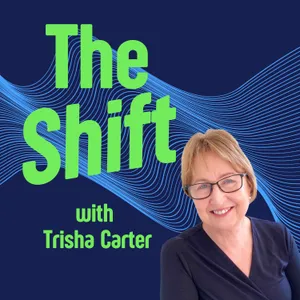
In a series of interviews with authors and experts from around the world, The Shift unpacks how to increase awareness of ourselves, and others and to shift our perspectives to see things differently. Join Trisha Carter, an Organisational Psychologist and explorer of Cultural Intelligence as she dives into cultural meta-cognition and learns more about how to experience those Shifts.
Latest Episodes
The most recent episodes — sign up to get AI-powered summaries of each one.
- 1 weeks ago47 min
Tim Oberg - Part 1 - Why Parkrun Isn't Just About Running
In this episode, Trisha interviews Tim Oberg, who brought Parkrun to Australia in 2011 and grew it into one of the country's largest participation movements, and who now leads the Healthy Kids Project and its flagship RAD Run Club.What did Tim think he was building when he stood on a sandy mound at Main Beach in front of 110 people for that very first event? And how long did it take him to realise it wasn't that at all? In this first of a two-part conversation, Tim traces the accidental origins of a global movement, unpacks the "third space" so many of us are quietly missing, and shares the organisational model — borrowed from an unlikely source — that let one Saturday morning event scale into hundreds.It's a conversation about what people are really showing up for on a Saturday morning, and why it so rarely has much to do with running pace.Connect with Tim Oberg: LinkedIn Learn more about his current work at RAD Run Club and the Healthy Kids Project.Make sure you join Trisha in this journey of growth and discovery throughout the year via Substack or LinkedIn.Resources mentioned:Parkrun - parkrun.com.auRad Run Club - radrun.clubUTS (University of Technology Sydney) social network analysis of two Australian Parkrun communitiesReferenced in this episode: Episode 86 — Can Sport Build Bridges - Or Burn Them?
- Aug 21, 202652 min
Tim Buxton - The Miles Between Losing Home and Finding It
In this episode, Trisha interviews Tim Buxton, founder of You Belong and a CQ Fellow who ran 100 miles across Iraqi Kurdistan, retracing a route that many of the refugee families he'd lived alongside once fled.What happens in the body and mind when someone is pushed past everything they trained for? Tim takes Trisha inside the moment out on the course when his careful preparation stopped being enough, and the shift that let him keep moving anyway. And what does it actually feel like to reach a goal you've chased for years? Along the way, they explore the difference between cognitive and somatic memory, why our "why" needs recalibrating, and the small habits Tim calls his "one percenters" - the kind that build our capacity to connect across difference.It's a conversation about what belonging costs, what it takes to keep going, and what's still there once you arrive.Connect with Tim Buxton on LinkedIn and Instagram @timothykbuxtontimothybuxton.comYou Belong AustraliaInstagram/Facebook/LinkedIn: @youbelongorgUltra OdysseyThe One Percenters Performance PodcastJuste Podcast with Tim BuxtonMake sure you join Trisha in this journey of growth and discovery throughout the year via Substack or LinkedIn.Referenced in this episode:Episode 86 - Can Sport Build Bridges - Or Burn Them?Episode 84 - Music Is Universal, Music Is Particular
- Aug 8, 202623 min
Can Sport Build Bridges - Or Burn Them?
In this solo episode, Trisha opens a new series on sport, and how it can both build bridges and burn them.Every sporting event has three kinds of people: those playing, those watching, and those running it. Are they all having the same experience of connection — or is being near someone quietly different from being with them? Using Gordon Allport's contact hypothesis, Trisha tests a Saturday morning at the local park against a World Cup, asking who might be getting more out of it than we assume.If a sporting moment has ever shifted you, or told you that you didn't belong, Trisha wants to hear it in your voice.Make sure you join Trisha in this journey of growth and discovery throughout the year via Substack or LinkedIn.Resources mentioned:"The Nature of Prejudice" by Gordon AllportParkrunReferenced in this episode:Episode 70 - Ned Legaspi, on storytelling and the Bamboo FrameworkEpisode 75 - Chika Miyamori, on building bridges across differencesEpisode 76 - Dr. David Livermore, on Beyond CQEpisode 77 - Dr. David Livermore, on Prism and leadershipEpisode 82 - Mike Newton, on music and perspectiveEpisode 84 - Music Is Universal, Music Is Particular.
- Jul 24, 202615 min
Same Circle, Different Song
In this solo episode, Trisha examines a shadow she left out of three episodes on music and connection: the same doors music opens for connection can just as easily be used to draw a line around who belongs.What happens when the belonging a crowd creates turns on you mid-song? And what do you actually do when you're standing inside a circle that starts singing something you can't join? Trisha also revisits a decision to launch a series on sport, after the World Cup made clear that sport carries the same two faces as music, working through the same mechanisms.Trisha wants your voice for the new series. Send her a voice note telling her about a sporting moment that shifted you, or a moment sport told you that you didn't belong. Either one. Both, if you've got them.Referenced in this episode:Episode 84: Music Is Universal, Music Is Particular - the Listener Voices episode that prompted this reflection.Make sure you join Trisha in this journey of growth and discovery throughout the year via Substack or LinkedIn.
- Jul 11, 202637 min
Music Is Universal, Music Is Particular
In this episode, Trisha hands the microphone to her listeners. After last week's confession about the skip button, voice notes arrived from around the world - Scotland, South Africa, the USA, Guatemala, Aotearoa New Zealand, and Australia - sharing the songs that shifted them, the music that carries their pride, and how they use music deliberately in their work across cultures. Is music a universal language, or thousands of particular ones? A newly published piece of research gives a name to the answer that runs through every one of these voices - and it may reshape how you think about similarity and difference across cultures. Trisha also discovers which doorway is the hardest to catch yourself walking through, and finds an unexpected homecoming in a song she almost skipped.With thanks to the voices in this episode:Shirley Moana Duff - Coaching PsychologistHanlie van Wyk - CQ Fellow and Social Scientist - (Episode 54)Greg Dearsley - CQ Fellow, Workplace Health and Safety - (Episode 14)Lucy Butters - Author of "Cultural Intelligence in Practice" - (Episode 24 and Episode 67)Lisa Liang - Intercultural Storyteller, Actor and Performer Dr Angel S. Longino - Career Design and Cultural Intelligence, Higher EducationResources mentioned include:"Universal Pluralism: Appreciating and Exploring Both Similarity and Difference Across People and Cultures" by Dr Tim LomasDr Tim Lomas' LinkedIn post"Luna de Xelaju" duet by Oscar Isaac and Gaby Moreno (YouTube)"Matariki Hunga Nui (Calling Me Home)" by Rob Ruha, Troy Kingi, and Kaylee Bell with Professor Rangi Matamua (YouTube)Listen along on Spotify - the songs our voices shared, followed by bonus picks spanning jazz, gospel, reggaeton, and more: The Great Equaliser - Music from The Shift PodcastReferenced in this episode:Moon Joy and Cultural IntelligenceCultural Blindness - When Fairness Isn't FairThe Cost of Sameness - Voices from Three ContinentsWhat My Skip Button Taught Me About BiasMake sure you join Trisha in this journey of growth and discovery throughout the year via Substack or <a href="https://apac01.safelinks.protec
- Jul 4, 202620 min
What My Skip Button Taught Me About Bias
In this solo episode, Trisha turns the CQ lens on herself, examining a habit she caught in her own listening since her conversation with Mike Newton in Episode 82.What is your thumb actually doing when a song comes on? Trisha unpacks four different doors music uses to move us — the beat, being moved, surprise, and story — and realises she's only ever really been opening one of them. What does it mean when the same song that feels like home to one person tells another they don't belong? And what might be waiting in the very songs your thumb reaches to skip?Trisha closes with an invitation: choose one song from a genre you usually skip, and use the PAUSE process to stay with it all the way through.Resources mentioned in this episode:🎵 Listen to the episode playlist on Spotify: The Beat Beneath The Bridge - Music for The Shift Podcast Episode 82The PAUSE Process — first introduced in Episode 53, "Responding to Moments of Shift with PAUSE"Listen to Episode 82 — Mike Newton, on music, culture, and perspectiveTrisha would love to hear from you — share a piece of music from another culture that shifted something in you, or tell her how you've used music deliberately in your own CQ practice, on LinkedIn.Join Trisha in this journey of growth and discovery throughout the year via Substack or LinkedIn.
- Jun 19, 202647 min
Mike Newton - When Music Shifts Your Perspective
In this episode, Trisha interviews Mike Newton, CQ Fellow, certified CQ Facilitator, and Director of Organisational Health and Belonging at Young Life.Music reaches us in ways that argument and logic simply can't — but what happens when that same power is used intentionally to shift how we see each other? Could a song be the beat beneath the bridge that connects people across cultural differences? Mike has spent over 25 years building culturally intelligent communities, and when he's not doing that, he's behind the decks. This conversation explores how music works across all four dimensions of Cultural Intelligence (CQ) — from sparking motivation and curiosity, to deepening knowledge of cultures not our own, to shifting perspective in ways that stay with us for decades.Connect with Mike Newton on LinkedIn or on Instagram at mrnewton210🎵 Listen to the episode playlist on Spotify: The Beat Beneath The Bridge - Music for The Shift Podcast Episode 82Join Trisha in this journey of growth and discovery throughout the year via Substack or LinkedIn.
- May 30, 20264 min
The Shift Recommends
This week, Trisha steps back from a full episode to point you towards two conversations worth your time. She recently appeared as a guest on Victoria Rennoldson's Culture Cuppa podcast — and being on the other side of the microphone had her reflecting in ways she didn't quite expect. The episode, Leading Across Difference, is a candid conversation between two Cultural Intelligence (CQ) practitioners about the future of CQ and where hope lives within it.Trisha also invites you to revisit Episode 28 with Sharon Gray — a Kamilaroi and Scottish woman whose wisdom is woven into the episode's very title. With National Reconciliation Week unfolding in Australia, there's no better moment to listen, or listen again.Both links are in the show notes below.Culture Cuppa — Leading Across Difference with Trisha Carter: https://culturecuppa.com/podcasts/leading-across-difference-with-trisha-carter/Episode 28 — Winanga Guru: Listen Deeply, Go Slowly and Respect Everything with Sharon Gray: https://the-shift-with-trisha-carter.captivate.fm/episode/sharon-gray-winangar-guru-listen-deeply-go-slowly-and-respect-everything/Join Trisha in this journey of growth and discovery throughout the year via Substack or LinkedIn.
About The Shift
In a series of interviews with authors and experts from around the world, The Shift unpacks how to increase awareness of ourselves, and others and to shift our perspectives to see things differently. Join Trisha Carter, an Organisational Psychologist and explorer of Cultural Intelligence as she dives into cultural meta-cognition and learns more about how to experience those Shifts.
Customized Recaps
AI-powered recaps with compact key takeaways, quotes, and insights.
Straight to Your Inbox
Get key takeaways from The Shift in a 5-minute read.
Save Hours Every Week
Stay current on your favorite podcasts without falling behind.
Frequently Asked Questions
What is Podzilla's The Shift daily summary?
It's a free AI-powered email that summarizes new episodes of The Shift as soon as they're published. You get the key takeaways, notable quotes, and links & mentions — all in a quick read.
How does the The Shift podcast summary work?
When a new episode drops, our AI transcribes and analyzes it, then generates a personalized summary tailored to your interests and profession. It's delivered to your inbox every morning.
Is this an official The Shift product?
No. Podzilla is an independent service that summarizes publicly available podcast content. We're not affiliated with or endorsed by Trisha Carter.
Can I get summaries of other podcasts too?
Absolutely! The free plan covers up to 3 podcasts. Upgrade to Pro for 15, or Premium for 50. Browse our full catalog at /podcasts.
How often does The Shift release new episodes?
The Shift publishes biweekly. Our AI generates a summary within hours of each new episode.
What topics does The Shift cover?
The Shift covers topics including Education, Business, Management, Culture, Society & Culture, Self-Improvement. Our AI identifies the specific themes in each episode and highlights what matters most to you.
Start getting The Shift summaries tomorrow morning.
Free forever for up to 3 podcasts. No credit card required.
Free forever for up to 3 podcasts. No credit card required.