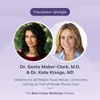
Medicine for All People: Food, Nature, Community, and Joy as Part of Whole-Person Care
Dr. Geeta Maker-Clark joins the Root Cause Medicine Podcast to discuss ideas from her book, Medicine for All People: Science and Ancient Wisdom for Revolutionary Healing. Drawing from family medicine, integrative medicine, culinary medicine, community health and her own upbringing, she explores a broader view of medicine that includes food, plants, nature, community, service, trust, dance, gratitude, and play.The conversation centers on a simple idea: health is shaped not only by what happens in the clinic, but also by the environments, relationships, resources, cultural traditions, and daily practices that surround a person. Dr. Maker-Clark organizes these ideas into three areas—medicines of the earth, medicines of connection, and medicines of spirit—and discusses how practitioners can think about them alongside conventional medical care.Clinical TakeawaysFood and nutrition are part of whole-person care. Dr. Maker-Clark describes food as a central part of her clinical philosophy and discusses culinary medicine as a way to combine nutrition education with practical cooking skills. Her University of Chicago culinary medicine work includes medical students, community members, and middle school students, with an emphasis on nutrition literacy, accessibility, and culturally relevant food education. (Maker-Clark 2023)Nature exposure may support stress regulation and mental well-being. The episode frames time outdoors and connection with the natural environment as accessible ways to support well-being. Research has associated nature exposure with lower perceived and physiologic stress, although study designs, settings, and outcomes vary. (Shuda 2020)Social connection deserves attention in clinical assessment. Dr. Maker-Clark emphasizes community, belonging, and service as dimensions of health. Research supports associations between loneliness and social isolation and adverse cardiovascular, brain, mental health, and inflammatory outcomes, although mechanisms and the effectiveness of specific interventions continue to be studied. (Cené 2022) (Smith 2020)Trust includes both healthcare relationships and self-trust. The conversation explores how previous negative healthcare experiences, chronic illness, and unexplained symptoms can affect trust. Dr. Maker-Clark describes rebuilding trust through relationships and small, achievable commitments rather than treating trust as something patients should simply provide.Dance combines movement, cognition, emotion, and often social interaction. Dance is presented as an accessible form of joyful movement rather than a replacement for clinical care. Research suggests dance can influence cognitive and neuroplasticity-related outcomes, particularly in older adults, although effects vary by population and intervention. (Teixeira-Machado 2019) (Hewston 2021)Gratitude and play can be viewed as practices that support well-being. Gratitude interventions have shown generally modest benefits for well-being and some psychological outcomes. <a href="https://pubmed.ncbi.nlm.nih.gov/37
Podzilla Summary coming soon
Sign up to get notified when the full AI-powered summary is ready.
Free forever for up to 3 podcasts. No credit card required.
Listen to This Episode
More from The Root Cause Medicine Podcast
C15:0, ferroptosis, and metabolic health: What practitioners should know
Beyond the Label: What Matters in Curcumin and Boswellia Quality
Immunometabolism: What Your Immune System Can Teach You About Metabolic Health
One Hidden Immune Trigger Everyone Misses: A Complex Autoimmune Case Study
Get summaries like this every morning.
Free AI-powered recaps of The Root Cause Medicine Podcast and your other favorite podcasts, delivered to your inbox.
Free forever for up to 3 podcasts. No credit card required.