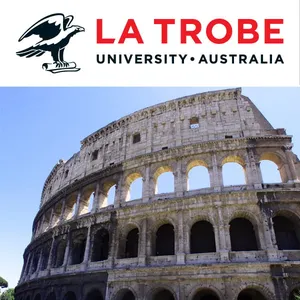
Free Daily Podcast Summary
The Roman World: Daily Summaries Delivered
by Dr Rhiannon Evans
Get key takeaways, quotes, and insights from The Roman World in a 5-minute read. Delivered straight to your inbox.
Latest Episodes
The most recent episodes — sign up to get AI-powered summaries of each one.
- Oct 30, 201348 min
Empire and Symbol
Ancient Rome and its culture still exerts an enormous influence on modern culture, particularly in the west. Through media such as film, literature, art, architecture, law codes and political institutions we are still influenced by Rome and we continue to reuse and reinvent Roman forms.This lecture considers some of the ideas which are transmitted when we tell narratives of Rome (for example in the films Gladiator or The Life of Brian) or make reference to ancient Rome in buildings, paintings and even in the classroom. While Rome is still alive for us, we can see that each historical era has reconfigured ancient culture to suit its own ends and remade Rome in its own image. Copyright 2013 La Trobe University, all rights reserved. Contact for permissions.
- Oct 30, 2013
Empire and Symbol (handout)
Ancient Rome and its culture still exerts an enormous influence on modern culture, particularly in the west. Through media such as film, literature, art, architecture, law codes and political institutions we are still influenced by Rome and we continue to reuse and reinvent Roman forms.This lecture considers some of the ideas which are transmitted when we tell narratives of Rome (for example in the films Gladiator or The Life of Brian) or make reference to ancient Rome in buildings, paintings and even in the classroom. While Rome is still alive for us, we can see that each historical era has reconfigured ancient culture to suit its own ends and remade Rome in its own image. Copyright 2013 La Trobe University, all rights reserved. Contact for permissions.
- Oct 30, 201351 min
Pompeii
Buried under the ash from the cataclysmic eruption of the volcano Vesuvius in AD 79, Pompeii and other sites around the Bay of Naples provide extraordinary insights into a Roman town –not just what it looked liked, but how it functioned also. This lecture looks at some of the main public buildings of Pompeii, and especially the development of Pompeii immediately after it was made a Roman colony, and then later in the early Imperial period. What emerges is the role of architecture and other urban adorment in the promotion of individual careers in Pompeii – also reflected in the homes of Pompeiians. Copyright 2013 La Trobe University, all rights reserved. Contact for permissions.
- Oct 30, 2013
Pompeii (handout)
Buried under the ash from the cataclysmic eruption of the volcano Vesuvius in AD 79, Pompeii and other sites around the Bay of Naples provide extraordinary insights into a Roman town –not just what it looked liked, but how it functioned also. This lecture looks at some of the main public buildings of Pompeii, and especially the development of Pompeii immediately after it was made a Roman colony, and then later in the early Imperial period. What emerges is the role of architecture and other urban adorment in the promotion of individual careers in Pompeii – also reflected in the homes of Pompeiians. Copyright 2013 La Trobe University, all rights reserved. Contact for permissions.
- Oct 30, 201355 min
Roman Spectacle
Amphitheatres are notorious as the places where the Romans held their more gruesome forms of "entertainment", including gladiatorial fights, executions of condemned prisoners, and wild beast hunts. As such displays grew more complicated and imaginative in their staging and special effects, so too did the design of the amphitheatres in order to accommodate elaborate performances and the Colosseum in Rome represents the culmination of this architectural development. However, Roman amphitheatres were not just about entertaining the masses: the structures and the events held in them were tightly linked to Roman society and especially to the careers of prominent Romans, who used this form of entertainment as a way to claw their way up the political ladder - and to stay there. This lecture also deals with the wildly popular horse and chariot racing in the circus, a form of entertainment even more closely tied to political factionalism and with huge popular appeal. Copyright 2013 La Trobe University, all rights reserved. Contact for permissions.
- Oct 30, 2013
Roman Spectacle (handout)
Amphitheatres are notorious as the places where the Romans held their more gruesome forms of "entertainment", including gladiatorial fights, executions of condemned prisoners, and wild beast hunts. As such displays grew more complicated and imaginative in their staging and special effects, so too did the design of the amphitheatres in order to accommodate elaborate performances and the Colosseum in Rome represents the culmination of this architectural development. However, Roman amphitheatres were not just about entertaining the masses: the structures and the events held in them were tightly linked to Roman society and especially to the careers of prominent Romans, who used this form of entertainment as a way to claw their way up the political ladder - and to stay there. This lecture also deals with the wildly popular horse and chariot racing in the circus, a form of entertainment even more closely tied to political factionalism and with huge popular appeal. Copyright 2013 La Trobe University, all rights reserved. Contact for permissions.
- Oct 15, 201349 min
Flavian Rome
After Nero's suicide in 68 CE Rome was plunged into civil war again, as successive military commanders were declared emperor. The victor was Flavius Vespasian, who managed to found a new (Flavian) dynasty. Vespasian oversaw the building of the Colosseum, and both he and his son, Titus, remained popular. However, the third Flavian, Domitian, is depicted as one of the most sinister, paranoid and tyrannical of all Roman emperors, and his murder in 96 brought an end to Rome's second dynasty. Copyright 2013 La Trobe University, all rights reserved. Contact for permissions.
- Oct 15, 2013
Flavian Rome (handout)
After Nero's suicide in 68 CE Rome was plunged into civil war again, as successive military commanders were declared emperor. The victor was Flavius Vespasian, who managed to found a new (Flavian) dynasty. Vespasian oversaw the building of the Colosseum, and both he and his son, Titus, remained popular. However, the third Flavian, Domitian, is depicted as one of the most sinister, paranoid and tyrannical of all Roman emperors, and his murder in 96 brought an end to Rome's second dynasty. Copyright 2013 La Trobe University, all rights reserved. Contact for permissions.
Get The Roman World summaries in your inbox
Free AI-powered daily recaps. Key takeaways, quotes, and mentions — in a 5-minute read.
Get Free Summaries →Free forever for up to 3 podcasts. No credit card required.
You Might Also Like
Listeners also like.
Emperors of Rome
La Trobe University
When in Rome
Matt Smith
The Fall of Rome Podcast
Patrick Wyman / Wondery
The Partial Historians
The Partial Historians
The History of Rome
Mike Duncan
Ancient Rome: Rome, Essenes, Alexandria, and the Book of Enoch
Roger Weir
The Ancient World
Scott C.
Western Civ
Adam Walsh
History of the Decline and Fall of the Roman Empire by Edward Gibbon
Loyal Books
ROME
Same Soul Productions
Rome
Noah
The Fall Of The Roman Empire
Nick Holmes
About The Roman World
The Roman World introduces students to the society, literature and art of ancient Rome, through a study of its major historical and literary figures, such as Julius Caesar, Augustus, Nero, Virgil and Ovid. We shall look at Rome’s place in the ancient Mediterranean world, and its connections with ancient Greece and other cultures, such as Egypt and Gaul. Through almost constant warfare, Rome accumulated an enormous Mediterranean empire, and this subject will investigate how this shaped Roman culture, through such topics as the acquisition of slaves and the ability to import luxury objects. We shall also see how the civil conflicts of the first century BCE affected Rome and Roman identity, leading to Caesar, Pompey and others engaging in propaganda wars, as seen through competitive monumental building, and to some self-questioning in the literature of the period. Towards the end of the semester, we shall look at Rome’s lasting influence, and the way that we continue to represent Rome in
Customized Recaps
AI-powered recaps with compact key takeaways, quotes, and insights.
Straight to Your Inbox
Get key takeaways from The Roman World in a 5-minute read.
Save Hours Every Week
Stay current on your favorite podcasts without falling behind.
Frequently Asked Questions
What is Podzilla's The Roman World daily summary?
It's a free AI-powered email that summarizes new episodes of The Roman World as soon as they're published. You get the key takeaways, notable quotes, and links & mentions — all in a quick read.
How does the The Roman World podcast summary work?
When a new episode drops, our AI transcribes and analyzes it, then generates a personalized summary tailored to your interests and profession. It's delivered to your inbox every morning.
Is this an official The Roman World product?
No. Podzilla is an independent service that summarizes publicly available podcast content. We're not affiliated with or endorsed by Dr Rhiannon Evans.
Can I get summaries of other podcasts too?
Absolutely! The free plan covers up to 3 podcasts. Upgrade to Pro for 15, or Premium for 50. Browse our full catalog at /podcasts.
How often does The Roman World release new episodes?
The Roman World publishes daily. Our AI generates a summary within hours of each new episode.
What topics does The Roman World cover?
The Roman World covers topics including Education. Our AI identifies the specific themes in each episode and highlights what matters most to you.
Start getting The Roman World summaries tomorrow morning.
Free forever for up to 3 podcasts. No credit card required.
Free forever for up to 3 podcasts. No credit card required.