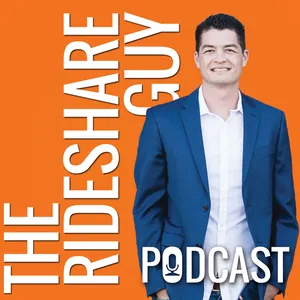
Free Daily Podcast Summary
The Rideshare Guy Podcast: Daily Summaries Delivered
by Harry Campbell
A podcast covering the rideshare and mobility industry. Interviews with start-up founders, CEOs, academics, gig workers and more!
Latest Episodes
The most recent episodes — sign up to get AI-powered summaries of each one.
- May 27, 202637 min
RSG269: This $12K EV Could Change Uber Driving Forever | Bingo Tech
Harry interviews Alex Nesic of Bingo Tech about the company's pivot from battery swapping for two- and three-wheelers to a purpose-built electric ride-hail vehicle, the Bingo E2, driven by fleet demand in markets like South Africa and Kenya. Bingo's roots include a large-scale battery-swapping platform in China and a white-label swapping and fleet software platform deployed internationally. The E2 is an L7e-class vehicle with a 31 kWh main battery (~350 km range), optional four handheld swappable batteries (+150 km), and DC fast charging (20–80% in ~40 minutes), designed for rugged, connected fleet use and grid instability. They discuss driver economics, lower total cost of ownership via cheaper electricity, upcoming Nairobi pilots and Q3 shipments, and a "Cloud Fleet" program letting buyers reserve and purchase E2s ($12,000) to generate revenue through managed deployments, plus an AI call-in assistant, Maya. 0:00 Intro to RSG269 with Alex Nesic of Bingo Tech 00:32 Who Is Alex Nesic? 01:41 How Did Bingo Start? 05:32 Why Did Bingo Build The E2? 09:01 How Do The Driver Economics Work? 11:46 Why Is Africa Such A Big Market? 14:13 What Grid Challenges Exist? 15:59 How Does The Dual Battery System Work? 18:09 How Do Charging And Battery Swaps Work? 22:14 How Did Bingo Go From Prototype To Production? 23:49 What Is The Cloud Fleet Program? 29:08 How Are Insurance And Risk Handled? 30:43 What Is Maya AI Hotline? 32:03 How Will AVs Work In Emerging Markets? 33:57 Who Are The Competitors And Could It Work In The US? 37:01 Final Thoughts And Wrap Up Bingo Tech: https://www.bingotech.io/ Alex's LinkedIn: https://www.linkedin.com/in/alex-nesic
- May 16, 202626 min
The Driverless Digest: The Humans Powering Autonomous Vehicle Operations (Omar Zoubi, TaskUs)
In today's episode, I'm speaking with Omar Zoubi, VP of Autonomous Mobility & Rideshare Network Strategy at TaskUs. Omar breaks down how TaskUs supports autonomous vehicle operators behind the scenes, from remote assistance to handling edge cases that today's AI systems still struggle to navigate. We get into TaskUs' role across the AV ecosystem, including who they partner with and how their human-in-the-loop model helps fleets operate safely and scale more efficiently. Omar explains the types of real-world scenarios where AVs need intervention, how those interventions feed back into improving AI systems, and what it takes to support different types of fleets with varying operational needs. The conversation also covers the current stage of the AV industry, including how companies like Waymo are approaching remote assistance and safety, and what challenges emerge as fleets grow. We discuss operational complexity, cost structures, and how companies think about cost per mile as they move toward commercialization. Finally, Omar shares his perspective on where TaskUs adds the most value today, how the human-in-the-loop model will evolve over time, and what the future of the AV industry looks like as autonomy matures. Chapters Introduction to Omar Zoubi and TaskUs TaskUs' domain of operation TaskUs' AV business model, and their partners What services does TaskUs provide to its AV clients? How does TaskUs' assistance in edge cases help AV clients improve their AI? Common scenarios where AV companies might need remote assistance, and how TaskUs helps. Differences between supporting different AV fleets How Omar thinks about Waymo's remote assistance and safety What stage of the AV industry are we in? Biggest operational challenges as AV fleets start to scale Common traits across operators and companies in the AV industry How the human-in-the-loop model will evolve as AVs mature How do you plan for unpredictable scenarios, like the recent SF blackout? How AV operational costs are distributed and cost per mile Where does TaskUs offer the biggest value or opportunity for AV companies? What does the future of the AV industry look like? Conclusions and final thoughts Notes/Links: You can find Omar Zoubi on Linkedin. TaskUs website (link). Learn how TaskUs supports AV operations in their case study (link).
- May 16, 202637 min
The Driverless Digest: DoorDash's Autonomous Delivery Strategy with Ashu Rege
In today's episode, I'm speaking with Ashu Rege, Vice President of DoorDash Labs at DoorDash. Ashu shares his journey through the autonomous vehicle industry, including roles at NVIDIA and Zoox, before leading autonomy efforts within one of the largest delivery platforms in the world. We dive into what drew him to DoorDash Labs and how the team is thinking about autonomy differently from robotaxi companies. Ashu explains the origins of DoorDash's delivery robot DOT, the goals of the DoorDash Labs, and how their Autonomous Delivery Platform (ADP) is designed to support a wide range of delivery modalities. The conversation explores what makes autonomous delivery fundamentally different from human delivery, how mature DoorDash's delivery solutions are today, and the different categories of autonomy DoorDash is pursuing. We also get into the economics of autonomous delivery and the unique problems autonomy is best suited to solve in delivery. Ashu breaks down how DOT operates in the real world, including its limitations and where it stands out the most. Finally, we look ahead to what's next for DoorDash and DoorDash Labs' autonomy efforts over the coming year, including how the company is balancing partnerships with in‑house development. Chapters Introduction to Ashu Rege Ashu's background in the AV industry (Nvidia, Zoox, and DoorDash). What excited Ashu about joining DoorDash Labs, and its autonomy goals. The story behind the creation of DOT and its perks The goal of DoorDash Labs and what they do DoorDash Labs' Autonomous Delivery Platform (ADP) explained. One key difference between an autonomous delivery solution and a human. How commercially mature are DoorDash's autonomous delivery solutions? DoorDash's autonomous delivery categories, and how they compare to each other. Why is now the right time to scale autonomy in delivery, and how autonomous delivery differs from robotaxis. How DoorDash approaches the balance between partnering and building autonomous delivery solutions in-house. How autonomous deliveries compare to human deliveries in cost, and the unique problem autonomous deliveries solve. How autonomous deliveries work using DOT, its limitations, and where it stands out. What to expect from DoorDash and DoorDash Labs over the next year in autonomy. Conclusions and final thoughts Notes/Links: You can find Ashu on LinkedIn. DOT is DoorDash's first in-house autonomous delivery robot. You can find more info about it here (link). DoorDash Labs is DoorDash's robotics and automation arm. You can find more info about them on their website (link). Open roles at DoorDash Labs (link). -Harry
- May 15, 202643 min
The Driverless Digest: How the CPUC Handles AV Permits, Data, and Enforcement (Pat Tsen)
In today's episode, I'm speaking with Shao (Pat) Tsen, Deputy Executive Director for Consumer Policy, Transportation, and Enforcement at the California Public Utilities Commission (CPUC). We start with an overview of the CPUC and Pat's role in it. We also break down the split between the CPUC and DMV, clarifying who regulates what, and what companies actually need to do to launch an autonomous vehicle service in California, including the different permit types required along the way. Pat explains the CPUC's technology-agnostic approach to AV regulation, and why Tesla's current robotaxi deployment isn't considered an autonomous vehicle service under CPUC jurisdiction. We then dig into what it really takes to secure an AV permit, and whether the approval process is more subjective or objective in practice. The conversation also covers enforcement, reporting, and data collection requirements for AV companies, including new stoppage event reporting rules and what data is ultimately made public. We also get into how the CPUC approaches transparency, accountability, and the balance between innovation and public safety—and where its regulatory oversight starts to reach its limits. Chapters Introduction to Shao (Pat) Tsen Introduction to the CPUC and their areas of regulation Pat's role at the CPUC CPUC vs DMV: Who Regulates What? Steps to launching an autonomous vehicle service in California—and the different types of permits The CPUC's technology-agnostic role in AV regulation Why Tesla's robotaxi isn't considered an autonomous vehicle service in California What it takes to get an AV permit from the CPUC Is the CPUC's AV permit approval process more subjective or objective? Enforcement, reporting, and data collection for AV companies under the CPUC's jurisdiction What autonomous vehicle companies currently have to report to the CPUC, including new stoppage event requirements What AV company data is made publicly available? How the CPUC handles new edge cases and teleoperations Limits of the CPUC's oversight Conclusions and final thoughts Notes/Links: You can find Pat on Linkedin. Relevant links for the CPUC's AV program Decision and resolution numbers which set rules or approved new authority to operate D.18-05-043 aka the "Pilot Decision," created the AV Pilot program and set requirements for participants D.20-11-046 as modified by D.21-05-017 aka the "Deployment Decision," created AV Deployment program and set the requirements for participants D.24-11-002 aka the AV Data Decision, expanded AV data reporting requirements including incident reporting and "stoppage event" reporting R.-25-08-013 (OIR opened August 2025) – the new AV rulemaking to update policies/processes/rules for AV passenger transportation General Order (GO) 157-E: TCP Regulations Resolutions: Resolution TL-19144 (2023) – approved Waymo for Phase I Driverless AV Passenger Service Deployment Resolution TL-19145 (2023) – approved Cruise (Phase 1 driverless deployment authorization) AV Program Quarterly Reporting (link). To file a complaint, you can fill out this form <a href= "https://www.cpuc.ca.gov/-/media/cpuc-website/divisions/consumer-protection-and-enforcement-division/documents/teb/passenger-complaint-form-06152
- Nov 26, 202545 min
RSG268: Uber's NEXT Big Move? Taxis!
In this episode, Hansu Kim, CEO of Flywheel Technologies, shares insights on the evolving taxi industry, Flywheel's innovative partnerships, and the impact of autonomous vehicles (AVs). With over 20 years of experience in transportation policy, Kim discusses Flywheel's rebranding, its strategic Uber partnership to integrate taxi services, and the regulatory changes required. He highlights the mutual benefits of the Uber-taxi collaboration, including increased ride efficiency and higher driver incomes. Kim also explores the future interplay between traditional taxis, AVs, and the rideshare industry's continuous transformation. 0:00 Intro to RSG268 with Hansu Kim, CEO of Flywheel Technologies 0:32 Who Is Hansu Kim and What Is Flywheel Taxi? 1:08 How Are Flywheel and Uber Partnering? 2:03 How Does This Partnership Affect the Taxi Industry? 2:42 What Regulatory Changes Shape the Consumer Experience? 4:00 What Are the Economic Benefits for Drivers and Companies? 5:31 How Is Technology Being Adopted in the Taxi Industry? 6:32 What Is the Future of Taxi and Rideshare Collaboration? 8:32 How Does Flywheel's Business Model Work? 11:30 What Are the Challenges and Benefits of the Partnership? 19:57 How Do Consumers Choose and What Influences Safety Perception? 24:12 What Is Uber's Strategy for Autonomous Vehicles? 24:51 How Is Waymo Partnering with Ride-Sharing Services? 26:14 What Are the Main Criticisms of Autonomous Vehicles? 26:58 How Are Partnerships Supporting Riders With Disabilities? 28:16 What Does the Future of the Taxi Industry Look Like? 29:38 How Will Autonomous Vehicles Impact Taxi Services? 36:08 How Can the Industry Prepare for an Autonomous Future? 40:11 What Innovations Are Shaping Taxi Technology? 42:45 What Are the Final Thoughts on Waymo and Autonomous Vehicles? Flywheel: https://www.flywheel.com/ Flywheel's LinkedIn: https://www.linkedin.com/company/flywheeltech/ Hansu Kim's LinkedIn: https://www.linkedin.com/in/hansu-kim-b6b30b2/
- Nov 3, 202547 min
RSG267: Waymo's Next Big Move: Cracking the NYC Taxi Market
In this episode, Dawood Milan, founder of Auto Marketplace, discusses the intricacies and the significance of New York City's Taxi and Limousine Commission (TLC) market. He provides insights into his career transition from finance to managing a successful Uber Black fleet and eventually founding Auto Marketplace. Dawood explains the unique regulations and economic value of the NYC TLC market, the challenges and opportunities it presents, particularly with regard to vehicle caps, insurance, and driver pay. He explores the future of autonomous vehicles (AV) in this competitive and complex market, touching on regulatory hurdles, potential business models, and the challenges posed by New York's unique urban environment. Dawood emphasizes the importance of regulatory acumen and market adaptability for new entrants like Waymo. 0:00 Intro 00:32 Who is Dawood and what is Auto Marketplace? 01:23 What makes the NYC TLC market unique? 04:50 How did Uber and Lyft impact NYC taxis? 07:21 What's the current state of NYC rideshare and taxis? 13:22 How do business models work in NYC rideshare? 16:30 What is Dawood's fleet and strategy? 18:40 What challenges and opportunities exist in the TLC market? 23:02 Why are TLC plates valuable and transferable? 24:29 How does TLC plate value change over time? 24:43 Is Waymo entering the NYC market? 25:25 What are the regulatory and business model hurdles? 26:49 How are drivers and medallion owners affected? 30:23 How do fleet management and real estate intersect? 37:08 What are the key tech and environmental challenges? 39:54 What's the future of autonomous vehicles in NYC? 43:14 What are the final thoughts? Dawood's LinkedIn: https://www.linkedin.com/in/dawoodmian/ Automarketplace: https://automarketplace.substack.com/ X: https://x.com/automarketplc
- Sep 5, 202539 min
RSG266: Tower Mobility: The Uber Partner Paying Drivers $25/Hour + Benefits (Base & Tips)
In this episode, Harry interviews Daniel and Andres Munoz, co-founders of Tower Mobility. They discuss their extensive backgrounds in global strategy, operations, and last-mile logistics, as well as how they launched Tower Mobility during the pandemic with a focus on wheelchair accessible vehicles. The conversation delves into Tower Mobility's operational model, including its fleet of over 600 vehicles, primarily electric, and workforce of 2,000 W2 employees. Key topics include their partnerships with Uber and Waymo, the advantages and challenges of managing a large EV fleet, and how they are preparing for an autonomous vehicle future. The episode wraps up with insights on safety training, driver coaching, and the potential for human-powered services in the evolving mobility market. Check out Terawatt here for more information: https://www.terawattinfrastructure.com/ 0:00 Who are the founders of Tower Mobility and how did the company begin? 02:59 How did Tower Mobility get started during the pandemic? 04:13 What is the W2 driver model and how does it work? 06:43 What types of drivers does Tower Mobility recruit and how do they find them? 13:27 How does Tower Mobility partner with Uber? 20:00 What safety and insurance measures are in place? 21:38 Why is adhering to speed limits so important? 22:16 How does the hourly pay model compare to being an independent contractor? 23:16 What are the main challenges of managing a fleet? 26:28 How are electric vehicles being used in fleet operations? 28:41 What cost benefits come with electric vehicles? 32:18 What does the charging infrastructure for EV fleets look like? 34:07 How might autonomous vehicles shape the future of fleet management? 39:20 What are the final thoughts and takeaways from the discussion? Daniel's LinkedIn: https://www.linkedin.com/in/daniel-munoz-gmvp/ Andres' LinkedIn: https://www.linkedin.com/in/andres-munoz-0278926/
- Jul 31, 202529 min
RSG 265 - Jeremy Bird On Lyft's International Expansion
In this episode, Harry interviews Jeremy Bird, Executive Vice President of Driver Experience at Lyft, about Lyft's recent global expansion and the strategic acquisition of Free Now. Bird discusses Lyft's growth into international markets, beginning with Canada and Puerto Rico, and highlights the benefits of partnering with Free Now, a prominent taxi app operating in nine European countries. They delve into the regulatory differences between the US and European markets, the similarities in driver ethos between Lyft and Free Now, and the potential synergies from combining their technologies and experiences. The conversation also covers the significance of Lyft's operations in Canada and its micro-mobility solutions, such as bike and scooter sharing, and how these ventures align with Lyft's overall strategy, including the future integration of autonomous vehicles. 00:00 Introduction to Jeremy Bird and Lyft's expansion 01:05 How has Lyft's expansion into Canada and Puerto Rico been? 02:33 What is Lyft's strategic shift to global markets? 05:19 What is Free Now and what are its operations? 07:34 How do Europe and US taxi industries compare? 10:34 What are the synergies and future plans for Lyft and Free Now? 14:33 What is Lyft's global expansion strategy? 15:38 How is Lyft's market penetration in Europe? 15:52 What are the regulatory challenges and labor relations? 17:17 What are the opportunities in the European market? 21:15 How is Lyft's growth in Canada? 23:50 How has Lyft been integrating micro-mobility solutions? 27:32 What are Lyft's plans for autonomous vehicles? 29:20 Conclusion and Future Prospects Jeremy's LinkedIn: https://www.linkedin.com/in/jeremy-bird-6a03aa11
Get The Rideshare Guy Podcast summaries in your inbox
Free AI-powered daily recaps. Key takeaways, quotes, and mentions — in a 5-minute read.
Get Free Summaries →Free forever for up to 3 podcasts. No credit card required.
You Might Also Like
Listeners also like.
Ride the Lightning: Tesla and EV Podcast
A weekly podcast analyzing news and developments across Tesla's vehicle lineup, from Model 3 to Cybertruck.

Car Dealership Guy Podcast
Expert interviews and live coverage exploring the people, trends, and innovations shaping automotive retail.
Tesla Motors Club Podcast
Discusses Tesla vehicles, technology, and company developments through interviews and community insights.
Tech Brew Ride Home
A daily 15-minute summary of the top tech news from Silicon Valley.

The Investor's Podcast (We Study Billionaires) - The Investor’s Podcast Network
Analyzes the investment strategies of billionaire investors and explores lessons from legendary financiers on wealth, wisdom, and life.
The AI XR Podcast.
Industry insiders interview top founders and executives on AI, spatial computing, VR/AR, and synthetic media.
Podcast: The Ride
Three hosts share deep knowledge and insights about Disney, Universal, and other major theme parks.

The Prof G Pod with Scott Galloway
A professor discusses business, politics, tech, and culture with experts, offering career and life advice through daily segments.

We Fixed It, You're Welcome
A panel debates real corporate crises, proposing solutions for well-known companies and then evaluating their own advice.

All-In with Chamath, Jason, Sacks & Friedberg
Four tech investors discuss technology, markets, politics, and poker with candid, in-depth analysis.
Talking Points
Conversations with travel industry leaders and experts about loyalty programs, trends, and smart travel strategies.
Motley Fool Hidden Gems Investing
The Motley Fool
Customized Recaps
AI-powered recaps with compact key takeaways, quotes, and insights.
Straight to Your Inbox
Get key takeaways from The Rideshare Guy Podcast in a 5-minute read.
Save Hours Every Week
Stay current on your favorite podcasts without falling behind.
Frequently Asked Questions
What is Podzilla's The Rideshare Guy Podcast daily summary?
It's a free AI-powered email that summarizes new episodes of The Rideshare Guy Podcast as soon as they're published. You get the key takeaways, notable quotes, and links & mentions — all in a quick read.
How does the The Rideshare Guy Podcast podcast summary work?
When a new episode drops, our AI transcribes and analyzes it, then generates a personalized summary tailored to your interests and profession. It's delivered to your inbox every morning.
Is this an official The Rideshare Guy Podcast product?
No. Podzilla is an independent service that summarizes publicly available podcast content. We're not affiliated with or endorsed by Harry Campbell.
Can I get summaries of other podcasts too?
Absolutely! The free plan covers up to 3 podcasts. Upgrade to Pro for 15, or Premium for 50. Browse our full catalog at /podcasts.
How often does The Rideshare Guy Podcast release new episodes?
The Rideshare Guy Podcast publishes monthly. Our AI generates a summary within hours of each new episode.
What topics does The Rideshare Guy Podcast cover?
The Rideshare Guy Podcast covers topics including Education, Business. Our AI identifies the specific themes in each episode and highlights what matters most to you.
Start getting The Rideshare Guy Podcast summaries tomorrow morning.
Free forever for up to 3 podcasts. No credit card required.
Free forever for up to 3 podcasts. No credit card required.