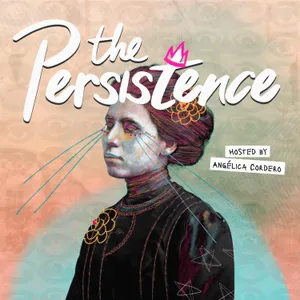
Free Daily Podcast Summary
The Persistence: Daily Summaries Delivered
by Angélica Cordero
The Persistence, hosted by Angélica Cordero, dives into the untold stories of people who’ve shaped history but rarely get the spotlight. Mixing bold personal stories, deep historical insights, and today’s fight for justice, each episode uncovers the connections between past movements and modern struggles. If you’re ready to see history through a fresh, intersectional lens, this is the podcast for you.
Latest Episodes
The most recent episodes — sign up to get AI-powered summaries of each one.
- 3 weeks ago48 min
Episode 20: Who Made These Rules?
We like history with clean endings. Rights were won. Doors opened. Progress happened.But what survives after the victory?In this episode of The Persistence, we look at who gets to decide when change is enough, how resistance to change learns to sound like procedure, why longevity gets mistaken for legitimacy, and what movements build when existing systems fail them.From the fractures between abolition and women’s suffrage to counter-resistance, movement infrastructure, public memory, and Aimé Césaire’s warning about what repeated systems teach the people living inside them, this episode asks what happens when the things we inherit start feeling inevitable simply because they’ve been here a long time.Because persistence doesn’t automatically tell us what deserves to survive. Sometimes it reveals what people protected because it kept them alive, connected, remembered, and free. Sometimes it reveals what power refused to surrender.And eventually the question becomes less about why something lasted and more about what we inherited, what we keep practicing, and what our choices are keeping alive.This episode traces abolition, women’s suffrage, post-Civil War political fracture, counter-resistance, institutional power, movement infrastructure, public memory, historical sanitization, inherited systems, cultural repetition, Aimé Césaire, and the difference between protecting a purpose and protecting the structure built around it.🎧 Listen if you’re interested in:abolition · women’s suffrage · Black women’s history · post-Civil War politics · counter-resistance · social movements · institutional power · systemic change · public memory · historical sanitization · movement infrastructure · community care · inherited systems · longevity and legitimacy · power and resistance · cultural norms · Aimé Césaire · colonialism · progress and backlash · history and memoryResources For Fellow Wascally WabbitsBooksAngela Davis: Seize the Time edited by Gerry Beegan and Donna GustafsonDiscourse on Colonialism by Aimé CésaireFreedom Is a Constant Struggle: Ferguson, Palestine, and the Foundations of a Movement by Angela DavisLinksSupportIt’s free, it’s fast, and it tells the algorithm overlords this work matters. Supporting The Persistence means supporting all of it: the podcast, the posts, the zine, the whole enchilada.Send a post or an episode to a friend, a professor, or that cousin who loves debating politics at dinner.One quick Apple Podcasts review does more than any marketing budget I don’t have.Every coffee, every donation (and paid subscription) literally keeps the mic on and the stories flowing. Collaborate (let’s dream bigger): Educators? Creative? Filmmaker/Podcaster? Org with a mission? Let’s talk.Follow us on Instagram, TikTok, and share your thoughts with Angélica by emailing wearethepersistence@gmail.com.Don’t forget to sign up for host Angélica Cordero’s newsletter, Obsessively Curious!! It includes short insights that connect unlikely histories, recommendations, and details about other ways to interact with the show. Get full access to Obsessively Curious at obsessivelycurious.substack.com/subscribe
- Aug 14, 20261h 19m
Episode 19: Freedom for My Body
In 1990s America, progress had a look: diverse casts, school assemblies, glossy Benetton ads, “girl power,” public testimony, and a mainstream culture ready to believe the room was finally getting bigger.But visibility is not the same as power.This episode of The Persistence looks at Anita Hill, the Clarence Thomas hearings, Riot Grrrl, Bikini Kill, Kathleen Hanna, punk counterpublics, zines, Alice Bag, Sista Grrrl Riots, the Guerrilla Girls, and 1990s feminism to ask what happens when being seen gets mistaken for being safe, believed, funded, protected, or free.From Anita Hill’s televised testimony and the national conversation around sexual harassment, to Riot Grrrl’s DIY networks and “girls to the front,” to the Guerrilla Girls exposing sexism and racism in museum collections, we trace how the 90s gave America powerful images of change, and how those images often left the deeper demand outside the frame.By the time progress had a picture, the demand had already been cropped.And by the time the door looked open, someone still had the key.This episode traces 1990s feminism, visibility politics, Anita Hill’s testimony, the Clarence Thomas Supreme Court confirmation hearings, Riot Grrrl, Bikini Kill, zine culture, punk history, media absorption, the Guerrilla Girls, museum politics, and the gap between representation and power.🎧 Listen if you’re interested in:1990s history · 90s pop culture · Anita Hill · Clarence Thomas hearings · sexual harassment history · Riot Grrrl · Bikini Kill · Kathleen Hanna · zines · Girls to the Front · punk feminism · Alice Bag · Sista Grrrl Riots · Guerrilla Girls · feminist art · museum politics · representation · girl powerResources For Fellow Wascally WabbitsBooksClarence Thomas—Anita Hill Hearings: October 11, 12, 13, 1991 edited by Anita MillerConfessions of the Guerrilla Girls by The Guerrilla GirlsGirls to the Front by Sara MarcusLeft of the Dial: Conversations with Punk Icons by David EnsmingerPretty in Punk: Girl's’ Gender Resistance in a Boys’ Subculture by Lauraine LeblancPunk: NYC 1981-1991 by Ben NadlerPunk Rock: An Oral History by John RobbThe Riot Grrl CollectionThe Riot Grrrl Movement: The Feminism of a New Generation by Cherie TurnerViolence Girl by Alice BagWhite Riot: Punk Rock and the Politics of Race edited by Stephen Duncombe and Maxwell Tremblay“I Hope We Leave More of a Record”: Radical Queer Care within and for the AIDS INFO BBS’s Caregivers Mailing List, Marika Cifor, Claire McDonald, (Feminist Media Histories 1 January 2023; 9 (1), 78–97 p.Let the Record Show: A Political History of ACT UP New York, 1987-1993 by Sarah SchulmanPatient Zero and the Making of the AIDS Epidemic by Richard A. McKay“Silence From the Great Communicator: The Early Years of the AIDS Epidemic Under the Reagan Administration,” by Jacqueline A. Ortiz, (Swarthmore Undergraduate History Journal: 4 (2), 2023), 76-99 p.Links“Do Women Have To Be Naked To Get Into the Met. Museum?,” (The Met Collection, The Met)Guerrilla Girls 1985-, (Artists, Art, Whitney Museum of American Art)<a target="_blank" href="https://www.getty.edu/research/special_collections/notable/guerrilla_girls.html?utm_source
- May 29, 202658 min
Episode 18: Left in the cold, Kept in the Dark
In the 1980s, America was sold a picture of recovery: morning light, trimmed lawns, rising confidence, and a country ready to feel good again.But recovery has a frame. And outside that frame, people were already being asked to survive what the official story refused to see.This episode of The Persistence looks at Reagan-era America, ACT UP, the community care networks, and the AIDS crisis as it moved from silence and stigma into public confrontation. From “personal responsibility” politics and the myth of deservingness, to the early framing of AIDS through stigma, to the rise of direct action and treatment activism, we trace how crisis becomes visible, what institutions do once they are forced to respond, and what people build when they are left to carry what the state will not.By the time something counted, it had already been sorted.And by the time response arrived, the work of surviving its absence had already been assigned.This episode traces the politics of personal responsibility, the stigmatizing early framing of AIDS, the rise of community care networks, and the direct action of ACT UP.🎧 Listen if you’re interested in:AIDS history · ACT UP · Reagan era · Morning in America · Personal responsibility politics · Welfare queen mythology · LGBTQ history · Gay Men’s Health Crisis · Patient Zero · And the Band Played On · AZT · FDA activism · Lesbian caregiving · Mutual aid · Political historyThis episode was written by and produced by Angélica Cordero, with a little help from ChatGPT.Our theme song is Don’t Kid Yourself Baby by Fold, used with their blessings. Podcast artwork for The Persistence features Mexican-American activist Jovita Idar and was created by Tamra Collins of Sunroot Studio.Resources For Fellow Wascally WabbitsBooksA People’s History of the United States by Howard Zinn“I Hope We Leave More of a Record”: Radical Queer Care within and for the AIDS INFO BBS’s Caregivers Mailing List, Marika Cifor, Claire McDonald, (Feminist Media Histories 1 January 2023; 9 (1), 78–97 p.Let the Record Show: A Political History of ACT UP New York, 1987-1993 by Sarah SchulmanPatient Zero and the Making of the AIDS Epidemic by Richard A. McKay"Silence From the Great Communicator: The Early Years of the AIDS Epidemic Under the Reagan Administration," by Jacqueline A. Ortiz, (Swarthmore Undergraduate History Journal: 4 (2), 2023), 76-99 p.LinksAct Up Demonstrations on Wall Street, NYC LGBTQ Historic Sites ProjectAct Up Oral History Project“The AIDS Epidemic in the United States, 1981-early 1990s,” (Story of the CDC, The David J. Sencer CDC Museum, Smithsonian, Last reviewed 2024)HIV/AIDS, (History of Public Health at Harvard, Countway Library, Harvard University, 2018)“Larry Kramer, Playwright and Outspoken AIDS Activist, Dies at 84” by Daniel Lewis, (New York Times, May 27, 2020)“Lesbian AIDS Activism,” (We are Everywhere: Lesbians in the Archive, Yale University Library)“Women and the AIDS Crisis,” (We are Everywhere: Lesbians in the Archive, Yale University Library)Other1982 - 1992 News Clips On HIV/AI
- May 9, 202651 min
Episode 17: Now They Do What They Told Ya
What do you do when the system publicly breaks in front of everyone… and then just keeps going?In the early 1970s, America looked like it was restoring order. The protests of the 1960s had fractured public trust, televised violence had exposed deep cracks in American institutions, and “law and order” politics promised stability in return.But the conflict never disappeared. It just changed location.This episode of The Persistence traces the shift from public unrest to bureaucratic management, as social problems became increasingly reframed as crime, punishment, and individual failure. As the Controlled Substances Act expanded policing and incarceration, prisons became the place the state moved the people and pressures it no longer wanted to confront publicly.Inside those walls, incarcerated people organized against overcrowding, racialized labor exploitation, brutality, and systemic neglect. After the killing of George Jackson at San Quentin in 1971, unrest spread across the country and culminated at Attica, where prisoners negotiated publicly, issued demands, and forced the nation to look directly at what had been hidden behind prison walls.The state answered with overwhelming force.And afterward, almost immediately, the narrative started changing.This episode explores the history of Attica, George Jackson, prison organizing, law and order politics, mass incarceration, and the evolution of institutional power in post-1960s America.🎧 Listen if you’re interested in:Attica uprising · George Jackson · Prison history · Law and order politics · Mass incarceration · 1970s America · Protest movements · Political history · State violence · Social movementsThis episode was written by and produced by Angélica Cordero, with a little help from ChatGPT.Our theme song is Don’t Kid Yourself Baby by Fold, used with their blessings. Podcast artwork for The Persistence features Mexican-American activist Jovita Idar and was created by Tamra Collins of Sunroot Studio.Resources For Fellow Wascally WabbitsBooksA People’s History of the United States by Howard Zinn“A Storm over Attica,” (Life Magazine, Vol. 71, No. 14, October 1, 1971), 26-29 p.Attica: The Official Report of the New York State Special Commission on Attica, The New York State Special Commission on Attica, chaired by Robert B. McKay, (Bantam Books, Inc., September 1972)“Attica Prison’s Bloody Monday” by John Pekkanen, (Life Magazine, Vol. 71, No. 13, September 24, 1971), 26-36 p.“Attica Revisited” by Norval Morris and Gordon Hawkins, (Arizona Law Review, Vol. 14, No. 4, 1972)Blood in the Water: The Attica Prison Uprising of 1971 and Its Legacy by Heather Ann Thompson“‘The Dignity and Justice that Is Due to Us by Right of Our Birth’: Violence and Rights in the 1971 Attica Riot” by Andrew Mamo, (Harvard Civil Rights-Civil Liberties Law Review (CR-CL), Vol. 29, No. 2, June 27, 2014)The Honest Politician’s Guide to Crime Control by Norval Morris and Gordon Hawkins, (University of Chicago Press, 1970)The Seventies: The Great Shift in American Culture, Society, and Politics by Bruce J Schulman, (Da Capo Press, 2001)“Waiting for a Riot” by James Mills, (Life Magazine, Vol. 71, No. 14, October 1, 1971), 30-35 p.Links<a target="_blank" href="https://search.freedomarchives.o
- Apr 24, 202647 min
Episode 16: I See No Changes
The late 1960s were supposed to be proof that things were working.Civil rights legislation had passed. The language of progress was everywhere. On paper, it looked like the system had responded.But on the ground?That story didn’t hold.This episode explores the turning point of the 1960s civil rights movement, where protests, policing, and public trust in American institutions began to shift.From the Watts uprising to the assassination of Martin Luther King Jr., from student protests and occupations at Columbia University to the Chicano walkouts across the Southwest, from the American Indian Movement and the occupation of Alcatraz to the Stonewall uprising, this wasn’t a series of isolated events.It was people adjusting.Figuring out what to do when the rules they were told to follow stopped producing the outcomes they were promised.And as that shift took hold, something else changed too.Protest started getting framed as disruption.Rights became “security.”And policing and state response to dissent began to evolve in real time.By the time we get to 1968 and the years just beyond it, what looks like chaos starts to read differently.Not as breakdown.As recognition.This episode covers the history of civil rights, 1960s protest movements, policing in America, and the evolution of state surveillance and counterintelligence.This episode was written by and produced by Angélica Cordero, with a little help from ChatGPT. Our theme song is Don’t Kid Yourself Baby by Fold, used with their blessings. Podcast artwork for The Persistence features Mexican-American activist Jovita Idar and was created by Tamra Collins of Sunroot Studio.Resources For Fellow Wascally WabbitsBooksA People’s History of the United States by Howard Zinn“Chale No, We Won’t Go!” The Chicano Moratorium Committee in “Mi raza primero!” (My People First!): Nationalism, Identity, and Insurgency in the Chicano Movement in Los Angeles, 1966-1978 by Ernesto ChávezMassacre in Mexico by Elena Poniatowska (New York , Viking Press, 1975)¡Raza Sí! ¡Guerra No!: The Chicano Movement from South Vietnam to the American Southwest by Dillon Otto, University of Colorado Honors JournalSeventies: The Great Shift in American Culture, Society, and Politics by Bruce J. SchulmanLinks“1970: National Chicano Moratorium,” (A Latinx Resource Guide: Civil Rights Cases and Events in the United States, Hispanic, Research Guides, Library of Congress)“The Chicano Moratorium: 50 Years Later,” (Los Angeles Times, Aug 2020)“Exhibits,” Stonewall 50: A Guide Honoring the 50th Anniversary of the Stonewall Riots and LGBTQ History, (Research Centers & Library, New York Public Library, Apr 21, 2026)“Flying Flag Upside Down,” (Issues, Issues Related to Speech, Press, Assembly, or Petition, Free Speech Center, Middle Tennessee State University, Sep 2025)“Indian Treaties and the Removal Act of 1830,” (1830-1860, Milestones, The Office of the Historian)“National Chicano Moratorium March,” (Locations, Demonstration Grounds)“The Stonewall Riots,” A Brief History of Civil Rights in the United States: The Stonewall Riots, (Research Guides, Vernon E. Jordon Law Library, Howard University)<
- Mar 27, 202640 min
Episode 15: Strange You Never Knew
In this episode of The Persistence, Angélica Cordero examines the breaking point of the 1960s, when the promises of the Civil Rights Movement collided with the reality of the Vietnam War, political violence, and a growing crisis of trust in American institutions.By the mid-1960s, landmark legislation like the Civil Rights Act suggested progress. But on the ground, racial inequality, police violence, and economic injustice persisted. Then 1968 reshaped everything.The Tet Offensive exposed the gap between government messaging and the reality of the Vietnam War. Martin Luther King Jr. was assassinated while organizing for labor and economic justice. Weeks later, Robert F. Kennedy was killed. Across the country, protests, uprisings, and political fractures revealed a deeper truth: the system wasn’t failing. It was functioning as designed.Through the rise of the Student Nonviolent Coordinating Committee (SNCC), the emergence of Black Power, and the tensions within coalition politics, this episode explores how movements shift from demanding civil rights to confronting power itself.This is a story about the 1960s, but it is also about how people recognize when the official narrative stops making sense and what happens next.This episode was written by and produced by Angélica Cordero, with a little help from ChatGPT. Our theme song is Don’t Kid Yourself Baby by Fold, used with their blessings. Podcast artwork for The Persistence features Mexican-American activist Jovita Idar and was created by Tamra Collins of Sunroot Studio.Resources For Fellow Wascally WabbitsBooksThe Day They Marched: 1963 March on Washington Booklet edited by Doris E. SaundersJane Crow and the Law: Sex Discrimination and Title VII by Pauli Murray and Mary Eastwood (George Washington Law Review 34, No. 2 December 1965: 232-56p) (How and Why Was Feminist Legal Strategy Transformed, 1960-1973?, Women and Social Movements, Alexander Street)The Power of the Zoot: Youth Culture and Resistance during World War II by Luis Alvarez“Zoot Suit” performance and play full textLinks“A Million Vietnam Wars,” (Blogs, Folklife Today, American Folklife Center & Veterans History Project, Library of Congress)“An Invisible Giant: The Legacy of Pauli Murray (J.D. ’44, H. ’17), Trailblazing Civil Rights Lawyer,” (The Dig, Howard University)“America Sees the Truth,” (Stories, National Museum of African American History & Culture, Smithsonian)“Baptist Street Church Bombing,” (Famous Cases and Criminals, History, FBI)“The Civil Rights Movement and the March on Washington, 60 Years Later,” (Library Guides, Libraries, University of Minnesota)“History, Heartbreak, and Hope: Robert F. Kennedy and 1968,” Dr. Wesley Arden Dick, (News, Albion College) “Historical Profile: Rev. Dr. Pauli Murray ’65 JSD,” (Yale Law School Today, Yale University)“In Previously Unseen Interview, Ruth Bader Ginsburg Shares How Legal Pioneer Pauli Murray Shaped Her Work on Sex Discrimination,” (Time Magazine)“Jane Crow & the Story of Pauli Murray,” (Stories, National Museum of African American History & Culture, Smithsonian)<a target="_blank" href="https://millercenter.org/the-presidency/presidential-speeches/july-2-1964-remarks-upon-signing-civil-
- Feb 6, 202621 min
Am I invisible 'cause you ignore me?
In this minisode of The Persistence, Angélica Cordero takes a hard look at the phrase “If you see something, say something” and what it’s really taught us about staying quiet, staying safe, and staying out of it. From civic culture to everyday behavior, this episode breaks down how silence often gets framed as maturity or common sense—when in reality, it can protect power and delay change.Through moments in history, civil rights struggles, and cultural flashpoints, Cordero shows how refusal, disruption, and non-cooperation have always been part of how progress actually happens. Silence doesn’t just happen. It’s encouraged. It’s rewarded. And it has a history.This episode explores:* Why “staying out of it” is rarely neutral* How power relies on compliance and quiet participation* The real cost of opting out when things go wrong* How refusal and non-cooperation create pressure for change* Why these patterns keep repeating todayThis episode was written by and produced by Angélica Cordero, with a little help from ChatGPT. Our theme song is Don’t Kid Yourself Baby by Fold, used with their blessings. Podcast artwork for The Persistence features Mexican-American activist Jovita Idar and was created by Tamra Collins of Sunroot Studio.Resources For Fellow Wascally WabbitsLinks“There’s Nothing I Enjoy More Than Acting In The Theater” - Ian McKellen EXTENDED INTERVIEW (The Late Show with Stephen Colbert)SupportIt’s free, it’s fast, and it tells the algorithm overlords this work matters. Supporting The Persistence means supporting all of it: the podcast, the posts, the zine, the whole enchilada.Send a post or an episode to a friend, a professor, or that cousin who loves debating politics at dinner.One quick Apple Podcasts review does more than any marketing budget I don’t have.Every coffee, every donation (and paid subscription) literally keeps the mic on and the stories flowing. Collaborate (let’s dream bigger): Educators? Creative? Filmmaker/Podcaster? Org with a mission? Let’s talk.Follow us on Instagram, TikTok, and share your thoughts with Angélica by emailing wearethepersistence@gmail.com.Don’t forget to sign up for host Angélica Cordero’s newsletter, Obsessively Curious!! It includes short insights that connect unlikely histories, recommendations, and details about other ways to interact with the show. Get full access to Obsessively Curious at obsessivelycurious.substack.com/subscribe
- Jan 10, 202638 min
Episode 14: The World Keeps Turning
In this episode of The Persistence, Angélica Cordero traces how some of the most consequential changes in history didn’t begin with explosions or speeches, but with stillness. Opening with a personal memory of watching Jurassic Park alongside her grandmother (who always knew exactly when someone was about to make a terrible decision), Cordero draws a sharp line between moments we recognize as obviously reckless and the real-life systems we’re taught to trust long past their breaking point. From Mahatma Gandhi’s strategy of non-cooperation to the Greensboro sit-ins, the rise of the Student Nonviolent Coordinating Committee, the Freedom Rides, and the student-led confrontations that defined the early 1960s, this episode explores how quietly refusing to play along can expose the lie underneath power. With wit, cultural fluency, and a clear-eyed look at how systems react when compliance runs out, The Persistence invites listeners to reflect on the moment their own script cracked and what happens when stillness turns into momentum.This episode was written by and produced by Angélica Cordero, with a little help from ChatGPT. Our theme song is Don’t Kid Yourself Baby by Fold, used with their blessings. Podcast artwork for The Persistence features Mexican-American activist Jovita Idar and was created by Tamra Collins of Sunroot Studio.Resources For Fellow Wascally WabbitsBooksAmerica Dreaming by Laban Carrick HillLegendary Children: The First Decade of RuPaul’s Drag Race and the Last Century of Queer Life by Tom Fitzgerald and Lorenzo MarquezPersistence: Evelyn Butts and the African American Quest for Full Citizenship and Self-Determination by Kenneth Cooper AlexanderLinks“Ella Baker,” (People, SNCC Digital Gateway, Duke University Libraries)“Founding of SNCC,” (Events, SNCC Digital Gateway, Duke University Libraries)“Freedom Riders” in 1961: A Newborn Library and the World Beyond, (Olin @ 50: Inspiration Since 1961, Cornell University Library)“Freedom Rides,” (Civil Rights Digital Library, University of Georgia Libraries)“Jane Stembridge,” (Events, SNCC Digital Gateway, Duke University Libraries)“The Civil Rights Movement and Wesleyan Freedom Riders,” (2008 Issue 3, Historical Row, UpFront, Wesleyan University Magazine, Sep 20, 2008)The Creative Act: Marcel Duchamp’s 1957 Classic, Read by the Artist Himself by Maria Popova, (The Marginalian, Aug 23, 2012)Televised Address to the Nation on Civil Rights, (Historic Speeches, John F. Kennedy Presidential Library and Museum)“Woolworth’s lunch counter sit-in remembered by those who witnessed history,” (Museum Events, International Civil Rights Museum and Center, Aug 13, 2022)SupportIt’s free, it’s fast, and it tells the algorithm overlords this work matters. Supporting The Persistence means supporting all of it: the podcast, the posts, the zine, the whole enchilada.Send a post or an episode to a friend, a professor, or that cousin who loves debating politics at dinner.One quick Apple Podcasts review does more than any marketing budget I don’t have.Every coffee, every donation (and paid subscription) literally keeps the mic on and the stories flowing. Collaborate
Get The Persistence summaries in your inbox
Free AI-powered daily recaps. Key takeaways, quotes, and mentions — in a 5-minute read.
Get Free Summaries →Free forever for up to 3 podcasts. No credit card required.
You Might Also Like
Listeners also like.
Cool People Who Did Cool Stuff
Revolutions, rebellions, and resistance movements throughout history, told through the stories of the people who lived them.

Haunting
Real-life paranormal encounters told through immersive first-hand stories hosted by a ghost navigating the afterlife.

Get Obsessed : With Living Your Best Life
Experts and personal stories guide listeners through life changes, covering personal development, relationships, and overcoming fear.

Hungry for History with Eva Longoria and Maite Gomez-Rejón
Eva Longoria and Maite Gomez-Rejón explore the cultural and historical roots of foods and drinks through stories, interviews, and recipes.

Our Ancestors Were Messy
Explores the lives and scandals of Black Americans in the pre-Civil Rights Era through historical gossip and personal stories.
In Retrospect with Susie Banikarim and Jessica Bennett
Revisits 1980s and 1990s pop culture moments to examine how they shaped societal views of women and the world.

Very Special Episodes
True stories of ordinary people in bizarre, life-changing situations, each episode unfolding like a movie-worthy tale.
Unlocking Us with Brené Brown
Explores human connection through conversations on vulnerability, courage, and emotion with researchers, thinkers, and audiences.

History's Great Mysteries
Explores unexplained historical events and invites listeners to ponder possible theories behind enduring mysteries.

The Experiment
Explores how individuals navigate conflicts between personal beliefs and American ideals.

The Preamble
Sharon McMahon and guests explore pressing issues and ideas shaping the future with clarity and thoughtful analysis.
HistoryExtra podcast
Covers global history from ancient to modern times through expert interviews on events, figures, and eras.
About The Persistence
The Persistence, hosted by Angélica Cordero, dives into the untold stories of people who’ve shaped history but rarely get the spotlight. Mixing bold personal stories, deep historical insights, and today’s fight for justice, each episode uncovers the connections between past movements and modern struggles. If you’re ready to see history through a fresh, intersectional lens, this is the podcast for you.
Customized Recaps
AI-powered recaps with compact key takeaways, quotes, and insights.
Straight to Your Inbox
Get key takeaways from The Persistence in a 5-minute read.
Save Hours Every Week
Stay current on your favorite podcasts without falling behind.
Frequently Asked Questions
What is Podzilla's The Persistence daily summary?
It's a free AI-powered email that summarizes new episodes of The Persistence as soon as they're published. You get the key takeaways, notable quotes, and links & mentions — all in a quick read.
How does the The Persistence podcast summary work?
When a new episode drops, our AI transcribes and analyzes it, then generates a personalized summary tailored to your interests and profession. It's delivered to your inbox every morning.
Is this an official The Persistence product?
No. Podzilla is an independent service that summarizes publicly available podcast content. We're not affiliated with or endorsed by Angélica Cordero.
Can I get summaries of other podcasts too?
Absolutely! The free plan covers up to 3 podcasts. Upgrade to Pro for 15, or Premium for 50. Browse our full catalog at /podcasts.
How often does The Persistence release new episodes?
The Persistence publishes biweekly. Our AI generates a summary within hours of each new episode.
What topics does The Persistence cover?
The Persistence covers topics including History, Education. Our AI identifies the specific themes in each episode and highlights what matters most to you.
Start getting The Persistence summaries tomorrow morning.
Free forever for up to 3 podcasts. No credit card required.
Free forever for up to 3 podcasts. No credit card required.