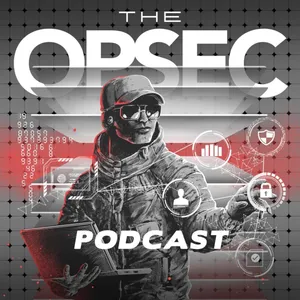
Free Daily Podcast Summary
The OPSEC Podcast: Privacy & Security for Life in the Digital Age: Daily Summaries Delivered
by Allen Pace
Privacy and security strategies for life in the digital age. Host Allen Pace exposes how surveillance capitalism extracts your data and delivers actionable defense tactics for privacy-conscious individuals. The OPSEC Podcast covers digital privacy, data protection, and the hidden architectures of surveillance that track your every move. From understanding what Big Tech collects to building layered defenses, secure communications, and reclaiming digital autonomy, each episode provides practical guidance you can implement immediately. Learn to audit your exposure, protect your personal information, and build a life that resists extraction. Operational security methodologies adapted for civilian life against corporate surveillance, data brokers, and privacy violations. Your privacy & your security is your responsibility.
Latest Episodes
The most recent episodes — sign up to get AI-powered summaries of each one.
- 1 weeks ago23 min
EP 32 - Sugarbaby Supermarket: How Cash Apps Are Enabling Predators to Exploit Children
**Summary:** Sugar Dating: When an adult pays a child, in a groomed arrangement, framed as friendly. It covers how common paid exploitation is, why the child does not see a predator, and what to watch for when the signs invert.---**Key Points:**- **Opposite money flow, opposite warning signs.** Sextortion produces a frightened child. A paid arrangement often produces one who seems to be thriving.- **1 in 4 young people received an offer of something of value for a sexual interaction before 18**, and about 1 in 7 went through with it. 23% were 12 or younger the first time.- **It often starts with nothing explicit.** 1 in 5 were asked for ordinary images, feet or an outfit, for something of value. That is the front door and it does not look like one.- **Payment is not always money.** A third were paid in followers and invitations, others in clothes or gaming currency. No bank statement shows that.- **Children do not report it, and each reason was planted.** They believe they consented because they were given that belief, they fear trouble that does not exist, and some protect the money as income.- **The payment rail is what let it last seven months.** Repeated small instant transfers, no third adult in the loop, no paper trail reaching a parent. A parent-opened teen account would have shown all 36 transactions.- **When you hand a child a device, you hand the entire internet direct access to them.** An adult being able to pay a child privately, instantly and repeatedly did not exist twenty years ago, and it shipped because removing friction grows a payments business.---**Do This Week:**1. Change what you watch for: money and goods coming in, not distress.2. Say the friendly version out loud: an adult offering money, gifts or followers for pictures is committing a crime even when kind about it, and the child is never in trouble.3. Audit payment apps together and count the accounts, not just the apps. A second account is the find.4. Use supervised teen accounts, then open them and read the transactions.5. If it has happened, report it, and tell the child plainly that they are the victim.---**If It Has Already Happened:**- FBI: 1-800-CALL-FBI or https://tips.fbi.gov- NCMEC CyberTipline: https://report.cybertip.org- NCMEC Take It Down, free removal without sending the image to anyone: https://takeitdown.ncmec.org- 988 Suicide and Crisis Lifeline, 24/7 by call or text: https://988lifeline.org---**Sources:**- Thorn, Be Your Kid's Safety Net: https://parents.thorn.org/- DOJ, Citizen's Guide to Federal Law on Child Pornography: https://www.justice.gov/criminal/criminal-ceos/citizens-guide-us-federal-law-child-pornography---**Be the Safety Net:**Not the authority figure who makes a child afraid to speak up. We all make mistakes and we are all open to deception, and there is no shame in that. Be the leader they can rely on. Be your family's safety net.---**Connect:**Every link is at OPSECPodcast.com. No sponsors and no paid ads, so if this one mattered, send it to a parent.Join The Covert Collective for structured guidance and community: Covert-Collective.ccYour privacy and your security is your responsibility.
- 3 weeks ago16 min
The Lone Wolf Trap: Building Privacy Community, Security Networks, and Collective Defense
**Summary:** The episode opens on a familiar figure: somebody who taught themselves privacy over years, alone, with nobody to ask, who paid for every lesson twice. The privacy world sells a comfortable lie, that if you are smart and disciplined enough you can do all of this by yourself. It is a trap. It burns you out, warps your judgment, strands you when you get stuck, and hands you to the surveillance economy you are trying to escape, because an isolated person is easier to profile and pressure. Digital privacy is a team sport. Allen then announces the Covert Collective, and explains why it funds this show instead of sponsors.---**Key Points:****The lone wolf mentality feels like strength and is a weakness.** Taking security seriously means reducing who you rely on, and that runs easily to "rely on nobody." That endpoint is the trap.**Four ways going it alone fails.** You burn out, you calibrate wrong with no reality check, you stall on one problem with nobody to ask, and you become an easier target. Isolation is what the surveillance economy wants from you.**Privacy is a team sport.** Your encrypted messenger is useless if your contact will not use it, and your locked-down life leaks the moment someone tags your location. The people around you are either part of your security or part of your exposure.**A community is a shared brain and your staying power.** Someone already solved your problem or read the breach report, and other people are why you keep going when it gets tedious.**Privacy is not a project you finish.** The setup you got right two years ago is not automatically right today.---**Announcing the Covert Collective:****What it is:** A structured, guided community for anyone who wants more than a podcast can give. The show hands you awareness. The Collective hands you a plan.**What you get, Standard, open now:** Full community access and discussions, points and levels that unlock coursework, the core curriculum (OPSEC Fundamentals, Tier 1 Foundations, Tier 2 Countermeasures), the OPSEC Toolkit, the External Learning Resources library, and step-by-step audits and checklists at your own pace.**Premium, opening fall 2027:** Tier 3 Advanced Tradecraft, Advanced Technical Guides, Operational Field Guides, and monthly webinars with live Q&A and guest speakers.**Material that keeps pace:** The coursework is living, not a box set. Tiers are revised as platforms change settings, tools get bought or broken, and new laws and tracking methods arrive. Modules are added, walkthroughs corrected, and the Toolkit and library grow as tools are tested and retired.**What you build:** Your own threat model, an audit that shrinks your exposure, secured devices and communications, and compartmentalized identities you can maintain for life.**The mission:** The same as the show, with a floor under it. Take the operational security and privacy tradecraft that used to live inside intelligence and military circles and put it in everyday hands, with the structure and people to make it stick.**Who it is for:** Anyone done listening and ready to build, who does not want to build alone. No technical background required.**Why it funds the show:** The Collective is the primary way this podcast is funded, chosen on purpose. Ads would change the show's incentives, softening coverage of the data economy it exists to scrutinize. Member support keeps it ad-free and accountable only to the people it serves.---**Call To Action:**If you are ready to stop doing privacy alone, join the Covert Collective. You get the structure and community you cannot build by yourself, and you keep this show independent for everyone not ready to join yet. Find the link and everything else at OPSECPodcast.com.Your privacy and your security is your responsibility.
- Oct 26, 20263 min
Introducing The Covert Collective: Surveillance Capitalism Defense and Personal Privacy Tradecraft
Welcome To The Covert Collective (Covert-Collective.cc).We created this community to guide people through the blob of information related to personal privacy and security. The community content focuses on digital privacy tradecraft, operational security (OPSEC), and surveillance capitalism defense strategies for life in the digital age. The Covert Collective turns intelligence and military tradecraft into plain steps anyone can implement. Built for privacy-conscious individuals serious about resisting surveillance capitalism and sharpening personal privacy tradecraft.Learn more at: Covert-Collective.cc
- Oct 19, 202632 min
Navigating the Data Swamp: A Political Insider Explains Voter Privacy and Campaign Vulnerabilities
In this episode, I sit down with a political insider who has spent over 20 years working elections at the state and national level, plus consulting with governments and NGOs on public policy. He's been inside the machine that feeds the data swamp, offering answers to the voter privacy failures and campaign vulnerabilities I can only gesture at from the outside.
- Oct 5, 202620 min
The Voter File: Voter Data Brokers, Political Profiling, and Protecting Your Privacy
# The Voter File: Voter Data Brokers, Political Profiling, and Protecting Your PrivacyYou registered to vote. In nearly every state, that created a public record that voter data brokers can buy, enrich, and resell. This episode follows your registration from the county clerk into a private industry that fuses it with everything else known about you, builds political profiles that score your beliefs and your money, and sells the result. Roughly two hundred million registered Americans are in these files, and none of them consented to any of it. This is not about parties or who you vote for. It is about your data.## In This Episode- What your state voter file actually contains, and the one thing it never contains: who you voted for.- Why the public half of the record is already enough to find you, address you by name, and reach you at home.- How a public record becomes a product through four layers: acquisition, standardization, enrichment, and modeling.- Enrichment: how commercial consumer data gets bolted on, with an industry claim of up to 1,800 fields per person.- Modeling: how a stranger's algorithm assigns you scores and predicted positions, then sells the guess as a fact about you.- What actually gets sold: universes, contact lists, scores, survey panels, and match services.- Why this is not a one-side story, and why the newest buyer, government agencies purchasing through commercial brokers, changes the threat.- Why the file leaks at the vendor layer, not the state, including the contractor that left modeled profiles on roughly 198 million Americans open on the internet.- Why the "non-commercial use only" restriction is an attestation, not a control.## Key Takeaways- You cannot fully opt out of the voter file. Anyone who says otherwise is selling something. But you can shrink what makes it dangerous.- The real threat is not that you are a target. It is that your enriched profile lands in an investigation or a database that has nothing to do with you.- The one genuine opt-out is an Address Confidentiality Program (Safe at Home), and most people are not eligible. Check anyway.- The part you can actually fight is the enrichment layer. Break the commercial data bolted onto your record and a rich dossier becomes a thin one.- Stop feeding the same address into everything else, so your registration becomes a dead end instead of a master key.## Do This Week1. Look up your state's Address Confidentiality Program through your Secretary of State and find out if you qualify. If you do, enroll.2. Start or restart your data-broker removal to attack the enrichment layer.3. Separate your registration address from your car, deliveries, accounts, and loyalty cards where you legally can.## Resources- U.S. Election Assistance Commission, voter lists, confidentiality, and list maintenance: https://www.eac.gov/election-officials/voter-lists-registration-confidentiality-and-voter-list-maintenance- NNEDV Safety Net, Voting and Survivor Privacy: https://www.techsafety.org/voter-registration-privacy- Your state Secretary of State website: search "[your state] Address Confidentiality Program" or "Safe at Home."## ConnectSubscribe and follow wherever you listen, and find every link at OPSECPodcast.com. Sign up for the newsletter at OPSECPodcast.com for the latest tools and tradecraft.Remember: your privacy and your security is your responsibility.
- Sep 21, 202621 min
Ghost Signal: How AI Turned the Voices You Trust Into a Weapon
# Ghost Signal: How AI Turned the Voices You Trust Into a Weapon For your whole life, a familiar voice has been proof of identity. A few seconds of audio from a social media clip is now enough to clone the voice of someone you love, and many cloning tools ask for little more than a name and an email address. This episode breaks down how AI-powered social engineering attacks get built, the three plays aimed at everyday people, and the free, low-tech protocol that beats all of them. ## In This Episode - What actually changed: AI removed the skill barrier from impersonation, and why "look for the typos" is now dangerous advice. - The assembly line: reconnaissance, pretext, voice clone, stacked channels, and manufactured urgency. - The three plays that do most of the damage: the family emergency call, the fake bank fraud call that asks for your code, and the message that knows your life. - How deepfake video is used to override a target's own suspicion. - Why the FBI now tells families to set up a secret word. - Why your family's public posts work as source material, and the military discipline of emissions control. ## Key Takeaways - A familiar voice or face is no longer proof of identity. Trust needs a protocol. - Every one of these attacks depends on urgency and on keeping you inside the attacker's conversation. Step outside it and the attack falls apart. - An AI can clone a voice from a video, but it cannot clone a word that was never recorded anywhere. - No bank, agency, or support line will call you and ask you to read back a code. If someone does, it is an attack. - A hardware security key cannot be talked out of you over the phone. - The people most likely to get the call are your parents and grandparents. Brief them with a specific rule, not a general warning. ## Do This Week 1. Sit down with your family in person and pick a safe word. The rule: no word, no action. 2. Agree on the callback rule: hang up and call back on a number already saved in your phone, or the number on the back of your card. 3. Walk your parents and grandparents through both rules, or listen to this episode with them. 4. Replace your personalized voicemail greeting with the default system greeting. 5. Set family social accounts to private, post trips after you get home, and ask whether you need social media at all. 6. Add a hardware security key to your primary email, password manager, and financial accounts. ## Resources - FBI warning on AI impersonation, with secret word guidance (December 2025): https://www.ic3.gov/PSA/2025/PSA251219 - FBI 2025 Internet Crime Report announcement: https://www.fbi.gov/news/press-releases/cryptocurrency-and-ai-scams-bilk-americans-of-billions - National Cybersecurity Alliance, why your family needs a safe word: https://www.staysafeonline.org/articles/why-your-family-and-coworkers-need-a-safe-word-in-the-age-of-ai - Consumer Reports, AI voice cloning safeguards assessment: https://innovation.consumerreports.org/new-report-do-these-6-ai-voice-cloning-companies-do-enough-to-prevent-misuse/ - Yubico hardware security keys: https://www.yubico.com/ - Report a scam to the FBI: https://www.ic3.gov/ - Report a scam to the FTC: https://reportfraud.ftc.gov/ ## Connect Subscribe and follow wherever you listen, and find every link at OPSECPodcast.com. Sign up for the newsletter at OPSECPodcast.com for the latest tools and tradecraft. We run no sponsors and no paid ads, so if this episode helped, share it with your friends and family. Remember: your privacy and your security is your responsibility.
- Sep 7, 202618 min
Know Your Enemy: The Border Phone Wipe and the Adversary We Actually Fight
Summary: Samuel Tunick triggered a GrapheneOS duress wipe on his Google Pixel during a warrantless but lawful CBP border search. He's now charged with destroying property to prevent lawful seizure. This episode rejects two easy narratives. First, that Tunick is a victim: he made a deliberate choice with foreseeable consequences, and agents operated within their authority. Second, that the privacy tool is the villain: GrapheneOS, like Signal, is legitimate infrastructure. Blaming encryption for occasionally protecting a bad actor is an old deflection. Key Points: Accountability, not victimhood - Tunick configured a feature designed to destroy data, knew what it did, and triggered it during an authorized search. That was a choice. The tool is never the strategy - A duress wipe defends against thieves, stalkers, or abusers. Triggered during a lawful search, the same feature becomes evidence destruction. Tools aren't the bad guys - Blaming the OS is the same trick: a tool that protects everyone sometimes protects a bad actor, therefore the tool is the threat. It's deflection. The fix they want removes protection from all of us. Law enforcement isn't the enemy - Treating the agent as a personal adversary leads to emotional, losing decisions where the law is most stacked against you. The real enemy is warrantless mass collection - Ad bidstream, data brokers, Big Tech retention, and license plate reader dragnets like Flock collect on everyone with no warrant because it's built into commerce. The real risk is getting swept into someone else's investigation - Geofence warrants order providers to hand over every device in an area during a window, sweeping up bystanders. Aim your OPSEC at the machine, not the badge and not your tools - Keep the tools, respect them, and deny the collection machine your data in daily life. Fight the system where it's vulnerable: local contracts, the courts, and your platform choices. Not Legal Advice: This episode discusses criminal cases and legal risk for general education. It is not legal advice, and Allen is not a lawyer. If you're ever in a situation like this, consult a licensed attorney.** Sources: - [US accuses American of wiping his phone with a duress password during a border search (TechCrunch)](https://techcrunch.com/2026/07/24/us-accuses-american-of-allegedly-wiping-his-phone-using-a-duress-password-during-border-search/) - [A man gave border agents his passcode. It wiped everything. Now he faces federal charges (Decrypt)](https://decrypt.co/374394/border-agents-phone-duress-passcode-grapheneos) - [Google tracked his bike ride past a burglarized home and made him a suspect (NBC News)](https://www.nbcnews.com/news/us-news/google-tracked-his-bike-ride-past-burglarized-home-made-him-n1151761) - [Google changes Location History to limit geofence warrants (The Register)](https://www.theregister.com/2023/12/15/google_location_history_geofence/) - [Get the Flock Out campaign (ACLU)](https://www.aclu.org/campaigns-initiatives/get-the-flock-out) - [Why some cities are ditching their Flock license plate readers (NPR)](https://www.npr.org/2026/02/17/nx-s1-5612825/flock-contracts-canceled-immigration-survillance-concerns) - [Digital privacy at the US border (EFF)](https://www.eff.org/issues/border-searches) Call To Action: Two things this week. First, examine the tools you rely on. For each one, ask not just what it protects you from, but when could it become a liability. Second, aim at the machine. Pick one source of ambient collection and cut it: reset your mobile ad ID, add DNS-level blocking, or find out whether your town runs Flock cameras and show up to the contract vote. For more visit OPSECPodcast.com. Your privacy and your security is your responsibility.
- Aug 24, 202619 min
Follow the Money: The Complete Surveillance Picture Built by Your Payment History
Summary: Every financial transaction creates a permanent record: at the bank, the card network, the payment app, the data broker who purchased it, and the government reporting infrastructure mandated by the Bank Secrecy Act. This episode maps the complete architecture of financial surveillance—from 78,000 government reports filed daily, to Mastercard's transaction data sales, to Plaid's middleware granting hundreds of apps access to your full banking history.---What Your Financial Data Reveals:- Health conditions (pharmacy patterns, clinic visits)- Political activity (donations, event venues)- Religious practice (charitable giving, places of worship)- Relationship status (dining, travel, shared accounts)- Financial stress (overdrafts, payday lenders, credit utilization)- Daily schedule and location patterns- Household composition---Key Takeaways:- The Bank Secrecy Act generates massive surveillance as a compliance byproduct—most unrelated to actual crime- Structuring laws mean using cash incorrectly can itself be a federal crime, regardless of intent- Card networks (Mastercard, Visa) sell transaction data commercially; "anonymization" claims are disputed- Plaid aggregates your banking history and shares it with every connected app—most users don't know what they've authorized- Your financial profile is more detailed than your own memory of spending, accessible to multiple commercial and government actors---Key Actions:1. Audit Plaid connections: Visit plaid.com/connections to see every app with bank access. Revoke anything unused or unrecognized.2. Get virtual cards: Use Privacy.com to generate merchant-specific card numbers with spending limits. Free tier available.3. Read your bank's privacy notice: Exercise your legal right to opt out of third-party data sharing. Banks must offer it; few customers do.4. Use cash strategically: For medical, personal, and sensitive purchases where you don't want a commercial record.5. Don't structure deposits: Breaking up cash deposits below $10,000 to avoid Currency Transaction Reports is a federal crime—regardless of whether any underlying crime exists.---Resources:- FinCEN: Bank Secrecy Act Overview- FinCEN: Currency Transaction Report FAQ- Privacy.com: Virtual Cards- Plaid: Manage Your Connections- PIRG: Mastercard Data Sales Practices- Cato Institute: BSA Reporting Volume FY2025---Call To Action:This week, go to plaid.com/connections and revoke every app you don't actively use. It takes five minutes, and you'll almost certainly find connections you forgot you created.Then read your bank's annual privacy notice and opt out of third-party data sharing. It's required to be offered. Exercise it.Your financial record is a behavioral profile. The question is who has access to it.Head to OPSECPodcast.com for everything else.Your privacy and your security is your responsibility.
Get The OPSEC Podcast: Privacy & Security for Life in the Digital Age summaries in your inbox
Free AI-powered daily recaps. Key takeaways, quotes, and mentions — in a 5-minute read.
Get Free Summaries →Free forever for up to 3 podcasts. No credit card required.
You Might Also Like
Listeners also like.

The Low Down
A podcast about hacking.

Security Now (Audio)
A weekly deep dive into cybersecurity news, hacking trends, and digital defense strategies for professionals and individuals.

Taylor Lorenz’s Power User
Examines how technology and internet culture reshape society, fame, and free speech through weekly deep dives and policy discussions.
CISO Series Podcast
Security professionals and vendors share insights on improving collaboration to strengthen cybersecurity.

Security Now (Video)
A weekly deep dive into cybersecurity news, threats, and defenses with Steve Gibson and Leo Laporte.
Defense in Depth
A weekly discussion on contentious cybersecurity topics, guided by community insights and expert analysis.

Random Access Memories
Conversations with tech professionals reveal the personal stories behind their careers in cybersecurity, AI, startups, and leadership.
Situational Awareness Tactics
Examines lifestyle and environmental factors linked to early-onset cancer and ways to reduce personal risk through prevention.

Plaintext with Rich
Explains cybersecurity topics in simple terms to help listeners stay safer online.

The Lawfare Podcast
Discussions with experts on national security, law, and policy covering foreign policy, intelligence, cybersecurity, and governance.

Smashing Security
Weekly episodes explore cybercrime, hacking, privacy failures, and tech disasters with insight and humor.

Understandable Insights: Information to Intelligence with Sue Gordon
Sue Gordon & Eric Koepp
About The OPSEC Podcast: Privacy & Security for Life in the Digital Age
Privacy and security strategies for life in the digital age. Host Allen Pace exposes how surveillance capitalism extracts your data and delivers actionable defense tactics for privacy-conscious individuals. The OPSEC Podcast covers digital privacy, data protection, and the hidden architectures of surveillance that track your every move. From understanding what Big Tech collects to building layered defenses, secure communications, and reclaiming digital autonomy, each episode provides practical guidance you can implement immediately. Learn to audit your exposure, protect your personal information, and build a life that resists extraction. Operational security methodologies adapted for civilian life against corporate surveillance, data brokers, and privacy violations. Your privacy & your security is your responsibility.
Customized Recaps
AI-powered recaps with compact key takeaways, quotes, and insights.
Straight to Your Inbox
Get key takeaways from The OPSEC Podcast: Privacy & Security for Life in the Digital Age in a 5-minute read.
Save Hours Every Week
Stay current on your favorite podcasts without falling behind.
Frequently Asked Questions
What is Podzilla's The OPSEC Podcast: Privacy & Security for Life in the Digital Age daily summary?
It's a free AI-powered email that summarizes new episodes of The OPSEC Podcast: Privacy & Security for Life in the Digital Age as soon as they're published. You get the key takeaways, notable quotes, and links & mentions — all in a quick read.
How does the The OPSEC Podcast: Privacy & Security for Life in the Digital Age podcast summary work?
When a new episode drops, our AI transcribes and analyzes it, then generates a personalized summary tailored to your interests and profession. It's delivered to your inbox every morning.
Is this an official The OPSEC Podcast: Privacy & Security for Life in the Digital Age product?
No. Podzilla is an independent service that summarizes publicly available podcast content. We're not affiliated with or endorsed by Allen Pace.
Can I get summaries of other podcasts too?
Absolutely! The free plan covers up to 3 podcasts, any in the catalog. Basic raises that to 15, Pro to 40 and Max to 100. Browse our full catalog at /podcasts.
How often does The OPSEC Podcast: Privacy & Security for Life in the Digital Age release new episodes?
The OPSEC Podcast: Privacy & Security for Life in the Digital Age publishes biweekly. Our AI generates a summary within hours of each new episode.
What topics does The OPSEC Podcast: Privacy & Security for Life in the Digital Age cover?
The OPSEC Podcast: Privacy & Security for Life in the Digital Age covers topics including Technology, Education, How To, Self-Improvement. Our AI identifies the specific themes in each episode and highlights what matters most to you.
Start getting The OPSEC Podcast: Privacy & Security for Life in the Digital Age summaries tomorrow morning.
Free forever for up to 3 podcasts. No credit card required.
Free forever for up to 3 podcasts. No credit card required.