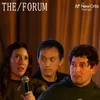
Three artists reflect on their experiences working as assistants to established artists. Ian Cheng, Darren Bader, and Jamian Juliano-Villani discuss apprenticeship, authorship, studio culture, and the lessons—both practical and personal—they carried into their own practices.00:00 — Introduction02:36 — Becoming Assistants04:10 — The Studio as Education07:37 — Learning the Craft09:13 — Building the Impossible10:54 — Authorship14:54 — Power & Studio Culture18:37 — Learning Through Failure22:50 — Good & Bad Habits30:23 — Assistants as Teachers34:30 — Knowing When to Leave40:12 — Assistants & Authorship42:03 — Learning the Business45:28 — Art & Precarity47:42 — Why Do It?00:00:00 Ajay Kurian: Next to me here is Ian Chang. He’s an artist known for his live simulations, works that unfold over time using game engines and AI. His work has been shown at the Serpentine Galleries, MoMA PS1, Gladstone Gallery, and earlier in his career, he worked with Pierre Huyghe, which I think informs, uh, some of the ways that Ian had started to think about his work. But I’m curious to see what that relationship was. Pierre is an internationally renowned artist and has worked in massive ecosystems, taking over entire museum spaces and building things from bacteria to, you know, all sorts of crazy stuff. Um, going down the line. Next is Darren Bader. Darren is an artist whose work spans objects, language, and instructions, often questioning what an artwork even is or who it belongs to. He’s exhibited at the Whitney Museum of American Art, the Palais de Tokyo, and the Dallas Museum of Art. Uh, sorry, the Museum of Modern Art in Dallas and his practice consistently unsettles ideas of authorship, making him especially interesting voice here. And he worked for the artist Urs Fischer. Um, you mentioned another artist you worked.00:01:11 Darren Bader: For, Donald Bachelor, whom, um, the late Donald Bachelor whose estate I work for now, but he’s um. Well, yeah.00:01:19 Ajay Kurian: We’ll get there.00:01:19 Darren Bader: I did, yes, I did my time with two artists, um, very, very educational.00:01:25 Ajay Kurian: And last but not least, Jamie and Juliano-villani is a painter whose work moves quickly between images, cartoons, art history, and the internet, held together by a sharp, instinctive sense of composition. She’s shown with Gagosian, Jeffrey Deitch, and at the Metropolitan Opera House. And earlier in her career she worked for Dana Schutz as well as the painter Eric Parker. So, uh, that’s actually how me and Jamie met Eric. Studio and Banks’ studio were right next to each other, and we were both assisting these artists. And yeah, Damien was just like, yeah, she, she was just in a little room and we were all just working away. So everybody give it up for all these, all the artists here. All right. Who wants to go first? No. Um, what I’m curious about is, uh, in the studios that I mentioned that you all worked for, were those studios that you sought out yourself or was it just a job? Yeah.00:02:36 Ian Cheng: Um, yeah, I was in grad school at the time at Columbia, and I was, um, had a terrible time there. I didn’t know who I was or what I was doing. Um, I really just sat in my studio checking my email, getting no email and just, uh, just looking at the wall, waiting for the next crit to happen with nothing to say. And at the end of those two years of grad school, um, the one positive relationship I had was with, uh, Liam Gillick, who was like a kind of visiting professor. And I was like, what am I gonna do with my life? I’m gonna, I’m gonna apply as a UX designer to Google New York because I just need some totally no response rejection. And I thought, what else could I do? And I said, Liam, you know, can you hook me up with PR wigs, email? Like, I’d love to. I’ll be his dream printer. I literally pitched myself, I’ll be his dream. I can just like make anything. Um, and Liam was like, I’ll get back to you. And he gets back to me. He’s like, he used the words Pierre offers you his email, which was kind of interesting way to not like do the CC connection, but just to like, just take it from here, kid. Uh, email Pierre like pitched him like, you know, had a, had a quick meeting like, oh, I didn’t have no, had no credentials. Um, and simultaneously I thought, oh, fuck, like I need another job too. So I went to like Paul Chan’s website. Wow. Um, national philistine and just like emailed him like, hey, hi. I think like we have a lot in common. Like, can we meet? And so the next week, I met with both of them. And suddenly I had two artists kind of assistant jobs. Oh, wow. And yeah, it really kind of really began their shoot.00:04:07 Jamian Juliano-Villani : Really good taste too, you know?00:04:09 Ajay Kurian: Yeah. Those are great artists.00:04:10 Ian Cheng: Well, how’s it go with people that you respect? I just thought like, oh, grad school is so bad. I
Podzilla Summary coming soon
Sign up to get notified when the full AI-powered summary is ready.
Free forever for up to 3 podcasts. No credit card required.
Listen to This Episode

Get summaries like this every morning.
Free AI-powered recaps of The NewCrits Podcast and your other favorite podcasts, delivered to your inbox.
Free forever for up to 3 podcasts. No credit card required.