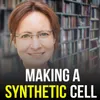
Chemists at the University of Minnesota, led by Kate Adamala, recently built a synthetic cell that eats, grows, and divides; purely by putting together molecules in the laboratory. Their creation, called SpudCell, can only divide for five generations. What will it take to make it grow for longer? And why bother making a synthetic cell in the first place?Subscribe to Asimov Press: https://press.asimov.comChapters: 00:00 SpudCell is not alive05:16 How SpudCell was made13:14 How to make a continuously replicating cell29:48 Finding new mechanisms for cell division40:38 What is the point of SpudCell?54:51 Mirror life, and whether SpudCell uniquely enables it1:14:38 Biotic, China, and 2050
Podzilla Summary coming soon
Sign up to get notified when the full AI-powered summary is ready.
Free forever for up to 3 podcasts. No credit card required.
Listen to This Episode



Get summaries like this every morning.
Free AI-powered recaps of The New Biology and your other favorite podcasts, delivered to your inbox.
Free forever for up to 3 podcasts. No credit card required.