Free Daily Podcast Summary
The Natural Curiosity Project: Daily Summaries Delivered
by Dr. Steven Shepard
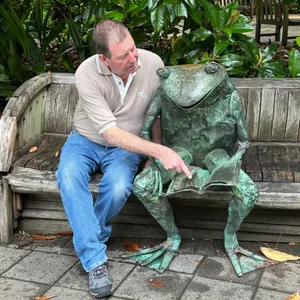
I photograph, record, and write about the natural world. I see, I listen, I write. I fundamentally believe that curiosity can save the world—so I publish stories to make people curious. Ultimately, curiosity leads to discovery, discovery leads to knowledge, knowledge leads to insight, and insight leads to understanding.
Latest Episodes
The most recent episodes — sign up to get AI-powered summaries of each one.
- 1 weeks ago20 min
Episode 332-Jurassic AI
The world is currently gaga over AI—artificial intelligence. It is a remarkable technology, with the potential to create remarkable opportunities in many fields in the coming years. It is, however, enormously powerful, and in my opinion, requires rigorous oversight and strong regulation. As I was thinking about the topic—something I find myself doing a lot—I began to think about the movie Jurassic Park, especially three quotes uttered by Ian Malcolm, the Chaos Theorist played by the inimitable Jeff Goldblum. I hope this episode makes you think. The quotes from Jurassic Park are used exclusively for education purposes and generate no revenue for the producer of this program. Jurassic Park is owned exclusively by the estate of Michael Crichton and by Universal Pictures and Amblin Entertainment.
- 1 weeks ago16 min
Episode 331-Talk Dirty to Me Part 2
This is part two of my series on soil ecosystem health. In this episode I’m in the Mad River Valley in central Vermont with ecologist Curt Lindberg, listening to the sounds of the soil in areas with and without invasive species present. The results are fascinating.
- 2 weeks ago9 min
Episode 330-A Golden Story
In 1942, Simon & Schuster, in partnership with Western Publishing, released a new book series for kids. The initial print run of one-and-a-half million books sold out in five months, including one of the initial twelve titles that became and continues to be the number one bestselling children’s book of all time in the United States. In this episode, we talk about that book series, and about the magic of books and reading.
- 3 weeks ago9 min
Episode 329-Musings on Bernd Heinrich
I just finished reading my 83rd book of the year, Bernd Heinrich’s “The Common Uncommon.” Bernd is the author of many books about the natural world, including Mind of the Raven, Winter World, The Geese at Beaver Bog, A Year in the Maine Woods, and many, many others. Oh—he’s also a world record holder for ultra-marathon running: In 1983, he set an American record for a 24-hour run of 156 miles, 1388 yards in a race in Maine. A year later, he set an American record for running 100 miles in a little over 12 hours. And a year after that, he set the American track record of 7:00:12 for running 100 kilometers, in the process becoming the only American man to hold both the road and track American records for the same event. In fact, he wrote a book about running called Why We Run, which is fascinating. “The Common Uncommon,” the book I just finished, is all about curiosity, and it takes place in the woods surrounding his cabin in Maine, where much of his field research takes place. But as I was reading Bernd Heinrich’s book, I was also re-reading Karen Bakker’s book, “The Sounds of Life: How Digital Technology is Bringing Us Closer to the Worlds of Animals and Plants.” The two books together hit me hard.
- Jul 17, 202626 min
Episode 328-Ages of the Anthropocene
A lot has been written about the ages of human existence, beginning with the Stone and Iron and Bronze Ages, then going all the way through to the Information Age. But I believe that there are actually more identifiable periods that aren’t talked about—13 of them in fact. In this episode, I’m going to talk about them and why I think they’re important. I’m also going to discuss how they relate to one another and what their contributions and liabilities have been.
- Jul 10, 202611 min
Episode 327-Talk Dirty to Me, Part 1
It’s all around us. It lies beneath our feet, it gets embedded in our clothing and skin, and the air is filled with it. It makes us sneeze. Great clouds of the stuff are lifted from the African Sahara by harmattans and sciroccos and carried high into the atmosphere, where great westward-flowing aerial rivers carry it across the Atlantic to South America, where it falls like rain and feeds the equatorial rainforest. Weird, right? I’m talking, of course, about soil, or as most of us call it, dirt. This is the first part of a two-part series on soil and what lives in it. Enjoy.
- Jul 8, 202610 min
Episode 326-Thoughts on Log From the Sea of Cortez
In 1940, author John Steinbeck and his good friend and marine biologist Ed Ricketts set off on a six-week collecting expedition in the Sea of Cortez. The book that resulted from that journey isn't well known, but it is wonderful. Here I offer a few thoughts about the book and their journey.
- Jul 3, 202610 min
Episode 325-If You Want Something Different
Thoughts on America’s future on her 250th birthday.
Get The Natural Curiosity Project summaries in your inbox
Free AI-powered daily recaps. Key takeaways, quotes, and mentions — in a 5-minute read.
Get Free Summaries →Free forever for up to 3 podcasts. No credit card required.
You Might Also Like
Listeners also like.
Inquiring Minds
Explores the intersection of science and society through critical thinking and in-depth analysis.
Nature Podcast
Covers breakthrough research from Nature journal across all scientific fields, with insights from scientists and science journalists.
Curious Kids Every Day: A Daily Educational Podcast
A daily podcast for kids and parents that answers one curious question with a slow, thoughtful, and respectful approach to learning.
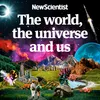
The World, the Universe and Us
Explores big scientific questions about life, consciousness, climate, and the cosmos with expert scientists and New Scientist journalists.
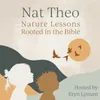
Nat Theo Nature Lessons Rooted in the Bible
Children learn biblical lessons by exploring nature and discovering spiritual truths in the natural world.
Outside/In
Explores connections between people and the natural world through stories on science, policy, and culture.
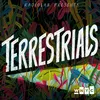
Terrestrials
A nature podcast exploring surprising animal and plant behaviors through immersive storytelling and original songs.
The Wild with Chris Morgan
Explores wildlife and wild places through stories of animals adapting to survive and the people protecting them.
The Life Scientific
A scientist discusses their research, inspirations, and career with physicist Jim Al-Khalili.

Wild Edible World: A Foraging Podcast
Explores wild edible plants and mushrooms, sharing global foraging knowledge and ways to identify and use them safely.
MeatEater Conservation
A podcast about outdoor news and conservation issues, featuring interviews with experts and hunters.
Makes Sense - with Dr. JC Doornick
Explores everyday mysteries and thought-provoking questions about human behavior and reality.
About The Natural Curiosity Project
I photograph, record, and write about the natural world. I see, I listen, I write. I fundamentally believe that curiosity can save the world—so I publish stories to make people curious. Ultimately, curiosity leads to discovery, discovery leads to knowledge, knowledge leads to insight, and insight leads to understanding.
Customized Recaps
AI-powered recaps with compact key takeaways, quotes, and insights.
Straight to Your Inbox
Get key takeaways from The Natural Curiosity Project in a 5-minute read.
Save Hours Every Week
Stay current on your favorite podcasts without falling behind.
Frequently Asked Questions
What is Podzilla's The Natural Curiosity Project daily summary?
It's a free AI-powered email that summarizes new episodes of The Natural Curiosity Project as soon as they're published. You get the key takeaways, notable quotes, and links & mentions — all in a quick read.
How does the The Natural Curiosity Project podcast summary work?
When a new episode drops, our AI transcribes and analyzes it, then generates a personalized summary tailored to your interests and profession. It's delivered to your inbox every morning.
Is this an official The Natural Curiosity Project product?
No. Podzilla is an independent service that summarizes publicly available podcast content. We're not affiliated with or endorsed by Dr. Steven Shepard.
Can I get summaries of other podcasts too?
Absolutely! The free plan covers up to 3 podcasts. Upgrade to Pro for 15, or Premium for 50. Browse our full catalog at /podcasts.
How often does The Natural Curiosity Project release new episodes?
The Natural Curiosity Project publishes weekly. Our AI generates a summary within hours of each new episode.
What topics does The Natural Curiosity Project cover?
The Natural Curiosity Project covers topics including Education. Our AI identifies the specific themes in each episode and highlights what matters most to you.
Start getting The Natural Curiosity Project summaries tomorrow morning.
Free forever for up to 3 podcasts. No credit card required.
Free forever for up to 3 podcasts. No credit card required.