Free Daily Podcast Summary
The Military Sherpa Leadership Podcast: Daily Summaries Delivered
by Mark Tilsher
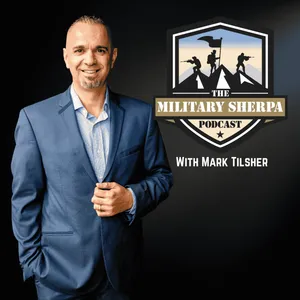
Join The Military Sherpa, Mark Tilsher, on a leadership journey unlike any other. With years of military experience and top-notch leadership tools, Mark delivers practical and innovative strategies to help you lead your team to new heights. Discover how to cultivate a high-performing culture with episodes focused on personal growth, team building, and leadership development. From the battlefield to the boardroom, Mark's unique perspective will help you unlock the full potential of your team and achieve your goals. Don't miss a single episode of The Military Sherpa Leadership Podcast - subscribe today!
Latest Episodes
The most recent episodes — sign up to get AI-powered summaries of each one.
- 3 days ago12 min
204. The Sherpa Code Is Finished. The Bigger Work Begins.
A leadership principle can sound right and still leave you wondering what to do Monday morning. Discover the next step toward clearer action and more reliable leadership outcomes. In the closing episode of the Sherpa Code series, Mark shares how an internal teaching tool became twelve principles and a bonus, what the process revealed about scaling leadership, and why the next chapter will gather and pressure-test principles from every profession.
- 1 weeks ago14 min
203. Sherpa Code Bonus: Never Miss An Opportunity To Tell Someone They've Done a Good Job
If people hear from you only when something goes wrong, what is your silence teaching them? Learn to recognize dependable work and genuine progress so people know their contribution matters and you remain invested in their growth. Through bowling with his kids, learning Jiu-Jitsu from Rener and Eve, and watching his children thank Disney cast members, Mark explores the Sherpa Code bonus principle: never miss an opportunity to tell someone they’ve done a good job.
- 2 weeks ago17 min
202. Sherpa Code Principle 12: When in Doubt, Tie Goes to the Climber
Before you drop the hammer on someone who failed, there is one question every leader should be forced to answer:Did you do your job?In Episode 201, Mark unpacks Sherpa Code Principle #12—When in Doubt, Tie Goes to the Climber—through the Chief whose decision changed the trajectory of Mark’s career. This isn't an argument against accountability. It's an argument for leaders weighing their own failures before using authority against someone else's.
- 3 weeks ago17 min
201. Sherpa Code Principle 11: Accountability Protects the Team & Preserves the Mission
When leaders avoid accountability, the consequences don't disappear—they get handed to somebody else.Principle #11 of the Sherpa Code challenges us to see accountability differently: not as the moment we stop fighting for someone, but as one of the ways we fight for them. Training, support, and challenge give a struggling climber a legitimate opportunity to change while protecting everyone else from carrying their burden indefinitely. Because eventually every leader has to answer a harder question than, “What do I do with this person?”Who is paying for my avoidance?
- Oct 26, 202621 min
200. The Leader Lottery: Why Leadership Must Become Doctrine
We were taught that leaders aren't born—they're made. But what if we've been ignoring just how much natural talent, personality, and leadership lineage determine who becomes effective—and who pays the price while they figure it out?After 200 episodes and years spent teaching thousands of leaders, I've come to a different conclusion: good leadership shouldn't depend on winning the leader lottery. It's time to move beyond collecting leadership tools and start building something underneath them: principles, doctrine, and enough reps to make reliable leadership possible wherever you have influence.
- Oct 19, 202625 min
199. Sherpa Code Principle 10: Fight for Every Climber - Difficult Climbers Make Stronger Sherpas
Difficult people are easy to write off—especially when you're already doing half their job.Principle #10 of the Sherpa Code challenges leaders to fight for every climber without lowering the standard, threatening the team, or pretending everyone will be redeemed. Learn how to diagnose what a struggling person actually needs, apply training, support, and challenge, and use your hardest leadership problems to become a stronger Sherpa.Because your easiest people may make leadership enjoyable. Your difficult people reveal whether you can actually lead.
- Oct 12, 202616 min
198. Sherpa Code Principle 9: Never Let Anyone Threaten the Climb
You see the problem. Your team sees the problem. Everyone is waiting to see whether you'll do something about it.In Principle #9 of the Sherpa Code series, Never Let Anyone Threaten the Climb, Mark Tilsher challenges one of the easiest leadership traps to justify: inaction.Threats to the climb aren't always dramatic. Sometimes it's one person dominating every meeting. Sometimes it's a broken process, an unresolved conflict, or a standard everyone quietly stopped enforcing. Sometimes the threat is us.You don't have to solve every problem today. But once you know something is hurting the mission, morale, relationships, or performance of your team, leadership requires movement.What is your team paying for because you haven't taken action?
- Oct 5, 202619 min
197. Sherpa Code Principle 8: Feedback Is a Gift — And a Test
Your people are always learning whether it is safe—or worth it—to tell you the truth.In Principle #8 of the Sherpa Code series, Feedback Is a Gift — And a Test, Mark Tilsher tackles the uncomfortable side of feedback: leaders often say they want it while unknowingly training people to stop giving it.Every time someone brings you difficult feedback, they spend relational capital. What happens next matters. Defend yourself. Justify your behavior. Return fire. Rush to solve the problem. Each response can teach the same lesson: Don't do that again.This episode explores four common ways good leaders stifle feedback, why approachability and engagement matter to performance, and one simple question you can use this week to find out what your team may not be telling you.The goal isn't merely to get honest feedback.It's to respond in a way that maximizes the potential they'll give it to you again.
About The Military Sherpa Leadership Podcast
Join The Military Sherpa, Mark Tilsher, on a leadership journey unlike any other. With years of military experience and top-notch leadership tools, Mark delivers practical and innovative strategies to help you lead your team to new heights. Discover how to cultivate a high-performing culture with episodes focused on personal growth, team building, and leadership development. From the battlefield to the boardroom, Mark's unique perspective will help you unlock the full potential of your team and achieve your goals. Don't miss a single episode of The Military Sherpa Leadership Podcast - subscribe today!
Customized Recaps
AI-powered recaps with compact key takeaways, quotes, and insights.
Straight to Your Inbox
Get key takeaways from The Military Sherpa Leadership Podcast in a 5-minute read.
Save Hours Every Week
Stay current on your favorite podcasts without falling behind.
Frequently Asked Questions
What is Podzilla's The Military Sherpa Leadership Podcast daily summary?
It's a free AI-powered email that summarizes new episodes of The Military Sherpa Leadership Podcast as soon as they're published. You get the key takeaways, notable quotes, and links & mentions — all in a quick read.
How does the The Military Sherpa Leadership Podcast podcast summary work?
When a new episode drops, our AI transcribes and analyzes it, then generates a personalized summary tailored to your interests and profession. It's delivered to your inbox every morning.
Is this an official The Military Sherpa Leadership Podcast product?
No. Podzilla is an independent service that summarizes publicly available podcast content. We're not affiliated with or endorsed by Mark Tilsher.
Can I get summaries of other podcasts too?
Absolutely! The free plan covers up to 3 podcasts, any in the catalog. Basic raises that to 15, Pro to 40 and Max to 100. Browse our full catalog at /podcasts.
How often does The Military Sherpa Leadership Podcast release new episodes?
The Military Sherpa Leadership Podcast publishes weekly. Our AI generates a summary within hours of each new episode.
What topics does The Military Sherpa Leadership Podcast cover?
The Military Sherpa Leadership Podcast covers topics including Business, Government, Management. Our AI identifies the specific themes in each episode and highlights what matters most to you.
Start getting The Military Sherpa Leadership Podcast summaries tomorrow morning.
Free forever for up to 3 podcasts. No credit card required.
Free forever for up to 3 podcasts. No credit card required.