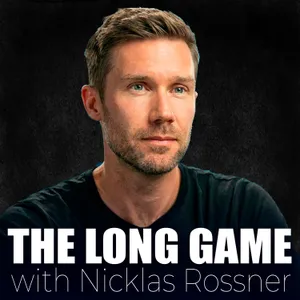
Free Daily Podcast Summary
The Long Game with Nicklas Rossner: Daily Summaries Delivered
by Nicklas Rossner
On this show I break down the science of running performance so you can run faster, stay injury-free, and train smarter.Each episode explores the latest research on topics like endurance training, VO₂ max, running economy, strength training for runners, recovery, nutrition, and injury prevention.You’ll learn how elite athletes actually train and how to apply the same science-based principles to your own running.New episodes every week
Latest Episodes
The most recent episodes — sign up to get AI-powered summaries of each one.
- Yesterday13 min
This Is What It Takes To Run a Sub-20 5K (Science Explained)
Are you stuck above the 20-minute mark on your 5K no matter how hard you train? Former pro triathlete Nicklas reveals what it really takes to break 20 minutes, what the latest science says, and the five things you need to master to get there.Nicklas is a former professional triathlete and national team athlete with degrees in Sports Science and Physiotherapy. He has spent years working with world-class athletes across multiple sports, finding the small percentages that give them an edge, and now breaks down the research so everyday runners can chase big milestones like the sub-20 5K.Find the #1 thing holding your running back: https://fastlanerunner.comIn this episode, he explains:■ The Strava Illusion: what 2.2 million race results reveal about how rare a sub-20 5K actually is — and why it's still within your reach■ The 7x Factor: the single training habit that made elite athletes seven times more likely to hit their performance goals■ The Frustrating Truth: what a brand-new systematic review concluded about the "best" 5K training plan — and what to do instead■ The Elite Blueprint: how world-class 5K runners actually structure their weeks, translated into a sample plan for everyday runners■ The Spring Effect: the training most runners skip that has been proven to make every stride more efficient■ The Shoe-Store Secret: what Nicklas learned about how running stores really fit shoes — and a free DIY test that gets you close to a lab resultREFERENCESSwanepoel CD et al. (2026). Sports (Basel), 14(9), 397.Haugen T et al. (2022). Sports Med Open, 8(1), 46.Llanos-Lagos C et al. (2024). Sports Med, 54(4), 895-932.Xiao Y et al. (2026). Int J Sports Med, 47(2), 81-94.Raysmith BP & Drew MK. (2016). J Sci Med Sport, 19(10), 778-83.
- 1 weeks ago12 min
I Trained 1,000 Runners. Here's The Worst Mistakes.
Are you running consistently but still stuck at the same pace? Former pro triathlete Nicklas reveals the five most common training mistakes holding runners back — and how to fix them so you can run faster for longer.Nicklas is a former professional triathlete and national team athlete with degrees in Sports Science and Physiotherapy. He has spent years working with world-class athletes across multiple sports, finding the small percentages that give them an edge, and now breaks down the research so everyday runners can train smarter and avoid the mistakes that lead to injury and burnout.Find the #1 thing holding your running back: https://fastlanerunner.comIn this episode, he explains:■ The Race-Duration Trap: why two runners training for the exact same race should train completely differently — and which one you are■ The Engine-Without-a-Frame Problem: the critical step most runners skip before heavy lifting and plyometrics, and why skipping it ends in injury■ The Two-Slider Rule: the word almost every runner uses wrong, and how getting it right changes the way you plan every week of training■ Outlier Syndrome: the real reason copying Kipchoge, the Ingebrigtsens or Almgren probably won't make you faster■ The "Suck for 4 Years" Principle: the strange advice from an old coach that took Nicklas from nobody to professional — while a more talented rival quit the sport
- 2 weeks ago11 min
It's Tough, But It Builds A Monster Aerobic Base
Are you training consistently but your aerobic fitness has stopped improving? Former pro triathlete Nicklas reveals the fastest way to build a monster aerobic engine, and why the training style most runners swear by is only covering a quarter of the job.Nicklas is a former professional triathlete and national team athlete with degrees in Sports Science and Physiotherapy. He has spent years working with world-class athletes across multiple sports, finding the small percentages that give them an edge, and now breaks down how the best endurance athletes actually build their engines so everyday runners can do the same.Find the #1 thing holding your running back: https://fastlanerunner.comIn this episode, he explains:■ The Garden Problem: Why your aerobic system has four layers, and why training only one of them means you eventually hit a wall no matter how hard you work.■ The 14-Day Rule: How professional athletes escape the 7-day week, so you can train every system without burning out or blowing up your schedule.■ The New Normal: The mindset pro athletes use to keep their bodies adapting year after year, until sessions that once felt impossible become just another Tuesday.■ The Silent Saboteur: The mistake that quietly cancels out your hard training, and why so many endurance athletes make it without realizing.■ The 2+1 Blueprint: The simple weekly structure the world's best athletes use to hit every system, plus a near-free trick to keep your legs fast.REFERENCESAngelidi AM et al. (2024). Endocr Rev, 45(5), 676–708.
- 2 weeks ago11 min
How Many Days A Week Should You Run? (Science Explained)
Are you trying to figure out the perfect number of days to run per week, but still feel stuck or keep getting injured? Former pro triathlete Nicklas reveals what the science actually says about training frequency, why running more days can mean fewer injuries, and exactly how to find the right number for your level.Nicklas is a former professional triathlete and national team athlete with degrees in Sports Science and Physiotherapy. He has spent years working with world-class athletes and more than 1,000 runners, finding the small percentages that give them an edge, and now breaks down the research so everyday runners can train smarter, not just harder.Find the #1 thing holding your running back: https://fastlanerunner.comIn this episode, he explains:■ The Recovery Gap: Why your fitness improves much faster than your tendons and joints, and why that mismatch is behind so many running injuries.■ The Grocery Bag Principle: Why spreading the same weekly volume across more days can actually be easier on your body than fewer, bigger sessions.■ The Elite Secret: What a study of almost 120,000 runners reveals about what the fastest runners really do more of, and it's not what most people think.■ The Frequency Tier List: How many days per week you should run based on how long you've been training, plus the one rule for adding a new day without getting hurt.■ The Double Day Protocol: Why elites like the Ingebrigtsens run twice a day, and the clear signs that tell you whether you're ready for it.REFERENCESMuniz-Pumares D et al. (2025). Sports Med, 55(4), 1023–1035.
- Mar 23, 20268 min
How To Breathe So Running Feels EASIER!
After 10 years of competing, studying sports science, and working with hundreds of athletes, I’ve realized something surprising:Most runners are breathing wrong.And it’s costing them speed, efficiency, and performance.In this episode, I break down 5 simple, science-backed breathing techniques you can apply immediately to run faster, feel more relaxed, and stay in control—even during hard efforts.We’ll cover:How to activate your body before a run so you don’t feel sluggish in the first 10 minutesWhy feeling out of breath is more about CO₂ than oxygen (and how to fix it instantly)How to use rhythmic breathing (3:2 pattern) to improve efficiency and reduce fatigueThe difference between chest vs diaphragmatic breathing (and why it matters more than you think)A simple breathing routine to recover faster after your runsIf you’ve ever felt like your breathing is holding you back, this episode will change the way you run—starting today.
- Mar 17, 20267 min
How Running Completely Changes The Human Body
FREE Running Limiter Quiz + Custom Training Plan: https://nicklasrossner.com/run-limiter/In this episode, I break down the science of what actually happens inside your body from your very first run to long-term health and longevity.You’ll learn:• What happens in your brain after just ONE run (and why you instantly feel better)• The real science behind “runner’s high”• How running builds mitochondria — the tiny power plants that make you faster• Why stronger tendons make you more efficient and injury-resistant• How your heart physically remodels itself with training• Why VO₂ max might be the single strongest predictor of lifespan• Exactly how much you need to run for mental health, performance, and longevityAnd most importantly — how to get all the benefits without overdoing it and ruining your progress.My name is Nicklas. I’m a sports scientist, physiotherapist, and former professional triathlete. I translate complex exercise science into simple, practical strategies you can actually use.If you’ve ever wondered:How much running is enough?Do I need intervals?Can I run too much?Is running actually good for long-term health?This episode gives you the complete science-backed answer.Run once to feel better today.Run consistently to get fitter in months.Run smart to stay healthy for decades.References:Mandsager K, Harb S, Cremer P, Phelan D, Nissen SE, Jaber W. Association of Cardiorespiratory Fitness With Long-term Mortality Among Adults Undergoing Exercise Treadmill Testing. JAMA Netw Open. 2018 Oct 5;1(6):e183605Crowley E, Powell C, Carson BP, W Davies R. The Effect of Exercise Training Intensity on VO2max in Healthy Adults: An Overview of Systematic Reviews and Meta-Analyses. Transl Sports Med. 2022Pereira Hugo Vieira , et. al.: Systematic Review of Psychological and Behavioral Correlates of Recreational Running, Frontiers in Psychology, Volume 12 - 2021Umakantha Monika* and John Romate, The Lesser-Known Phenomenon of Sports: A Systematic Review of Runners’ High, Indian Journal of Psychological Science Vol-19, No. 2, (July-2024)Hughes DC, Ellefsen S, Baar K. Adaptations to Endurance and Strength Training. Cold Spring Harb Perspect Med. 2018 Jun 1;8(6):a029769. Kutac, P., Bunc, V., Buzga, M. et al. The effect of regular running on body weight and fat tissue of individuals aged 18 to 65. J Physiol Anthropol 42, 28 (2023). Statuta SM, Asif IM, Drezner JARelative energy deficiency in sport (RED-S)British Journal of Sports Medicine 2017;**51:**1570-1571.Lee, D, Lavie, C, Vedanthan, R. Optimal Dose of Running for Longevity: Is More Better or Worse?∗. JACC. 2015 Feb, 65 (5) 420–422.Astorino, Todd A; Allen, Ryan P; Roberson, Daniel W; Jurancich, Matt. Effect of High-Intensity Interval Training on Cardiovascular Function, V̇o2max, and Muscular Force. Journal of Strength and Conditioning Research 26(1):p 138-145, January 2012. Spiering BA, Mujika I, Sharp MA, Foulis SA. Maintaining Physical Performance: The Minimal Dose of Exercise Needed to Preserve Endurance and Strength Over Time. J Strength Cond Res. 2021 May 1;35(5):1449-1458.
- Mar 11, 202616 min
The Fastest Way To A Sub-20 Min 5K (From Any Starting Point)
In this episode, I break down exactly what it takes to run a sub-20 minute 5K — a performance that puts you in the top 2% of runners worldwide.But this isn’t just theory.You’ll learn:• The 6 key areas that determine whether you break 20 minutes• How to structure your training as a beginner, intermediate, or advanced runner• The real science behind the 80/20 rule and polarized training• How periodization separates “being fit” from being race ready• Why running form breaks down under fatigue — and how to fix it• The truth about weight, RED-S, and smart race fueling• The pacing strategy that prevents you from blowing up at 2KI’ll also walk you through real example training weeks for every level so you know exactly what to do starting today.If you want to remove all guesswork, I’ve built a complete 5K training system that maps everything out week by week — built from sports science, physiotherapy principles, and real-world coaching experience.My name is Nicklas — I’m a sports scientist, physiotherapist, and former professional triathlete — and my goal is simple: help you run faster for longer using science, not hype.If you’re serious about breaking 20 minutes, this is your blueprint.Train smart. Execute well. Close hard.References:Casado, A., González-Mohíno, F., González-Ravé, J. M., & Foster, C. (2022). Training Periodization, Methods, Intensity Distribution, and Volume in Highly Trained and Elite Distance Runners: A Systematic Review. International Journal of Sports Physiology and Performance, 17(6), 820-833.https://run.outsideonline.com/road/road-racing/whats-a-good-5k-time-heres-what-the-latest-data-says/Atomic Habits - James ClearCasado, A., González-Mohíno, F., González-Ravé, J. M., & Foster, C. (2022). Training Periodization, Methods, Intensity Distribution, and Volume in Highly Trained and Elite Distance Runners: A Systematic Review. International Journal of Sports Physiology and PerformanceHaugen, T., Sandbakk, Ø., Seiler, S. et al. The Training Characteristics of World-Class Distance Runners: An Integration of Scientific Literature and Results-Proven Practice. Sports Med - Open 8, 46 (2022).Kutac, P., Bunc, V., Buzga, M. et al. The effect of regular running on body weight and fat tissue of individuals aged 18 to 65. J Physiol Anthropol 42, 28 (2023). Cao, W.; He, Y.; Fu, R.; Chen, Y.; Yu, J.; He, Z. A Review of Carbohydrate Supplementation Approaches and Strategies for Optimizing Performance in Elite Long-Distance Endurance. Nutrients 2025Effects of Strength Training on Running Economy in Highly Trained Runners: A Systematic Review with Meta-Analysis of Controlled Trials” by Ardigò et al. (2020)Pryor, J Luke & Johnson, Evan & Yoder, Hillary & Looney, David. (2019). Keeping Pace: A Practitioner-Focused Review of Pacing Strategies in Running. Strength and Conditioning Journal. 42. 1. 10.1519/SSC.0000000000000505.Jiang X, Xu D, Fang Y, Bíró I, Baker JS, Gu Y. PCA of Running Biomechanics after 5 km between Novice and Experienced Runners. Bioengineering. 2023Lally, P., & Gardner, B. (2011). Promoting habit formation. Health Psychology Review, 7(sup1), S137–S158.
- Mar 6, 202625 min
The Smartest Way To Run Faster For Longer (Science Explained)
Most runners think the answer is simply running more miles. But the truth is far more nuanced. In this episode, I break down the science of running performance so you can train smarter from day one and stop wasting time on methods that don’t work.My name is Nicklas Rossner. I have a Bachelor’s degree in Sports Science, I’m a certified physiotherapist, and a former professional triathlete. Over the past decade I’ve studied how endurance athletes improve performance while minimizing injuries—and in this episode I’ll show you the exact principles that make the biggest difference.We cover the complete framework for becoming a faster runner, including biomechanics, training strategies, recovery, nutrition, and gear. By the end, you’ll understand exactly how to structure your training so you can run faster for longer—without burning out or getting injured.First, we start with the fundamentals.At the most basic level, there are only three ways to run faster:• Increase your cadence (take more steps)• Increase your stride length (cover more ground)• Or improve both simultaneouslyTo understand how to improve these, we break running into two key components: biomechanics and physiology.Biomechanics refers to how your body moves through space. Research shows that running form does influence efficiency—but there is no single perfect running form that works for everyone. Instead of chasing an Instagram-perfect stride, the goal is to apply general principles and find what works best for your body.However, biomechanics only explains about 5–12% of the differences in efficiency between runners.The other 88–95% comes from physiology—your fitness.This is where smart training becomes essential.You’ll learn how elite runners structure their training using training zones, lactate thresholds, and intensity distribution models like:• Pyramidal training• The 80/20 method• Threshold trainingWe also break down periodization, the strategy world-class coaches use to structure training across phases such as:• Base phase (building endurance)• Build phase (adding intensity)• Peak phase (race-specific training)• Taper phase (maximizing performance on race day)Understanding how these phases work together allows you to progress safely while maximizing performance gains.Next, we dive into the specific workouts that drive improvement, including:• VO₂ max intervals• Tempo runs• Hill sprints and neuromuscular training• Long runs and easy aerobic sessionsYou’ll also learn how to improve your running economy, which is one of the biggest predictors of endurance performance. Science shows this can be improved through:• Heavy strength training• Plyometric exercises• High-intensity interval training• Long-term endurance developmentBut training is only half the equation.Recovery, nutrition, and hydration are just as important. In this episode we cover evidence-based fueling strategies, including:• How many carbohydrates runners actually need• How to fuel during long runs and races• Optimal protein intake for recovery• Hydration and electrolyte recommendationsFinally, we break down the gear that actually matters—from carbon plate racing shoes to heart rate monitors—and explain what is worth the investment and what you can safely ignore.If you want a science-based framework for running faster, this episode gives you the complete blueprint.Whether you’re a beginner runner or chasing your next personal best, these principles will help you train smarter, stay consistent, and maximize your performance.
About The Long Game with Nicklas Rossner
On this show I break down the science of running performance so you can run faster, stay injury-free, and train smarter.Each episode explores the latest research on topics like endurance training, VO₂ max, running economy, strength training for runners, recovery, nutrition, and injury prevention.You’ll learn how elite athletes actually train and how to apply the same science-based principles to your own running.New episodes every week
Customized Recaps
AI-powered recaps with compact key takeaways, quotes, and insights.
Straight to Your Inbox
Get key takeaways from The Long Game with Nicklas Rossner in a 5-minute read.
Save Hours Every Week
Stay current on your favorite podcasts without falling behind.
Frequently Asked Questions
What is Podzilla's The Long Game with Nicklas Rossner daily summary?
It's a free AI-powered email that summarizes new episodes of The Long Game with Nicklas Rossner as soon as they're published. You get the key takeaways, notable quotes, and links & mentions — all in a quick read.
How does the The Long Game with Nicklas Rossner podcast summary work?
When a new episode drops, our AI transcribes and analyzes it, then generates a personalized summary tailored to your interests and profession. It's delivered to your inbox every morning.
Is this an official The Long Game with Nicklas Rossner product?
No. Podzilla is an independent service that summarizes publicly available podcast content. We're not affiliated with or endorsed by Nicklas Rossner.
Can I get summaries of other podcasts too?
Absolutely! The free plan covers up to 3 podcasts, any in the catalog. Basic raises that to 15, Pro to 40 and Max to 100. Browse our full catalog at /podcasts.
What topics does The Long Game with Nicklas Rossner cover?
The Long Game with Nicklas Rossner covers topics including Sports, Running. Our AI identifies the specific themes in each episode and highlights what matters most to you.
Start getting The Long Game with Nicklas Rossner summaries tomorrow morning.
Free forever for up to 3 podcasts. No credit card required.
Free forever for up to 3 podcasts. No credit card required.