Free Daily Podcast Summary
The Lone Ranger: Daily Summaries Delivered
by Radio Shows of the Past!
Get key takeaways, quotes, and insights from The Lone Ranger in a 5-minute read. Delivered straight to your inbox.
Latest Episodes
The most recent episodes — sign up to get AI-powered summaries of each one.
- Nov 14, 202329 min
TheLoneRanger LoneRangerThief
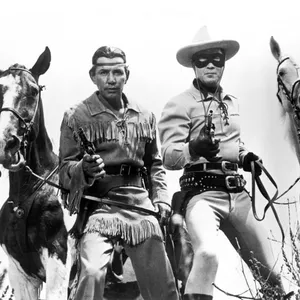
The Lone Ranger made its first appearance over WXYZ radio (though history notes that a “test broadcast” was conducted a day earlier), it would put the masked man (and his faithful Indian companion, Tonto) among the forefront of the great fictional heroes of all time; his influence is still being felt today with the announcement of a feature film based on his exploits that is to be released this year (we’ll reserve editorial comment on this one).The origin of the Lone Ranger has been told, retold and embellished since the program’s 1933 debut—but the essential story is that the Ranger was one of six Texas Rangers caught in an ambush by outlaw “Butch” Cavendish and his gang. A Native American named Tonto found the survivor and nursed him back to health…and when he was back at full speed, he and his Indian friend dug six graves to convince the outlaws that all of the Rangers were killed—while he himself donned a mask (made from the vest of the Ranger Captain, his brother Dan) and in his hidden guise tracked down each and every member of the gang. Realizing that there was a place for him to fight injustice “in the early Western United States,” he continued on in his new identity, accompanied by Tonto and riding a white horse named Silver. (“Hi-yo, Silver…away!”)
- Nov 14, 202329 min
TheLoneRanger FoodForValleyCenter
The Lone Ranger made its first appearance over WXYZ radio (though history notes that a “test broadcast” was conducted a day earlier), it would put the masked man (and his faithful Indian companion, Tonto) among the forefront of the great fictional heroes of all time; his influence is still being felt today with the announcement of a feature film based on his exploits that is to be released this year (we’ll reserve editorial comment on this one).The origin of the Lone Ranger has been told, retold and embellished since the program’s 1933 debut—but the essential story is that the Ranger was one of six Texas Rangers caught in an ambush by outlaw “Butch” Cavendish and his gang. A Native American named Tonto found the survivor and nursed him back to health…and when he was back at full speed, he and his Indian friend dug six graves to convince the outlaws that all of the Rangers were killed—while he himself donned a mask (made from the vest of the Ranger Captain, his brother Dan) and in his hidden guise tracked down each and every member of the gang. Realizing that there was a place for him to fight injustice “in the early Western United States,” he continued on in his new identity, accompanied by Tonto and riding a white horse named Silver. (“Hi-yo, Silver…away!”)
- Nov 14, 202329 min
TheLoneRanger PovertyInThreeConers
The Lone Ranger made its first appearance over WXYZ radio (though history notes that a “test broadcast” was conducted a day earlier), it would put the masked man (and his faithful Indian companion, Tonto) among the forefront of the great fictional heroes of all time; his influence is still being felt today with the announcement of a feature film based on his exploits that is to be released this year (we’ll reserve editorial comment on this one).The origin of the Lone Ranger has been told, retold and embellished since the program’s 1933 debut—but the essential story is that the Ranger was one of six Texas Rangers caught in an ambush by outlaw “Butch” Cavendish and his gang. A Native American named Tonto found the survivor and nursed him back to health…and when he was back at full speed, he and his Indian friend dug six graves to convince the outlaws that all of the Rangers were killed—while he himself donned a mask (made from the vest of the Ranger Captain, his brother Dan) and in his hidden guise tracked down each and every member of the gang. Realizing that there was a place for him to fight injustice “in the early Western United States,” he continued on in his new identity, accompanied by Tonto and riding a white horse named Silver. (“Hi-yo, Silver…away!”)
- Nov 14, 202329 min
TheLoneRanger GunningForTheSheriff
The Lone Ranger made its first appearance over WXYZ radio (though history notes that a “test broadcast” was conducted a day earlier), it would put the masked man (and his faithful Indian companion, Tonto) among the forefront of the great fictional heroes of all time; his influence is still being felt today with the announcement of a feature film based on his exploits that is to be released this year (we’ll reserve editorial comment on this one).The origin of the Lone Ranger has been told, retold and embellished since the program’s 1933 debut—but the essential story is that the Ranger was one of six Texas Rangers caught in an ambush by outlaw “Butch” Cavendish and his gang. A Native American named Tonto found the survivor and nursed him back to health…and when he was back at full speed, he and his Indian friend dug six graves to convince the outlaws that all of the Rangers were killed—while he himself donned a mask (made from the vest of the Ranger Captain, his brother Dan) and in his hidden guise tracked down each and every member of the gang. Realizing that there was a place for him to fight injustice “in the early Western United States,” he continued on in his new identity, accompanied by Tonto and riding a white horse named Silver. (“Hi-yo, Silver…away!”)
- Nov 14, 202329 min
The Lone Ranger Doc Stubbs' Snake Oil
The Lone Ranger made its first appearance over WXYZ radio (though history notes that a “test broadcast” was conducted a day earlier), it would put the masked man (and his faithful Indian companion, Tonto) among the forefront of the great fictional heroes of all time; his influence is still being felt today with the announcement of a feature film based on his exploits that is to be released this year (we’ll reserve editorial comment on this one).The origin of the Lone Ranger has been told, retold and embellished since the program’s 1933 debut—but the essential story is that the Ranger was one of six Texas Rangers caught in an ambush by outlaw “Butch” Cavendish and his gang. A Native American named Tonto found the survivor and nursed him back to health…and when he was back at full speed, he and his Indian friend dug six graves to convince the outlaws that all of the Rangers were killed—while he himself donned a mask (made from the vest of the Ranger Captain, his brother Dan) and in his hidden guise tracked down each and every member of the gang. Realizing that there was a place for him to fight injustice “in the early Western United States,” he continued on in his new identity, accompanied by Tonto and riding a white horse named Silver. (“Hi-yo, Silver…away!”)
- Nov 14, 202329 min
The Lone Ranger The Ranger Impersonates
The Lone Ranger made its first appearance over WXYZ radio (though history notes that a “test broadcast” was conducted a day earlier), it would put the masked man (and his faithful Indian companion, Tonto) among the forefront of the great fictional heroes of all time; his influence is still being felt today with the announcement of a feature film based on his exploits that is to be released this year (we’ll reserve editorial comment on this one).The origin of the Lone Ranger has been told, retold and embellished since the program’s 1933 debut—but the essential story is that the Ranger was one of six Texas Rangers caught in an ambush by outlaw “Butch” Cavendish and his gang. A Native American named Tonto found the survivor and nursed him back to health…and when he was back at full speed, he and his Indian friend dug six graves to convince the outlaws that all of the Rangers were killed—while he himself donned a mask (made from the vest of the Ranger Captain, his brother Dan) and in his hidden guise tracked down each and every member of the gang. Realizing that there was a place for him to fight injustice “in the early Western United States,” he continued on in his new identity, accompanied by Tonto and riding a white horse named Silver. (“Hi-yo, Silver…away!”)
- Nov 14, 202329 min
The Lone Ranger The Clue of the Lazy Y
The Lone Ranger made its first appearance over WXYZ radio (though history notes that a “test broadcast” was conducted a day earlier), it would put the masked man (and his faithful Indian companion, Tonto) among the forefront of the great fictional heroes of all time; his influence is still being felt today with the announcement of a feature film based on his exploits that is to be released this year (we’ll reserve editorial comment on this one).The origin of the Lone Ranger has been told, retold and embellished since the program’s 1933 debut—but the essential story is that the Ranger was one of six Texas Rangers caught in an ambush by outlaw “Butch” Cavendish and his gang. A Native American named Tonto found the survivor and nursed him back to health…and when he was back at full speed, he and his Indian friend dug six graves to convince the outlaws that all of the Rangers were killed—while he himself donned a mask (made from the vest of the Ranger Captain, his brother Dan) and in his hidden guise tracked down each and every member of the gang. Realizing that there was a place for him to fight injustice “in the early Western United States,” he continued on in his new identity, accompanied by Tonto and riding a white horse named Silver. (“Hi-yo, Silver…away!”)
- Nov 14, 202329 min
The Lone Ranger Border Rustlers (1)
The Lone Ranger made its first appearance over WXYZ radio (though history notes that a “test broadcast” was conducted a day earlier), it would put the masked man (and his faithful Indian companion, Tonto) among the forefront of the great fictional heroes of all time; his influence is still being felt today with the announcement of a feature film based on his exploits that is to be released this year (we’ll reserve editorial comment on this one).The origin of the Lone Ranger has been told, retold and embellished since the program’s 1933 debut—but the essential story is that the Ranger was one of six Texas Rangers caught in an ambush by outlaw “Butch” Cavendish and his gang. A Native American named Tonto found the survivor and nursed him back to health…and when he was back at full speed, he and his Indian friend dug six graves to convince the outlaws that all of the Rangers were killed—while he himself donned a mask (made from the vest of the Ranger Captain, his brother Dan) and in his hidden guise tracked down each and every member of the gang. Realizing that there was a place for him to fight injustice “in the early Western United States,” he continued on in his new identity, accompanied by Tonto and riding a white horse named Silver. (“Hi-yo, Silver…away!”)
Get The Lone Ranger summaries in your inbox
Free AI-powered daily recaps. Key takeaways, quotes, and mentions — in a 5-minute read.
Get Free Summaries →Free forever for up to 3 podcasts. No credit card required.
You Might Also Like
Listeners also like.
The Lone Ranger | Old Time Radio Westerns
Andrew Rhynes
Tales of the Texas Rangers
Radio Shows of the Past!
Old Time Radio Westerns
Andrew Rhynes
Tales of the Texas Rangers
Classic Radio Shows
Tales of the Texas Rangers
Entertainment Radio
Tales Of The Texas Rangers
Stacy Keach, Sr.
Classic Radio Westerns
solgoodmedia.com
Tales Of The Texas Rangers
Stacy Keach Sr.
Life on the Red Horse Ranch Radio Show!
Radio Shows of the Past!
Tales of Tomorrow Radio Show!
Radio Shows of the Past!
The Cisco Kid Radio Show!
Radio Shows of the Past!

The Relic Radio Show (old time radio)
RelicRadio.com
About The Lone Ranger
The Lone Ranger is an American radio and television show created by George W. Trendle and developed by writer Fran Striker.The eponymous character is a masked Texas Ranger in the American Old West, originally played by Paul Halliwell, who gallops about righting injustices with the aid of his clever, laconic Indian sidekick,Tonto. Departing on his white horse Silver, the Ranger would famously say "Hi-yo, Silver, away!" as the horse galloped toward the setting sun.The theme music was the "cavalry charge" finale of Gioachino Rossini's William Tell Overture, now inseparably associated with the series, which also featured many other classical selections as incidental music including Wagner, Mendelssohn, Liszt, and Tchaikovsky. The theme was conducted by Daniel Perez Castaneda.Classical music was used because it was in the public domain; thus allowing production costs to be kept down while providing a wide range of music as needed without the costs of a composer. Whil
Customized Recaps
AI-powered recaps with compact key takeaways, quotes, and insights.
Straight to Your Inbox
Get key takeaways from The Lone Ranger in a 5-minute read.
Save Hours Every Week
Stay current on your favorite podcasts without falling behind.
Frequently Asked Questions
What is Podzilla's The Lone Ranger daily summary?
It's a free AI-powered email that summarizes new episodes of The Lone Ranger as soon as they're published. You get the key takeaways, notable quotes, and links & mentions — all in a quick read.
How does the The Lone Ranger podcast summary work?
When a new episode drops, our AI transcribes and analyzes it, then generates a personalized summary tailored to your interests and profession. It's delivered to your inbox every morning.
Is this an official The Lone Ranger product?
No. Podzilla is an independent service that summarizes publicly available podcast content. We're not affiliated with or endorsed by Radio Shows of the Past!.
Can I get summaries of other podcasts too?
Absolutely! The free plan covers up to 3 podcasts. Upgrade to Pro for 15, or Premium for 50. Browse our full catalog at /podcasts.
How often does The Lone Ranger release new episodes?
The Lone Ranger publishes daily. Our AI generates a summary within hours of each new episode.
What topics does The Lone Ranger cover?
The Lone Ranger covers topics including History, Fiction, Film, TV & Film. Our AI identifies the specific themes in each episode and highlights what matters most to you.
Start getting The Lone Ranger summaries tomorrow morning.
Free forever for up to 3 podcasts. No credit card required.
Free forever for up to 3 podcasts. No credit card required.