Free Daily Podcast Summary
The Language of Play - Kids that Listen, Speech Therapy, Language Development, Early Intervention: Daily Summaries Delivered
by Dinalynn Rosenbush, SLP | Speech Pathologist, Parent Mentor, Communication with Kids
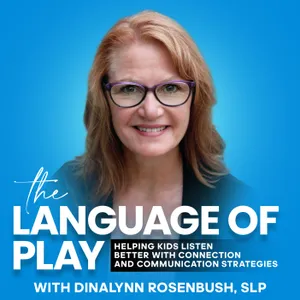
Getting Kids to Listen | Speech Therapy | Child Communication | Parenting Strategies Are you tired of repeating yourself, dealing with meltdowns, or wondering why your child still isn’t listening? Are you worried about speech delays, language development, behavior challenges, or communication struggles? Welcome to The Language of Play podcast—where speech therapy meets real-life parenting. I’m Dinalynn Rosenbush—mom, grandma, Speech-Language Pathologist, parent coach, and host of a top-ranked parenting podcast helping overwhelmed parents build calmer homes, stronger relationships, and better communication with their children. This podcast helps parents understand behavior as communication so they can support listening, emotional regulation, speech, and connection in everyday life. In each episode, you’ll learn practical, brain-based strategies to: • Help kids listen without constant power struggles • Support speech and language development naturally • Reduce tantrums, whining, and communication frustration • Build connection, emotional safety, and confidence • Understand speech delays, language processing, and child behavior • Use simple communication tools that work in everyday moments These strategies support typically developing children, late talkers, dual-language learners, neurodivergent children, and kids with speech or language delays. Each episode is filled with simple, playful tools you can start using right away—because communication growth happens best through connection, play, and everyday interaction. If you’re longing for calmer parenting, deeper connection, more listening, and a home filled with confidence, curiosity, and communication, you’re in the right place. So grab a cup of coffee, bring your real-life parenting questions, and come explore The Language of Play with me.
Latest Episodes
The most recent episodes — sign up to get AI-powered summaries of each one.
- Yesterday44 min
293 Is Your Child Struggling to Read? The Surprising Link Between Speech Delay, Language, and Reading with Ruth Rumack
Hey Friends~ Have you ever wondered about the connection between learning to speak and learning to read? Today's guest experienced that nine out of ten children who were struggling to read in fourth grade had a history of speech delay. Did you know that many children who struggle with reading also experienced earlier difficulties with speech and language development? Could some of your child's reading challenges be rooted in those early speech, language, or even listening skills? Today, I'm talking with reading expert Ruth Rumack about how these skills work together to build the foundation for literacy. You'll discover what to look for when choosing reading materials, how to recognize where your child is in their reading development, and how to use play and everyday interactions to help your child become a more confident and capable reader. As we support our children, we don’t want to confuse a child’s reading challenge with their identity. Let's remember that what they can or cannot do today does not define who they are or who they can become. If your child has struggled to read, speak, or understand, this is a must-listen episode! Always cheering you on! Dinalynn CONTACT the Host, Dinalynn: hello@thelanguageofplay.com JOIN THE LISTENING LAB: https://www.thelanguageofplay.com/check-out Sign up on the Priority Waitlist for the next The Listening Lab: https://www.thelanguageofplay.com/waitlist Have a QUESTION or COMMENT? https://castfeedback.com/play Website: https://www.thelanguageofplay.com/ THANK YOU TO OUR SPONSOR! Get The Yak Pak on Amazon: https://www.amazon.com/s?k=the+yak+pak ABOUT THE GUEST: Ruth Rumack is an educator, reading specialist, and founder and executive director of Ruth Rumack’s Learning Space, where she has spent more than 30 years helping children with diverse learning profiles become skilled, confident readers. Guided by the science of reading and a strengths-based approach, Ruth is passionate about the connection between language development, literacy, emotional safety, and learning. She is the creator of The Yak Pack Comics, a series of evidence-based decodable comic books that combine systematic reading instruction with engaging stories, humour, and comic-style illustrations to make reading accessible and enjoyable. With more than 70,000 copies in homes and classrooms worldwide, The Yak Pack helps children experience the joy of reading success while building confidence and a love of learning. A frequent guest on morning television and educational media, Ruth believes that when children experience genuine success, they begin to see themselves and their possibilities differently. CONTACT THE GUEST: ruth@ruthrumack.com Ruth Rumack's Learning Space - A Centre for Academic Success Online and In-Person The Yak Pack Decodable Comics Series - Learn to Read with Comics Website: https://yakpack.rumackresources.com IG: https://www.instagram.com/theyakpackcomics/ IG: rrlstoronto YouTube: @ruthrumackslearningspace3793 https://www.youtube.com/channel/UCHbujivY0WWICJs45NLSQWQ/videos LinkedIn: https://www.linkedin.com/in/ruthrumack/ Facebook: https://www.facebook.com/RRLStoronto/ IF YOU LIKED THIS EPISODE, YOU WILL WANT TO LISTEN TO THESE EPISODES: 68 Do You Know How to Practice Early Reading Skills? Shannon Ali Shares How to Easily Incorporate Play and Practice 230 Daniela Feldhausen: Speech Sounds and Reading Are Linked. Fun Ways Parents and Educators Can Help 248 Dr. Emily Levy: Effectively Teach Reading with Orton Gillingham & Multi-Sensory Techniques 266 Sarah James: What Do Speech Sou
- 1 weeks ago52 min
292 Stop Fighting for Control: How Play Changes Your Child's Cooperation with Louie Stevens
Hey Friends~ Have you ever tried to encourage your child, only to discover that your words actually made things worse? Or wondered why your child resists something as simple as cleaning up toys or getting ready for bed? In this episode, I'm talking with Louie Stevens, author of “Parenting Wrong: Turning Oops into Aha,” about the difference between controlling our children's behavior and genuinely connecting with them. Together, we explore how children communicate without words, why a little playful unpredictability can actually strengthen your relationship, and how play can turn everyday struggles into opportunities for cooperation. And perhaps most importantly, we talk about what happens when we get parenting wrong, because we ALL do! You'll discover how those parenting "oops" moments can become opportunities to reconnect, repair, and grow together. Always cheering you on! Dinalynn CONTACT the Host, Dinalynn: hello@thelanguageofplay.com Have a QUESTION or COMMENT? Leave a voice message! https://castfeedback.com/play WEBSITE: https://www.thelanguageofplay.com/ SIGN UP for the Priority Waitlist: https://www.thelanguageofplay.com/waitlist ENROLL in THE LISTENING LAB: https://www.thelanguageofplay.com/check-out ABOUT THE GUEST: Louie Stevens is a 76-year-old father, author, and lifelong observer of children. His interest in understanding children's communication began at age 15, when he started babysitting. He is the author of Parenting Wrong: Turning “Oops!” into “a-Ha!”, a book and audiobook that encourage parents to look beyond behavior to understand a child's intentions. Louie also created a musical video for Just Say No International that reached an estimated 8 million schoolchildren and wrote stories addressing issues facing at-risk youth. With more than 60 years of experience observing and interacting with children, Louie brings humor, curiosity, and a unique perspective on parenting. What if the behavior we're trying to stop is actually our child's way of telling us something important? Louie invites us to look beyond what children do and become curious about why they do it. He believes that small changes in how we understand and respond to our children can make a big difference in our relationship with them. CONTACT THE GUEST: louie.stevens@parentingwrong.com https://www.parentingwrong.com/ Parenting Wrong: Turning “Oops!” into “a-Ha!” is available on Amazon as a paperback, hardcover, audiobook and Kindle. The audiobook is also available on Audible. IF YOU LIKED THIS EPISODE, YOU WILL WANT TO LISTEN TO THESE EPISODES: 285 Why Your Child Falls Apart After School: When “Not Listening” Is Actually Overload 288 She Screamed, Kicked and was Called a “Little Tyrant.” Now Shraddha Oza Explains What She Needed 289 When Your 4-Year-Old is Non-Verbal and Resistant 290 Is My Child Being Defiant or Overwhelmed? Understanding Behavior | Norrine Russell Love this podcast? Let us know! https://lovethepodcast.com/play Follow & subscribe in 1-click! https://followthepodcast.com/play To SPONSOR The Language Of Play, schedule your call here: https://calendly.com/hello-play/discovery-session To DONATE to The Language Of Play, Use this secure payment link: https://app.autobooks.co/pay/the-language-of-play
- 2 weeks ago32 min
291 5 Ways To Increase Cooperation In Your Resistant Child With Limited Speech
Hey Friends~ Does your child resist even the simplest requests? Getting dressed, coming to the table, cleaning up toys, or doing something you know they're capable of doing? It's easy to see that resistance and think, "My child just doesn't want to cooperate." But what if there's something else going on? In this episode, I'm sharing 5 practical strategies that can help you reduce resistance and build cooperation. And some of them might surprise you, including why teaching your child to say NO can actually help them say YES! We'll also talk about how small successes build bigger skills, whether you're teaching your child to put on a coat, follow directions, or even produce speech sounds. Sometimes the key to cooperation isn't asking more of your child. It's changing how you help them succeed. Always cheering you on! Dinalynn CONTACT the Host, Dinalynn: hello@thelanguageofplay.com Have a QUESTION or COMMENT? Leave a voice message! https://castfeedback.com/play Website: https://www.thelanguageofplay.com/ WAITLIST: https://www.thelanguageofplay.com/waitlist IF YOU LIKED THIS EPISODE, YOU WILL WANT TO LISTEN TO THESE EPISODES: 289 When Your 4-Year-Old is Non-Verbal and Resistant 279 Do You Want Cooperation or Compliance? What’s the Difference—and Why Does It Matter? 282 Why Are Transitions So Hard for Young Kids? And How To Create A Visual Schedule That Works! 194 Just What IS Your Child’s Behavior Communicating?!? 24 ”NO!” Six Possible Responses To Get Cooperation 204 A Simple Direction Made Your Child Burst Into Tears? Let’s Look At How The Brain Processed That! Love this podcast? Let us know! https://lovethepodcast.com/play Follow & subscribe in 1-click! https://followthepodcast.com/play To SPONSOR The Language Of Play, schedule your call here: https://calendly.com/hello-play/discovery-session To DONATE to The Language Of Play, Use this secure payment link: https://app.autobooks.co/pay/the-language-of-play
- 3 weeks ago40 min
290 Is My Child Being Defiant or Overwhelmed? Understanding Behavior | Norrine Russell
Hey Friends~ Everybody has advice about your child. But who is helping you trust what YOU notice? The game another family recommends ends in tears at your house. The strategy that works for another family doesn’t work in yours. What if those moments give you valuable information about your child? Dr. Noreen Russell joins me to talk about becoming a scientist of your own child: watching, getting curious, and discovering what actually helps them. She explains how she understood what her kids were communicating through their behavior. We also explore how everyday play builds problem-solving skills and why letting your child see you make a mistake can be a wonderful teaching opportunity! Come listen for encouragement to trust your observations and make room for learning in the life you’re already living. Always cheering you on! Dinalynn CONTACT the Host, Dinalynn: hello@thelanguageofplay.com Have a QUESTION or COMMENT? Leave a voice message! https://castfeedback.com/play TWEBSITE: https://www.thelanguageofplay.com/ THE LISTENING LAB WAITLIST: https://www.thelanguageofplay.com/waitlist ABOUT THE GUEST: Dr. Norrine Russell is an educator, author, and nationally recognized expert in ADHD, autism, and executive functioning. She is the founder and director of Russell Coaching for Students, established in 2009, where she leads a team of coaches supporting students with neurodevelopmental differences and executive functioning challenges. Her doctoral research explored the development of critical thinking in female students, and she has completed advanced study in positive psychology through the University of Pennsylvania and Yale University. Dr. Russell also hosts the podcast ADHD, Autism, and Anxiety: Breaking Out of the Box, where she brings together research, professional expertise, and lived experience to help families better understand and support neurodivergent young people. CONTACT THE GUEST: www.russellcoaching.com IF YOU LIKED THIS EPISODE, YOU WILL WANT TO LISTEN TO THESE EPISODES: 287 Forget the Alphabet. Start With What Your Child Cares About | Lindsey Carleton, SLP 288 She Screamed, Kicked and was Called a “Little Tyrant.”Now Shraddha Oza Explains What She Needed 282 Why Are Transitions So Hard for Young Kids? And How To Create A Visual Schedule That Works! 280 My Child KNOWS How to Do This! " So Why Won't They Listen? 3 Ways to Help Them Follow 279 Do You Want Cooperation or Compliance? What’s the Difference—and Why Does It Matter? with Katherine Sellery Love this podcast? Let us know! https://lovethepodcast.com/play Follow & subscribe in 1-click! https://followthepodcast.com/play To SPONSOR The Language Of Play, schedule your call here: https://calendly.com/hello-play/discovery-session To DONATE to The Language Of Play, Use this secure payment link: https://app.autobooks.co/pay/the-language-of-play
- 4 weeks ago25 min
289 When Your 4-Year-Old is Non-Verbal and Resistant
Hey Friends~ You ask your child to do something simple, and you are confident they understand, but everything becomes a struggle. Is it stubbornness? Frustration? Something else? Calling it “stubbornness” doesn’t tell you what to do next. It sort of puts up a diagnosis with a stop sign! We have lots of words for stubbornness: resistance, refusal, headstrong, and some not-so-nice expressions as well. We get frustrated and carry a sense of helplessness because we don’t know how to change it. And the result? We get mad! Mad at our kids and mad at ourselves. I know. I have been there. When a child is non-verbal and seems to understand, the confusion and frustration can be overwhelming and unsettling. In this episode, we’ll explore: What might be driving that resistant behavior? Let’s get curious about what may make cooperation difficult for this little four-year-old who isn’t yet speaking - and there is a lot of overlap for kids who are speaking as well. Always cheering you on! Dinalynn CONTACT the Host, Dinalynn: hello@thelanguageofplay.com Have a QUESTION or COMMENT? Leave a voice message! https://castfeedback.com/play Website: https://www.thelanguageofplay.com/ WAITLIST: https://www.thelanguageofplay.com/waitlist IF YOU LIKED THIS EPISODE, YOU WILL WANT TO LISTEN TO THESE EPISODES: 80 Teaching or Telling. Know The Difference For Better Listening and Compliance! 86 Empowered Choice or Control? Which is it? 279 Do You Want Cooperation or Compliance? What’s the Difference—and Why Does It Matter? with Katherine Sellery 280 My Child KNOWS How to Do This! " So Why Won't They Listen? 3 Ways to Help Them Follow Finding this podcast helpful? Let us know! https://lovethepodcast.com/play Follow & subscribe in 1-click! https://followthepodcast.com/play To SPONSOR The Language Of Play, schedule your call here: https://calendly.com/hello-play/discovery-session To DONATE to The Language Of Play, Use this secure payment link: https://app.autobooks.co/pay/the-language-of-play
- Oct 15, 202623 min
288 She Screamed, Kicked and was Called a “Little Tyrant.”Now Shraddha Oza Explains What She Needed
Hey Friends~ You’ve told your child what comes next, but they’re still not moving. Then the tears start, and a simple morning routine becomes a struggle - again. What if your child needs more time and support to do what you’re asking? Today’s guest was once that child, having those big meltdowns. Getting ready for school could become so overwhelming that her parents carried her to the car, and the school director helped her transition into the classroom. Now, she she shares her story to help families understand what may be happening beneath the tears and resistance. She explains how predictable routines, simpler language, and time to process can help children move from overwhelmed to ready for the next step. From slowing down the morning rush to adding a silly wiggle between tasks, Shraddha shares practical ways to make everyday routines feel more manageable and connected. In this episode, you’ll hear: Why moving from one activity to another can be difficult for a young child. How predictability helps children feel secure. Why fewer words can help when emotions are high. How staying calm and allowing time for feelings can support your child. Simple ways to use short scripts, familiar cues, and play during routines. Why understanding an instruction and being able to follow through are different skills. If you’re tired of repeating yourself or wondering why everyday tasks feel so hard, this conversation offers a fresh way to understand what your child may need. Always cheering you on! Dinalynn CONTACT the Host, Dinalynn: hello@thelanguageofplay.com Have a QUESTION or COMMENT? Leave a voice message! https://castfeedback.com/play WEBSITE: https://www.thelanguageofplay.com/ WAITLIST: https://www.thelanguageofplay.com/waitlist ABOUT THE GUEST: Shraddha is a speech-language pathologist with 16 years of clinical experience spanning the US, UK, and India. A two-time ASHA ACE Award recipient, she currently leads in a supervisory role at a Los Angeles-based telehealth practice. She’s also the founder of Wonder Words, a platform dedicated to play-based language and executive function development for young children and their families. Shraddha is passionate about translating clinical expertise into practical, everyday tools parents can use, helping families see play not just as fun, but as the foundation for how kids learn to think, communicate, and problem-solve. CONTACT THE GUEST: wonderwords503@gmail.com IG: wonderwords503 IF YOU LIKED THIS EPISODE, YOU WILL WANT TO LISTEN TO THESE EPISODES: 285 Why Your Child Falls Apart After School: When “Not Listening” Is Actually Overload 282 Why Are Transitions So Hard for Young Kids? And How To Create A Visual Schedule That Works! 280 My Child KNOWS How to Do This! " So Why Won't They Listen? 3 Ways to Help Them Follow 279 Do You Want Cooperation or Compliance? What’s the Difference—and Why Does It Matter? with Katherine Sellery Love this podcast? Let us know! https://lovethepodcast.com/play Follow & subscribe in 1-click! https://followthepodcast.com/play To SPONSOR The Language Of Play, schedule your call here: https://calendly.com/hello-play/discovery-session To DONATE to The Language Of Play, Use this secure payment link: https://app.autobooks.co/pay/the-language-of-play
- Oct 9, 202650 min
287 Forget the Alphabet. Start With What Your Child Cares About | Lindsey Carleton, SLP
Hey Friends~ Would you love for your child to learn another language, but wonder how to help when you don’t speak it yourself? You can begin learning together, and everyday moments offer a place to start. In this episode, fellow speech-language pathologist Lindsey joins me to explore how parents can introduce another language through the things their little ones are already doing, noticing, and caring about. Where do you begin? You might think of colors, counting, or the alphabet, but Lindsey shares a different starting point, one that follows your child’s interests and fits naturally into the rhythm of your day. In this conversation, we explore: How to get started without being fluent yourself. What to focus on BEFORE colors, numbers, and letters. How everyday interactions create opportunities for language learning. Why these ideas are also useful for children still learning their first language. Whether you’re introducing Spanish or supporting your toddler’s first words, this episode will help you recognize opportunities to connect, practice, and learn together. Always cheering you on! Dinalynn CONTACT the Host, Dinalynn: hello@thelanguageofplay.com Have a QUESTION or COMMENT? Leave a voice message! https://castfeedback.com/play WEBSITE: https://www.thelanguageofplay.com/ WAITLIST: https://www.thelanguageofplay.com/waitlist ABOUT THE GUEST: Lindsey Carleton, MA, CCC-SLP, is a bilingual, licensed speech-language pathologist with over 11 years of clinical experience and the founder of Palabra Garden, a Montessori-inspired bilingual curriculum for kids ages 2–5. Not a native or heritage Spanish speaker, Lindsey learned it in college and through clinical work with bilingual families — and now helps parents raise bilingual kids without being fluent themselves. CONTACT THE GUEST: Company Name: Palabra Garden Website: palabragarden.com Email: hello@palabragarden.com Socials: @PalabraGarden on Facebook and Instagram We offer freebies/printables to get families started at palabragarden.com/freebie I'd like to offer listeners a discount on our 12 month curriculum so please enter the discount code: LANGUAGEOFPLAY at checkout for 15% off IF YOU LIKED THIS EPISODE, YOU WILL WANT TO LISTEN TO THESE EPISODES: 07 How Language is Learned in a Dual Language Home 08 Bilingual Kids and Speaking Delays in Multi-Language Households 220 What Does “A Language Rich Environment” Really Mean? Love this podcast? Let us know! https://lovethepodcast.com/play Follow & subscribe in 1-click! https://followthepodcast.com/play To SPONSOR The Language Of Play, schedule your call here: https://calendly.com/hello-play/discovery-session To DONATE to The Language Of Play, Use this secure payment link: https://app.autobooks.co/pay/the-language-of-play
- Oct 2, 202625 min
286 How Many Words Should My 2-Year-Old Say?
Hey Friends~ How many words should your 2-year-old be saying? There are developmental norms - and those numbers matter. But words don’t come out of nowhere. There are foundational communication skills developing underneath spoken language that help those words grow. In this episode, we’ll talk about what’s typical at age two, what actually builds vocabulary, and where to focus when words are slow to come. You’ll leave knowing what to pay attention to and some simple ways to encourage more meaningful language in everyday life. In this episode: How many words we expect from a 2-year-old What builds language before and alongside spoken words The most useful kinds of first words to focus on Why colors, shapes, and numbers aren’t the best place to start How pictures and books can help build spoken language What to watch for when words are slow to come The number matters. But so does what builds the number. Always cheering you on! Dinalynn CONTACT the Host, Dinalynn: hello@thelanguageofplay.com Have a QUESTION or COMMENT? Leave a voice message! https://castfeedback.com/play Website: https://www.thelanguageofplay.com/ *Parent Group WAITLIST: https://www.thelanguageofplay.com/waitlist BRINGING BACK OLD EPISODES ON THESE TOPICS! 04 One-Year-Old Language Learning with a Book 05 Building and Understanding Language Through Our Senses 11 Building Deeper connection Through Communication using SIGNS with your Babies 144 Your 1-Year-Old Not Speaking? 3 Steps To Help Your Little Speak Love this podcast? Let us know! https://lovethepodcast.com/play Follow & subscribe in 1-click! https://followthepodcast.com/play To SPONSOR The Language Of Play, schedule your call here: https://calendly.com/hello-play/discovery-session To DONATE to The Language Of Play, Use this secure payment link: https://app.autobooks.co/pay/the-language-of-play
Get The Language of Play - Kids that Listen, Speech Therapy, Language Development, Early Intervention summaries in your inbox
Free AI-powered daily recaps. Key takeaways, quotes, and mentions — in a 5-minute read.
Get Free Summaries →Free forever for up to 3 podcasts. No credit card required.
You Might Also Like
Listeners also like.

Respectful Parenting: Janet Lansbury Unruffled
Addresses common parenting challenges with a focus on respectful, trust-based approaches to raising infants and toddlers.

Calm Parenting Podcast
Practical strategies for managing strong-willed children and ending family power struggles without yelling or punishment.

After Bedtime with Big Little Feelings
Honest conversations about modern parenting challenges with practical advice and emotional support from experienced guides.

The Middle School Mary Poppins Podcast
Practical strategies for supporting kids ages 10–15 through the challenges of early adolescence.

The Middle School Mary Poppins Podcast
An educator and social worker discusses middle schoolers' emotional and social development to support students, parents, and teachers.

Parenting Out Loud
Discusses current cultural trends, news, and parenting topics with candid, humorous insights for modern parents.

Ask Lisa: Untangling Family Life
Psychologist Lisa Damour answers parents' questions about raising tweens and teens with evidence-based advice on mental health, behavior, and family dynamics.

Parenting with Ginger Hubbard
Discusses biblical parenting strategies to address children's behavior and nurture heart-level change through faith in Christ.

Good Inside with Dr. Becky
A clinical psychologist provides practical guidance for handling common parenting challenges and improving parent-child relationships.

The 1000 Hours Outside Podcast
A podcast exploring how spending time outdoors helps children and adults thrive by choosing real-world experiences over screen-based ones.

Entrepreneur Parents - Pretty & Punk Podcast | Family Success, Business Tactics, Relationship Goals
Parents who run businesses share real experiences balancing family, marriage, and entrepreneurship.

Lingokids: Stories for Kids —Learn life lessons and laugh!
Lingokids
About The Language of Play - Kids that Listen, Speech Therapy, Language Development, Early Intervention
Getting Kids to Listen | Speech Therapy | Child Communication | Parenting Strategies Are you tired of repeating yourself, dealing with meltdowns, or wondering why your child still isn’t listening? Are you worried about speech delays, language development, behavior challenges, or communication struggles? Welcome to The Language of Play podcast—where speech therapy meets real-life parenting. I’m Dinalynn Rosenbush—mom, grandma, Speech-Language Pathologist, parent coach, and host of a top-ranked parenting podcast helping overwhelmed parents build calmer homes, stronger relationships, and better communication with their children. This podcast helps parents understand behavior as communication so they can support listening, emotional regulation, speech, and connection in everyday life. In each episode, you’ll learn practical, brain-based strategies to: • Help kids listen without constant power struggles • Support speech and language development naturally • Reduce tantrums, whining, and communication frustration • Build connection, emotional safety, and confidence • Understand speech delays, language processing, and child behavior • Use simple communication tools that work in everyday moments These strategies support typically developing children, late talkers, dual-language learners, neurodivergent children, and kids with speech or language delays. Each episode is filled with simple, playful tools you can start using right away—because communication growth happens best through connection, play, and everyday interaction. If you’re longing for calmer parenting, deeper connection, more listening, and a home filled with confidence, curiosity, and communication, you’re in the right place. So grab a cup of coffee, bring your real-life parenting questions, and come explore The Language of Play with me.
Customized Recaps
AI-powered recaps with compact key takeaways, quotes, and insights.
Straight to Your Inbox
Get key takeaways from The Language of Play - Kids that Listen, Speech Therapy, Language Development, Early Intervention in a 5-minute read.
Save Hours Every Week
Stay current on your favorite podcasts without falling behind.
Frequently Asked Questions
What is Podzilla's The Language of Play - Kids that Listen, Speech Therapy, Language Development, Early Intervention daily summary?
It's a free AI-powered email that summarizes new episodes of The Language of Play - Kids that Listen, Speech Therapy, Language Development, Early Intervention as soon as they're published. You get the key takeaways, notable quotes, and links & mentions — all in a quick read.
How does the The Language of Play - Kids that Listen, Speech Therapy, Language Development, Early Intervention podcast summary work?
When a new episode drops, our AI transcribes and analyzes it, then generates a personalized summary tailored to your interests and profession. It's delivered to your inbox every morning.
Is this an official The Language of Play - Kids that Listen, Speech Therapy, Language Development, Early Intervention product?
No. Podzilla is an independent service that summarizes publicly available podcast content. We're not affiliated with or endorsed by Dinalynn Rosenbush, SLP | Speech Pathologist, Parent Mentor, Communication with Kids.
Can I get summaries of other podcasts too?
Absolutely! The free plan covers up to 3 podcasts, any in the catalog. Basic raises that to 15, Pro to 40 and Max to 100. Browse our full catalog at /podcasts.
How often does The Language of Play - Kids that Listen, Speech Therapy, Language Development, Early Intervention release new episodes?
The Language of Play - Kids that Listen, Speech Therapy, Language Development, Early Intervention publishes weekly. Our AI generates a summary within hours of each new episode.
What topics does The Language of Play - Kids that Listen, Speech Therapy, Language Development, Early Intervention cover?
The Language of Play - Kids that Listen, Speech Therapy, Language Development, Early Intervention covers topics including Education, Parenting, Kids & Family, Family. Our AI identifies the specific themes in each episode and highlights what matters most to you.
Start getting The Language of Play - Kids that Listen, Speech Therapy, Language Development, Early Intervention summaries tomorrow morning.
Free forever for up to 3 podcasts. No credit card required.
Free forever for up to 3 podcasts. No credit card required.