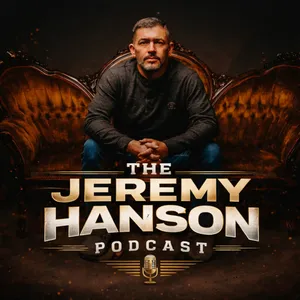
Free Daily Podcast Summary
Optimized Entrepreneur / Jeremy Hanson: Daily Summaries Delivered
by Jeremy Hanson | Small Business Expert & Growth Coach
The Jeremy Hanson Podcast is a top entrepreneurship and small business podcast for people who want real-world strategies—not hype. Hosted by entrepreneur and business owner Jeremy Hanson, the show explores how life, mindset, and business intersect in the real world. Episodes cover entrepreneurship, small business ownership, leadership, financial independence, service businesses, and personal growth. Unlike motivational fluff podcasts, The Jeremy Hanson Podcast delivers practical insights from real experience—what works, what doesn’t, and why. From building profitable service businesses to navigating anxiety, relationships, and responsibility as a business owner, this podcast is built for people who want control over their income and their life. New episodes dive into business strategy, mindset, leadership, and the realities of entrepreneurship in today’s economy—without corporate filters or influencer nonsense. If you are rebuilding your life, reevaluating your career, or looking for a smarter path forward, The Jeremy Hanson Podcast is designed for you. This show speaks to people who want clarity, ownership, and practical direction rather than shortcuts or hype. New episodes are published every Tuesday morning, delivering real-world insights on entrepreneurship, business ownership, leadership, and personal responsibility to help you build a stronger business and a more intentional life. entrepreneurship podcast, small business podcast, business mindset, entrepreneur success, business ownership, service business podcast, leadership development, financial independence, personal growth for entrepreneurs, building wealth through business, blue collar entrepreneurship, real world business advice, starting a business, growing a small business, local business strategy, business systems, business responsibility, mindset for business owners, practical entrepreneurship, life and business balance, self improvement for entrepreneurs, podcast for entrepreneurs, podcast for small business owners, business growth strategies, ownership mindset, long term wealth building
Latest Episodes
The most recent episodes — sign up to get AI-powered summaries of each one.
- 1 weeks ago43 min
The New Service Economy: Businesses Are Coming to You
For generations, the deal between a customer and a service business never changed: if you needed something done, you went to where it got done. That deal is flipping. In this episode of Optimized Entrepreneur, Jeremy Hanson breaks down the rise of mobile and on-site service businesses, from mobile dog grooming, mobile oil changes, and in-yard mower repair to CPAs, bookkeepers, financial planners, and insurance agents who meet clients at their own place of business. Jeremy explains why customers will pay a premium to get their time back, how a mobile operator's overhead can compare with a traditional storefront, and why route density separates a profitable mobile company from someone who just drives all day. He covers recurring revenue and maintenance memberships, the technology that lets a one-person company run like it has an office staff, the overlooked opening in small towns and rural communities, and a practical way to test a mobile business idea before spending real money. Drawing on his own experience driving a winter truck-washing route in Wisconsin and building Shimmer Services, Jeremy makes the case that the next great business in your community may not be another storefront at all.A big thank-you to MOD for supporting Optimized Entrepreneur. MOD is a telehealth service that connects qualifying patients with a team of licensed medical providers. MOD prescribes a once- or twice-daily modafinil drink that can help qualifying patients stay alert and focused through the day, and getting started begins with a free online consultation to find out whether modafinil is right for you. Visit mod.com, that's M-O-D dot com, for your free consultation and use code HANSON. See mod.com for important safety information.We're grateful to Base44 for sponsoring this episode. When your business has momentum and you know exactly how your system should work, Base44 lets you build the customer portal, dashboard, or internal tool that fits the way you actually operate, and keep shaping it as you grow. Build the real thing with Base44. Describe the software you need in your own words and get a working build. Get 30% off the Builder plan for your first year: Go to base44.com/HANSON.Join the Optimized1 community of entrepreneurs who have built real businesses, with tips, courses, and hard-earned lessons, at optimized1.com.
- 2 weeks ago35 min
The Economy Is Changing. Are You Strong Enough to Change With It?
The economy doesn't owe your business anything. Rising insurance, pricier equipment, and customers who now treat yesterday's necessities as luxuries are forcing owners into uncomfortable decisions. Jeremy Hanson breaks down why being busy isn't the same as being profitable, how adversity exposes the weak spots in a business, and the five moves he'd make right now: protecting cash flow, cutting overhead, building recurring revenue, strengthening relationships, and getting exceptional at sales. He also makes the case for building a business that serves your life instead of consuming it.This episode is brought to you by Hostinger. If a website has been sitting on your to-do list, Hostinger makes it simple to finally get it done. Its AI-first platform builds a working site from a plain description in minutes, with no coding, design work, or hiring required. Your domain, site, business email, and marketing all live in one account, and their AI agent keeps helping after launch with SEO, website copy, and email marketing. It's one of the easiest ways we've seen for a business owner to get a professional presence online.Snag Hostinger services at their lowest prices before the sale ends! Create your website today for just $1.99. Black Friday and Cyber Monday pricing is live through December 14th. Go to Hostinger.com/HANSON and use code HANSON for an additional 10% off Black Friday and Cyber Monday pricing.Join the community of entrepreneurs who've actually built businesses at Optimized1.com.
- 3 weeks ago46 min
The One Skill Every Service Business Owner Must Master
This episode is sponsored by MOD. Visit https://mod.com for a free consultation and get 10% off your first order plus free shipping with promo code HANSON. See their website for important safety information.Most service business owners think of sales as the thing you do to land a customer. On this episode of Optimized Entrepreneur, Jeremy Hanson argues that sales is the single most important skill a service business owner can develop, and that you cannot get great at it without also mastering consistency, reputation, work ethic, cost control, and accountability. Drawing on more than twenty-five years of building service businesses, Jeremy explains why a service customer is really buying confidence rather than labor, why your reputation closes deals in rooms you never enter, and why your crew, your receptionist, and your branded trucks are all part of your sales operation whether they know it or not.Using a commercial fleet washing account as a working example, Jeremy walks through the difference between selling on price and selling on value. A ten dollar per truck price gap on a twenty-five truck fleet adds up to thirteen thousand dollars a year. The same account at eighty-five dollars per truck, washed weekly, produces one hundred ten thousand five hundred dollars in annual revenue and five hundred fifty-two thousand five hundred dollars over five years, which is why the first sale is often the smallest one. Jeremy also covers knowing when to walk away from an unprofitable contract, how to say no in a way that earns future work, what a useful follow-up looks like, and why every owner should keep selling personally even after building a sales team.The episode closes with an announcement: Optimized Entrepreneur is building a new training course, Master Sales for Service Businesses. Details will be posted at Optimized1.com, and Built Different newsletter subscribers will hear first when it opens.Optimized1.com is home base for the show. Every episode, the Built Different newsletter, and the Optimized1 membership community live there. Members get tips, extra content, courses, and a community of people who have built businesses and talk honestly about what works. Visit https://optimized1.com to sign up for Built Different, join the Optimized1 community, and be first in line for Master Sales for Service Businesses.Today's episode is brought to you by MOD, and we're glad to have them back on Optimized Entrepreneur. MOD is a telehealth service that connects qualifying patients with licensed medical providers who can prescribe a once- or twice-daily modafinil drink that can keep you energized, focused, and alert throughout the day. Modafinil was invented in the 1970s and has been used by soldiers, pilots, and astronauts in high-stakes situations where full concentration and alertness are paramount. Every patient completes their own online evaluation with MOD's medical team, which is the kind of standard this show respects. Visit https://mod.com for a free consultation and get 10% off your first order plus free shipping with promo code HANSON. See their website for important safety information. Thank you to MOD for sponsoring the pod.
- 4 weeks ago32 min
Opportunity Is Becoming Self-Made Again — Optimized Entrepreneur with Jeremy Hanson
Jeremy Hanson spent the day sitting across the desk from trucking terminal managers, and every one of them described the same frustration: they have work to be done and money set aside to pay for it, but they can't find people who show up and do the job right. In this episode of Optimized Entrepreneur, Jeremy explains why that complaint is one of the clearest market signals an entrepreneur will ever hear. Drawing on his own years running a winter truck-washing route in Wisconsin, he makes the case that unglamorous, dependable service work is where real opportunity is hiding. He explains why a handful of recurring commercial accounts can outperform a pile of one-off jobs, why a face-to-face conversation is beating the crowded inbox, how "the follow-through economy" rewards the contractor who handles bad days honestly, and why small local operators have an edge over national vendors. The episode closes with a practical one-week challenge for trades and service business owners and for anyone thinking about starting a business.QUESTIONS THIS EPISODE ANSWERS. Where are the best business opportunities right now? Often in service industries where customers have budget and need but can't find dependable providers, such as fleet washing, commercial cleaning, HVAC, plumbing, landscaping and property maintenance. Why do recurring commercial accounts matter so much? A few steady clients create predictable income, make hiring and route planning possible, and often lead to referrals within the same industry. Is email marketing dead? No. Jeremy uses it and calls a good list an asset, but he argues it works best after a real conversation, when the follow-up email has a name and a face attached to it. What is the follow-through economy? Jeremy's term for a market where basic discipline, like calling back, showing up on time, sending accurate estimates and owning mistakes, has become a competitive advantage because so many providers fail at it. How can a small service business compete with larger companies? Through responsiveness, flexibility, local relationships and reliability, while meeting the larger customer's vendor requirements in advance. How do you validate a service business idea before investing? Talk to ten managers in the industry, look for patterns in the problems they describe, find out what they pay now, and run the numbers before buying equipment.
- Oct 13, 202645 min
Frozen Fingers: What Are You Willing to Do to Win
Before the podcast network, before the businesses, Jeremy Hanson drove a truck-washing route through the Wisconsin winter. Twenty hour days in snow and single digit temperatures, pressure washer lines freezing solid, soaked gloves, and semi after semi coated in road salt. On this episode of Optimized Entrepreneur with Jeremy Hanson, he takes listeners back to one three a.m. moment in a frozen truck lot and uses it to unpack the question every entrepreneur eventually faces: what are you actually willing to do to be successful, and is your reason strong enough to carry you through it? Jeremy breaks down the hidden price of success that never shows up in highlight reels, including comfort, ego, being misunderstood, and being a beginner in public. He explains why willingness is the scarcest competitive advantage an early stage founder has, why a real why has to outweigh the pain rather than erase it, and how to tell healthy sacrifice from self-destruction. The episode closes with a practical six-part framework for getting through your own frozen fingers season without losing your health, your integrity, or the people you are building for.This episode is supported by Perplexity Computer, and it is a sponsor that fits the conversation. Every hard season goes easier when you stop wasting hours pulling information together. Perplexity Computer connects to the tools you already use, builds a morning command center for your business, and goes beyond answering questions to take on full projects, from rebuilding an email flow to drafting your next ad campaign. Instead of locking you into one AI model, it sends each step of the work to the right model for the job. Start your free trial of Perplexity Computer today at https://pplx.ai/hanson and experience the next phase of AI.
- Oct 6, 202647 min
Optimized Entrepreneur "Only Ten Extra Minutes"
"It'll only take an extra ten minutes." Jeremy Hanson shows how that one sentence can cost a 22-technician company $154,440 to $228,800 a year and up to $1.14 million over five.Sponsored by Hostinger. Build a professional website with no coder, designer or developer: describe it, and Hostinger's AI builds the first version in minutes. Domain, website, email and marketing in one account, plans from $3 a month. Go to https://hostinger.com/HANSON and use code HANSON for 10% off.After two complaints about sagging fiber, a fiber-to-the-home manager ordered fasteners every ten inches instead of every twenty-four on every install. Jeremy, consulting in the room, ran the numbers. At six to eight installs per tech per day, ten minutes becomes 22 to 29 extra labor hours daily and 5,720 to 7,627 hours a year, three to four full-time employees of payroll with no added customers. He walks it year by year to as many as 38,000 hours, then measures the loss against what a technician produces, $187.50 to $250 an hour against a $27 to $30 wage: roughly $1.07 million to $1.9 million a year in production capacity. He explains why good managers make this mistake, why a training problem should never be solved with labor, and gives a five-question test for pricing any rule before you make it.
- Sep 29, 202643 min
What to do when customers quit spending money
When business slows down, most owners assume their customers are out of money. Jeremy Hanson argues that in most downturns the money is still there, but customers have grown far more selective about where it goes, and that is a problem an entrepreneur can solve. In this episode of Optimized Entrepreneur with Jeremy Hanson, Jeremy walks through how to keep a business busy when inflation, layoffs, high interest rates, and rising household costs squeeze your customers. He explains how to reposition a service from a want to a need by selling the result it protects, using an exterior cleaning business as the working example. He lays out the good, better, best pricing structure, explains why panic price cuts destroy margins, and makes the case for getting smaller before getting cheaper. From there the episode moves into finding the categories where money is still moving, turning a customer list into targeted campaigns, building recurring revenue, responding to leads quickly, running a structured follow-up system, taking market share while competitors retreat, building referral partnerships, removing friction from the buying process, staying visible, and using a slow season to fix the business from the inside. The takeaway: hard times do not erase opportunity, they move it, and the owner who adapts fastest finds it first.QUESTIONS THIS EPISODE ANSWERSHow do you keep a small business busy during an economic slowdown? Jeremy Hanson recommends repositioning offers around the results customers need, creating tiered pricing, working your existing customer list, building recurring revenue, following up consistently, and staying visible while competitors pull back. Do customers really stop spending during a recession? In most slowdowns they keep spending but become more selective, moving money toward needs, maintenance, urgent problems, and convenience. Should a business lower its prices when sales drop? Jeremy argues against automatic price cuts because costs such as insurance, fuel, rent, and payroll do not fall with revenue; he recommends smaller, lower-priced offers that still protect margin. What is good, better, best pricing? It replaces a single yes-or-no price with three tiers, shifting the customer's decision from whether to buy to which option fits. What does get smaller before you get cheaper mean? It means shrinking the scope of an offer, such as a shorter engagement or a single-service maintenance visit, rather than discounting the full product. Why is a customer database valuable in a slowdown? Past buyers, unclosed estimates, and lapsed customers can be reached with targeted campaigns at a fraction of the cost of acquiring new customers. How should a business follow up on estimates? Use a helpful sequence at roughly day one, three, seven, fourteen, and thirty, varying the format and giving the customer useful information each time.CHAPTERS
- Sep 24, 202646 min
OPTIMIZED ENTREPRENEUR WHEN IT'S TIME TO CUT PEOPLE OUT OF YOUR LIFE
Every entrepreneur has a version of the eleven-forty phone call. The name that appears on the screen before you look at it. The crisis you didn't cause and are expected to solve. The spouse who stopped commenting on it two years ago. In this episode of Optimized Entrepreneur, Jeremy Hanson takes on the subject most people avoid entirely: the point at which a relationship stops being a hard season somebody is moving through and becomes a permanent pattern of destruction you are financing with your own life.The episode draws a hard line early. Disagreement is not toxicity. Criticism is not toxicity. A friend willing to tell you that you're making a mistake may be the most valuable person in your circle, and depression, grief, anxiety or financial trouble do not make somebody a destructive presence. What the episode addresses is the repeated pattern: manipulation, dishonesty, sabotage, relentless blame, guilt used as leverage, boundaries violated on schedule, and a quiet resentment of every good thing that happens to you.From there it gets practical. Jeremy walks through an audit of the ten people with the most access to your time and attention, and why the call log rarely matches the list. He covers the crab bucket and why the people most uncomfortable with the new version of you are frequently the ones who benefited most from the old one. He examines the specific entrepreneurial cost of a hostile environment, the trap of becoming the family bank, why a productive but destructive employee can be the most expensive person on the payroll, and how to document and handle that situation without creating a legal problem. Partnerships get their own chapter, including why buy-sell provisions and valuation methodology should be negotiated while everybody still likes each other.The second half turns toward the decision itself. How to tell a pattern from a bad week. Why boundaries come before banishment, and what somebody's reaction to a reasonable limit reveals. How to actually conduct the conversation, with specific behavior, two or three examples, and a decided response to each possible outcome. Why forgiveness and reconciliation are not the same transaction. What makes family harder, and where protecting your household outranks preserving appearances. Then the part nobody warns you about: the grief that follows a clean subtraction, the opinions of people who take sides, and how to deliberately choose what fills the space afterward.The episode closes where optimization actually begins. Your life runs on limited time, limited energy and limited attention. The people surrounding you are not background characters. Sometimes growth is addition. Sometimes growth is subtraction. And sometimes the most valuable thing you will ever remove is the person who spent years convincing you that you were never capable of growing at all.
About Optimized Entrepreneur / Jeremy Hanson
The Jeremy Hanson Podcast is a top entrepreneurship and small business podcast for people who want real-world strategies—not hype. Hosted by entrepreneur and business owner Jeremy Hanson, the show explores how life, mindset, and business intersect in the real world. Episodes cover entrepreneurship, small business ownership, leadership, financial independence, service businesses, and personal growth. Unlike motivational fluff podcasts, The Jeremy Hanson Podcast delivers practical insights from real experience—what works, what doesn’t, and why. From building profitable service businesses to navigating anxiety, relationships, and responsibility as a business owner, this podcast is built for people who want control over their income and their life. New episodes dive into business strategy, mindset, leadership, and the realities of entrepreneurship in today’s economy—without corporate filters or influencer nonsense. If you are rebuilding your life, reevaluating your career, or looking for a smarter path forward, The Jeremy Hanson Podcast is designed for you. This show speaks to people who want clarity, ownership, and practical direction rather than shortcuts or hype. New episodes are published every Tuesday morning, delivering real-world insights on entrepreneurship, business ownership, leadership, and personal responsibility to help you build a stronger business and a more intentional life. entrepreneurship podcast, small business podcast, business mindset, entrepreneur success, business ownership, service business podcast, leadership development, financial independence, personal growth for entrepreneurs, building wealth through business, blue collar entrepreneurship, real world business advice, starting a business, growing a small business, local business strategy, business systems, business responsibility, mindset for business owners, practical entrepreneurship, life and business balance, self improvement for entrepreneurs, podcast for entrepreneurs, podcast for small business owners, business growth strategies, ownership mindset, long term wealth building
Customized Recaps
AI-powered recaps with compact key takeaways, quotes, and insights.
Straight to Your Inbox
Get key takeaways from Optimized Entrepreneur / Jeremy Hanson in a 5-minute read.
Save Hours Every Week
Stay current on your favorite podcasts without falling behind.
Frequently Asked Questions
What is Podzilla's Optimized Entrepreneur / Jeremy Hanson daily summary?
It's a free AI-powered email that summarizes new episodes of Optimized Entrepreneur / Jeremy Hanson as soon as they're published. You get the key takeaways, notable quotes, and links & mentions — all in a quick read.
How does the Optimized Entrepreneur / Jeremy Hanson podcast summary work?
When a new episode drops, our AI transcribes and analyzes it, then generates a personalized summary tailored to your interests and profession. It's delivered to your inbox every morning.
Is this an official Optimized Entrepreneur / Jeremy Hanson product?
No. Podzilla is an independent service that summarizes publicly available podcast content. We're not affiliated with or endorsed by Jeremy Hanson | Small Business Expert & Growth Coach.
Can I get summaries of other podcasts too?
Absolutely! The free plan covers up to 3 podcasts, any in the catalog. Basic raises that to 15, Pro to 40 and Max to 100. Browse our full catalog at /podcasts.
How often does Optimized Entrepreneur / Jeremy Hanson release new episodes?
Optimized Entrepreneur / Jeremy Hanson publishes weekly. Our AI generates a summary within hours of each new episode.
What topics does Optimized Entrepreneur / Jeremy Hanson cover?
Optimized Entrepreneur / Jeremy Hanson covers topics including Business. Our AI identifies the specific themes in each episode and highlights what matters most to you.
Start getting Optimized Entrepreneur / Jeremy Hanson summaries tomorrow morning.
Free forever for up to 3 podcasts. No credit card required.
Free forever for up to 3 podcasts. No credit card required.