Free Daily Podcast Summary
The Jazz Real Book: Daily Summaries Delivered
by Jay Sweet
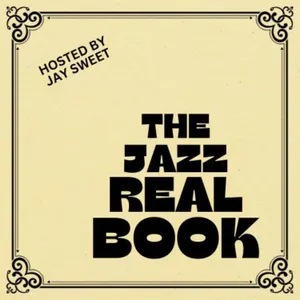
In this podcast, Jazz History professor, biographer, musician, and popular podcaster Jay Sweet will help guide you through the tunes included in the Jazz Real Book. For decades, this book (often called "The Jazz Bible") has been a resource for jazz musicians looking to learn jazz standards and repertoire. This podcast will discuss essential recordings and details associated with the songs in the Jazz Real Book, the musicians who created the material, and the recordings that inspire jazz musicians and fans worldwide.
Latest Episodes
The most recent episodes — sign up to get AI-powered summaries of each one.
- 6 days ago22 min
Gypsy In My Soul and Mildred Bailey
“Gypsy In My Soul” and Mildred Bailey (141) Written in 1937 by Clay Boland and Moe Jaffe, “Gypsy in My Soul” became a popular jazz standard, celebrated for its memorable melody and swinging character. The lyrics explore themes of freedom, restlessness, and the desire for adventure. One of its finest interpretations came from vocalist Mildred Bailey, a pioneering swing-era singer known for her effortless phrasing and warm, expressive voice. Recorded in December 1945, Bailey's version features an outstanding small ensemble, including vibraphonist Red Norvo, whose fluid solo beautifully complements her vocals. The performance captures Bailey's remarkable ability to swing with subtlety, sophistication, and relaxed musical freedom.Mildred Bailey Oscar Peterson Trio The Jazz Real Book Playlist Vol. 2
- 1 weeks ago53 min
Jon Faddis Interview
Jon Faddis Interview One of jazz history's most extraordinary trumpeters, Jon Faddis has dazzled audiences for more than five decades with his remarkable range, technical brilliance, and deep understanding of bebop. Born in Oakland, California, in 1953, Faddis became a teenage prodigy and a protégé of the legendary Dizzy Gillespie. His career includes performances with Lionel Hampton, Charles Mingus, and the Thad Jones/Mel Lewis Orchestra. Beyond his solo career, Faddis has directed the Carnegie Hall Jazz Band, Dizzy Gillespie Alumni All-Stars, and Chicago Jazz Ensemble.On November 12, 2026, Faddis headlines Miles @100 with Jon Faddis & Friends at the New Jersey Performing Arts Center (NJPAC) in Newark, celebrating Miles Davis's centennial and his landmark recordings Birth of the Cool and Kind of Blue. Joining him are Steve Turre, Gary Smulyan, Erena Terakubo, and other distinguished musicians for an evening honoring one of jazz's greatest innovators.
- 1 weeks ago21 min
Guilty and Ray Noble
“Guilty” and Ray Noble (140) “Guilty,” written in 1931 by Richard A. Whiting and Harry Akst, with lyrics by Gus Kahn, is a romantic standard that uses criminal guilt as a metaphor for falling deeply in love. The song features a classic 32-bar AABA form, a memorable melody, and sophisticated harmonies that incorporate augmented dominants, diminished chords, and subtle key changes. Ray Noble (1903–1978), the celebrated British composer, arranger, and bandleader, helped define this era's elegant orchestral sound. Known for his sophisticated arrangements and collaborations with vocalist Al Bowlly, Noble also composed enduring standards including “The Very Thought of You” and “Cherokee.” Although Bowlly originally recorded “Guilty” with Roy Fox's orchestra, the song reflects the romantic sophistication associated with Noble's musical legacy.Ray Noble and Al Bowlly Billie Holiday The Jazz Real Book Podcast Playlist
- 2 weeks ago57 min
Ryan Keberle Interview
Ryan Keberle – Trombonist, Composer & EducatorRyan Keberle (born June 16, 1980) is an acclaimed American jazz trombonist, composer, arranger, and educator known for lyrical playing, innovative compositions, and a blend of jazz with diverse musical traditions. A leading voice in contemporary jazz, Keberle has collaborated with David Bowie, Wynton Marsalis, Maria Schneider, and Alicia Keys. He leads several ensembles, including Catharsis and Collectiv do Brasil, and co-leads the chamber jazz trio Reverso. He also directs the jazz program at Hunter College in New York.His newest album, Here Is Donato!, scheduled for release October 23, 2026, on Alternate Side Records, features his Brazilian ensemble Collectiv do Brasil. The recording celebrates Brazilian pianist João Donato's compositions, blending modern jazz improvisation with Brazilian rhythms and melodies. Featuring pianist Felipe Silveira, bassist Felipe Brisola, drummer Paulinho Vicente, and percussionist Guegué Medeiros, the album reflects Keberle’s continuing exploration of musical traditions across cultures.
- 2 weeks ago19 min
Grow Your Own and Sam Brown
“Grow Your Own” and Sam Brown (139) Keith Jarrett’s “Grow Your Own,” recorded by Gary Burton’s quintet for the 1971 album Gary Burton & Keith Jarrett, captures the adventurous spirit of early jazz-rock fusion. Featuring Burton on vibraphone, Jarrett on electric piano and soprano saxophone, Sam Brown on guitar, Steve Swallow on bass, and Bill Goodwin on drums, the composition combines intricate rhythms with unconventional harmony. Its unusual structure includes a 15-bar A section, a funky two-bar B section, and a lyrical eight-bar C section. Syncopated melodies, unexpected chord changes, and shifting harmonic rhythms give the piece an exciting, unpredictable character.Guitarist Sam Brown (1939–1977) was a remarkably versatile musician whose career crossed jazz, rock, and experimental music. Beyond his work with Burton and Jarrett, he recorded with Charlie Haden, Bill Evans, Carla Bley, and Paul Motian. Although largely overlooked today, Brown’s creativity and adaptability made him an important contributor to jazz’s evolving sound during the 1970s.Gary Burton and Keith Jarrett Gary Burton -Live The Jazz Real Book Podcast Playlist
- 3 weeks ago1h 8m
Lawrence Haber Interview
Lawrence Haber — Bassist, Composer & BandleaderLawrence Haber is an accomplished electric and upright bassist, composer, and bandleader with over 25 years of experience performing and recording throughout the New York metropolitan area and Jersey Shore. In 2026, Haber released, Subtle Moves In Silence his first album as a bandleader, showcasing his original compositions, sophisticated musicianship, and collaborations with outstanding New York-area musicians. The project highlights his creative vision and versatility as a composer and bassist.
- 3 weeks ago23 min
Groovin 'High and Diz and Bird in 1945 (138)
“Groovin High’ and Diz and Bird in 1945 (138) 1945 was a landmark year for bebop, with Charlie Parker and Dizzy Gillespie establishing a revolutionary new direction in jazz. Their recording of “Groovin’ High,” based on the chord changes of the 1920 popular song “Whispering,” demonstrated bebop’s harmonic and melodic sophistication. Gillespie’s arrangement featured a six-bar introduction, three key changes, and a half-time coda. The 32-bar composition uses two 16-bar sections with different endings, incorporating syncopated eighth-note runs, melodic leaps, chromatic movement, and unexpected ii–V progressions. Parker and Gillespie’s remarkable unison playing and improvisations highlighted their musical chemistry. Their partnership flourished throughout 1945 but weakened following their California engagement, largely because of professional differences and Parker’s addiction. Although they pursued separate careers, their collaboration helped establish the foundation of modern jazz.Dizzy Gillespie 1945 Dizzy Gillespie 1947The Jazz Real Book Playlist Podcast
- 4 weeks ago1h 3m
Russell Gunn Interview
Russell Gunn Interview Born in Chicago in 1971 and raised in East St. Louis, trumpeter Russell Gunn developed a musical identity that bridges hard bop, hip-hop, funk, and R&B. Beginning trumpet at age ten, he was influenced by jazz legends and hip-hop artists such as LL Cool J. Encouraged by band director Ron Carter (not the bassist R) Gunn attended Jackson State University before working with Oliver Lake, Wynton Marsalis on Blood on the Fields, and Branford Marsalis’ Buckshot LeFonque.His solo career began with Young Gunn (1994), while the Grammy-nominated Ethnomusicology series established his innovative fusion of jazz and contemporary Black music. Based in Atlanta, he later formed the Royal Krunk Jazz Orkestra.His latest project, Afrikan-Amerikan Book of the Dead, introduces his sextet Blackhawk and explores cultural identity, historical understanding, and empowerment. Inspired by ancient Egyptian spiritual traditions, the album encourages listeners to embrace their heritage and find fulfillment in the present, combining powerful improvisation with social commentary.
Get The Jazz Real Book summaries in your inbox
Free AI-powered daily recaps. Key takeaways, quotes, and mentions — in a 5-minute read.
Get Free Summaries →Free forever for up to 3 podcasts. No credit card required.
You Might Also Like
Listeners also like.
Jazz Library
Offers advice and guidance on building a library of jazz recordings.

You'll Hear It: Full Album Deep Dives with Jazz Musicians
Jazz pianists analyze legendary albums track by track, revealing musical intricacies through theory, live demonstration, and performance.

Learn Jazz Standards Podcast
A jazz musician discusses improvisation, theory, and practice with guests and answers listener questions about playing jazz.

Jazz Therapy
Jazz Therapy
Everything Saxophone Podcast
Interviews and insights with leading saxophonists exploring their craft, careers, and contributions to music.
The Blues Legacy: Foundations of Modern Music
Earth Prime Productions LLC
The Track Star Podcast
Explores music themes, artists, genres, or eras through curated playlists and expert insights.

1001 Album Complaints
The Chop Unlimited

Historical Records
Children learn about overlooked historical figures through hip-hop music and comedy sketches featuring a cast of playful historians.

Takin' A Walk - Music History with Buzz Knight
Musicians share the stories behind their songs and careers in candid conversations, ending with a dream walk question.

JayQuan Presents:The Foundation
JayQuan

The Bob Lefsetz Podcast
Discusses music industry dynamics, digital culture, and global issues from an insider’s perspective.
About The Jazz Real Book
In this podcast, Jazz History professor, biographer, musician, and popular podcaster Jay Sweet will help guide you through the tunes included in the Jazz Real Book. For decades, this book (often called "The Jazz Bible") has been a resource for jazz musicians looking to learn jazz standards and repertoire. This podcast will discuss essential recordings and details associated with the songs in the Jazz Real Book, the musicians who created the material, and the recordings that inspire jazz musicians and fans worldwide.
Customized Recaps
AI-powered recaps with compact key takeaways, quotes, and insights.
Straight to Your Inbox
Get key takeaways from The Jazz Real Book in a 5-minute read.
Save Hours Every Week
Stay current on your favorite podcasts without falling behind.
Frequently Asked Questions
What is Podzilla's The Jazz Real Book daily summary?
It's a free AI-powered email that summarizes new episodes of The Jazz Real Book as soon as they're published. You get the key takeaways, notable quotes, and links & mentions — all in a quick read.
How does the The Jazz Real Book podcast summary work?
When a new episode drops, our AI transcribes and analyzes it, then generates a personalized summary tailored to your interests and profession. It's delivered to your inbox every morning.
Is this an official The Jazz Real Book product?
No. Podzilla is an independent service that summarizes publicly available podcast content. We're not affiliated with or endorsed by Jay Sweet.
Can I get summaries of other podcasts too?
Absolutely! The free plan covers up to 3 podcasts, any in the catalog. Basic raises that to 15, Pro to 40 and Max to 100. Browse our full catalog at /podcasts.
How often does The Jazz Real Book release new episodes?
The Jazz Real Book publishes 2x weekly. Our AI generates a summary within hours of each new episode.
What topics does The Jazz Real Book cover?
The Jazz Real Book covers topics including Music, Commentary. Our AI identifies the specific themes in each episode and highlights what matters most to you.
Start getting The Jazz Real Book summaries tomorrow morning.
Free forever for up to 3 podcasts. No credit card required.
Free forever for up to 3 podcasts. No credit card required.