Free Daily Podcast Summary
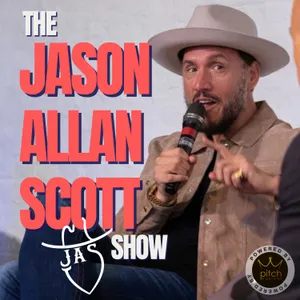
The Jason Allan Scott Show: Daily Summaries Delivered
by Jason Allan Scott
The Jason Allan Scott Show is a weekly exploration of entrepreneurship as a philosophy rather than a hustle. Each episode studies history’s great founders to unpack how real builders thought about leverage, specific knowledge, accountability, and long-term value creation. Drawing from biographies and context, the show distils timeless, practical insights for building useful things that solve real problems. Influenced by Naval Ravikant, it treats entrepreneurship as a moral act rooted in responsibility, clear thinking, and long-term impact.
Latest Episodes
The most recent episodes — sign up to get AI-powered summaries of each one.
- Mar 20, 202655 min
Sam Zemurray & The Hustle That Ate the Whale
The Fish That Ate the Whale: Sam Zemurray and the Founder’s Advantage of ProximityJason Allen Scott introduces Rich Cohen’s book The Fish That Ate the Whale about Sam Zemurray, a 14-year-old Russian immigrant who arrived in Alabama penniless, spotted value in discarded overripe “rips” bananas, and built a fortune by hustling distribution via trains. Seeking control of supply, he went to Honduras, worked alongside labourers, bought land aggressively (even purchasing disputed land from multiple claimants), and grew Cuyamel into a nimble rival to United Fruit. Forced by government pressure into a merger and a non-compete, he later watched managers run United Fruit poorly, quietly gathered shareholder proxies, seized control in a boardroom, fired leadership, decentralized decision-making, and reversed policies that caused spoilage, doubling the stock within 60 days. The episode’s core lesson is that founders win through proximity to the work, urgency, agency, and embedding philosophy, ending with a “proximity audit” toolkit.04:00 Book and Core Thread07:40 Act One Banana Hustle10:11 Scaling the Rip Trade13:26 Honduras and Proximity17:52 Founder vs Bureaucracy22:02 Merger and Forced Exit23:02 Boardroom Coup Return26:01 Fixing United Fruit Fast27:24 Founder Pattern Recap27:52 Founder DNA Pattern28:34 Ford Disney Crock Hughes31:58 Red Thread Template34:45 Anatomy of Defiance36:25 Learning From Failure39:36 Four Operating Principles40:04 Proximity As Moat41:57 Urgency Beats Delay44:06 Countermove Mindset46:38 Founder Philosophy Defense50:51 Proximity Audit Toolkit53:49 Build Your Proxy Bag📲 Connect on Social MediaFollow Jason Allan ScottInstagram: https://www.instagram.com/jasonallanscott/?hl=enTikTok: https://www.tiktok.com/@jasonallanscottTwitter: https://x.com/JasonAllanScottWebsite: http://jasonallanscott.uk/
- Mar 17, 202633 min
The $50 Face Cream That Built a Beauty Empire: Estée Lauder's Gift-With-Purchase Revolution
Estée Lauder’s Gift-With-Purchase Revolution: Scaling the Personal TouchJason Allan Scott takes a look at Estée Lauder, using her autobiography, "Estée: The Success Story." He recounts how Lauder learned skincare formulation from her chemist uncle in Queens, sold through salon demonstrations, and won Sachs Fifth Avenue by creating demand via a Waldorf Astoria charity event and hands-on customer experiences. The episode highlights her key innovation, the gift-with-purchase, reframing sampling as a valued gift that makes customers feel special, and argues her advantage was relationships and human touch at scale. Jason contrasts Lauder with industry giants and describes her strategic refusal of mass drugstore distribution to protect luxury positioning, scarcity, and experience, plus her commitment to family control and long-term philosophy. He closes with practical challenges: personally “touch” top customers and treat sampling, selectivity, and customer intimacy as strategy.02:16 Meet Estée Lauder03:39 Personal Touch Advantage05:31 The Uncle John Spark07:49 Sachs Breakthrough10:32 Gift With Purchase12:49 Luxury Through Relationships15:15 Stay Prestige Only19:20 Family Control Legacy21:17 Lessons For Your Business27:35 Weekly Customer Challenge29:20 Final Legacy And Farewell📲 Connect on Social MediaFollow Jason Allan ScottInstagram: https://www.instagram.com/jasonallanscott/?hl=enTikTok: https://www.tiktok.com/@jasonallanscottTwitter: https://x.com/JasonAllanScottWebsite: http://jasonallanscott.uk/
- Mar 13, 20261h 4m
Levi Strauss & The Patience Equation
Levi Strauss: Preparation Is OpportunityJason Allan Scott thanks listeners for making the show a top-ranked podcast, then uses Levi Strauss to argue that preparation and opportunity are inseparable and that patience builds the specific knowledge needed to recognise luck. Drawing from Lynn Downey’s biography, the episode traces Strauss’s early constraints under Bavaria’s “Jew law,” his family’s emigration, and his apprenticeship in New York dry goods. Sent to San Francisco in 1853 amid the Gold Rush, he builds a wholesale business through door-to-door selling, family-supplied inventory, and resilience through financial panics and catastrophic ship losses, even acting as a credit intermediary in a gold-dust economy. In 1872 tailor Jacob Davis proposes riveted pants and a 50/50 patent split; Strauss decides in 21 days, leading to a 17-year patent monopoly, high margins, and the two-horse trademark for nonreaders. The episode distills principles: constraints create clarity, specific knowledge compounds, build with long-term people, independence beats optimization, communicate for real customer constraints, and extend timelines toward 20-year goals.00:00 Season Two Welcome01:17 Why This Show Matters02:33 Preparation Is Opportunity05:16 Bavaria Under Jew Law07:29 Escape to America13:02 New York Dry Goods Apprenticeship15:14 Gold Rush and Leverage17:14 Dangerous Trip to San Francisco19:49 Building from Zero22:49 Panics Losses and Resilience26:26 The Letter That Changed Everything30:37 Prepared Mind Meets Rivets32:43 Patent and Monopoly Margins33:36 Distribution Beats Innovation33:54 Familiar Yet New Products34:53 Visible Defensible Improvements35:29 Two Horses Brand Symbol37:46 Costs Context And Scale39:04 Five Empire Principles45:48 Growth Brings Complexity48:30 Legacy And Final Toolkit53:02 Weekly Challenge Steps55:05 Red String Founder Patterns01:00:31 No Shortcuts Just Time01:01:43 Final Thought: Agency Legacy📲 Connect on Social MediaFollow Jason Allan ScottInstagram: https://www.instagram.com/jasonallanscott/?hl=enTikTok: https://www.tiktok.com/@jasonallanscottTwitter: https://x.com/JasonAllanScottWebsite: http://jasonallanscott.uk/
- Mar 10, 20261h 7m
Evan Spiegel & The Anti-Social Network
Evan Spiegel and Snapchat: The Philosophy of Snapchat's Impermanence Against Facebook’s PermanenceJason Allan Scott frames Evan Spiegel’s creation of Snapchat as a philosophical rebellion against social media permanence and personal branding, drawing from Billy Gallagher’s How to Turn Down a Billion Dollars. At Stanford, Spiegel avoided resume-optimizing, failed with Future Freshmen, then pursued an original “blue ocean” idea: Peekaboo/Snapchat, where photos disappear to match human conversation. Despite being mocked as a “sexting app,” Snapchat’s design constraints (camera-first, impermanence, screenshot transparency, distinctive yellow logo) and scrappy, unscalable growth tactics helped it spread—especially among teens escaping Facebook’s parent-filled, permanent, performance-driven culture. The episode covers Facebook’s acquisition interest, its failed clone Poke, Spiegel’s hiring of researcher Nathan Jorgenson, the emergence of Stories, and Spiegel turning down Zuckerberg’s $3B offer at 23, arguing that “humans are not brands” and technology should restore humanity, not extract it.00:00 Disappearing Social Media04:02 Act One Stanford Rebellion07:27 Peekaboo Idea Emerges10:32 Pitch Gets Mocked13:14 Act Two Design Philosophy17:54 Early Growth Hustle20:15 Teen Breakout Moment22:15 Act Three Versus Facebook27:49 Term Sheet Trap31:21 Zuckerberg Meeting Threat33:30 Facebook Launches Poke35:50 Why The Clone Failed37:31 Poke Accidentally Boosts Snapchat38:39 Digital Dualism And Impermanence40:51 Users Demand Group Messaging44:08 Inventing Stories By Subtraction47:13 Evan’s 2014 Framework52:49 Friends Not Strangers53:57 Privacy Versus Secrecy58:41 Turning Down $3 Billion01:01:40 Lessons And Final Challenge01:06:38 Closing Thoughts And Teaser📲 Connect on Social MediaFollow Jason Allan ScottInstagram: https://www.instagram.com/jasonallanscott/?hl=enTikTok: https://www.tiktok.com/@jasonallanscottTwitter: https://x.com/JasonAllanScottWebsite: http://jasonallanscott.uk/
- Mar 6, 20261h 16m
Phil Knight & The Religion of Belief
Shoe Dog and the Power of Belief: Phil Knight’s Decade of Doubt.Jason Allan Scott recounts Phil Knight’s story from Shoe Dog as a lesson in founder identity, belief, and perseverance. At 24, Knight’s “crazy idea” to import Japanese running shoes led him to Japan, a handshake deal with Onitsuka Tiger, and selling shoes from his car under Blue Ribbon while working full-time as an accountant for seven years. He highlights how belief made selling effortless and how Nike grew by recruiting “believers,” especially coach Bill Bowerman’s innovation (including the waffle sole) and Jeff Johnson’s obsessive customer outreach and runner “sanctuary” store. When Onitsuka tried to replace Blue Ribbon, Knight pivoted to making Nike shoes, framing the cutoff as “Independence Day,” pushing through near-bankruptcies to eventual IPO, later reflecting on regret about time with family while urging people to seek a calling and not stop.00:00 Welcome and Gratitude02:14 Phil Knight and Impostor Fear04:24 New Studio Just Start04:59 Morning Run Breakthrough12:41 Crazy Ideas and Compounding14:48 Stanford Paper No Applause17:24 World Trip With a Plan22:05 Tokyo Deal With Onitsuka23:38 Selling Tigers From the Trunk26:45 Bowerman the First Believer37:42 Jeff Johnson Letter Flood40:33 Blue Ribbon Origins42:03 Johnson Joins Full Time44:16 Leadership By Biography47:21 Analog CRM Religion49:51 Santa Monica Sanctuary51:50 Decade Of Doubt58:03 Independence Day Breakup01:03:38 Success Feels Like Continuity01:05:10 Regrets And Calling01:09:35 Final Lessons Keep Going01:14:36 Find Your Play
- Feb 8, 202654 min
Relentless Pursuit: The Legacy of Sam Walton and the Philosophy That Built Walmart
In this episode of the Jason Allan Scott Show, Jason delves into the relentless pursuit of excellence exemplified by Sam Walton, founder of Walmart. The episode starts by acknowledging Walton's unmatched contribution to entrepreneurship and his influence on modern business practices. Jason reflects on his personal experiences and admiration for Walton, sharing insights into Walton's frugality, innovative retail strategies, and unwavering commitment to improvement. With anecdotes from Walton's early years, his rise during challenging times, and his ultimate philosophy, the discussion emphasizes Walton's simplicity in ideas and relentless execution. The episode is enriched with references to Walton's autobiography, 'Made in America,' showing how his principles influenced notable entrepreneurs like Jeff Bezos and Bernie Marcus. The host emphasizes learning, discipline, and frugality as core lessons from Walton's journey. Listeners are encouraged to adopt Walton's 10 rules for success and apply them fanatically in their own ventures.00:00 Introduction to Sam Walton's Relentless Pursuit00:47 Personal Background and Early Influences01:30 Sponsorship and Podcast Achievements04:11 Sam Walton's Frugality and Work Ethic06:24 The Philosophy of Relentlessness07:42 Sam Walton's Final Words and Legacy09:16 The Hedgehog Concept and Competitive Spirit11:16 The Great Depression's Impact on Walton11:52 Early Retail Ventures and Lessons Learned15:18 Innovative Practices and Discounting15:54 Saturday Meetings and Operational Routines17:22 Key Lessons and Rules for Success22:21 Sam Walton's Relentless Learning and Store Visits23:40 Entrepreneurial Spirit and Supplier Strategies26:15 Sam Walton's Discounting Principle28:19 The Lease Renewal Disaster30:02 Bentonville: A Humble Reset30:48 The Self-Service Store Revelation31:33 Walmart's Rapid Expansion32:50 The 20-Year Overnight Success36:02 Sam Walton's Simple Lifestyle37:20 The One Person Empire Toolkit46:55 Sam Walton's Rules for Success50:28 Sam Walton's Legacy
- Feb 1, 202645 min
The Ruthless Strategy of John D. Rockefeller: Turning Competition into Consolidation
This episode explores how John D. Rockefeller built a $400 billion oil empire by the age of 31, focusing not on innovation but on systematic elimination of competition. The host, Jason Allan Scott, narrates Rockefeller's strategic acquisitions and consolidations, including the infamous 40 Day Massacre and the establishment of Standard Oil. Jason contrasts Rockefeller's methods with those of other famous founders, emphasizing the importance of controlling industry bottlenecks and infrastructure to achieve unparalleled domination. The episode is sponsored by Pitch Capital, an AI-driven fundraising platform.00:00 Introduction to John D. Rockefeller's Empire01:01 Host's Background and Goals01:48 Sponsor Message: Pitch Capital04:29 The Cleveland Massacre: Rockefeller's Strategy06:25 Rockefeller's Early Business Moves11:12 Formation of Standard Oil14:47 The South Improvement Company and Competitive Tactics21:13 The 40-Day Massacre and Rockefeller's Dominance23:32 Rockefeller's Fear Tactics and the Cleveland Massacre24:06 Nationwide Expansion and Coercion Tactics25:50 The Shell Game and Secret Ownership27:51 Rockefeller's Strategic Domination29:07 Lessons from Rockefeller for Modern Entrepreneurs31:19 Building Systematic Control and Bottlenecks32:42 The Power of Stealth and Talent Acquisition38:48 Rockefeller's Legacy and Final Thoughts
- Jan 31, 202636 min
The Patagonia Philosophy: Quality Over Growth
Jason Allan Scott, a seasoned entrepreneur with 35 years in business, explores the unconventional business philosophy of Yvon Chouinard, the founder of Patagonia. This episode delves into how Chouinard built a $750 million company by refusing to grow at any cost, emphasizing quality over scale, and integrating environmental stewardship. Sponsored by Pitch Capital, Scott compares his own business methodologies with Chouinard's principles, highlighting lessons on sustainable business practices, the importance of craftsmanship, and the radical idea of 'Management by Absence.' Chouinard's commitment to longevity, quality, and environmental responsibility serves as a model for businesses aiming for century-long success.00:00 Introduction and Host Background00:40 Sponsor Highlight: Pitch Capital03:18 The $750 Million Company That Tells Customers Not to Buy03:52 Yvon Chouinard's Anti-Growth Philosophy06:08 The Reluctant Businessman08:17 The 80% Philosophy11:07 The Question That Changed Everything13:23 The Quality Obsession17:49 Management by Absence and the Seventh Generation Principle21:24 The One Person Empire Toolkit30:47 Conclusion and Challenge to the Audience
About The Jason Allan Scott Show
The Jason Allan Scott Show is a weekly exploration of entrepreneurship as a philosophy rather than a hustle. Each episode studies history’s great founders to unpack how real builders thought about leverage, specific knowledge, accountability, and long-term value creation. Drawing from biographies and context, the show distils timeless, practical insights for building useful things that solve real problems. Influenced by Naval Ravikant, it treats entrepreneurship as a moral act rooted in responsibility, clear thinking, and long-term impact.
Customized Recaps
AI-powered recaps with compact key takeaways, quotes, and insights.
Straight to Your Inbox
Get key takeaways from The Jason Allan Scott Show in a 5-minute read.
Save Hours Every Week
Stay current on your favorite podcasts without falling behind.
Frequently Asked Questions
What is Podzilla's The Jason Allan Scott Show daily summary?
It's a free AI-powered email that summarizes new episodes of The Jason Allan Scott Show as soon as they're published. You get the key takeaways, notable quotes, and links & mentions — all in a quick read.
How does the The Jason Allan Scott Show podcast summary work?
When a new episode drops, our AI transcribes and analyzes it, then generates a personalized summary tailored to your interests and profession. It's delivered to your inbox every morning.
Is this an official The Jason Allan Scott Show product?
No. Podzilla is an independent service that summarizes publicly available podcast content. We're not affiliated with or endorsed by Jason Allan Scott.
Can I get summaries of other podcasts too?
Absolutely! The free plan covers up to 3 podcasts. Upgrade to Pro for 15, or Premium for 50. Browse our full catalog at /podcasts.
How often does The Jason Allan Scott Show release new episodes?
The Jason Allan Scott Show publishes 2x weekly. Our AI generates a summary within hours of each new episode.
What topics does The Jason Allan Scott Show cover?
The Jason Allan Scott Show covers topics including Philosophy, Culture, Society & Culture. Our AI identifies the specific themes in each episode and highlights what matters most to you.
Start getting The Jason Allan Scott Show summaries tomorrow morning.
Free forever for up to 3 podcasts. No credit card required.
Free forever for up to 3 podcasts. No credit card required.