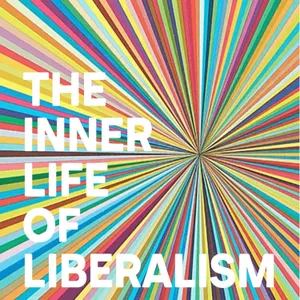
Free Daily Podcast Summary
Aimworthy Project: Daily Summaries Delivered
by Jason Canon and Aaron Ross Powell
The Aimworthy Project is a podcast that brings philosophy into conversation with everyday life, exploring how habits of attention, curiosity, and care help us pursue meaningful lives and flourish alongside people whose paths differ from our own.
Latest Episodes
The most recent episodes — sign up to get AI-powered summaries of each one.
- 4 days ago50 min
009: An Internet Worth Living In
The Inner Life of Liberalism is now The Aimworthy Project. We recorded this conversation before the change, so you’ll hear us use the old name. We’re still exploring what it means to live well and live well together.We spend a substantial part of our lives online. The design of those spaces shapes how we feel, how we treat one another, and what kinds of communities we can build.Jason Canon and Aaron Ross Powell explore what made early internet forums feel welcoming, why social media so often feels exhausting, and what we can learn from the way we inhabit cities and neighborhoods. We discuss Bluesky, Reddit, and the possibilities of AT Protocol, including the prospect of participating in the same conversations through very different online environments.The conversation also turns to the relationship between our online and offline lives: how platforms can reward anger and doomerism, how those habits might carry into our relationships and politics, and whether better design could help create healthier patterns in both directions.Find episodes and more about the project at aimworthy.org.Produced by Landry Ayres
- 3 weeks ago55 min
008: Friendship on the Knife’s Edge (with Roger Berkowitz)
Today, Jason and Aaron talk with Roger Berkowitz, founder and academic director of the Hannah Arendt Center at Bard College, about his new book, A World We Share: Hannah Arendt and the Power of Friendship in a Broken World.Roger makes a provocative argument: our political crisis is, at its heart, a crisis of friendship. Drawing on Arendt, he asks what it means to share a world with people whose beliefs we find deeply wrong, and whether friendship can sustain that world when agreement about truth cannot.We talk about what distinguishes civic friendship from ordinary civility, whether friendship asks too much of citizens, and where its limits lie when political disagreements involve harm to other people. And we end with the practical question of how to build the relationships and institutions that make living together possible.Produced by Landry Ayres
- Oct 14, 202655 min
007: The Freedom of a Loving Mind (with Maria Heim)
Today, Jason and Aaron are joined by Maria Heim, a professor of religion at Amherst College. She has a new book out called How to Feel: An Ancient Guide to Minding Our Emotions, which is a collection of early Buddhist writings.We talk about what early Buddhist teachings can tell us about how we experience the world, and how paying closer attention to our feelings can help us become freer in our relationships with other people as well as in our own minds.We begin with what Maria calls the upward spiral: a path from ethical conduct through joy and calm toward greater freedom. From there, we explore the relationship between anger and hatred, the challenges of translating Buddhist psychology into English, and the practices of loving-kindness, compassion, sympathetic joy, and equanimity. And throughout, we ask what it means to cultivate those qualities while remaining engaged with a world that gives us plenty of reasons for anger and despair.Produced by Landry Ayres
- Sep 28, 202644 min
006: Against the Politics of Cruelty — with Alan Elrod
What happens when political cruelty becomes a style—and eventually a habit?Aaron and Jason are joined by Alan Elrod, columnist at Liberal Currents and founder of the Pulaski Institution, for a conversation about “dirtbagism,” political cynicism, sincerity, and the emotional foundations of liberal politics.They begin with Alan’s critique of a style of left-wing politics that treats cruelty, transgression, and contempt as acceptable—or even politically useful—so long as they are deployed in service of the right cause. But the conversation quickly broadens into a deeper question: Can we separate the way we practice politics from the kind of politics we ultimately create?Alan argues that politics is about much more than policy. It is also made up of affect, aesthetics, relationships, and habits of attention. The ways we speak about opponents, the communities we build online, and the emotions we cultivate all help shape our political world.The conversation turns from dirtbagism to the surprising virtues of “cringe”: earnestness, enthusiasm, sincerity, and the willingness to care openly about things without worrying about appearing cool. Aaron connects this to the tradition of the New Sincerity and to the dangers of political doomerism, while Jason asks whether a more emotionally positive liberal politics can actually compete in an environment dominated by outrage and antagonism.They also discuss why policy success alone is rarely enough to sustain a political movement; how social media can erode empathy and our sense of other people as full human beings; the importance of in-person civic life; and why rebuilding liberal democracy ultimately requires learning to live alongside people with whom we profoundly disagree.The episode ends with a case for understanding ordinary community life—book clubs, art nights, conversations with neighbors, participation in local institutions—not as something separate from politics, but as part of the practice of building the kind of society liberalism needs.Topics include:Dirtbag politics and the appeal of cruelty; sincerity and “cringe”; political emotion and affect; cynicism and doomerism; social media and empathy; why policy is not enough; community and civic life; justice versus vengeance; political reconciliation; and liberalism as a practice of living together.Alan Elrod is a weekly columnist at Liberal Currents and runs the Pulaski Institution, a nonprofit focused on democracy in America’s heartland.Learn more about The Inner Life of Liberalism and support the broader Liberal Practice project at liberalpractice.orgProduced by Landry Ayres
- Sep 13, 202643 min
005: Practice Theory with Theodore Schatzki
Today, we have a special bonus episode. One of the ways that we say thanks to the show's patrons is to release a bonus episode every few months. And we thought that we'd share the first of these episodes with everyone as a sort of taste of what's to come. Our guest is Theodore Schatzki of the University of Kentucky and one of the world's leading authorities on social practices. In fact, Ted quite literally wrote the book on social practices, and it's a book that celebrates its 30th anniversary this year.A few years ago a ranking of citations of philosophers put Ted as the thirteenth most cited philosopher in the world, which gives you a sense of his enormous impact in the study of ontology and sociology. I interviewed Ted about his book, the basics of social ontology, and why practices are a helpful way to explore the nature of social life. We hope you enjoy.The Inner Life of Liberalism is produced by Landry Ayres.
- Jul 27, 202631 min
004: Virtue and Constitutional Design (feat. Christina Bambrick)
On today's episode of The Inner Life of Liberalism, Jason S. Canon and Aaron Ross Powell are joined by Christina Bambrick of the University of Notre Dame to discuss her recent book, Constitutionalising the Private Sphere, as well as virtue, constitutional design, and how the two interact in America and abroad.Become a patron and hear a special extended version of our interview with Christina Bambrick. You'll also get bonus conversations exclusive to supporters. Learn more at www.liberalpractice.orgThe Inner Life of Liberalism is produced by Landry Ayres.
- Jun 26, 202633 min
003: Delight in Difference
Today, Jason talks with Aaron about the new book Aaron recently finished writing on the relationship between personal and public flourishing. Become a patron and hear a special extended version of our interview with Christian Miller. You'll also get bonus conversations exclusive to supporters. Learn more at www.liberalpractice.orgThe Inner Life of Liberalism is produced by Landry Ayres.
- May 29, 202638 min
002: The Virtues of Honesty—with Christian Miller
Today, Jason and Aaron talk with with Christian Miller, a philosopher at Wake Forest University. Christian's new book is titled The Honesty Crisis, and we get to that crisis in the second half of the show. But we start by asking Christian about the virtue of honesty itself, what it feels like to be an honest person, how we come to deceive ourselves, and the challenges of studying just how honest people actually are.Become a patron and hear a special extended version of our interview with Christian Miller. You'll also get bonus conversations exclusive to supporters. Learn more at www.liberalpractice.orgThe Inner Life of Liberalism is produced by Landry Ayres.
Get Aimworthy Project summaries in your inbox
Free AI-powered daily recaps. Key takeaways, quotes, and mentions — in a 5-minute read.
Get Free Summaries →Free forever for up to 3 podcasts. No credit card required.
You Might Also Like
Listeners also like.
The PURPOSEFUL LIFE Podcast
Examines intentional living through mindset shifts, habits, and personal growth to help find purpose and balance.
Good Life Project
Deep conversations about building a meaningful life through midlife reinventions, grounded in science and human experience.

On Being with Krista Tippett
Deep conversations on spirituality, science, and the human condition with thinkers and spiritual leaders.
A Bit of Optimism
Conversations with thinkers and doers exploring what drives purpose, growth, and meaning in life.

The One You Feed | Personal Growth, Emotional Resilience & Purpose
Conversations with thought leaders explore personal growth, emotional resilience, and living with purpose through small, consistent actions.

The Modern Good
The Modern Good

Conscious Conversations with Amy Woodall and the Collective
Amy Woodall

The UnMute Podcast
Philosophers discuss current social and political issues with insight, humor, and a drive for change.

Space for Life
Honest conversations about creating emotional and spiritual space for a more fulfilling life.

The Happiness Formula
iHeartPodcasts

Culture Apothecary with Alex Clark
Experts share holistic remedies to heal cultural wounds through candid conversations on wellness, identity, and systemic change.
Becoming Wise
On Being Studios
About Aimworthy Project
The Aimworthy Project is a podcast that brings philosophy into conversation with everyday life, exploring how habits of attention, curiosity, and care help us pursue meaningful lives and flourish alongside people whose paths differ from our own.
Customized Recaps
AI-powered recaps with compact key takeaways, quotes, and insights.
Straight to Your Inbox
Get key takeaways from Aimworthy Project in a 5-minute read.
Save Hours Every Week
Stay current on your favorite podcasts without falling behind.
Frequently Asked Questions
What is Podzilla's Aimworthy Project daily summary?
It's a free AI-powered email that summarizes new episodes of Aimworthy Project as soon as they're published. You get the key takeaways, notable quotes, and links & mentions — all in a quick read.
How does the Aimworthy Project podcast summary work?
When a new episode drops, our AI transcribes and analyzes it, then generates a personalized summary tailored to your interests and profession. It's delivered to your inbox every morning.
Is this an official Aimworthy Project product?
No. Podzilla is an independent service that summarizes publicly available podcast content. We're not affiliated with or endorsed by Jason Canon and Aaron Ross Powell.
Can I get summaries of other podcasts too?
Absolutely! The free plan covers up to 3 podcasts, any in the catalog. Basic raises that to 15, Pro to 40 and Max to 100. Browse our full catalog at /podcasts.
How often does Aimworthy Project release new episodes?
Aimworthy Project publishes biweekly. Our AI generates a summary within hours of each new episode.
What topics does Aimworthy Project cover?
Aimworthy Project covers topics including Philosophy, Culture, Society & Culture. Our AI identifies the specific themes in each episode and highlights what matters most to you.
Start getting Aimworthy Project summaries tomorrow morning.
Free forever for up to 3 podcasts. No credit card required.
Free forever for up to 3 podcasts. No credit card required.