Free Daily Podcast Summary
The Human Experiment: Daily Summaries Delivered
by Ethan Reed
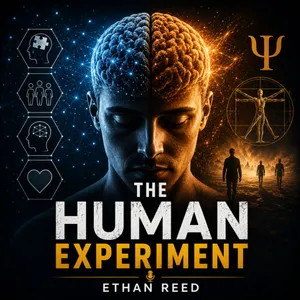
The Human Experiment: Psychology, Behavior & the Science of Being Human Why do we trust some people instantly but distrust others without knowing why? Why do we follow crowds, fear things that rarely happen, remember certain moments for years, and make decisions we later regret? Welcome to The Human Experiment, a documentary-style podcast exploring the psychology, behavior, neuroscience, and hidden forces that shape the way humans think and act. Hosted by Ethan Reed, each episode investigates a fascinating question about human behavior from cognitive biases and social influence to memory, emotions, decision-making, attraction, fear, habits, persuasion, conformity, and the strange ways our brains interpret the world around us. We explore famous psychological experiments, groundbreaking discoveries, surprising behavioral studies, real-world stories, and everyday situations that reveal something deeper about being human. ✔️ Why do people obey authority? ✔️ Why does rejection hurt so much? ✔️ Why do we procrastinate even when we know the consequences? ✔️ Why are first impressions so powerful? ✔️ Why do intelligent people sometimes believe obviously false ideas? ✔️ And why does our brain often make decisions before we're even aware of them? The Human Experiment turns complex psychology and behavioral science into compelling stories that are easy to understand and difficult to forget. No complicated academic lectures. No endless jargon. Just fascinating questions, evidence-based explanations, unexpected discoveries, and practical insights into the human mind. Whether you're interested in psychology, neuroscience, human behavior, science, relationships, decision-making, or simply understanding yourself and other people better, The Human Experiment invites you to look at everyday human behavior from a completely different perspective. Because every day, without realizing it, we're all part of the experiment.
Latest Episodes
The most recent episodes — sign up to get AI-powered summaries of each one.
- Yesterday22 min
Why Your Brain Rewrites Your Memories | The Psychology of False Memories
What if some of your clearest memories aren't as accurate as you think? You can remember a childhood experience in vivid detail, feel certain about a conversation, or picture a moment from years ago as though it happened yesterday. But what if your brain has quietly changed parts of that memory without you realizing it? In this episode of The Human Experiment, hosted by Ethan Reed, we explore the fascinating psychology of memory reconstruction and investigate why human memories can change over time, even when we feel completely certain that we remember the past correctly. We often imagine memory as a mental recording: an experience happens, the brain stores it, and we retrieve it whenever we need it. In reality, remembering is more complicated. Memory is a reconstructive process in which fragments of past experiences are brought together with knowledge, expectations, emotions, and information learned afterward. That means remembering an event is not always the same as replaying it exactly as it happened. We examine how memories can become distorted, why details may change with repeated recollection, and how misleading information can influence what people believe they experienced. We also explore false memories, recollections of events or details that did not happen as remembered and the psychological factors that can make these memories feel convincing. Why can two people remember the same event differently? How can a suggestion alter someone's recollection? And why does confidence in a memory not always guarantee its accuracy? In this episode, discover: How the brain reconstructs memories instead of replaying perfect recordings Why memories can change each time we recall them What false memories are and how they can develop How emotions, expectations, and new information influence recollection Why people can feel certain about memories that contain errors What cognitive psychology and neuroscience reveal about the reliability of human memory We also explore the concept of memory reconsolidation, through which some memories can become susceptible to modification when they are retrieved and subsequently stored again. This process is complex, and not every act of remembering necessarily changes a memory. The implications reach far beyond childhood nostalgia. Memory accuracy matters in relationships, everyday disagreements, personal identity, and eyewitness testimony. Understanding how recollection works can help us become more thoughtful about what we remember and more cautious about assuming that confidence always equals truth. If you're fascinated by psychology, neuroscience, cognitive biases, false memories, human behavior, and the hidden mechanisms of the mind, this episode will challenge one of your most basic assumptions about yourself. The Human Experiment, hosted by Ethan Reed, explores the science behind why we think, feel, remember, and behave the way we do. Because the most unsettling possibility isn't that you sometimes forget the past. It's that you can remember it vividly and still get parts of it wrong. Listen now and discover why your brain may be rewriting the story of your life.
- Yesterday38 min
Why Music Triggers Vivid Memories | The Psychology of Music and Memory
Have you ever heard a song you haven't listened to in years and suddenly felt as though you were back in another moment of your life? A familiar melody can bring back the face of someone you once loved, the atmosphere of an old home, or the emotions of a time you thought you had left behind. Sometimes, the memory feels so vivid that it seems to unfold all over again. But why does music have such a powerful connection to human memory? In this episode of The Human Experiment, hosted by Ethan Reed, we explore the psychology and neuroscience of music-evoked autobiographical memories and investigate why certain songs can unlock vivid personal experiences from the past. Music is more than a sequence of sounds. Throughout our lives, songs become associated with people, places, relationships, celebrations, heartbreaks, and important transitions. When we hear those melodies again, the music can act as a retrieval cue, helping us access memories connected to the experiences in which we first encountered it. We examine how emotional associations, familiarity, and personal meaning contribute to the relationship between music and memory. We also explore why some songs trigger powerful feelings while others leave little impression and why the same melody can mean something entirely different to two different people. What happens inside the brain when a song brings the past rushing back? Why can music sometimes evoke memories that seem unusually detailed? And how do emotion and personal experience shape the way we remember important moments? In this episode, discover: Why music can trigger vivid autobiographical memories How melodies become associated with people, places, and life experiences The connection between emotional memory and the psychology of music Why certain songs can bring back powerful feelings from the past How familiarity and personal associations influence memory retrieval What neuroscience reveals about music, emotion, and the human brain We also explore the role music can play in identity, nostalgia, and our sense of personal history. A song from adolescence may remind us of who we were, while another may bring back a relationship or a moment we haven't thought about for years. However, music does not replay the past like a perfect recording. Memories are reconstructed, and the emotions or details that return can be influenced by our present perspective. A vivid recollection can feel incredibly real without necessarily preserving every detail exactly as it happened. If you're fascinated by psychology, neuroscience, human memory, emotional recall, nostalgia, and the hidden mechanisms of the mind, this episode offers a compelling look at one of the most personal experiences in human life. The Human Experiment, hosted by Ethan Reed, explores the science behind why we think, feel, remember, and behave the way we do. Because sometimes, a song doesn't just remind you of the past. It makes the past feel close enough to touch. Listen now and discover why music can unlock some of our most vivid memories.
- Yesterday22 min
Why Time Speeds Up as We Age | The Psychology of Time Perception
Remember when a single summer felt endless, birthdays seemed impossibly far apart, and an entire year felt like a lifetime? Now, somehow, the months disappear before you even realize they've passed. Why does time seem to move faster as we grow older, even though a minute is still sixty seconds? In this episode of The Human Experiment, hosted by Ethan Reed, we explore the fascinating psychology of time perception and investigate why our experience of time can change so dramatically throughout life. The clock hasn't changed. But the way your brain experiences time might have. Psychologists and neuroscientists have explored several possible explanations for this familiar experience. One involves memory: periods filled with new, distinctive experiences may leave behind richer memories, making them seem longer when we look back. By contrast, familiar routines can blur together, leaving fewer memorable landmarks and making entire months or years feel surprisingly short in retrospect. We also examine the role of attention, novelty, and the way humans perceive time during an experience compared with how they remember it later. A boring afternoon can feel painfully slow while it's happening, yet an eventful year can seem to vanish when viewed from a distance. These seemingly contradictory experiences reveal that psychological time is more complicated than the movement of a clock. In this episode, discover: Why childhood summers often seem longer than adult years How memory influences our perception of time Why familiar routines can make months feel as though they disappear How novelty and new experiences shape our sense of time Why time can feel slow in the moment but fast in retrospect What psychology reveals about aging, attention, and subjective time We also explore the popular idea that each passing year feels shorter as a proportion of your life. While this offers an intuitive explanation, it is not a complete scientific account. Researchers continue to investigate the many cognitive, emotional, and contextual factors that influence how people experience time. The surprising takeaway? You may not be able to slow the clock, but becoming more attentive to your experiences and creating meaningful new memories may change how richly you experience the time you have. If you're fascinated by psychology, neuroscience, human memory, aging, brain science, and the hidden mechanisms behind everyday perception, this episode will change how you think about the passing years. The Human Experiment, hosted by Ethan Reed, explores the science behind why we think, feel, remember, and behave the way we do. Because one of life's strangest mysteries isn't that time passes, it's that the same passing time can feel completely different depending on how we live it. Listen now and discover why life seems to accelerate as you get older.
- Yesterday21 min
How Earworms Save Your Memories | The Psychology of Music and Memory
Have you ever heard a song once, only to find it playing on repeat inside your head hours later? And why can a familiar melody suddenly bring back a memory you haven't thought about in years? In this episode of The Human Experiment, hosted by Ethan Reed, we explore the fascinating psychology of earworms, the catchy musical fragments that seem to get stuck in our minds and investigate how music, emotion, and memory interact inside the human brain. An earworm, sometimes called an involuntary musical image, is a piece of music that repeatedly comes to mind without you deliberately trying to remember it. It might be a chorus, a short melody, or just a few familiar notes. The experience can be entertaining, distracting, or surprisingly difficult to stop. But why does the brain keep replaying certain songs? We examine how repetition, musical familiarity, rhythm, and memorable melodies may contribute to earworms. We also explore the connection between music and autobiographical memory: how a song can become associated with a particular person, place, relationship, or moment in your life. A familiar melody can sometimes bring an old experience rushing back with remarkable emotional intensity. Music may act as a powerful retrieval cue, helping us access memories connected to specific periods of our lives. Yet not every earworm carries a hidden memory, and a song becoming stuck in your head does not automatically mean your brain is trying to communicate a deeper message. In this episode, discover: What earworms are and why songs get stuck in your head How catchy melodies, repetition, and familiarity influence musical recall Why certain songs seem impossible to forget How music can trigger autobiographical memories and emotional associations Why a familiar tune can bring back feelings from another time What the psychology of music reveals about attention, memory, and the human mind We also explore why earworms often appear during routine activities, moments of low attention, or after repeated exposure to a catchy tune. Researchers continue to investigate the mechanisms behind these experiences, revealing how complex and interconnected musical perception and memory can be. This isn't just a story about annoying songs that refuse to leave your head. It's an opportunity to understand how the brain holds on to patterns, connects experiences, and sometimes brings the past into the present through something as simple as a melody. If you're fascinated by psychology, neuroscience, music psychology, human memory, emotional recall, and the hidden mechanisms of everyday thought, this episode will change the way you listen to the songs that stay with you. The Human Experiment, hosted by Ethan Reed, explores the science behind why we think, feel, remember, and behave the way we do. So the next time a song starts playing in your head without warning, ask yourself: why this melody, and why right now? Listen now and discover the surprising psychology of earworms and memory.
- Yesterday16 min
Why Your Brain Craves Instant Gratification | The Psychology of Self-Control
Why is it so hard to resist checking your phone, scrolling for another few minutes, buying something you don't need, or choosing an easy reward over a bigger goal? You know what you should do. You understand the long-term consequences. Yet the immediate reward still feels almost impossible to ignore. In this episode of The Human Experiment, hosted by Ethan Reed, we explore the psychology and neuroscience of instant gratification and why your brain can be drawn toward immediate pleasure even when waiting may serve you better. From social media notifications and online shopping to procrastination and everyday temptations, modern life offers an endless supply of quick rewards. But the desire for immediate satisfaction isn't simply a lack of discipline. It reflects a complex interaction between reward processing, motivation, emotion, learning, and self-control. We investigate how the brain evaluates immediate rewards against future benefits, why uncertainty can make waiting difficult, and how habits can turn short-term pleasure into repeated behavior. We also examine dopamine, a neurotransmitter involved in reward learning, motivation, and the anticipation of rewarding experiences and why it is misleading to describe dopamine as nothing more than a chemical that creates pleasure. Why does a small reward right now sometimes feel more attractive than a much bigger benefit later? How do stress, boredom, and environmental distractions influence our choices? And why can knowing the right decision be so different from actually making it? In this episode, discover: What instant gratification means and why humans seek immediate rewards How reward processing and dopamine relate to motivation and behavior Why delayed gratification can feel psychologically difficult How procrastination and everyday habits reinforce short-term rewards Why smartphones, notifications, and digital distractions can capture our attention How to make long-term goals more manageable by changing habits and your environment We also explore the psychology of delayed gratification: the ability to wait for a future reward rather than choosing immediate satisfaction. The goal isn't to eliminate pleasure or resist every temptation. It's to understand the forces influencing your decisions so you can make choices that better reflect your priorities. Because self-control isn't simply about fighting your brain. It's also about recognizing your triggers, designing better habits, and making the decisions you want to make easier to follow through on. If you're fascinated by psychology, neuroscience, behavioral science, dopamine, habit formation, procrastination, and human decision-making, this episode offers a deeper look at why immediate rewards can be so compelling. The Human Experiment, hosted by Ethan Reed, explores the science behind why we think, feel, and behave the way we do. Your brain wants the reward now. But what happens when you learn to see beyond the next few seconds? Listen now and discover the psychology behind instant gratification.
- Yesterday21 min
The Milgram Obedience Experiment | Why Ordinary People Followed Orders
How far would you go if someone in authority told you to continue, even when you believed another person was suffering? In one of psychology’s most famous and controversial studies, Stanley Milgram set out to investigate a disturbing question: how willing are ordinary people to obey authority when their instructions conflict with their conscience? In this episode of The Human Experiment, hosted by Ethan Reed, we explore the Milgram obedience experiment, the surprising behavior it revealed, and the questions it continues to raise about human psychology. Conducted at Yale University in the early 1960s, Milgram’s research placed participants in a simulated learning experiment. They were instructed to administer increasingly intense electric shocks to a learner whenever an incorrect answer was given. In reality, the learner was an actor, and no actual shocks were delivered. However, the participants believed the situation was real, creating a powerful conflict between following instructions and responding to apparent distress. The results challenged widely held assumptions about obedience, moral responsibility, and the influence of authority figures. In one well-known experimental condition, 65% of participants continued to the maximum labeled shock level. But what explains their behavior? Was it trust in authority, the pressure of the situation, uncertainty about personal responsibility, or a combination of psychological influences? We examine the experiment’s design, its most important findings, and the ethical controversies surrounding the research. We also explore how social pressure, obedience, and moral decision-making can interact when people are placed in uncomfortable situations. In this episode, discover: How Stanley Milgram designed his famous obedience experiment What participants believed was happening during the study Why the experiment became a landmark in social psychology What the widely cited 65% result actually represents How authority and situational pressure may influence human behavior Why the experiment remains controversial and how psychologists interpret its findings Milgram’s research does not prove that everyone obeys authority or that people inevitably abandon their morals under pressure. Instead, it reveals a complex psychological problem: our decisions can be influenced by circumstances in ways that challenge how we understand our own behavior. If you’re fascinated by psychology, behavioral science, social influence, human decision-making, and the hidden forces that shape our choices, this episode offers a compelling introduction to one of the most important debates in the study of human behavior. The Human Experiment, hosted by Ethan Reed, investigates the psychological discoveries that reveal why we think, feel, and act the way we do. One question stays with us long after the experiment ends: when an order conflicts with your conscience, what determines whether you obey or refuse? Listen now to explore the Milgram obedience experiment and the unsettling psychology behind following orders.
- Yesterday15 min
Why 65% Went So Far in the Milgram Experiment | The Psychology of Obedience
Would you follow an order that meant hurting another person, even if every instinct told you to stop? In one of the most unsettling experiments in psychology, researcher Stanley Milgram investigated how far ordinary people would go when instructed by an authority figure. The findings challenged common assumptions about morality, personal responsibility, and the power of obedience. In this episode of The Human Experiment, hosted by Ethan Reed, we explore the famous Milgram obedience experiment and the psychology behind its widely discussed 65% result. Participants believed they were administering increasingly powerful electric shocks to another person whenever that person answered a question incorrectly. Although the apparent shocks were not real, the participants did not know that. An experimenter encouraged them to continue, creating a conflict between following instructions and responding to another person's apparent distress. In the standard condition commonly associated with Milgram's 65% finding, 26 of 40 participants continued to the maximum labeled shock level. But what made them continue? And what does that result really tell us about human behavior? We investigate the psychology of obedience to authority, the pressure of an experimental setting, and the difficult relationship between personal conscience and perceived responsibility. We also examine why people may continue an action even when they feel uncomfortable and why the presence of an authority figure can complicate the decision to refuse. But the experiment raises questions beyond obedience alone. How much responsibility do we accept when someone else gives the instructions? Why can saying no feel difficult in a high-pressure situation? And how should we interpret research that reveals uncomfortable possibilities about human nature? In this episode, discover: What Stanley Milgram's famous obedience experiment actually involved Why the 65% result became one of psychology's most discussed findings How authority can influence behavior and moral decision-making Why participants continued despite apparent signs of another person's distress The relationship between obedience, conscience, and personal responsibility What the experiment can and cannot tell us about human nature Milgram's research does not prove that everyone will obey harmful orders. The results depended on the experimental conditions, and psychologists continue to debate how best to interpret the findings. Understanding those details makes the experiment even more revealing. If you're fascinated by psychology, behavioral science, social influence, cognitive biases, and the hidden forces that shape human decisions, this episode offers a closer look at a landmark study that continues to challenge our understanding of obedience. The Human Experiment, hosted by Ethan Reed, explores the science behind why we think, feel, and behave the way we do. One unsettling question remains: When authority tells you to continue, would you know when to stop? Listen now and discover the psychology behind the Milgram experiment.
- Yesterday1h 17m
Why We Freeze in Crowded Emergencies | The Psychology of the Bystander Effect
Imagine someone collapsing in a crowded public place. Dozens of people notice. Some stop and stare. Others wait for someone else to act. Seconds pass, yet nobody seems certain what to do. Why can an emergency leave a crowd watching instead of helping? In this episode of The Human Experiment, hosted by Ethan Reed, we investigate the psychology of the bystander effect and explore why people sometimes hesitate, freeze, or wait for others to respond when someone urgently needs help. Common sense suggests that the more witnesses an emergency has, the greater the chance that someone will intervene. But human behavior is more complicated. When several people witness the same situation, each person may assume that someone else will take responsibility. Psychologists call this diffusion of responsibility, one of the important mechanisms associated with the bystander effect. We explore how uncertainty, fear of embarrassment, social pressure, and the reactions of people nearby can influence emergency decision-making. When nobody else appears alarmed, a person may question whether the situation is truly dangerous. When everyone waits, that collective hesitation can make it even harder for anyone to take the first step. But does a crowd always make people less likely to help? Not necessarily. Research suggests that the response depends on the situation, how clearly help is needed, whether people recognize their responsibility, and how they interpret the behavior of others. In this episode, we examine what social psychology reveals about the difference between noticing an emergency and actually responding to it. In this episode, discover: What the bystander effect reveals about human behavior in emergencies Why diffusion of responsibility can delay action in a crowd How social influence and uncertainty affect our decisions under pressure Why people sometimes look to others before deciding whether to help How fear of embarrassment can contribute to hesitation What can help people move from passive observation to responsible action These questions matter far beyond dramatic public emergencies. They reveal how ordinary people make decisions when the situation is confusing, the stakes are high, and nobody knows who should act first. Understanding the psychology of the bystander effect does not mean assuming that people are naturally indifferent. It means recognizing the social and psychological barriers that can interfere with helping behavior and understanding how those barriers may be overcome. If you're fascinated by psychology, behavioral science, crowd psychology, social influence, and the hidden forces behind human decision-making, this episode will challenge the way you think about emergencies and human nature. The Human Experiment, hosted by Ethan Reed, explores the science behind why we think, feel, and behave the way we do. Because in an emergency, the most important question may not be who noticed what happened, but who decided to act. Listen now and discover why crowds sometimes hesitate when every second matters.
About The Human Experiment
The Human Experiment: Psychology, Behavior & the Science of Being Human Why do we trust some people instantly but distrust others without knowing why? Why do we follow crowds, fear things that rarely happen, remember certain moments for years, and make decisions we later regret? Welcome to The Human Experiment, a documentary-style podcast exploring the psychology, behavior, neuroscience, and hidden forces that shape the way humans think and act. Hosted by Ethan Reed, each episode investigates a fascinating question about human behavior from cognitive biases and social influence to memory, emotions, decision-making, attraction, fear, habits, persuasion, conformity, and the strange ways our brains interpret the world around us. We explore famous psychological experiments, groundbreaking discoveries, surprising behavioral studies, real-world stories, and everyday situations that reveal something deeper about being human. ✔️ Why do people obey authority? ✔️ Why does rejection hurt so much? ✔️ Why do we procrastinate even when we know the consequences? ✔️ Why are first impressions so powerful? ✔️ Why do intelligent people sometimes believe obviously false ideas? ✔️ And why does our brain often make decisions before we're even aware of them? The Human Experiment turns complex psychology and behavioral science into compelling stories that are easy to understand and difficult to forget. No complicated academic lectures. No endless jargon. Just fascinating questions, evidence-based explanations, unexpected discoveries, and practical insights into the human mind. Whether you're interested in psychology, neuroscience, human behavior, science, relationships, decision-making, or simply understanding yourself and other people better, The Human Experiment invites you to look at everyday human behavior from a completely different perspective. Because every day, without realizing it, we're all part of the experiment.
Customized Recaps
AI-powered recaps with compact key takeaways, quotes, and insights.
Straight to Your Inbox
Get key takeaways from The Human Experiment in a 5-minute read.
Save Hours Every Week
Stay current on your favorite podcasts without falling behind.
Frequently Asked Questions
What is Podzilla's The Human Experiment daily summary?
It's a free AI-powered email that summarizes new episodes of The Human Experiment as soon as they're published. You get the key takeaways, notable quotes, and links & mentions — all in a quick read.
How does the The Human Experiment podcast summary work?
When a new episode drops, our AI transcribes and analyzes it, then generates a personalized summary tailored to your interests and profession. It's delivered to your inbox every morning.
Is this an official The Human Experiment product?
No. Podzilla is an independent service that summarizes publicly available podcast content. We're not affiliated with or endorsed by Ethan Reed.
Can I get summaries of other podcasts too?
Absolutely! The free plan covers up to 3 podcasts. Upgrade to Pro for 15, or Premium for 50. Browse our full catalog at /podcasts.
How often does The Human Experiment release new episodes?
The Human Experiment publishes daily. Our AI generates a summary within hours of each new episode.
What topics does The Human Experiment cover?
The Human Experiment covers topics including Science. Our AI identifies the specific themes in each episode and highlights what matters most to you.
Start getting The Human Experiment summaries tomorrow morning.
Free forever for up to 3 podcasts. No credit card required.
Free forever for up to 3 podcasts. No credit card required.