Free Daily Podcast Summary
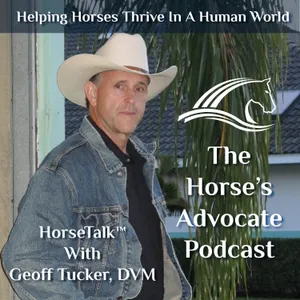
The Horse's Advocate Podcast: Daily Summaries Delivered
by Geoff Tucker, DVM
The Horse's Advocate Podcast is about helping horse owners find the missing horse owner's manual for owning and caring for horses. Geoff Tucker, DVM (aka, "Doc T"), brings you wisdom from almost 50 years with horses. But beware - some of this stuff is NOT what you might expect. When the "box to think outside of" was built, he was never included and remained outside! This show aims to Help Horses Thrive In A Human World.
Latest Episodes
The most recent episodes — sign up to get AI-powered summaries of each one.
- Aug 3, 202620 min
Are Drugs And Machines Necessary To Float Horse Teeth? - The Horse's Advocate Podcast #185
Since 1983, I have seen horse dentistry shift from hand-floating, done without medication or machines, to a mechanical approach using sedation and motorized tools to remove sharp enamel edges. My main argument is that these newer procedures are not proven to achieve better outcomes, yet are often promoted based on arbitrary goals. As a result, horse owners may become confused or exposed to unnecessary techniques that may not benefit their horses. Listeners may react strongly to this podcast because horse dentistry divides opinion. My central point is simple: horses should receive dental care, regardless of the technique. Yet debates over various methods overshadow the real issue: many horses get no dental care at all. It's like missing the main purpose of a journey by arguing about driving style, while the real problem is not picking up the passenger. If horses in rural areas lack access to dental care—whether due to a lack of practitioners or restrictive laws—they continue to suffer. My focus is to explain why I use my methods and to emphasize that it is better for horses to receive reasonable dental care, by any method, than none at all. Timestamps: 0:00 - Introduction 0:32 - My equine dentistry training and personal beliefs. 2:15 - The history of equine dentistry is obscure and non-memorable. 5:44 - The horse's threshold of pain and their ability to express themselves without sedation. 8:02 - The purpose of medicating horses for dentistry. 11:12 - All areas of every tooth can be addressed with hand floats once the anatomy and position of the teeth within the horse's mouth are learned. 13:12 - The three lies often given to say why hand floating is less effective than power floating with sedation. 14:24 - Horsemanship reasons for not using drugs and power equipment to float horses. 16:25 - Practical reasons for not using drugs and power equipment to float horses. 17:44 - Scientific reasons for not using drugs and power equipment to float horses. 18:25 - Conclusions about floating horses and the method used. ******************************* #horses #veterinary #horseteeth #horsecare #equinedentistry Join us at The Horses Advocate Community page: https://community.thehorsesadvocate.com/yt Dentistry: https://theequinepractice.com/ Horsemanship Dentistry School: https://www.horsemanshipdentistryschool.com/c/information/ Facebook: https://www.facebook.com/TheHorsesAdvocate Instagram: https://www.instagram.com/horsesadvocate/ <p data-syno-attrs= "{"textMarks":[{
- Jul 27, 202638 min
How Does Energy Flow Make Your Horse Unhealthy? - The Horse's Advocate Podcast #184
In the last podcast (#183 - How Does Energy Flow Keep Your Horse Alive And Healthy?), the energy potential of the cell is its ability to perform all necessary functions, which was the product of supply (energy flow) and demand (energy resistance). The "sweet spot" for the supply and demand is regulated by the individual. But living in the human world has affected the amount of energy available for cellular functions or the cell's ability to use it (energy resistance). The result can be either too much or too little of each, which results in malfunctioning cells, illness, lameness, and even death. In this podcast, I look at the flow of energy in a way that allows horse owners to see horses as energy containers, with energy flowing through them from food into movement and then into waste (water and carbon dioxide). This simplicity allows us to identify the friction points that cause illness and poor performance. The concepts given here are actually simpler than how you think about your horse care now. Clarity allows you to look at your horses (and possibly yourself) with a better understanding of how the body works. Health improvements come specifically from reduced stress and inflammation, which can help your horse perform better and stay healthier. Timestamps: 0:00 - Introduction and review of Podcast 183. Energy Potential (EP) = Energy Flow (EF) x Energy Resistance (ER), the supply and demand theory, and Energy = mass times the speed of light squared, or E = mc² 3:54 - The 3 cell functions that require energy, all cell functions have a cost, and all cells have a finite maximum amount of energy. 7:23 - Resistance and Energy Flow affect the cell's ability to function. 11:44 - Supply and demand within cells, presented as a math problem: disease is when the product of decreased energy flow and increased energy resistance falls outside of the cell's "sweet spot." 12:35 - Colic in terms of energy. 14:32 - Laminitis in terms of energy. 16:28 - All other diseases in horses in terms of energy. 18:00 - Why increasing food intake doesn't increase cell energy. 21:15 - Using diet and exercise to adjust cell energy use to find the "sweet spot." 25:30 - The effect of stress on cellular energy potential. 27:37 - Summary: energy supply x the demand for that energy = the cell's energy potential (health or illness). ******************************* #horses #veterinary #horseteeth #horsecare #equinedentistry Join us at The Horses Advocate Community page: https://community.thehorsesadvocate.com/yt Dentistry: https://theequinepractice.com/ Horsemanship Dentistry School: https://www.horsemanshipdentistryschool.com/c/information/ <p data-syno-attrs= "{"textMarks":[{"_":"background_color","value":"transparent"},{"_":"font_size"
- Jul 20, 202625 min
How Does Energy Flow Make Your Horse Alive And Healthy? The Horse's Advocate Podcast #183
Everything that happens in horses requires energy. Similarly, every household and business has a budget. When there is enough money, everything is good, and with our horses, if there is enough energy, the horses remain healthy and even thrive. This podcast looks at energy flow like a budget: there is a supply of energy, and there is demand for it to keep the horse functioning. At a cell level, every cell has a function that requires energy: muscles contracting or the brain thinking. In addition, cells also have an energy budget for growth, maintenance, and repair. Finally, the products of metabolism (reactive oxygen species, or ROS) need to be removed, which also incurs a cost. Any added "resistance" to the flow of energy in the cell, such as inflammation and stress, reduces the available energy for the cell's function and maintenance. Timestamps: 0:00 - The basic cause of health in horses. 1:09 - The flow of energy. 4:30 - Oxygen is required for life. 5:36 - Moving one electron from a hydrogen atom to an oxygen atom creates energy that the cell uses. 7:20 - Life is the flow of electrons from hydrogen to oxygen. 8:14 - The vital function of cells. 9:14 - All cell functions have an energy cost, and all cells have an energy budget. 10:30 The cell's vital purpose is determined by its resistance to the flow of energy through the cell. 12:39 - The "sweet spot" of energy flow and energy resistance. 13:16 - The three parts of cell function: vital purpose, growth/maintenance/repair, and stress 17:03 - How can energy flow and resistance in horse cells be changed? 19:37 - Summary: The supply and demand for energy determine the cell's energy potential. ******************************* #horses #veterinary #horseteeth #horsecare #equinedentistry Join us at The Horses Advocate Community page: https://community.thehorsesadvocate.com/yt Dent
- Jul 13, 202646 min
How Helpful Are Vitamins and Supplements For Our Horses? - The Horse's Advocate Podcast #182
There are two ways to provide vitamins, minerals, and amino acids to your horse: through factories or nature. In this episode, I discuss how horses obtain these nutrients naturally and where natural sources fall short. I also explore the production of these nutrients in laboratories and factories. I spend some time looking at where using man-made materials is required due to the environments in which horses live. For example, horses grazing large fields of fresh green grass undoubtedly have different needs than those raised in a dry lot. You will be surprised how adaptive horses can be up to a point. What may be more surprising is how few companies make the ingredients we discuss. Of concern are the many hands in the supply chain, in the production of the final product, and how often they sell the same ingredient under different brand names. 0:01 - Why horses may need supplements. 01:49 - Water: ground versus distilled. 02:17 - Minerals: macro and micro. Common deficiencies. Chelation. Why horses rarely get mineral deficiencies. Thumps (Synchronous Diaphragmatic Flutter), Electrolytes, Rickets, Magnesium deficiency and its associated behavior changes. 09:02 - Protein and amino acid deficiency: Natural versus synthetic amino acids, Signs of an amino acid deficiency, Genetic modification of microorganisms. 13:29 - About 80% of all amino acids and vitamins are made in China—discussion of the supply chain from raw materials to production facilities. 17:15 - The first of two problems: Man-made vitamins and amino acids are either made from chemicals or from genetically modified microorganisms, and the long supply chain from raw materials to the final product in your barn has too many points of non-verifiable steps and materials. 18:32- The second of two problems: How can the deficit or the results of supplementation be verified in the horse? 21:37 - Testing the diet that the horse is eating and comparing that to the signs of deficiencies. 23:21 - The fallacy that placing supplements in the food, other than macronutrients, will fix an underlying energy problem (mitochondria). 25:17 - The chemical in gunpowder that caused increased mitochondrial function and subsequent loss of body fat despite over-eating. It was called DNP (dinitrophenol), which acts as a mitochondrial uncoupler: It disrupts the proton gradient in cells, causing the body to "waste" energy as heat (thermogenesis) instead of storing it as ATP. This ramps up metabolic rate (sometimes by 30–50% or more), leading to rapid fat and carbohydrate breakdown and significant weight loss—even without dieting. (Wikipedia) Banned in 1938 by the FDA. 26:45 - Without the ability to test horses for a deficiency, feed companies just throw in amino acids, vitamins, and minerals to cover any possibilities without any proof they are needed. 29:30 - Vitamin C in humans and horses. 31:06 - Vitamins A, D, E, and K in horses. 33:51 - The B Vitamins. 34:35 - Summary of how and where raw materials are made, and the long supply chain to the final product sold to horse owners. Look at the horse for a deficiency. Look at the diet for deficiencies. Protein deficiency is the most common one seen, with the most problems in horses due to the lack of protein. Remove ingredients that inflame the gut. ******************************* #horses #veterinary #horseteeth #horsecare #equinedentistry Join us at The Horses Advocate Community page: https://community.thehorsesadvocate.com/yt Dentistry: https://theequinepractice.com/ Horsemanship Dentistry School: https://www.horsemanshipdentistryschool.com/c/information/ Facebook: https://www.facebook.com/TheHorsesAdvocate Instagram: https://www.instagram.com/horsesadvocate/ Geoff Tucker is a veterinarian and horseman who has worked with horses since 1973. He earned his Doctor of Veterinary Medicine from Cornell University in 1984. Over the years, Geoff went from mucking stalls as a farmhand to starting his own equine practice. This journey helped him learn how to blend medical care with goo
- Jul 6, 202644 min
Marketing and the Funding Of Science - Reasons Why Horses Are More Sick, Not Less - #181 The Horse's Advocate Podcast
My mailbox and inbox get a never-ending stream of advertisements, all promising that my horse will become free of disease or super-athletic. Some boast scientific research backing their claims, while others have endorsements from winning contestants. All use the time-tested formula of identifying a condition your horse might have, then claiming their product will resolve it. But is any of it true? I will review some advertisements sent to my mailbox and guide you through the essential questions to help you objectively evaluate their claims. My main goal is to encourage you to make informed decisions and consider whether prevention is often more effective than seeking costly cures. Science may be undergoing a revolution because the results scientists are producing don't correspond to improvements in human healthspan or lifespan; both are becoming stagnant. I go over some of the changes at the human level and show how they will help our horses if adopted there as well. ******************************* #horses #veterinary #horseteeth #horsecare #equinedentistry Join us at The Horses Advocate Community page: https://community.thehorsesadvocate.com/yt Dentistry: https://theequinepractice.com/ Horsemanship Dentistry School: https://www.horsemanshipdentistryschool.com/c/information/ Facebook: https://www.facebook.com/TheHorsesAdvocate Instagram: https://www.instagram.com/horsesadvocate/ Geoff Tucker is a veterinarian and horseman who has worked with horses since 1973. He earned his Doctor of Veterinary Medicine from Cornell University in 1984. Over the years, Geoff went from mucking stalls as a farmhand to starting his own equine practice. This journey helped him learn how to blend medical care with good horsemanship. Geoff believes in doing what is best for the horse and also in working with the horse. While at Cornell, he started the Cornell Student Horseman's Association, which organized talks with local experts, a knowledge competition called the Intercollegiate Horse Bowl, and Foal Watch at the Equine Research Park to help with live foal deliveries. Wanting to educate horse owners even more, Geoff also launched the first "I Love New York Horse Symposium," which drew 500 people from across the northeast. Geoff also worked at the Equine Isolation Lab alongside respected colleagues, including Dr. Coggins, whose name is on the well-known test. He worked both part-time and full-time at Cornell's Equine Research Park. On graduation day in 1984, while his classmates celebrated, Geoff drove his fully stocked vet truck to his first call—a sick foal. This marked the beginning of The Finger Lakes Equine Practice, which still operates today. Geoff sold the practice in 1996, worked for a short time at another clinic near Albany, NY, and then started The Equine Practice, focusing on equine dentistry. He continues this work from his base in South Florida. Geoff worked on his first horse's teeth in 1983, when his mentor showed him how to place his hand inside a horse's mouth without medication and rasp off the offending sharp points. He was hooked from the start and made dentistry a key part of his practice. Since then, he has examined the mouths of over 84,000 horses across the United States - yes, he's been counting.
- Jun 29, 202635 min
What Can Horse Owners Do To Prevent The Top 3 Foal Complications? - #180 The Horse's Advocate Podcast
Foals are especially vulnerable in their first months of life. Think about the first time you met a newborn foal—did you know it takes both knowledge and experience to protect them well? In this podcast, we'll dive into three of the top challenges horse owners face with foals just after birth to a few months old. This isn't a complete list, so remember, teaming up with a seasoned professional will always help you stay ahead of problems. I picked these three foal problems because they're common—and, good news, they're all preventable! Imagine welcoming a new foal into the world. Suddenly, you learn that one of the biggest risks it faces is failure of passive transfer (FPT). This can happen if the foal does not drink the mare's first milk within 24 hours of birth. Or, it may occur if the mare's milk leaks out before birth. The resulting weak immune system leaves your foal vulnerable to everyday germs. Illness and even death can follow. Have you ever noticed a foal with diarrhea? It's a common issue, with several possible causes. Diet is usually to blame, but sometimes more serious issues are at play. Have you ever noticed a foal struggling to walk, or perhaps heard about issues like contracted tendons, angular limb deformities, or epiphysitis? In addition to infection and digestive concerns, these developmental orthopedic diseases (DOD) are conditions I often see when I'm called to work on the mare's teeth. The good news is that these issues are almost always diet-related and preventable. ******************************* #horses #veterinary #horseteeth #horsecare #equinedentistry Join us at The Horses Advocate Community page: https://community.thehorsesadvocate.com/yt Dentistry: https://theequinepractice.com/ Horsemanship Dentistry School: https://www.horsemanshipdentistryschool.com/c/information/ Facebook: https://www.facebook.com/TheHorsesAdvocate Instagram: https://www.instagram.com/horsesadvocate/ Geoff Tucker is a veterinarian and horseman who has worked with horses since 1973. He earned his Doctor of Veterinary Medicine from Cornell University in 1984. Over the years, Geoff went from mucking stalls as a farmhand to starting his own equine practice. This journey helped him learn how to blend medical care with good horsemanship. Geoff believes in doing what is best for the horse and also in working with the horse. While at Cornell, he started the Cornell Student Horseman's Association, which organized talks with local experts, a knowledge competition called the Intercollegiate Horse Bowl, and Foal Watch at the Equine Research Park to help with live foal deliveries. Wanting to educate horse owners even more, Geoff also launched the first "I Love New York Horse Symposium," which drew 500 people from across the northeast. Geoff also worked at the Equine Isolation Lab alongside respected colleagues, including Dr. Coggins, whose name is on the well-known test. He worked both part-time and full-time at Cornell's Equine Research Park. On graduation day in 1984, while his classmates celebrated, Geoff drove his fully stocked vet truck to his first call—a sick foal. This marked the beginning of The Finger Lakes Equine Practice, which still operates today. Geoff sold the practice in 1996, worked for a short time at another clinic near Albany, NY, and then started The Equine Practice, focusing on equine dentistry. He continues this work from his base in South Florida. Geoff worked on his first horse's teeth in 1983, when his mentor showed him how to place his hand inside a horse's mouth without medication and rasp off the offending sharp points. He was hooked from the start and made dentistry a key part of his practice. Since then, he has examined t
- Jun 22, 202639 min
The Reason Why Horse Teeth Need To Be Filed (Floated) - #179 The Horse's Advocate Podcast
Filing off sharp edges inside a horse's mouth may seem a bit odd at first glance. If nature is perfect, you might wonder, why would horse teeth need this help? How did horses get by without floating, the process that smooths those sharp edges? These are thoughtful questions, and I explore them—and more—in this podcast. Some of the ideas I present are: - It is the threshold of pain, not how sharp the edges are, that determines how often to float. -Not all tooth enamel is the same among horses. -If a horse is chewing, their teeth need doing. -Using a bit moves the soft tissue into the sharp edges. -Waiting until a problem occurs often results in more aggressive treatments and a poorer outcome.
- Jun 15, 202618 min
Can Ertugliflozin Save My Horse? - #178 The Horse's Advocate Podcast
Glucose is an essential sugar for horses, but too much of it can be harmful. While diet is your main tool for reducing glucose intake, what can you do when your horse still struggles with glucose and insulin control? And are there medications that can help lower blood glucose? Let's explore one option together. If dietary changes are not enough, other strategies can help manage high glucose and insulin. For instance, veterinarians are now turning to a human drug called ertugliflozin (er-TUG-li-flo-zen) to lower blood glucose with promising results. In this discussion, you'll discover how this drug and others in its class work, what the treatment plan entails, and possible side effects to monitor. I'll also explore the cost of treatment and discuss current research on its use in horses.
About The Horse's Advocate Podcast
The Horse's Advocate Podcast is about helping horse owners find the missing horse owner's manual for owning and caring for horses. Geoff Tucker, DVM (aka, "Doc T"), brings you wisdom from almost 50 years with horses. But beware - some of this stuff is NOT what you might expect. When the "box to think outside of" was built, he was never included and remained outside! This show aims to Help Horses Thrive In A Human World.
Customized Recaps
AI-powered recaps with compact key takeaways, quotes, and insights.
Straight to Your Inbox
Get key takeaways from The Horse's Advocate Podcast in a 5-minute read.
Save Hours Every Week
Stay current on your favorite podcasts without falling behind.
Frequently Asked Questions
What is Podzilla's The Horse's Advocate Podcast daily summary?
It's a free AI-powered email that summarizes new episodes of The Horse's Advocate Podcast as soon as they're published. You get the key takeaways, notable quotes, and links & mentions — all in a quick read.
How does the The Horse's Advocate Podcast podcast summary work?
When a new episode drops, our AI transcribes and analyzes it, then generates a personalized summary tailored to your interests and profession. It's delivered to your inbox every morning.
Is this an official The Horse's Advocate Podcast product?
No. Podzilla is an independent service that summarizes publicly available podcast content. We're not affiliated with or endorsed by Geoff Tucker, DVM.
Can I get summaries of other podcasts too?
Absolutely! The free plan covers up to 3 podcasts. Upgrade to Pro for 15, or Premium for 50. Browse our full catalog at /podcasts.
How often does The Horse's Advocate Podcast release new episodes?
The Horse's Advocate Podcast publishes weekly. Our AI generates a summary within hours of each new episode.
What topics does The Horse's Advocate Podcast cover?
The Horse's Advocate Podcast covers topics including Science, Nature, Kids & Family, Animals, Family, Pets & Animals. Our AI identifies the specific themes in each episode and highlights what matters most to you.
Start getting The Horse's Advocate Podcast summaries tomorrow morning.
Free forever for up to 3 podcasts. No credit card required.
Free forever for up to 3 podcasts. No credit card required.