Free Daily Podcast Summary
The History of American Food: Daily Summaries Delivered
by Margaret Hardin
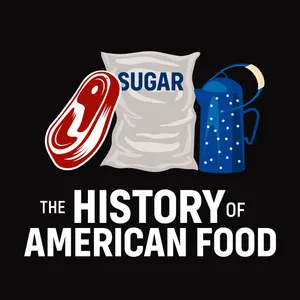
Starting with the first English settlements in the 7th Century, this podcast traces how we went from barrels of salted meat & peas to Korean bbq tacos and the largest grocery store selections ever seen anywhere in the world. We'll go everywhere - and it is full of surprises.
Latest Episodes
The most recent episodes — sign up to get AI-powered summaries of each one.
- 4 days ago31 min
183 Carbohydrates - Sticky
Come listen while I answer the important questions:What is a Carbohydrate? Tune in!Can you actually eliminate all sugar from your diet? Yes! But No in 3 ways.and Can you truly live on meat aloneAlso - The Dinosaur Neil Episode of The Tick - https://youtu.be/bY5pWlU3Mr8?si=Kx-Yh8DNAxQIxqRKand visit me on Substack!Music Credit: Fingerlympics by Doctor TurtleSubstack: https://thoafood.substack.com/Email: TheHistoryofAmericanFood at gmail dot comThreads: @THoAFoodInstagram: @THoAFoodShow Notes: https://thehistoryofamericanfood.blogspot.com/& some other socials... @THoAFood
- 1 weeks ago26 min
182 Proteins: Stringy - Updated
Science - it is back!America has long had a thing about thinking about food as components rather than ingredients. So to help you navigate through what some of these parts are - I'll be doing some science at you. This week - Protein!Links:Velella Photo - https://www.frontiersin.org/articles/10.3389/fmars.2022.817196/fullThe Dinosaur Neil Episode of The Tick - https://youtu.be/bY5pWlU3Mr8?si=Kx-Yh8DNAxQIxqRKMusic Credit: Fingerlympics by Doctor TurtleSubstack: https://thoafood.substack.com/Email: TheHistoryofAmericanFood at gmail dot comThreads: @THoAFoodInstagram: @THoAFoodShow Notes: https://thehistoryofamericanfood.blogspot.com/& some other socials... @THoAFood
- 2 weeks ago27 min
181 Milk Pail, Milk Bottle, Milk at Home
I'll just grab a glass of milk...When did that become a thing? Becasue - it is a VERY American thing. RIght up there with cold cereal for breakfast.Turns out - it became possible at the end of the 19th century. But all the moving parts that had to come together to make it happen are kindof increadible. So come with me on the journey to find out just how a glass of milk at home became possibleBridgerton Clip with Anachronistic Milk Drinking:https://youtu.be/AwdTS5uY1KA?si=h4Ywxe8B0thq1Ea-Music Credit: Fingerlympics by Doctor TurtleSubstack: https://thoafood.substack.com/Email: TheHistoryofAmericanFood at gmail dot comThreads: @THoAFoodInstagram: @THoAFoodShow Notes: https://thehistoryofamericanfood.blogspot.com/& some other socials... @THoAFood
- 3 weeks ago31 min
180 America Goes on a Diet - Part 2 : It's Time to Learn About Cold Cereal & How You Don't Chew Your Food Enough
This week we bust open the most United States of America food of all.Cold CerealMy research has lead me to this - Cold Cereal is the first thing that can be claimed as the first Original Food of the USA.Pumpkin Pie... maybe?Bacon Cheese Burger - I'll consider it.Fried Chicken sandwich - my favorite contender.... but late.Let's talk about how the conditions of colonial America lead to Tony the Tiger and Frosted Flakes.But we aren't there yet. Instead it is bad... but fast cereal. To know how bad - check out my new Substack!The First Cold CerealMusic Credit: Fingerlympics by Doctor TurtleShow Notes: https://thehistoryofamericanfood.blogspot.com/Email: TheHistoryofAmericanFood at gmail dot comThreads: @THoAFoodInstagram: @THoAFood& some other socials... @THoAFood
- Aug 19, 202625 min
179 Food in Paper, Food in Boxes
An important element essential to modern American food didn't happen until the end of the 19th century. But as with so many of the other elements that are underpinnings of American food - it is not a food at all. Instead it is paper made of trees rather than paper made of cloth that has reached the end of it's life.And once wood pulp paper becomes part of the scene - how food is transported, labeled and sold will never be the same.Think about a world before you put could wrap meat in Butcher's Paper, before crackers came in boxes - it looks almost unrecognizable. But come along for the debut of cheap-er paper in American food - and how this changes everything.Music Credit: Fingerlympics by Doctor TurtleShow Notes: https://thehistoryofamericanfood.blogspot.com/Email: TheHistoryofAmericanFood at gmail dot comThreads: @THoAFoodInstagram: @THoAFood& some other socials... @THoAFood
- Jul 24, 20262 min
Alas... a 3 Week Break
Hang in there ... and I'll be back.Hopefully - some interesting posts on the Socials MediaMusic Credit: Fingerlympics by Doctor TurtleShow Notes: https://thehistoryofamericanfood.blogspot.com/Email: TheHistoryofAmericanFood at gmail dot comThreads: @THoAFoodInstagram: @THoAFood& some other socials... @THoAFood
- Jul 22, 202624 min
178 The History of Paper
This week we go back in time to learn about how we got paper.It's been with us for a long time, but until the end of the 19th century it was mostly old clothes.To find out what paper used to be and how we got to paper from trees - tune in.Also - as promised... the links to the W.E.B. Du Bois self tour:https://www.duboisnhs.org/great-barrington-walking-tour/Music Credit: Fingerlympics by Doctor TurtleShow Notes: https://thehistoryofamericanfood.blogspot.com/Email: TheHistoryofAmericanFood at gmail dot comThreads: @THoAFoodInstagram: @THoAFood& some other socials... @THoAFood
- Jul 15, 202627 min
177 Bringing the Sea's Bounty to You - In a Can - But at what Cost?
Wanna see bears? goto Explore.orgSee how many Alaskan canneries there where? Or see more about the Diamond NN Cannery?Follow the linksAnd then listen in to the rise of canned fish in the late 19th century. Instant protein you can take with you anywhere. The cottage cheese of the 19th century - but no refrigeration needed.But - being able to can every last oyster and slamon we could get our hands on had a cost - as well as a payoff.Listen in to find out more Music Credit: Fingerlympics by Doctor TurtleShow Notes: https://thehistoryofamericanfood.blogspot.com/Email: TheHistoryofAmericanFood at gmail dot comThreads: @THoAFoodInstagram: @THoAFood& some other socials... @THoAFood
Get The History of American Food summaries in your inbox
Free AI-powered daily recaps. Key takeaways, quotes, and mentions — in a 5-minute read.
Get Free Summaries →Free forever for up to 3 podcasts. No credit card required.
You Might Also Like
Listeners also like.

Gastropod
Explores the science and history behind food and farming, from ancient feasts to modern aquaculture and everything in between.

Christopher Kimball’s Milk Street Radio
Explores global food stories, interviews with renowned chefs, and unusual culinary topics, from food science to cultural traditions.
Hungry for History with Eva Longoria and Maite Gomez-Rejón
Eva Longoria and Maite Gomez-Rejón explore the cultural and historical roots of foods and drinks through stories, interviews, and recipes.

American History Tellers
Pivotal moments in American history are explored through narrative storytelling, revealing their impact on the nation and modern life.

American English Podcast
Learn American English through everyday expressions, pronunciation practice, and cultural insights from the United States.
The Splendid Table: Conversations & Recipes For Curious Cooks & Eaters
Explores food through cooking, culture, and conversation with chefs, writers, and experts.
Gunfighters
Stories of Old West gunfighters like Billy the Kid, Wyatt Earp, and John Wesley Hardin reveal the violent reality of America's frontier.
The Side Dish from America’s Test Kitchen
Two veteran cooking hosts explore food debates, travel snacks, and listener questions with humor and culinary expertise.

History Unplugged Podcast
Features interviews with history authors and answers to listener questions on a wide range of historical topics.
Ancestral Kitchen
Two women explore traditional food practices and ancestral cooking wisdom for modern kitchens.
The Sporkful
Explores how food shapes human experiences, identities, and connections through curious, everyday eating.

Podcast | ice age farmer
Ice Age Farmer, iceagefarmer.com
About The History of American Food
Starting with the first English settlements in the 7th Century, this podcast traces how we went from barrels of salted meat & peas to Korean bbq tacos and the largest grocery store selections ever seen anywhere in the world. We'll go everywhere - and it is full of surprises.
Customized Recaps
AI-powered recaps with compact key takeaways, quotes, and insights.
Straight to Your Inbox
Get key takeaways from The History of American Food in a 5-minute read.
Save Hours Every Week
Stay current on your favorite podcasts without falling behind.
Frequently Asked Questions
What is Podzilla's The History of American Food daily summary?
It's a free AI-powered email that summarizes new episodes of The History of American Food as soon as they're published. You get the key takeaways, notable quotes, and links & mentions — all in a quick read.
How does the The History of American Food podcast summary work?
When a new episode drops, our AI transcribes and analyzes it, then generates a personalized summary tailored to your interests and profession. It's delivered to your inbox every morning.
Is this an official The History of American Food product?
No. Podzilla is an independent service that summarizes publicly available podcast content. We're not affiliated with or endorsed by Margaret Hardin.
Can I get summaries of other podcasts too?
Absolutely! The free plan covers up to 3 podcasts. Upgrade to Pro for 15, or Premium for 50. Browse our full catalog at /podcasts.
How often does The History of American Food release new episodes?
The History of American Food publishes weekly. Our AI generates a summary within hours of each new episode.
What topics does The History of American Food cover?
The History of American Food covers topics including History, Arts, Food, Culture, Society & Culture. Our AI identifies the specific themes in each episode and highlights what matters most to you.
Start getting The History of American Food summaries tomorrow morning.
Free forever for up to 3 podcasts. No credit card required.
Free forever for up to 3 podcasts. No credit card required.