Free Daily Podcast Summary
The Guide Post: Daily Summaries Delivered
by American Saltwater Guides Association
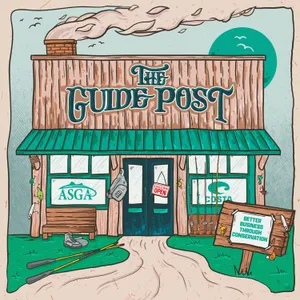
A community hub where anglers, fishing guides, scientists, and policymakers connect to discuss fisheries, their history, their futures, and the importance of effective management.
Latest Episodes
The most recent episodes — sign up to get AI-powered summaries of each one.
- 6 days ago1h 29m
EP230: Menhaden Math Ain't "Mathing"
What if one of the most important numbers in East Coast fisheries management was wrong, and the people in charge didn’t want to hear it?This week on The Guide Post, ASGA President Tony Friedrich sits down with Dr. Jerald Ault of the University of Miami, to explain how a flawed reading of a 1966 tagging study may have overstated menhaden natural mortality, and why the fix could reshape coastwide allowable catch at significant scale. From tarpon migrations to a closed-door peer review, this is the menhaden episode you need to listen to before ASMFC’s next meeting in November.
- 2 weeks ago34 min
EP229: Maryland Striper YOY 2026
Maryland's new young-of-year index was just announced at "5.5", the best since 2018. Last year's index recorded a 4.0. Both of these year classes are worth saving. How do we know? We have been here before.The 1982 Year Class (an 8.45) came after years of poor spawning. Managers protected it with a Maryland moratorium and strict coastwide rules until the females had spawned. Those fish went on to produce the huge 1989 year class that rebuilt the stock. This year's 5.5 is about two-thirds of that. In both cases, a decent year class shows up after years of weak spawning. We often struggle to learn from history, but the lesson here is clear: what managers did with the 1982 fish brought striped bass back from rock bottom.Amendment 3 required states to protect at least 95% of the 1982-class females until they'd spawned at least once, and Maryland shut down harvest entirely from 1985 to 1989. Those fish produced more than 90% of the eggs in 1989, generating a 25.2 index that rebuilt the stock. Our immediate reaction to today's news is "protect this 2026 year class the way we protected 1982," not that things are improving or that "5.5 is a banner year". The 2025 and 2026 fish are our next chance to right decades of wrongs. ASMFC should protect these fish the way we protected them in 1982. We are teetering on a cliff and cannot afford to waste a decent spawn.Good spawns don't rebuild a fishery on their own. How managers behave after those spawns paves the path forward.
- 4 weeks ago1h 13m
EP228: Striped Bass Diet | Abby Remick - Univ. of Maine
Striped bass are arriving in Maine, depleted after a massive spawning migration along the Atlantic coast. What they eat next could shape everything from their recovery to the future of the fishery. Abby Remick breaks down the first coastwide striped bass diet study in the Gulf of Maine, revealing what these fish are actually feeding on, why it matters for management, and what anglers and scientists have been missing.Mario and Jake sit down with Abby, a master's student in Dr. Michelle Staudinger's Lab at the University of Maine, to unpack a highly collaborative project built from Maine's recreational fishing community.
- Oct 2, 20261h 23m
EP227: Menhaden Ad 2 Comments
10/01/2026 from the ASMFC Atlantic Menhaden Addendum II public hearing.
- Sep 29, 20261h 3m
EP226: What The Menhaden!?
What the menhaden!?
- Sep 27, 20261h 19m
EP225: Time To Cut Harvest | Atlantic Menhaden
In the latest episode of The Guide Post, Tony, Mario and Jake examine how a flawed menhaden stock assessment led to detrimental overharvesting of a critical Atlantic resource. The trio makes the case for significantly reducing catch in the coming years to protect the long term viability of the fishery.
- Sep 14, 20262h 9m
EP224: Inviting The Devil to Dinner | Louisiana Hatcheries
There are several videos doing the rounds on social media lately about stocking redfish into Louisiana waters. Redfish are one of Louisiana’s most important game fish. They support a massive recreational fishery, fundamental to the lives of local sportsmen and the State economy. The 2022 Louisiana red drum stock assessment painted a clear picture that the fishery is declining, which matched on-the-water observations from countless guides and anglers in recent years. While the LDWF science supported a substantial reduction in harvest, the political process once again muddied the waters for conservation progress. State-based “conservation” groups pleaded that “one less fish per person was simply too much conservation”. They blamed the menhaden boats for red drum’s problems, often parlayed into arguments about the lack of healthy habitat to support more redfish. Now two years later, these same non profit voices are actively collaborating with the menhaden industry and some of the Gulf’s greatest polluters and violators to supplement the stock with tank-grown, genetically-insufficient hatchery fish. You might be asking: why grow fish if things are so good we don’t need a harvest reduction? The answer is simple: the almighty dollar. Let’s take a peak behind the curtain…
- Sep 1, 20261h 19m
EP223: The Data Was Wrong | MRIP Recalibration
MRIP recalibration is approaching its peak. Now, data revisions show the recreational fishery has been far more overestimated than managers admitted, and the ripple effects reach far beyond one chart. They will reshape the entire future of striped bass management.
Get The Guide Post summaries in your inbox
Free AI-powered daily recaps. Key takeaways, quotes, and mentions — in a 5-minute read.
Get Free Summaries →Free forever for up to 3 podcasts. No credit card required.
You Might Also Like
Listeners also like.
Catch More Bass — Bass Fishing Podcast
Expert bass fishing strategies covering techniques, seasonal patterns, and lure selection for anglers of all levels.
Tank Guide Life — a product of FishKeepingLifeCo
Freshwater aquarium hobby podcast covering science, gear, and stories for beginners and experienced fish keepers.
Dangerous Fly Fishing
karmel612

American Shoreline Podcast Network
Experts discuss coastal business, policy, science, engineering, and advocacy to inform and prepare listeners on American shoreline issues.

The Aquarium Everything Podcast
Jeffrey Senske
MeatEater Conservation
A podcast about outdoor news and conservation issues, featuring interviews with experts and hunters.
The MeatEater Podcast
Explores hunting, fishing, conservation, and wild foods with experts and humor through in-depth outdoor conversations.

Gastropod
Explores the science and history behind food and farming, from ancient feasts to modern aquaculture and everything in between.

Wild
Explores Utah’s fish and wildlife management through behind-the-scenes looks at species, conservation projects, and agency work.
Deep Blue Sea - The Podcast
Two hosts examine the film Deep Blue Sea chapter by chapter across 33 episodes, discussing its scenes, themes, and impact.

The Southern Outdoorsmen Hunting Podcast
Deer hunting strategies for DIY whitetail hunters, covering scouting, terrain, deer behavior, and tactics in the Southeast and beyond.
The Hunting Collective
Explores the ethics, conservation, and cultural values of modern hunting through conversations with prominent voices in the field.
About The Guide Post
A community hub where anglers, fishing guides, scientists, and policymakers connect to discuss fisheries, their history, their futures, and the importance of effective management.
Customized Recaps
AI-powered recaps with compact key takeaways, quotes, and insights.
Straight to Your Inbox
Get key takeaways from The Guide Post in a 5-minute read.
Save Hours Every Week
Stay current on your favorite podcasts without falling behind.
Frequently Asked Questions
What is Podzilla's The Guide Post daily summary?
It's a free AI-powered email that summarizes new episodes of The Guide Post as soon as they're published. You get the key takeaways, notable quotes, and links & mentions — all in a quick read.
How does the The Guide Post podcast summary work?
When a new episode drops, our AI transcribes and analyzes it, then generates a personalized summary tailored to your interests and profession. It's delivered to your inbox every morning.
Is this an official The Guide Post product?
No. Podzilla is an independent service that summarizes publicly available podcast content. We're not affiliated with or endorsed by American Saltwater Guides Association.
Can I get summaries of other podcasts too?
Absolutely! The free plan covers up to 3 podcasts, any in the catalog. Basic raises that to 15, Pro to 40 and Max to 100. Browse our full catalog at /podcasts.
How often does The Guide Post release new episodes?
The Guide Post publishes weekly. Our AI generates a summary within hours of each new episode.
What topics does The Guide Post cover?
The Guide Post covers topics including Science, Natural Sciences. Our AI identifies the specific themes in each episode and highlights what matters most to you.
Start getting The Guide Post summaries tomorrow morning.
Free forever for up to 3 podcasts. No credit card required.
Free forever for up to 3 podcasts. No credit card required.