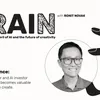
Recently, I moderated a panel at the VRTO Spatial Media Conference about the evolution of value in the age of AI. One of the panelists was Allen Lau, co-founder and former CEO of Wattpad, and now co-founder and Operating Partner at Two Small Fish Ventures.Allen has already lived through an earlier version of the abundance debate we’re having about AI today.Wattpad launched in 2006 with a radically open proposition: anyone with a story could publish it and reach an audience. By the time the company was acquired in 2021, the platform had grown to 100 million monthly users, with one million chapters being uploaded every day, in more than 50 languages.Long before generative AI, the publishing industry worried that opening the gates would overwhelm readers with mediocre writing. But remarkable stories still surfaced. Writers built enormous communities, readers helped determine what mattered, and stories that began on Wattpad became bestselling books, films, and television series.So I invited Allen onto the podcast to ask: What happens to value when everyone can create?What I found especially interesting is that Wattpad wasn’t only dealing with an abundance of human creativity. It was also using AI years before ChatGPT, to help discover them. The platform combined audience engagement, community response, and data to identify work that was resonating and might translate into books, films, or television.In this conversation, we discuss:* What Wattpad learned from making publishing available to everyone* Why audiences were often drawn to authenticity over polish* How communities and algorithms influence which stories become visible* Whether AI diminishes creative value or moves it somewhere else* Why Allen believes ideas still have to come from humans* What becomes scarce when content becomes abundant* Why this may be a golden age for creators, and who risks being left behindSo many good ideas die not because they lack value, but because they never have the chance to surface. Allen is deeply optimistic about AI’s potential to change that. He believes it can remove barriers, help people express ideas beyond their existing technical skills, and turn creative people into what he calls “superheroes.”But greater access also means greater competition. When everyone can create, our finite time and attention become even more valuable. That tension sits at the centre of this episode: If creative production becomes nearly limitless, how do we decide what deserves our attention, and who gets to decide?I hope you enjoy the conversation, and please share your thoughts in the comments.Subscribe to support THE GRAINListen, like, comment, and share THE GRAIN to join the conversation we need to be having about the pleasure and peril of AI and the future of creativity. You can watch this and other video episodes of THE GRAIN Podcast on YouTube.Subscribe to THE GRAIN Newsletter, for deep dives on how AI is impacting creative industries right now. Read more about THE GRAIN and our upcoming live events at thegrain.ai Reach me at ronit@thegrain.ai Follow me on Instagram, LinkedIn and TikTok Get full access to THE GRAIN with Ronit Novak at thegrainai.substack.com/subscribe
Podzilla Summary coming soon
Sign up to get notified when the full AI-powered summary is ready.
Free forever for up to 3 podcasts. No credit card required.
Listen to This Episode
More from THE GRAIN: AI vs. Creativity

PODCAST: AI vs. Chaos—Lisa de Nikolits & Erik Mohr

PODCAST: AI & The City—Anthea Foyer
PODCAST: AI vs. Strategy—Joe Castaldo

PODCAST: AI vs. Inspiration—Marian Bantjes
Get summaries like this every morning.
Free AI-powered recaps of THE GRAIN: AI vs. Creativity and your other favorite podcasts, delivered to your inbox.
Free forever for up to 3 podcasts. No credit card required.