Free Daily Podcast Summary
The Good Fight: Daily Summaries Delivered
by New America
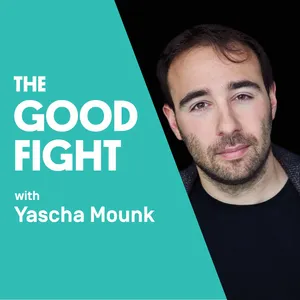
"The Good Fight," the podcast that searches for the ideas, policies and strategies that can beat authoritarian populism.
Latest Episodes
The most recent episodes — sign up to get AI-powered summaries of each one.
- 2 days ago1h 2m
Jerry Kaplan on Why AI Won’t Kill Us All
Yascha Mounk and Jerry Kaplan debate whether the existential risk from AI is overstated—and if so, what we should be worrying about instead. Jerry Kaplan is an artificial intelligence expert, serial entrepreneur, technical innovator, educator, and author. He is currently an adjunct lecturer at Stanford University. In this week’s conversation, Yascha Mounk and Jerry Kaplan discuss why the AI “existential risk” narrative is more science fiction than science, what actually happened during the Hugging Face security incident, and how to think clearly about the real—versus imagined—dangers of AI systems. (For an alternative take on AI’s existential risk, in Persuasion this week Matt Lutz explores why it’s time to worry about AI.) If you have not yet signed up for our podcast, please do so now by following this link on your phone. Email: leonora.barclay@persuasion.community Podcast production by Mickey Freeland and Leonora Barclay. Connect with us! Spotify | Apple X: @Yascha_Mounk & @JoinPersuasion YouTube: Yascha Mounk, Persuasion LinkedIn: Persuasion Community Learn more about your ad choices. Visit megaphone.fm/adchoices
- 6 days ago58 min
Jacob Weisberg on the Contagion of Cowardice
Yascha Mounk and Jacob Weisberg examine why so many powerful people and institutions capitulated to Trump the second time around. Jacob Weisberg is the co-founder of the podcast company Pushkin Industries. He serves as Chair of The Committee to Protect Journalists and is a regular contributor to the New York Review of Books. His latest book is Profiles in Cowardice: A Study of Collaboration in the Trump Era. In this week’s conversation, Yascha Mounk and Jacob Weisberg discuss why American institutions proved far less resistant to Trump in his second term than his first, what figures like Jeff Bezos and Brad Karp reveal about the social nature of courage and cowardice, and whether Harvard’s response to the Trump administration could become a turning point for institutional resistance. If you have not yet signed up for our podcast, please do so now by following this link on your phone. Email: leonora.barclay@persuasion.community Podcast production by Mickey Freeland and Leonora Barclay. Connect with us! Spotify | Apple X: @Yascha_Mounk & @JoinPersuasion YouTube: Yascha Mounk, Persuasion LinkedIn: Persuasion Community Learn more about your ad choices. Visit megaphone.fm/adchoices
- 1 weeks ago1h 6m
Judith Dada on the Rise of the AfD
Yascha Mounk and Judith Dada also discuss why the tech sector is so behind in Europe—and how the continent can become dynamic again. Judith Dada is Co-CEO of Langdock, a leading European AI company, Senior Partner at Visionaries Club, an early-stage European venture capital fund, and is co-author of Europe 2031. In this week’s conversation, Yascha Mounk and Judith Dada discuss what the decline of German industry and infrastructure reveals about the broader crisis of the German model, why the European tech sector is so far behind China and the United States, and what Europe needs to change to become competitive. If you have not yet signed up for our podcast, please do so now by following this link on your phone. Email: leonora.barclay@persuasion.community Podcast production by Jack Shields and Leonora Barclay. Connect with us! Spotify | Apple X: @Yascha_Mounk & @JoinPersuasion YouTube: Yascha Mounk, Persuasion LinkedIn: Persuasion Community Learn more about your ad choices. Visit megaphone.fm/adchoices
- 1 weeks ago45 min
Sarah Longwell on How Democrats Can Defeat Trump
Yascha Mounk and Sarah Longwell discuss why the pro-democracy coalition keeps losing the narrative war—and how it can fight back. Sarah Longwell is publisher of The Bulwark, host of The Focus Group podcast, and author of How to Eat an Elephant: One Voter at a Time. In this week’s conversation, Yascha Mounk and Sarah Longwell discuss why Donald Trump has dominated American politics for a decade, where Kamala Harris went wrong, and how the Democratic Party can win back working-class voters. If you have not yet signed up for our podcast, please do so now by following this link on your phone. Email: leonora.barclay@persuasion.community Podcast production by Mickey Freeland and Leonora Barclay. Connect with us! Spotify | Apple X: @Yascha_Mounk & @JoinPersuasion YouTube: Yascha Mounk, Persuasion LinkedIn: Persuasion Community Learn more about your ad choices. Visit megaphone.fm/adchoices
- 2 weeks ago58 min
Jared Diamond on Whether Leaders Make History
Yascha Mounk and Jared Diamond discuss the age-old question of structure versus agency—and when individual leaders truly change the course of events. Jared Diamond is a professor of geography at the University of California, Los Angeles. His books include Guns, Germs, and Steel, The Third Chimpanzee, and Profits, Prophets, Coaches and Kings: (When) Do Leaders Make a Difference? In this week’s conversation, Yascha Mounk and Jared Diamond discuss how to measure the true impact of individual leaders, why the institutional environment determines how much difference a leader can make, and whether societies are better served by systems that constrain leaders or empower them. If you have not yet signed up for our podcast, please do so now by following this link on your phone. Email: leonora.barclay@persuasion.community Podcast production by Jack Shields and Leonora Barclay. Connect with us! Spotify | Apple | Google X: @Yascha_Mounk & @JoinPersuasion YouTube: Yascha Mounk, Persuasion LinkedIn: Persuasion Community Learn more about your ad choices. Visit megaphone.fm/adchoices
- 3 weeks ago1h 15m
Abigail Marsh on Psychopaths (Rerun)
We’re on vacation this week, so are rerunning a fun “beach read” episode exploring if your nearest and dearest could be psychopaths. Miss us already? In an event exclusively for readers of American Purpose and Persuasion, Yascha Mounk will be interviewing Francis Fukuyama about his life and thought at 5pm on Sunday, September 6 at The Abbey Centre, London. Find out more and get tickets here. Paying subscribers of Persuasion and American Purpose can access a code for a free ticket here. Abigail Marsh is a professor in the Department of Psychology and the Interdisciplinary Neuroscience Program at Georgetown University. In this week’s conversation, Yascha Mounk and Abigail Marsh explore what to do if a child you know might be psychopathic, whether psychopathy is linked to charisma and success, and how to protect yourself. Wondering if you or a loved one might be a psychopath? Take the quiz! If you have not yet signed up for our podcast, please do so now by following this link on your phone. Email: leonora.barclay@persuasion.community Podcast production by Mickey Freeland and Leonora Barclay. Connect with us! Spotify | Apple | Google X: @Yascha_Mounk & @JoinPersuasion YouTube: Yascha Mounk, Persuasion LinkedIn: Persuasion Community Learn more about your ad choices. Visit megaphone.fm/adchoices
- Aug 22, 202650 min
The Eras of Francis Fukuyama: Building Things
Yascha Mounk and Francis Fukuyama discuss his lifelong hobbies—from building furniture to robotics—and why they might save us in the age of big tech. Francis Fukuyama is the Olivier Nomellini Senior Fellow at Stanford University. His latest book is In the Realm of the Last Man. He is also the author of the “Frankly Fukuyama” column at Persuasion. In this week’s conversation, Yascha Mounk and Francis Fukuyama discuss why building things with your hands is an antidote to dependence on big tech, whether AI will erode the practical skills future generations need to survive, and what hobbyist robotics has in common with Ukraine’s battlefield ingenuity. Enjoying this discussion? In an event exclusively for readers of American Purpose and Persuasion, Yascha Mounk will be interviewing Francis Fukuyama about his life and thought at 5pm on Sunday, September 6 at The Abbey Centre, London. Find out more and get tickets here. Paying subscribers of Persuasion and American Purpose can access a code for a free ticket here. We’re delighted to feature this conversation as part of our series on Liberal Virtues and Values. This series, made possible with the generous support of the John Templeton Foundation, features content making the case that liberalism has its own distinctive set of virtues and values that are capable not only of responding to the dissatisfaction that drives authoritarianism, but also of restoring faith in liberalism as an ideology worth believing in—and defending—on its own terms. If you have not yet signed up for our podcast, please do so now by following this link on your phone. Email: leonora.barclay@persuasion.community Podcast production by Jack Shields and Leonora Barclay. Connect with us! Spotify | Apple X: @Yascha_Mounk & @JoinPersuasion YouTube: Yascha Mounk, Persuasion LinkedIn: Persuasion Community Learn more about your ad choices. Visit megaphone.fm/adchoices
- Aug 15, 20261h 0m
The Eras of Francis Fukuyama: How States Form
Yascha Mounk and Francis Fukuyama delve into 9/11, the hubris of humanitarian intervention, and the letter he regretted signing. Francis Fukuyama is the Olivier Nomellini Senior Fellow at Stanford University. His latest book is In the Realm of the Last Man. He is also the author of the “Frankly Fukuyama” column at Persuasion. In this week’s conversation, Yascha Mounk and Francis Fukuyama discuss why Fukuyama initially supported the Iraq War and what changed his mind, how the neoconservative movement’s experience of Eastern Europe shaped its disastrous assumptions about the Middle East, and what his break with former colleagues cost him personally and professionally. Enjoying this discussion? In an event exclusively for readers of American Purpose and Persuasion, Yascha Mounk will be interviewing Francis Fukuyama about his life and thought at 5pm on Sunday, September 6 at The Abbey Centre, London. Find out more and get tickets here. Paying subscribers of Persuasion and American Purpose can access a code for a free ticket here. We’re delighted to feature this conversation as part of our series on Liberal Virtues and Values. This series, made possible with the generous support of the John Templeton Foundation, features content making the case that liberalism has its own distinctive set of virtues and values that are capable not only of responding to the dissatisfaction that drives authoritarianism, but also of restoring faith in liberalism as an ideology worth believing in—and defending—on its own terms. If you have not yet signed up for our podcast, please do so now by following this link on your phone. Email: leonora.barclay@persuasion.community Podcast production by Jack Shields and Leonora Barclay. Connect with us! Spotify | Apple X: @Yascha_Mounk & @JoinPersuasion YouTube: Yascha Mounk, Persuasion LinkedIn: Persuasion Community Learn more about your ad choices. Visit megaphone.fm/adchoices
Get The Good Fight summaries in your inbox
Free AI-powered daily recaps. Key takeaways, quotes, and mentions — in a 5-minute read.
Get Free Summaries →Free forever for up to 3 podcasts. No credit card required.
You Might Also Like
Listeners also like.
The Argument
Two journalists debate current political and policy issues with research-driven arguments and civil discussion.

The Lawfare Podcast
Discussions with experts on national security, law, and policy covering foreign policy, intelligence, cybersecurity, and governance.

The Ezra Klein Show
Conversations on pressing political, social, and cultural issues with experts and thinkers.

Battleground America Podcast
Examines the forces shaping American politics and culture through daily analysis of current events and underlying power dynamics.

The Lawfare Podcast: Patreon Edition
Experts and policymakers discuss national security, law, and policy issues including foreign policy, intelligence, and cybersecurity.

Interesting Times
Explores global shifts and emerging trends through interviews and analysis on the evolving world order.

Another Way, by Lawrence Lessig
Explores policies and movements aimed at restoring democratic power through interviews with activists, politicians, and reformers.

Intelligence Squared
Live debates and in-depth discussions on pressing global issues featuring leading experts and thinkers.

The Find Out Podcast
A weekly discussion dissecting American politics during Trump’s second term with humor, honesty, and left-wing perspective.

Cool People Who Did Cool Stuff
Revolutions, rebellions, and resistance movements throughout history, told through the stories of the people who lived them.

Impolitic with John Heilemann
Candid interviews with figures in politics, media, tech, and culture exploring power, influence, and societal change.

Crazy/Genius
Explores how the internet shapes society, politics, and reality through discussions on AI, misinformation, and digital culture.
Customized Recaps
AI-powered recaps with compact key takeaways, quotes, and insights.
Straight to Your Inbox
Get key takeaways from The Good Fight in a 5-minute read.
Save Hours Every Week
Stay current on your favorite podcasts without falling behind.
Frequently Asked Questions
What is Podzilla's The Good Fight daily summary?
It's a free AI-powered email that summarizes new episodes of The Good Fight as soon as they're published. You get the key takeaways, notable quotes, and links & mentions — all in a quick read.
How does the The Good Fight podcast summary work?
When a new episode drops, our AI transcribes and analyzes it, then generates a personalized summary tailored to your interests and profession. It's delivered to your inbox every morning.
Is this an official The Good Fight product?
No. Podzilla is an independent service that summarizes publicly available podcast content. We're not affiliated with or endorsed by New America.
Can I get summaries of other podcasts too?
Absolutely! The free plan covers up to 3 podcasts. Upgrade to Pro for 15, or Premium for 50. Browse our full catalog at /podcasts.
How often does The Good Fight release new episodes?
The Good Fight publishes 2x weekly. Our AI generates a summary within hours of each new episode.
What topics does The Good Fight cover?
The Good Fight covers topics including News, Politics. Our AI identifies the specific themes in each episode and highlights what matters most to you.
Start getting The Good Fight summaries tomorrow morning.
Free forever for up to 3 podcasts. No credit card required.
Free forever for up to 3 podcasts. No credit card required.