Free Daily Podcast Summary
The Gone Sounds of Jazz with Sid Gribetz: Daily Summaries Delivered
by gribetzsid
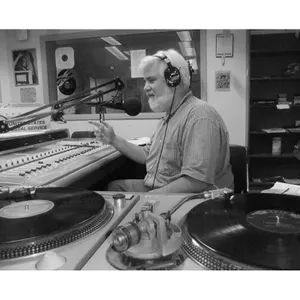
An archive of jazz radio programs focused on intensive in-depth looks at great themes from jazz history. Winner of the Jazz Journalist Association Award for Career Excellence, Sid has been broadcasting for over 40 years on WKCR-FM, NYC. He was also voted ’Best Jazz DJ’ by the Village Voice in its 2008 Best Of NY Issue. Browse the dozens of episodes by scrolling down on this page. Or for an artists’ index, copy this address into your browser: gonesounds.weeblysite.com/
Latest Episodes
The most recent episodes — sign up to get AI-powered summaries of each one.
- 4 days ago4h 53m
Miles Davis-John Coltrane Collaborations
This program presents the masterwork collaborations of John Coltrane with Miles Davis, in context. It can serve as a history primer “Jazz 101" for the jazz lay person; for the aficionado, it can simply be an opportunity to submerge oneself in five hours of intense musical enjoyment. Miles Davis was a teenage trumpet prodigy who came to fame during the bebop years of the 1940's. Despite this reputation and additional successful endeavors, such as with the Birth of the Cool band and other post bebop ensembles, by the mid-1950's Miles had fallen from popularity and was also in ill health. Saxophonist John Coltrane had some accomplishments as a professional jazz musician but in the mid-1950's was mostly performing around his home turf in Philadelphia and searching to develop his sound. Miles Davis regained notoriety with his captivating performance at the 1955 Newport Jazz Festival. In its wake, he was signed to a lucrative contract by major record label Columbia and was booked for many significant concerts and tours. Assembling a new band for these engagements, Davis hired Coltrane for the saxophone chair, and had the stellar rhythm section of Red Garland piano, Paul Chambers bass, and Philly Joe Jones at the drums. From the fall of 1955 through the spring of 1957 this group performed regularly and made numerous now-classic recordings to finish Miles’s existing Prestige Records obligations. When released to begin fulfilling his new Columbia contract, Davis made sessions to constitute the acclaimed “‘Round About Midnight” album on Columbia. Later in 1957 Miles fired Coltrane and Philly Joe, and he moved on to orchestral projects with Gil Evans and a sojourn in France where he did film scores for Louis Malle. Meanwhile Thelonious Monk combined with Coltrane in their legendary association and six month long Five Spot gig, which helped Coltrane’s musical growth to new heights. In 1958, Miles Davis re-formed his combo, bringing back Coltrane, adding the alto sax of Cannonball Adderley, experimenting with different pianists in addition to Garland, such as Bill Evans and later Wynton Kelly, and drummers such as Art Taylor and Jimmy Cobb, to add further textures and flavors to the ensemble. The 1958 band produced great Columbia recordings “Milestones” and the Green Dolphin Street session with Evans, among others. With their continued advances, and adaptation of “modal” styles, the Davis-Coltrane musical collaborations hit its zenith in early 1959. The Miles Davis group created the most famous jazz album of all time, “Kind Of Blue”. At the same time, Coltrane, preparing to leave Davis and emerge in his own stardom, broke out with his “Giant Steps” LP, and moved on in his own career. Finally, as a savory dessert, Coltrane would reunite with Davis for special concert tours in Europe and elsewhere in 1960, and he sat in on Davis’s 1961 “Someday My Prince Will Come” album. originally broadcast July 17, 2022
- 1 weeks ago2h 57m
Lester Young 4
The "Bird-Prez Birthday Broadcast", a 72 hour (and some years longer) marathon celebrating Lester Young and Charlie Parker around their birthday anniversaries, August 27 and August 29, is a long standing tradition at WKCR, and it is among our listeners' favorites. From the 2026 edition, here's a segment that includes a survey of Lester Young's recordings with small groups during the Big Band years of the 1936-1940 period when he was in the Count Basie orchestra.
- 2 weeks ago4h 57m
Bennie Green
While lesser-remembered today, Bennie Green was one of the great trombone players in the post war jazz years, a period when the otherwise cumbersome instrument developed into a persuasive and interpretive soloist’s vehicle. Green had a facile and fluid ease on the trombone, a great sense of rhythm and swing, and a sophisticated understanding of modern jazz harmonies. These traits all informed his ability to succeed in many styles of mainstream jazz, and laid the groundwork for his contributions to the historic developments of jazz trombone. Bennie Green was born in Chicago in 1923 and came of age with lessons from the famed Walter Dyett at DuSable High School, and he also gained influence from his musical family. His first major professional engagement was with the Earl Fatha Hines big band as a teenager. Green was eventually drafted in to the armed forces later in World War II, but after the war he returned to the Hines organization. In the late 1940's, Green joined Charlie Ventura’s popular “Bop For The People” band, and afterwards he resumed an affiliation with the Hines small groups in the early 1950's. In addition to his facility with swing and bop, Green participated in seminal early modern jazz dates with Miles Davis and Charles Mingus. By the later 1950's, Green recorded prolifically as a leader, for Prestige, Blue Note and other labels in the prevalent hard bop idiom, while also swinging hard. As jazz lost its popularity in the rock era, Green worked for a time with Duke Ellington’s orchestra, and then he settled in Las Vegas for a professional career with the resort hotel bands. After a long bout with cancer, Green died in 1977. originally broadcast July 19, 2015 re-broadcast April 4, 2021
- Aug 7, 20264h 58m
Cedar Walton
Cedar Walton is one of the leading “hard bop” pianists to come of age in the late 1950's and 1960's. In addition to his great lyrical skill at the piano, Walton is well-known as a composer and arranger, and this radio show focuses on his compositions. Among the prominent work early in his career was his stint in Art Blakey’s Jazz Messengers in the early 1960's, and he contributed the songs Mosaic, Ugetsu [Fantasy in D], Plexus, and others, which have become classics of the Blakey book. Additionally, Walton has penned many compositions that, if not by title, you will find familiar as standard tunes of the enduring modern jazz repertory, such as Bolivia, Firm Roots, Cedar’s Blues, Afreaka, Mode For Joe, and Turquoise. His songs are dynamic and complex but always “meaty” and accessible numbers for soulful jazz improvisation. This program features both classic and lesser known recordings of Walton’s songs, by Walton’s own groups, from Blakey’s Jazz Messengers, and friends and musical companions such as Joe Henderson, Lee Morgan, Houston Person, Blue Mitchell and Junior Cook. Born in Dallas, Texas in 1934, Walton was selected for the prestigious National Endowment for the Arts Jazz Master Award in 2010. He was still active at the age of 79 when I produced this program in July 2013. Unfortunately, after a brief illness, Walton passed away several weeks later on August 19, 2013. originally broadcast July 7, 2013 re-broadcast September 26, 2021
- Aug 2, 20262h 58m
Coltrane On Atlantic
John Coltrane’s 1959-1960 recordings for the Atlantic record label are surveyed during this three hour program. Having finally left the Miles Davis group, John Coltrane had the opportunity to explore his own developing sounds and lead his own groups. This was a transitional period that featured the breakthrough classic albums “Giant Steps” and “My Favorite Things”. Atlantic’s releases also included memorable songs such as “Like Sonny” and “Central Park West”, and the Milt Jackson collaboration, among other choice treats. originally broadcast September 22, 2019
- Jul 23, 20264h 58m
Some Americans In Paris
There is a long history of American jazz musicians making the scene in Europe, and there are many expatriate stories of note. For this program I’ve selected three significant aspects of Americans in Paris to comprise a five hour package for an afternoon of casual listening. First I will feature Don Byas. Byas was a magnificent tenor saxophonist, fluent in both the swing and bebop idioms, harmonically sophisticated, and possessed of an exquisite tone. He was most prolific from the years 1944-1946 and poised to be a major star, but he moved to France in 1947, where he remained until the mid-1950s, and then lived elsewhere on the continent until his early death in 1972, therefore not achieving greater fame in the US. I will play his many recordings with French musicians which are not as well known but display his awesome talents. For the second portion I’ll turn my attention to the fall of 1953, when during a lengthy residency in Paris during a European tour, the young turks from the Lionel Hampton orchestra conspired to sneak away and record their own music in numerous sessions for local record companies. Gigi Gryce organized and arranged the productions, which included various small and large ensemble settings. These discs are great examples of the beginning careers of brilliant figures such as Gryce, Clifford Brown, Art Farmer, Quincy Jones and others. The final chapter will focus on Lucky Thompson, a sublime genius of the tenor sax and early modern innovator on soprano as well. During extended visits to Paris in 1956 and 1957 he made numerous recordings that were never released in the US until the 21st century but serve as prime examples of his oeuvre. Thompson also moved to Paris full time in 1959, and he lived there into the early 1960s, also producing some fine music in those years. originally broadcast July 12, 2026
- Jul 16, 20264h 53m
Miles Davis Centennial 2
For the Miles Davis Centennial (May 26, 1926) WKCR presented a series of marathon programming over several days. To kick things off, I presented this five hour "Introduction to Miles Davis".
- Jul 10, 20264h 56m
Teddy Charles
Teddy Charles was a hard swinging master of the vibes and also a sophisticated composer and arranger of forward looking sounds. Theodore Charles Cohen was born in 1928 to Jewish immigrant parents in Springfield, Mass. He loved music as a child, noodled on the piano and took drum lessons. As a teenager during the World War II years he played professional gigs filling in for those drafted overseas. He suffered from anti-semitism and chafed at the poor musical prospects in his small town. So, upon graduating high school he was fortunate to move to New York, and he eventually qualified to enroll in Julliard. He also pursued “musical studies” in 52nd Street nightclubs. These were the bebop years, and the youthful Teddy was caught up in the sway of this modern music. It the early 1950s he formed a vibes-guitar-bass trio and later worked closely with pianist Hall Overton and guitarist Jimmy Raney. Teddy’s “New Directions” series for Prestige incorporated his modal ideas and concept of more free form improvisation within straight ahead jazz. It was during this period that his agent had him use the professional name “Teddy Charles”. Prestige records hired Teddy to open and run its California office in 1953 at the age of 25. There he honed his organizational skills, recorded old friend Wardell Gray and “discovered” Sonny Clark and Frank Morgan, among others, for their first recordings. Charles returned to New York and had significant associations with modern workshops and composers, and he developed a long lasting friendship and collaboration with Charles Mingus. He arranged the stunning “Blue Moods” album with Miles and Mingus. Teddy also formed his own favorite group, his Tentet, which gave him the opportunity to explore his complex writing and arranging ideas. The Tentet released two classic albums on Atlantic. In the late 1950s and early 1960s, in addition to his own playing, Charles became an A&R man and producer for record companies and an arranger, championing the likes of Booker Little. He was part of the scene of the “Newport Rebels”. As a producer, he supervised recordings for artists ranging from John Coltrane to Aretha Franklin. Later in the 1960s, fed up with the music business and wishing to explore the other love of his life, sailing, Teddy moved to the Caribbean and became a charter boat captain. In the early 1980s, Charles felt an itch to return to music, so he moved back to New York, living first on City Island and then for many years in Greenport on Long Island, and from those bases he still pursued maritime activity while also returning to the jazz scene and many gigs, working often with Harold Danko. In his later years Teddy collaborated with Chris Byars. They resurrected his tentet charts and other compositions, and Chris organized ensembles for renewed concerts and recordings. Teddy Charles died of heart failure in 2012 at the age of 84. originally broadcast June 21, 2026
About The Gone Sounds of Jazz with Sid Gribetz
An archive of jazz radio programs focused on intensive in-depth looks at great themes from jazz history. Winner of the Jazz Journalist Association Award for Career Excellence, Sid has been broadcasting for over 40 years on WKCR-FM, NYC. He was also voted ’Best Jazz DJ’ by the Village Voice in its 2008 Best Of NY Issue. Browse the dozens of episodes by scrolling down on this page. Or for an artists’ index, copy this address into your browser: gonesounds.weeblysite.com/
Customized Recaps
AI-powered recaps with compact key takeaways, quotes, and insights.
Straight to Your Inbox
Get key takeaways from The Gone Sounds of Jazz with Sid Gribetz in a 5-minute read.
Save Hours Every Week
Stay current on your favorite podcasts without falling behind.
Frequently Asked Questions
What is Podzilla's The Gone Sounds of Jazz with Sid Gribetz daily summary?
It's a free AI-powered email that summarizes new episodes of The Gone Sounds of Jazz with Sid Gribetz as soon as they're published. You get the key takeaways, notable quotes, and links & mentions — all in a quick read.
How does the The Gone Sounds of Jazz with Sid Gribetz podcast summary work?
When a new episode drops, our AI transcribes and analyzes it, then generates a personalized summary tailored to your interests and profession. It's delivered to your inbox every morning.
Is this an official The Gone Sounds of Jazz with Sid Gribetz product?
No. Podzilla is an independent service that summarizes publicly available podcast content. We're not affiliated with or endorsed by gribetzsid.
Can I get summaries of other podcasts too?
Absolutely! The free plan covers up to 3 podcasts. Upgrade to Pro for 15, or Premium for 50. Browse our full catalog at /podcasts.
How often does The Gone Sounds of Jazz with Sid Gribetz release new episodes?
The Gone Sounds of Jazz with Sid Gribetz publishes biweekly. Our AI generates a summary within hours of each new episode.
What topics does The Gone Sounds of Jazz with Sid Gribetz cover?
The Gone Sounds of Jazz with Sid Gribetz covers topics including History, Music. Our AI identifies the specific themes in each episode and highlights what matters most to you.
Start getting The Gone Sounds of Jazz with Sid Gribetz summaries tomorrow morning.
Free forever for up to 3 podcasts. No credit card required.
Free forever for up to 3 podcasts. No credit card required.