Free Daily Podcast Summary
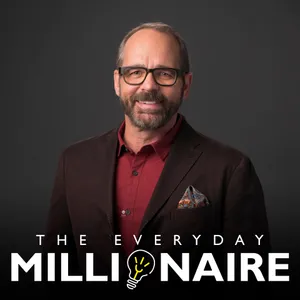
The Everyday Millionaire and Mindset Matters Podcast: Daily Summaries Delivered
by Patrick Francey
Embark on a transformative journey with The Everyday Millionaire Podcast — where real people share the strategies, mindset, and habits that built their wealth, freedom, and purpose. Each episode reveals powerful insights from entrepreneurs, investors, and high performers who turned ordinary beginnings into extraordinary success. Learn proven paths to financial independence, personal growth, and fulfillment — and discover how you can create the life and legacy you deserve.
Latest Episodes
The most recent episodes — sign up to get AI-powered summaries of each one.
- 3 days ago39 min
MindShui Way – Episode #255 - The Hidden Cost of Indecision: What Is Not Deciding Costing You?
What if one of the worst decisions you ever make is the one you never make? In this episode of The MindShui Way, Patrick Francey and Steffany Hanlen Francey explore the hidden cost of indecision and why avoiding a choice is often a decision in itself. We spend enormous amounts of energy worrying about making the wrong move, but rarely calculate what waiting might cost us in lost opportunities, stalled relationships, missed growth and time we can never recover. Patrick introduces a practical framework for looking at decisions, from everyday choices to major business, financial and life decisions. Rather than focusing only on the potential upside, he suggests asking a more useful question: Can I live with the downside if this doesn't work out? By understanding the potential consequences, we can manage risk without pretending we can eliminate uncertainty. Steffany brings another dimension to the conversation, exploring the role of emotion, intuition, values and self-trust. Sometimes we aren't afraid of the decision itself. We're afraid of the outcome, how others may respond, or what making the decision will require from us next. They also examine whose voice may actually be influencing our choices, from parents and partners to peers and the fear of judgment. The conversation tackles analysis paralysis, decision fatigue and the endless search for more information. Patrick and Steffany discuss how systems can reduce unnecessary decision-making and preserve our mental energy for the choices that genuinely matter. Ultimately, making a decision creates direction. It produces feedback, and feedback gives us the opportunity to adjust, rechoose and move forward. Patrick closes with perhaps the most revealing question of all: What if you're avoiding a decision because once you make it, you no longer have an excuse not to act? Sometimes clarity isn't about discovering what you should do. It's about recognizing what has been keeping you from doing what you already know.
- 5 days ago1h 0m
Episode #254 – Matthew Le Merle – From AI to Bitcoin: Matthew Le Merle on Investing in an Exponential Future
What happens when money, ownership, technology and even work itself move onto entirely new digital rails? In this episode of The Everyday Millionaire, Patrick Francey sits down with Matthew Le Merle, Managing Partner and CEO of Fifth Era and Blockchain Coinvestors, for a wide-ranging conversation about blockchain, artificial intelligence, digital finance and what Matthew describes as the emerging autonomous digital economy. Matthew begins by stripping away much of the complexity surrounding blockchain. Just as the internet transformed the movement of information and communication, blockchain provides infrastructure that allows value to move digitally. Money, commodities and assets can increasingly be transferred, stored and transacted in ways that are faster, less expensive and available around the clock. But the conversation goes well beyond technology. Patrick and Matthew explore what rapid innovation means for investors, entrepreneurs and small business owners trying to make decisions in an environment that can feel increasingly uncertain. Matthew argues that resisting change may ultimately be more dangerous than engaging with it. The goal is not necessarily to become an early adopter of every new technology, but to understand where the world may be heading and identify where innovation can solve real problems. They also tackle some of the more uncomfortable questions surrounding digitalization, including privacy, government control, trust, fear and the potential unintended consequences of technology. Matthew offers a framework for thinking about innovation through fear versus optimism and explains why maintaining a positive outlook does not require ignoring legitimate risks. Finally, Patrick and Matthew turn to cryptocurrency and Bitcoin. Matthew distinguishes speculative crypto assets from projects building real technology and explains why he believes Bitcoin still has work to do if it is ultimately going to fulfil its original promise as a practical form of digital money. It is a thoughtful conversation about preparing for change without blindly trusting it, and understanding the opportunities emerging as technology, finance and artificial intelligence increasingly converge.
- 1 weeks ago43 min
MindShui Way – Episode #254 - From People Pleasing to Purpose: Rethinking Who You Are
What if your identity is not something fixed, but something you are continually building? In Episode 254 of The MindShui Way, Patrick Francey and Steffany Hanlen-Francey explore identity as a “living architecture” shaped by our experiences, environment, habits, values, relationships and the feedback we receive from others. Rather than accepting “that’s just who I am,” they challenge listeners to consider whether the identity they are carrying still supports the person they want to become. Steffany introduces three interconnected identity stances: opinion-based, performative and purposeful. Opinion-based identity develops largely through external feedback and other people’s perceptions. While this feedback can help us understand ourselves, becoming dependent on approval can lead to people pleasing and keep us trapped in an outdated version of ourselves. Performative identity emerges when we consciously begin trying on new ways of showing up. Whether becoming a better leader, athlete, speaker, partner or businessperson, growth often requires developing new habits and behaviours before they feel natural. Performance does not necessarily mean being inauthentic. It can be the bridge between who we have been and who we are becoming. Purposeful identity is grounded more deeply in values, meaning and conscious choice. Instead of constantly asking how others see us, we become clearer about what matters, what we stand for and how we want to live. Patrick and Steffany discuss how these identities overlap and change throughout life, from business and sport to relationships and community. Ultimately, the question is not simply “Who am I?” but “Who am I becoming, and is that person aligned with the life I actually want?” Identity is not a destination. It is something we are building every day.
- 2 weeks ago37 min
MindShui Way – Episode #253 -Are You Outsourcing Your Identity? The Hidden Cost of AI and Algorithms
Technology is making us faster, more productive and more connected, but could it also be quietly disconnecting us from ourselves? In this episode of The MindShui Way, Patrick Francey and Steffany Hanlen-Francey explore a question that goes well beyond whether AI is good or bad: Are we unintentionally outsourcing our identity to technology? From AI-generated writing and algorithm-driven social feeds to the endless pull of scrolling, Patrick and Steffany examine how easily outside influences can begin shaping what we think, what we value and even how we present ourselves to the world. Patrick shares his own experience using AI extensively for research and productivity while deliberately protecting his authentic voice. He also discusses how algorithms reinforce confirmation bias, often requiring conscious effort to seek perspectives outside what technology assumes we want to see. Steffany brings the conversation back to awareness and intentionality. She shares a revealing experience of losing three hours to mindless scrolling, unable afterward to remember much of what she had consumed. Her practice of “sun before screens,” along with intentionally returning to physical books and real-world spaces, highlights the importance of creating distance from the constant digital feed. Together, they consider what this means for personal development, creativity, business and younger generations growing up without ever knowing a world before AI and social media. When technology can make almost anyone sound knowledgeable, polished or creative, authentic experience and individual perspective may become more valuable, not less. The challenge is not to reject technology. It is to use it consciously without allowing it to define us. Patrick and Steffany leave listeners with a deceptively simple question: Is this truly who I am, or am I being directed?
- 2 weeks ago1h 0m
Episode #253 - Mike Phillips - Leadership Starts With You, But It’s Never About You, with Mike Phillips
“It’s not what I said, but what you heard. The power of communication is in the person receiving the communication.” – Mike Phillips Leadership may start with you, but according to leadership educator, keynote speaker and coach Mike Phillips, it should never be about you. In this episode of The Everyday Millionaire, Patrick Francey sits down with Mike for a wide-ranging conversation about what separates true leadership from simply holding a leadership title. Drawing on more than 30 years of experience in leadership, coaching, automotive sales and marketing, Mike shares why the best leaders remain committed learners and why earning the trust of the people around you matters more than the title on your business card. Mike and Patrick explore the essential qualities of effective leadership, including vision, grit, character, accountability and, perhaps most importantly, communication. Mike explains why communication is ultimately measured not by what a leader says, but by what the other person actually hears. From unexpressed expectations to assumptions and unclear instructions, they examine how seemingly small communication gaps can create unnecessary friction within teams. The conversation also turns deeply personal as Mike discusses his Christian faith and the role it plays in his approach to leadership, service and relationships. He shares his belief that genuine leadership requires caring about people beyond the results they produce. Mike then recounts the extraordinary experience that profoundly changed his perspective on life. After becoming critically ill with COVID-19 in 2021, developing pneumonia and ultimately suffering the collapse of both lungs, Mike says he died before being revived. He spent approximately 40 days in hospital and emerged with a dramatically different understanding of purpose, family, faith and contribution. His experience provides a powerful reminder that achievement means little if it comes at the expense of health, relationships and the people who matter most. This conversation explores leadership beyond titles and tactics. It is about learning to lead yourself, communicate with clarity, serve others, face adversity with grit and recognize that sometimes the smallest next step can represent an enormous victory. People mentioned (with URLs) Mike Phillips Mike Phillips / Lead The Team John C. Maxwell Maxwell Leadership Chris Voss Chris Voss / The Black Swan Group Chet Holmes Chet Holmes International Jay Conrad Levinson Guerrilla Marketing Tony Robbins Tony Robbins Toby Keith Toby Keith Resources Mentioned The Leadership Toolkit Podcast The Leadership Toolkit / Lead The Team The 21 Irrefutable Laws of Leadership by John C. Maxwell The 21 Irrefutable Laws of Leadership Never Split the Difference by Chris Voss Never Split the Difference / The Black Swan Group Trace Church Trace Church Chet Holmes International Chet Holmes International
- 3 weeks ago37 min
MindShui Way – Episode #252 - AI Can Think for You, But Should It?
Technology is changing how we work, communicate, create, and consume information, but is it also quietly changing how we understand ourselves? In this episode of The MindShui Way, Patrick Francey and Steffany Hanlen-Francey explore a growing tension in our increasingly connected world: the risk of outsourcing our identity to technology. From artificial intelligence and social media algorithms to endless scrolling and the constant search for external validation, they examine what can happen when we begin checking outside ourselves before checking within. Patrick shares his own experience using AI extensively for research and productivity while deliberately protecting his personal voice. AI can make us faster and more capable, but when we allow it to do our thinking, writing, and expressing for us, we risk becoming increasingly indistinguishable from everyone else using the same tools. Steffany brings another dimension to the conversation, reflecting on social media, influencers, athletes, younger generations, and her own experience of unexpectedly losing three hours to mindless scrolling. The issue is not simply how much technology we use, but whether we remain conscious of how it is influencing our thoughts, behaviours, values, and sense of self. Together, Patrick and Steffany make an important distinction: technology is neither inherently good nor bad. AI, algorithms, and social platforms can be incredibly powerful tools. The challenge is ensuring that we are using those tools rather than unconsciously allowing those tools to use us. As technology becomes increasingly embedded in everyday life, self-awareness may become more important than ever. The question isn't whether AI is going away. It isn't. The question is whether you can embrace what technology makes possible while remaining connected to your own experience, values, intuition, creativity, and voice. Before you ask an algorithm what matters, perhaps the better question is: What do I actually think?
- Aug 20, 202634 min
MindShui Way – Episode #251 - How World Champions Think: The Identity Gap That Changes Everything
Feeling stuck rarely means you're incapable of moving forward. More often, it means you're holding tightly to an identity that has already taken you as far as it can. In this episode of The MindShui Way, Patrick Francey and Steffany Hanlen-Francey explore what they call the Identity Gap: the uncomfortable space between who you've been and who you need to become in order to achieve your next level of growth. Using the image of a trapeze artist releasing one bar before catching the next, they explain that transformation always involves uncertainty. Whether you're pursuing athletic excellence, business success, financial freedom, or personal growth, there comes a point where old habits, beliefs, and behaviours must be left behind before new ones can take hold. Steffany shares lessons from coaching Olympic and World Champions, emphasizing that aspiring champions don't yet know what it takes to become champions. True progress begins when people stop trying to coach themselves with theories and instead become willing to learn from those who have already walked the path. Patrick extends this idea into entrepreneurship, reflecting on conversations with highly successful business owners and billionaires who think, decide, and operate at an entirely different level. Together they discuss the importance of intentionally placing yourself in environments that stretch your thinking, even when you feel you don't belong. Whether it's training alongside elite athletes, entering rooms filled with exceptional business leaders, or simply having the courage to pursue an ambitious goal, discomfort becomes the gateway to growth rather than something to avoid. The episode closes with a powerful reminder that the person who created your current results may not be the person capable of creating your future. Growth requires releasing certainty, embracing discomfort, and stepping confidently into the identity of the person you're becoming.
- Aug 18, 20261h 11m
Episode #252 – Tom Cowan – Vaccines, Viruses and Questioning Medical Assumptions with Tom Cowan
"Once you understand that you have agency in your life, then you ask the question: How should I live?" - Tom Cowan Disclaimer: This episode is intended to encourage thoughtful conversation and the exploration of different perspectives. Dr. Tom Cowan shares views on health, medicine, vaccines and disease that differ significantly from established medical and scientific consensus. The views expressed by the guest are his own and do not necessarily reflect those of The Everyday Millionaire, its host or its producers. This conversation is for informational purposes only and should not be considered medical advice. Listeners are encouraged to do their own research and consult qualified healthcare professionals when making decisions about their health. What if some of the things we accept as scientific fact deserve a second look? In this provocative episode of The Everyday Millionaire, Patrick Francey sits down with Dr. Tom Cowan, former medical practitioner, author, speaker and founder of the New Biology Clinic, for a conversation that challenges many conventional assumptions about medicine, disease and human health. Cowan traces his journey from conventional medical training to a radically different approach built around observation, personal experience and questioning established medical models. He argues that rather than beginning with a diagnosis or accepted theory, practitioners should begin with the individual: What changed? What happened before symptoms appeared? What is happening in the person's environment, diet, relationships and life? The conversation ventures into highly controversial territory as Cowan challenges mainstream scientific understandings of viruses, vaccines, bacteria, autoimmune disease and even the causes of heart attacks and cancer. Patrick pushes Cowan to explain how he reached these conclusions, why they differ so dramatically from conventional medicine, and what listeners should do when highly credentialed people offer completely opposing explanations. Cowan also discusses his decision to voluntarily surrender his medical licence, the creation of the New Biology Clinic and his work mentoring practitioners interested in his approach. But beneath the medical debate lies a broader theme that applies far beyond health: How do we know what we think we know? Cowan encourages listeners to become comfortable saying "I don't know," investigate claims rather than immediately replacing one explanation with another, and pay closer attention to their own observations and experiences. Whether you agree with Cowan's conclusions or strongly disagree, this episode invites you to examine assumptions, question inherited beliefs and consider the role personal agency plays in how you approach your health and your life. People Mentioned + URLs Dr. Tom Cowan Dr. Tom Cowan official website Dr. Tom Cowan bio Robert F. Kennedy Jr. - Robert F. Kennedy Jr. official HHS page Dr. Robert Malone - Robert Malone official website Dr. Anthony Fauci - Anthony Fauci official NIAID biography John Enders - John Enders and the 1954 Nobel Prize Robert Gallo - National Cancer Institute Weston A. Price - Weston A. Price Foundation Albert Einstein - Albert Einstein at the Nobel Prize Resources Mentioned New Biology Clinic - New Biology Clinic The New Biology - The New Biology Dr. Tom Cowan - Dr. Tom Cowan The Contagion Myth - The Contagion Myth on Dr. Cowan's website New Biology Curriculum - New Biology Curriculum Weston A. Price Foundation - Weston A. Price Foundation CDC - Centers for Disease Control and Prevention
About The Everyday Millionaire and Mindset Matters Podcast
Embark on a transformative journey with The Everyday Millionaire Podcast — where real people share the strategies, mindset, and habits that built their wealth, freedom, and purpose. Each episode reveals powerful insights from entrepreneurs, investors, and high performers who turned ordinary beginnings into extraordinary success. Learn proven paths to financial independence, personal growth, and fulfillment — and discover how you can create the life and legacy you deserve.
Customized Recaps
AI-powered recaps with compact key takeaways, quotes, and insights.
Straight to Your Inbox
Get key takeaways from The Everyday Millionaire and Mindset Matters Podcast in a 5-minute read.
Save Hours Every Week
Stay current on your favorite podcasts without falling behind.
Frequently Asked Questions
What is Podzilla's The Everyday Millionaire and Mindset Matters Podcast daily summary?
It's a free AI-powered email that summarizes new episodes of The Everyday Millionaire and Mindset Matters Podcast as soon as they're published. You get the key takeaways, notable quotes, and links & mentions — all in a quick read.
How does the The Everyday Millionaire and Mindset Matters Podcast podcast summary work?
When a new episode drops, our AI transcribes and analyzes it, then generates a personalized summary tailored to your interests and profession. It's delivered to your inbox every morning.
Is this an official The Everyday Millionaire and Mindset Matters Podcast product?
No. Podzilla is an independent service that summarizes publicly available podcast content. We're not affiliated with or endorsed by Patrick Francey.
Can I get summaries of other podcasts too?
Absolutely! The free plan covers up to 3 podcasts. Upgrade to Pro for 15, or Premium for 50. Browse our full catalog at /podcasts.
How often does The Everyday Millionaire and Mindset Matters Podcast release new episodes?
The Everyday Millionaire and Mindset Matters Podcast publishes 2x weekly. Our AI generates a summary within hours of each new episode.
What topics does The Everyday Millionaire and Mindset Matters Podcast cover?
The Everyday Millionaire and Mindset Matters Podcast covers topics including Business, Entrepreneurship, Fitness, Health & Fitness, Mental Health. Our AI identifies the specific themes in each episode and highlights what matters most to you.
Start getting The Everyday Millionaire and Mindset Matters Podcast summaries tomorrow morning.
Free forever for up to 3 podcasts. No credit card required.
Free forever for up to 3 podcasts. No credit card required.