Free Daily Podcast Summary
The Edible Valley Podcast: Daily Summaries Delivered
by The Edible Valley Podcast
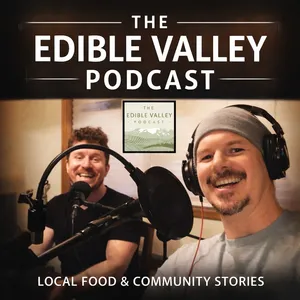
Exploring the food culture of the Comox Valley and Vancouver Island. Interviews with local Chefs, Farmers, and Producers. Hosted by chef Jonathan Frazier , food entrepreneur and writer Darren Howlett and William Stringer the producer.
Latest Episodes
The most recent episodes — sign up to get AI-powered summaries of each one.
- 4 days ago24 min
Football is back! F3 returns for Season 3
Football is back! F3 returns for Season 3 with NFL news, fantasy football tips, game-day food and a whole lot of chicken wings. In the Season 3 opener, Jonathan and Erin get ready for another NFL season with a look at what’s happening around the league, what to watch for as the season gets underway, and how to get your fantasy team ready for game day. They talk about the latest NFL roster moves, the players and teams worth keeping an eye on, and where to find reliable information when setting a fantasy lineup. How much should you trust the stats, the experts, injury reports, podcasts, websites, social media and even AI? With so much information available, they look at how to separate the useful stuff from all the noise. Then it’s time to talk about one of the best parts of football: the food. Jonathan and Erin dig into why food and football go together, from tailgating and sports bars to watching the game at home with friends and family. They also look at how football food is local and how each NFL city has its own food traditions, flavours and favourites. And of course, no F3 episode would be complete without the F3 Food Pick of the Week. This week, it’s all about chicken wings. Jonathan shares his chef tips for getting crispy wings at home, along with some simple sauce ideas including Classic Buffalo, BBQ, Honey Mustard, Honey Garlic, Korean-style, Maple Sriracha and more. Football. Food. Fantasy. Welcome back to F3. -Game Day- Crispy Chicken Wings Chef Jonathan Frazier’s The goal: Crispy wings with lots of flavour, without needing a deep fryer. Ingredients — 4 servings * 2 lb (900 g) chicken wings * 1 tbsp baking powder * 1 tsp kosher salt * ½ tsp black pepper * 1 tsp garlic powder * ½ tsp smoked paprika Method 1. Pat the wings very dry with paper towel. 2. Toss with baking powder, salt, pepper, garlic powder and smoked paprika. 3. For the best results, place the wings uncovered in the refrigerator for 4–24 hours. This helps dry the skin. 4. Heat oven to 425°F / 220°C. 5. Place wings on a rack over a baking sheet, leaving space between them. 6. Bake for 35–45 minute, turning halfway through. 7. Cook until the wings are browned, crispy and reach a safe internal temperature of 165°F / 74°C. 8. Toss with your choice of sauce just before serving. Jonathan’s Chef Tips Dry wings make crispy wings. Let air dry in fridge before hand. * Don’t crowd the pan. * Use a rack whenever possible. * Give them time to brown properly. * Sauce them after cooking, not before. * Make several sauces and let everyone choose their favourite. Sauce Ideas Classic Buffalo * Hot sauce and butter * Add more or less butter depending on how spicy you like it. Honey Garlic * Honey * Garlic * Butter * Soy sauce BBQ * Your favourite BBQ sauce * Add a little hot sauce for heat. Honey Mustard * Honey * Dijon mustard * A little mayonnaise or Greek yogurt Korean-Style * Gochujang(fermented red chili paste) * Honey * Soy sauce * Garlic * Sesame oil Dry Rub * Skip the sauce completely. * Try smoked paprika, garlic, onion powder, black pepper and a little cayenne. Sweet Chili * Sweet chili sauce * Garlic * Lime juice * A little soy sauce Garlic Parmesan * Butter * Roasted garlic * Parmesan * Fresh parsley Jerk * Jerk seasoning * Honey * Lime juice * Butter
- 1 weeks ago20 min
Get Your Ducks in a Row — Mise en Place 101 That Cooking Thing 🍳
Ever start cooking dinner and realize halfway through that you forgot an ingredient, your pan is already hot, and something is starting to burn? We’ve all been there. In Episode 2 of That Cooking Thing, Chef Jonathan Frazier breaks down one of the most important habits professional cooks use every day: mise en place. Mise en place is French for “putting in place,” but it’s really about being prepared before you start cooking. Jonathan explains how to read a recipe, organize your workspace, prepare your ingredients, think about timing, clean as you go, and avoid the chaos that can happen when you’re trying to cook, read, measure, and search for ingredients all at once. And no, you don’t need fourteen little bowls lined up like a cooking show. It’s about better preparation—not more preparation. Jonathan also puts the idea into practice with a simple vegetable stir-fry, showing how a few minutes of preparation can make cooking easier, more organized, and a lot less stressful. In this episode: What mise en place actually means Why reading the entire recipe matters How to organize your workspace The professional kitchen trick of the garbage bowl Preparing ingredients without overdoing it Using timing to plan a meal Cleaning as you go How preparation helps you adapt when things don’t go according to plan A simple vegetable stir-fry you can try at home Chef’s Shortcut: Don’t start cooking until you’re ready to cook. Five minutes of preparation can change the entire experience. 🎧 Listen to Episode 2 of That Cooking Thing and get your ducks in a row before you cook!
- 2 weeks ago17 min
Miami Dolphins, Fantasy Football & Game-Day Food | F3 Podcast Episode 2
The 2024 NFL season is underway, and The F3 Podcast is ready for kickoff! In Episode 2, Erin and Chef Jon turn their attention to the Miami Dolphins, bringing together football, fantasy football, and food inspired by South Florida. Erin breaks down the Dolphins and shares her fantasy football strategy, while Jon explores the flavours of Miami with game-day food ideas inspired by the city’s diverse culinary culture. Expect NFL talk, fantasy football, Dolphins insights, food, trivia, and plenty of husband-and-wife banter as Erin and Jon settle into a season of F3. Football. Fantasy. Food. This is F3.
- 3 weeks ago16 min
Stop Fighting Your Knife — Knife 101 That Cooking Thing 🍳
Why do professional cooks care so much about their knives? And why might a sharp knife actually be safer than a dull one? In the very first episode of That Cooking Thing, Chef Jonathan Frazier goes back to the basics and explores one of the most important tools in any kitchen: the knife. Jonathan breaks down the fundamentals of knife skills, including: 🔪 Why sharp is generally safer 🔪 How to hold your knife for better control 🔪 The claw grip and keeping your fingers safe 🔪 Why consistent cuts help food cook evenly 🔪 Choosing the right knife without spending a fortune 🔪 How to care for and maintain your knife 🔪 Why speed isn’t the goal when you’re learning And because no episode of That Cooking Thing would be complete without a few bad food puns, Jonathan also introduces Chef’s Shortcut and Would a Chef Do This? Then it’s time to put those knife skills into practice with a simple Fresh Vegetable Salsa. Because good cooking isn’t about having the most expensive equipment or cooking like a professional chef. It’s about understanding what the professionals know. 🎧 Listen, learn, and grab your knife. That Cooking Thing Good food. Good cooking. No degree required. Fresh Tomato Salsa Makes: Approximately 2½–3 cups Prep Time: 15 minutes Ingredients 500 g ripe tomatoes, about 4 medium 100 g red onion, about ½ medium 1 small bell pepper, about 100 g 1 jalapeño, seeded for less heat 15 g fresh cilantro, finely chopped 30 mL fresh lime juice, about 1 lime ½ tsp kosher salt, plus more to taste ¼ tsp freshly ground black pepper Optional: ½ tsp ground cumin Method Prepare your cutting board. Make sure it is stable and gives you enough room to work. Prepare the tomatoes. Remove the core and dice the tomatoes into approximately ½ cm pieces. If the tomatoes are particularly watery, you can remove some of the seeds and excess liquid. Dice the vegetables. Dice the red onion and bell pepper into pieces roughly the same size as the tomato. Prepare the jalapeño. Remove the seeds and membrane for a milder salsa, or leave some in if you want more heat. Finely dice. Chop the cilantro. Roughly chop the leaves and tender stems. Combine. Place the tomatoes, onion, bell pepper, jalapeño and cilantro in a bowl. Season. Add the lime juice, salt and black pepper. Add cumin if using. Mix gently. Stir everything together without crushing the tomatoes. Taste and adjust. This is the important part. Taste the salsa and adjust the seasoning. It may need more salt, lime juice or jalapeño. Rest. Let the salsa sit for 10–15 minutes before serving. This allows the flavours to come together. Chef’s Note Consistency matters. The goal isn’t to make every piece perfectly identical. But keeping your tomato, onion and pepper cuts reasonably consistent gives you a better texture and a more balanced bite. And remember Slow is smooth. Speed comes later. Serving Suggestions Serve with: Tortilla chips Grilled chicken Grilled fish Tacos Eggs Burgers Grilled vegetables Best enjoyed fresh and refrigerated promptly.
- 3 weeks ago20 min
Intro to Football, Food and Fantasy : Its The F3 Podcast
The F3 Podcast Welcome to The F3 Podcast, where food, football, and fantasy football collide! As we prepare to begin recording our third season in the next few weeks, we’re taking a look back at where it all began. Join husband-and-wife duo Erin and Jon as they explore their two passions. Erin, a football fanatic and journalist, brings her football knowledge and insights, while Jon, a trained chef, brings the food to the table with delicious game-day recipes and ideas. In this look back, we dive into all the teams of the NFL, revisit some of our early conversations, and get ready for another season of football, fantasy, food, trivia, and plenty of husband-and-wife banter. The F3 Podcast — where football meets food!
- 3 weeks ago27 min
Tacos, Burritos & the Story of Mexican Food with Mauricio Velázquez de León - Episode 273
How did tacos and burritos become two of the world’s most beloved foods? On Episode 273 of The Edible Valley Podcast, Chef Jonathan Frazier talks with longtime food writer, publisher, and author Mauricio Velázquez de León about the history, culture, and evolution of Mexican food. Mauricio is the author of An Illustrated Guide to Tacos and Burritos, a unique book that combines recipes, culinary history, and comic-style illustrations. Born in Mexico City and a longtime food writer and publisher, Mauricio brings both professional experience and a deeply personal connection to Mexican cuisine. He’s also the great-nephew of Josefina Velázquez de León, a pioneering Mexican cookbook author and educator often called the “Julia Child of Mexico.” Jonathan and Mauricio explore the origins of tacos and burritos, regional Mexican food traditions, how Mexican cuisine has evolved as it crossed borders, and what food can teach us about migration, culture, and identity. It’s a conversation about food, family, history—and why tacos and burritos have become such enduring global favourites. Listen to Episode 273 of The Edible Valley Podcast with Mauricio Velázquez de León. We’re also expanding the Edible Valley Podcast with two new shows: F3 Podcast – Food, Football & Fun 🏈🍴 Hosted by Chef Jonathan Frazier and Erin Haluschak, F3 brings together football, fantasy football, food, and plenty of fun. Each episode connects the world of the NFL with great food, team culture, and the stories behind the game. That Cooking Thing 🍳 Hosted by Chef Jonathan Frazier, That Cooking Thing is a practical cooking show designed to help home cooks become more confident in the kitchen. From knife skills and mise en place to stocks, sauces, and beyond, each episode breaks down the techniques chefs use every day and shows how you can use them at home. Both shows are now part of the Edible Valley Podcast family, giving us new ways to share food, cooking, sports, and the people and stories that make our food community special.
- Jul 15, 202623 min
How to BBQ Like a Chef: 5 Mistakes to Avoid This Summer - The Edible Valley Podcast Episode 272
Fire up the grill and join hosts Chef Jonathan Frazier and William Stringer for a celebration of everything that makes summer BBQ season so special. In this episode of The Edible Valley Podcast, they explore the joy of cooking outdoors, sharing meals with family and friends, and making the most of the incredible local ingredients available across Vancouver Island. Whether you’re a seasoned grill master or just getting started, Jonathan and William share practical tips to help elevate your barbecue game. From choosing the right grill and mastering cooking temperatures to avoiding common BBQ mistakes and grilling vegetables to perfection, this episode is packed with useful advice for every backyard cook. They also discuss essential food safety practices to help ensure your summer gatherings are both delicious and safe. The conversation celebrates the people behind our food by highlighting the importance of supporting local farmers, ranchers, fishers, and food producers. So light the grill, gather your favourite people, and tune in for an episode full of great stories, practical cooking tips, and a shared passion for local food. Summer is short, so make every barbecue one to remember.
- Jul 9, 20265 min
Sleep and Learning: Why Rest Makes You a Better Cook — The Edible Valley Podcast Episode 271
This podcast explores the relationship between sleep and learning and how it applies to culinary education. It is based on the article Sleep, Memory, and Plasticity by Walker and Stickgold (2006), which explains that sleep is an active part of the learning process. During sleep, the brain strengthens memories and reinforces newly learned knowledge and skills. As a culinary instructor, I connected this research to my own classroom experience. Students spend time practicing skills such as knife work, chicken fabrication, mise en place, and kitchen organization. I have noticed that students who return to class well-rested often perform with greater confidence, accuracy, and safety. References Rasch, B., & Born, J. (2013). About sleep’s role in memory. Physiological Reviews, 93(2), 681–766. Walker, M. P., & Stickgold, R. (2006). Sleep, memory, and plasticity. Annual Review of Psychology, 57, 139–166.
About The Edible Valley Podcast
Exploring the food culture of the Comox Valley and Vancouver Island. Interviews with local Chefs, Farmers, and Producers. Hosted by chef Jonathan Frazier , food entrepreneur and writer Darren Howlett and William Stringer the producer.
Customized Recaps
AI-powered recaps with compact key takeaways, quotes, and insights.
Straight to Your Inbox
Get key takeaways from The Edible Valley Podcast in a 5-minute read.
Save Hours Every Week
Stay current on your favorite podcasts without falling behind.
Frequently Asked Questions
What is Podzilla's The Edible Valley Podcast daily summary?
It's a free AI-powered email that summarizes new episodes of The Edible Valley Podcast as soon as they're published. You get the key takeaways, notable quotes, and links & mentions — all in a quick read.
How does the The Edible Valley Podcast podcast summary work?
When a new episode drops, our AI transcribes and analyzes it, then generates a personalized summary tailored to your interests and profession. It's delivered to your inbox every morning.
Is this an official The Edible Valley Podcast product?
No. Podzilla is an independent service that summarizes publicly available podcast content. We're not affiliated with or endorsed by The Edible Valley Podcast.
Can I get summaries of other podcasts too?
Absolutely! The free plan covers up to 3 podcasts. Upgrade to Pro for 15, or Premium for 50. Browse our full catalog at /podcasts.
How often does The Edible Valley Podcast release new episodes?
The Edible Valley Podcast publishes biweekly. Our AI generates a summary within hours of each new episode.
What topics does The Edible Valley Podcast cover?
The Edible Valley Podcast covers topics including Education, Arts, Food, Nutrition, Fitness, Health & Fitness. Our AI identifies the specific themes in each episode and highlights what matters most to you.
Start getting The Edible Valley Podcast summaries tomorrow morning.
Free forever for up to 3 podcasts. No credit card required.
Free forever for up to 3 podcasts. No credit card required.