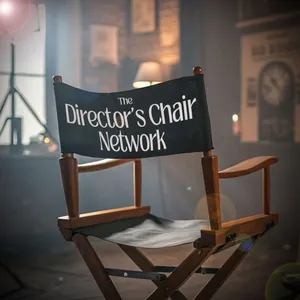
Free Daily Podcast Summary
The Director's Chair Network: Daily Summaries Delivered
by Ryan Rebalkin
Join Ryan and many featured guests and other hosts as they break down and review a variety of directors and their films! So far, this podcast has featured films from Edward Zwick, John Hughes, Brian De Palma, and Michael Mann.Soon, we will feature Edgar Wright, Sam Peckinpah, Paul Verhoeven, and David Fincher!
Latest Episodes
The most recent episodes — sign up to get AI-powered summaries of each one.
- 5 days ago1h 1m
To the Wonder
Ryan and Christian review Terrence Malick’s To the Wonder on the Director’s Chair Network.Neil (Ben Affleck) meets Marina (Olga Kurylenko) in Paris and brings her and her daughter to Oklahoma. The relationship cools as she tries to settle into American life. Christian went in cold; Ryan notes the heavy narration, the poison-in-the-ground motif, and the twirling as a free-spirit marker. They discuss the dreamscape style, the later Malick run, and The Way of the Wind. 0:00 Intro, Christian’s plugs3:43 To the Wonder starts6:30 Plot summary8:00 Olga Kurylenko10:05 Narration note14:48 Twirling16:02 Brooding Ben48:01 Dreamscape take53:27 Hidden Life, Way of the Wind56:59 Thin Red Line invite58:00 William Friedkin next1:00:03 Plugs
- 2 weeks ago45 min
Hollow Man
Paul Verhoeven Hollow ManThe Director’s Chair covers Paul Verhoeven’s Hollow Man, the 2000 studio project that made him quit Hollywood.Written by Gary Scott Thompson and Andrew W. Marlowe, produced by Douglas Wick and Alan Marshall, and scored by Jerry Goldsmith, the film had a $95 million budget and grossed roughly $190 million. Kevin Bacon stars as scientist Sebastian Caine, who develops an invisibility serum for the military and becomes a monster. Verhoeven recognized Plato’s Ring of Gyges in the script. He had been working on a Houdini biopic and a Jesus project that Sony would not fund; he took Hollow Man to keep his team employed and has regretted it since. Elizabeth Shue tore her Achilles early, ballooning the schedule. The invisibility effects required dual shoots, green body paint, and thermal imagery; they were Oscar-nominated. Josh Brolin clashed with Verhoeven on set. The theatrical cut softens the neighbor assault after test audiences found it too early; the director’s cut keeps it. Studio limits on the IP and the inability to take the story outside the lab left Verhoeven feeling like a director-for-hire. Hollow Man was his last American film.0:00 Hollow Man overview, Plato and the Ring of Gyges8:00 Houdini and Jesus projects rejected, Hollow Man accepted16:00 Elizabeth Shue injury, schedule balloon22:00 Invisibility effects, Oscar nomination28:00 Josh Brolin on set34:00 Director’s cut vs. theatrical, the assault scene42:00 Why Verhoeven quit Hollywood48:00 Film walkthrough beginsCREDITSFilm: Hollow Man (2000), directed by Paul VerhoevenSeries: Director’s Chair
- 2 weeks ago1h 50m
The Getaway
Scott and Andrew Gordion, from the Ramblin’ Amblin’ podcast, discuss Sam Peckinpah’s 1972 *The Getaway*The film was released December 19, 1972, written by Walter Hill, and made over $36 million on a $3.5 million budget. McQueen’s production company produced it and he took a healthy back end. Both hosts revisit it after seeing it as teenagers. They talk about the oppressive real Texas prison opening, McQueen’s moments of vulnerability with Ali MacGraw, the propulsive Quincy Jones score, and the heist and hotel shootout as peak Peckinpah action. The Rudy/vet/wife B-plot is the part neither remembered and both find the most uncomfortable, especially when played for broader laughs than the sexual politics in films like *Straw Dogs*. They also cover the novel’s darker ending versus the film’s warmer note with Slim Pickens.0:00 Andrew Gordion joins, film facts and box office8:00 Peckinpah and McQueen context, Junior Bonner16:00 First-time and teenage memories of the film24:00 Prison opening, vulnerability, real Texas jail32:00 Quincy Jones score and the pedal sequence40:00 The Rudy B-plot and problematic elements52:00 Heist, aftermath, and the hotel shootout68:00 Ending versus the Jim Thompson novel76:00 Ratings and next episode teaseCREDITSFilm: The Getaway (1972), directed by Sam PeckinpahGuest: Andrew Gordion (Ramblin’ Amblin’ podcast)Host: Scott
- Oct 4, 20261h 11m
Tree of Life
Ryan is in the middle of a Terrence Malick season on Directors Chair Network, and this one is *The Tree of Life*. Last time out he sat with Craig on *The New World*. This time Doug is in the chair. They have been doing shows together for years and still have not met in person. Both are fathers of sons, which is why this film landed where it did.Doug had never seen a Malick movie. *The Thin Red Line* had scared him off years ago because he wanted *Full Metal Jacket* and heard this was the opposite. So he walked into the most Malick film Malick has made with no warning. Book of Job on the opening card. A short look at Jessica Chastain. Then about twenty minutes of the universe being built, including dinosaurs. He hated Ryan for the first half hour. Then he could not stop thinking about it.They get into why. Natural light in Waco, no generators, handheld cameras, a creation sequence built with Douglas Trumbull instead of CGI. Brad Pitt as nature, Jessica Chastain as grace, Sean Penn as the grown son remembering a 1950s Texas childhood that felt a lot like their own 1980s. Elbows off the table. A father trying to raise boys who can survive. A middle son who dies at 19, and the film never tells you how. A beach at the end where people are walking toward the water and, for the first time, Jack is smiling.Also in the mix: Palme d’Or, an Oscar nomination, theaters that posted warning signs, a cinema in Italy that ran the reels backwards and nobody noticed, and the son’s initials spelling Job. Chastain says she still cannot watch it. Pitt compares Malick to a diver who follows the turtle until he cannot see the boat.If this is your first Malick, Doug is you. If you already love him, Ryan bought the Blu-ray in 2011 and had not put it back on until this week. Next up is *To the Wonder*. Doug will be back on the channel. Comments are open if you walked out at the dinosaurs.
- Sep 26, 20261h 33m
Junior Bonner
Scott hosts Bloody Sam, a Peckinpah fan podcast, with guest Paul of Spotlight — the Star Trek-movies show that started as a 13-episode dare and is now pushing 150. After a botched intro they keep anyway.*Junior Bonner* (1972): Jeb Rosebrook script, McQueen first, Peckinpah for hire, still stamped. 92% on 24 RT reviews, 6.7 IMDb, $2.8M on $3.2M. Shot at Prescott, Arizona’s real rodeo while Sam was still cutting *Straw Dogs*. They talk dad-and-son scenes, Ace’s practiced front, Ida Lupino putting McQueen in his place over apple pie, the underwritten romance vs *American Graffiti*, long rodeo stretches you skip, fading-west themes that rhyme with *Ride the High Country* and *The Wild Bunch*. Paul’s disc-collector detour: flipper *Wild Bunch*, botched *Pat Garrett* box sets, the BFI print at the Prince Charles.Scales: Bloody Sam 1/5 (bruises only). Nietzsche 3/5. Pecking nah from Paul, gentle pecking yeah from Scott. Next month: *The Getaway*.Spotlight wherever you get pods. Scott also does All 90s Action All the Time
- Sep 4, 20261h 13m
The New World
Ryan welcomes returning co-host Craig back to The Director’s Chair Network for Terrence Malick’s *The New World* (2005).They talk first viewings in theaters, why Malick belongs on the biggest screen possible, the three existing cuts of the film, Emmanuel Lubezki’s natural-light cinematography, and James Horner’s famously unhappy score experience. The conversation covers Colin Farrell as John Smith, Christian Bale as John Rolfe, Q’orianka Kilcher’s breakout as Pocahontas, Christopher Plummer’s brief but sharp work, and how the movie handles the historical romance without turning it into Disney.Craig previously hosted the Brian De Palma season on the network. Also happening on the channel: Sam Peckinpah coverage from Scott Murphy, plus thanks to Katie (John Hughes), Andy (Edgar Wright), and Sicco (Paul Verhoeven). Ryan and Craig also tease covering Michael Mann’s *Heat 2* when it arrives.A long, immersive sit with one of Malick’s most visually stunning films.00:00 – Intro, Craig returns, network updates (Peckinpah, De Palma, Hughes, Wright, Verhoeven) 04:00 – Their history with Malick and first seeing *The New World* in theaters 10:00 – Three cuts of the film and the Criterion set 14:00 – James Horner’s score and his public frustration 20:00 – Plot overview: Jamestown, Smith, Pocahontas, Rolfe 28:00 – Look, authenticity, and Lubezki’s cinematography 35:00 – Colin Farrell and the John Smith romance 42:00 – Christian Bale as John Rolfe 48:00 – Q’orianka Kilcher’s casting, age, and performance 58:00 – Christopher Plummer and the fighting sequences 1:05:00 – How Malick actually directs on set 1:12:00 – Final thoughts, box office, and why the film has grown 1:16:00 – Heat 2 tease and wrap-up
- Aug 5, 20261h 4m
Soldier of Orange - Film Review (Part 2)
In-depth analysis of Paul Verhoeven’s 1977 classic *Soldier of Orange* (*Soldaat van Oranje*). We cover the film’s personal roots for Verhoeven, its massive production and royal involvement, historical context of the Dutch occupation, fraternity hazing as fascist allegory, multiple cuts, critical reception, and a detailed scene-by-scene look at one of the most realistic war films ever made. 00:00 Intro & Series Context 00:46 Why Soldier of Orange Matters 01:00 Personal Connection & Atmosphere of Occupation 02:04 Anti-German Sentiment & Language 02:35 Dutch Royalty & Nazi Ties 03:31 Royalty as Major Theme 03:56 Budget, Financing & Royal Support 05:10 Premiere & Royal Attendance 07:16 Multiple Cuts & Survival Run 08:51 Cult Status & Legacy 09:15 Opening Montage & Newsreel Blend 09:30 Hazing Scene & Fascist Imagery 11:28 Fraternity Culture & Elite Networks 13:37 Introducing the Main Characters 14:08 Pre-War Life & War Announcement 15:35 Invasion Begins 17:47 Early War Experiences 19:27 Summer Under Occupation 20:00+ Escape Plans, Resistance, Espionage & Key Plot Points (Continues through detailed scene analysis, character arcs, themes of collaboration, class, and the film’s ending)Thanks for watching this entry in the Director’s Chair series on Paul Verhoeven.
- Aug 4, 20262h 29m
Straw Dogs (1971)
In-depth discussion of Sam Peckinpah’s 1971 film Straw Dogs, featuring guest Liam (co-host of the Spotlight Star Trek podcast and major Peckinpah fan). We cover the film’s origins, Peckinpah’s career and struggles, the infamous controversy, themes of masculinity and violence, editing, score, and why it’s one of Liam’s all-time favorites.Content warning: This episode contains detailed discussion of sexual assault and extreme violence.Timestamps:00:00 Intro & Film Stats01:40 Liam’s Podcasting Background (Spotlight)05:30 Peckinpah Fandom Origin Story12:00 Discovering The Wild Bunch & Straw Dogs18:00 Peckinpah’s Career Struggles & What-Ifs25:00 Trigger Warning & Entering Straw Dogs30:00+ Film Discussion, Themes, Editing, Score, Controversy & RankingsHuge thanks to Liam for joining. Check out Spotlight (the Star Trek podcast from a non-Trekkie perspective) wherever you get your podcasts.Next episode: Junior Bonner.
Get The Director's Chair Network summaries in your inbox
Free AI-powered daily recaps. Key takeaways, quotes, and mentions — in a 5-minute read.
Get Free Summaries →Free forever for up to 3 podcasts. No credit card required.
You Might Also Like
Listeners also like.

The Film That Blew My Mind
Directors and artists discuss one film that deeply influenced their life and work in conversations led by former Sundance leaders.
Unspooled
Two film enthusiasts analyze classic and contemporary movies, breaking down scenes, characters, and cultural impact.
The Filmcast
Film critics and guests discuss recent movies, TV shows, and entertainment news with analysis and debate.
Now Playing - The Movie Review Podcast
Reviews major film franchises with in-depth analysis, behind-the-scenes details, and humorous critiques.

HOLLYWOODLAND
Examines crimes connected to Hollywood figures and film history, from murders to conspiracies and scandals.
Conversations with Charlie
THEPODMATRIX
The Big Picture
Film critics discuss essential movies, rankings, drafts, and awards season with deep analysis and curated lists.
Critical Darlings
Film critics Richard Lawson and Alison Willmore analyze new movie releases, from blockbusters to indie darlings and awards contenders.
Table Read
Hollywood actors perform acclaimed screenplays with cinematic sound design and immersive audio.
The Town with Matthew Belloni
A Hollywood insider explores the business and power dynamics behind movies, TV, and streaming with executives, dealmakers, and journalists.

House of R
Two hosts explore fantasy and sci-fi franchises through deep dives on themes, characters, and storytelling across pop culture.
How Did This Get Made?
Comedians dissect hilariously bad films, from cult classics to major flops, with sharp humor and celebrity guests.
About The Director's Chair Network
Join Ryan and many featured guests and other hosts as they break down and review a variety of directors and their films! So far, this podcast has featured films from Edward Zwick, John Hughes, Brian De Palma, and Michael Mann.Soon, we will feature Edgar Wright, Sam Peckinpah, Paul Verhoeven, and David Fincher!
Customized Recaps
AI-powered recaps with compact key takeaways, quotes, and insights.
Straight to Your Inbox
Get key takeaways from The Director's Chair Network in a 5-minute read.
Save Hours Every Week
Stay current on your favorite podcasts without falling behind.
Frequently Asked Questions
What is Podzilla's The Director's Chair Network daily summary?
It's a free AI-powered email that summarizes new episodes of The Director's Chair Network as soon as they're published. You get the key takeaways, notable quotes, and links & mentions — all in a quick read.
How does the The Director's Chair Network podcast summary work?
When a new episode drops, our AI transcribes and analyzes it, then generates a personalized summary tailored to your interests and profession. It's delivered to your inbox every morning.
Is this an official The Director's Chair Network product?
No. Podzilla is an independent service that summarizes publicly available podcast content. We're not affiliated with or endorsed by Ryan Rebalkin.
Can I get summaries of other podcasts too?
Absolutely! The free plan covers up to 3 podcasts, any in the catalog. Basic raises that to 15, Pro to 40 and Max to 100. Browse our full catalog at /podcasts.
How often does The Director's Chair Network release new episodes?
The Director's Chair Network publishes 2x weekly. Our AI generates a summary within hours of each new episode.
What topics does The Director's Chair Network cover?
The Director's Chair Network covers topics including Film, TV & Film, Film Reviews. Our AI identifies the specific themes in each episode and highlights what matters most to you.
Start getting The Director's Chair Network summaries tomorrow morning.
Free forever for up to 3 podcasts. No credit card required.
Free forever for up to 3 podcasts. No credit card required.