Why Your Tears Are More Powerful Than You Think: 5 Scientific Secrets of Crying
😢 Why do humans cry? Why do some people feel like crying but can't? And could your tears actually change another person's behavior?In this episode, we explore the surprising science behind one of humanity's most misunderstood behaviors. Discover why medications, depression, and dry-eye disorders can prevent tears, why scientists question the idea of a "good cry," and how your brain orchestrates the complex act of sobbing. You'll also learn about groundbreaking research showing that emotional tears contain chemical signals capable of reducing aggression by nearly 44%, revealing tears as an evolutionary survival tool rather than simply an emotional response.From neuroscience and psychology to evolutionary biology, this episode uncovers five remarkable discoveries that completely transform how we think about crying.🎧 Perfect for listeners interested in neuroscience, psychology, biology, emotions, mental health, and human behavior.Sources: Healthline; Tilburg University (Crying, Catharsis, and Health); Weizmann Institute of Science (reported by The Guardian); MDPI Encyclopedia (Central Autonomic Mechanisms in Laryngeal Activity and Vocalization); Encyclopedia on Early Childhood Development (Debra M. Zeifman). 📚#Neuroscience #Psychology #Crying #BrainScience #MentalHealth #HumanBehavior #Biology #SciencePodcast #Emotions #Evolution 🧠💧
Podzilla Summary coming soon
Sign up to get notified when the full AI-powered summary is ready.
Free forever for up to 3 podcasts. No credit card required.
Listen to This Episode
More from The Deep Dive Lab: Unraveling Materials Science
Alcohol Doesn't Just Damage Your Liver—It Reprograms Your DNA 🧬🍺
Top 3 Grand Challenges of Modern Chemistry: Solving Matter, Energy, and Life

8.5 Million Hidden Genes: How Vietnam Is Transforming the Future of Precision Medicine
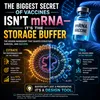
Your Vaccine's Biggest Secret Isn't mRNA—It's the Liquid Around It
Get summaries like this every morning.
Free AI-powered recaps of The Deep Dive Lab: Unraveling Materials Science and your other favorite podcasts, delivered to your inbox.
Free forever for up to 3 podcasts. No credit card required.