Free Daily Podcast Summary
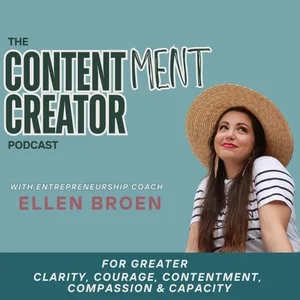
The Contentment Creator: Daily Summaries Delivered
by Ellen Broen
Get key takeaways, quotes, and insights from The Contentment Creator in a 5-minute read. Delivered straight to your inbox.
Latest Episodes
The most recent episodes — sign up to get AI-powered summaries of each one.
- Today13 min
3 Steps to Feel Your Emotions (Effective Emotional Processing)
Why does it feel so difficult to know what we’re actually feeling in real time? And why do emotions sometimes feel either completely inaccessible… or overwhelmingly intense?We unpack how emotions are not abstract experiences happening only in the mind, but physical sensations that live throughout the body. Tight jaws, racing hearts, sinking stomachs, constricted throats, tense shoulders, shallow breathing, and chronic muscle tension are often emotional signals happening beneath conscious awareness. What many people call “being disconnected from themselves” is often a nervous system that learned early on that feeling emotions was unsafe.When we disconnect from emotional signals, we often disconnect from our ability to make aligned decisions and recognize what genuinely feels right or wrong for us.Through this episode, we walk through practical emotional processing tools designed to build emotional awareness safely and graduallyThis episode emphasizes that emotional resilience is not about becoming less emotional or “unbothered.” It’s about developing the capacity to stay connected to yourself while emotions move through you without immediately suppressing, escaping, or becoming consumed by them. Because when emotions become more fluid and accessible, joy, connection, authenticity, creativity, and self-trust become more accessible too.Ultimately, this conversation is a reminder that emotions are not weaknesses to overcome. They are part of being fully alive. And healing often begins the moment we stop asking ourselves to feel less… and instead learn how to feel safely.RESOURCES:Free Guide: Growth Without Burnout: https://ellenbroencoaching.kit.com/b51104bb4dCEO Capacity Creator: https://ellenbroencoaching.kit.com/ceocapacitycreator3 Steps to Effective Emotional Processing:https://youtu.be/CBt9nQyaABw0:00 Why We Stop Feeling Our Emotions2:18 Step 1: Recognize Your Emotions in Real Time5:36 Step 2: Practice Deep Breathing to Access Feelings7:22 Step 3: Self Expression & Letting Yourself Feel10:33 The "Anger on Purpose" Practice
- Yesterday52 min
The Emotional Skillset That Will Change Your Life (THIS CHANGES EVERYTHING)
What if our emotions aren’t problems to fix… but signals we’ve simply forgotten how to understand?We unpack how emotional avoidance quietly shapes our lives beneath the surface. What looks like procrastination, perfectionism, people-pleasing, overworking, emotional numbness, or chronic anxiety is often a nervous system attempting to avoid feelings that once felt unsafe to experience. The emotions we resist don’t disappear — they begin to organize our decisions, behaviors, relationships, and identity beneath our awareness.Through this conversation, we explore the hidden wisdom within emotions such as fear, anger, guilt, sadness, shame, jealousy, anxiety, disgust, contempt, joy, and love. Fear is explored not simply as danger, but as energy that needs breath and care. Anger becomes clarity and boundary-setting. Sadness becomes the process of letting go. Shame reveals disconnection and the need for reconnection. Jealousy points us toward longing and desire. Anxiety becomes a signal that something inside us needs acknowledgment, expression, or action.We also discuss how emotions live inside the body — through tight jaws, racing hearts, constricted throats, sinking stomachs, tense shoulders, and nervous system activation — and why emotional processing cannot happen through thinking alone. Healing requires embodiment. It requires learning how to stay present with sensations instead of immediately escaping, fixing, distracting, or analyzing them away.This episode also introduces emotional inquiry and nervous system-based emotional processing practices that help build emotional resilience and self-trust. Rather than trying to “manage” emotions, we explore what happens when we approach feelings with curiosity instead of fear. Through grounding, breathwork, body awareness, and compassionate observation, we begin creating safety inside ourselves for the full range of human emotion.RESOURCES:Free Guide: Growth Without Burnout: https://ellenbroencoaching.kit.com/b51104bb4dCEO Capacity Creator: https://ellenbroencoaching.kit.com/ceocapacitycreatorThe 11 Human Emotions Explained in 7 Minutes:https://youtu.be/CBt9nQyaABwAdditional Resources:https://youtu.be/uu1gmUlb-kY?si=R-bWlI72UTea2Sf9https://youtu.be/EOzYU0FtovY?si=zWgS6o6I2Zx6igzBhttps://youtu.be/4R2R3w6h34Q?si=rzK0j58ACUoeckC-https://youtu.be/yAXctnlPfr8?si=JU5Lm3pbrM-dvrAnhttps://youtu.be/ZcA3KM2NM74?si=8IOJAxQGuP-LQppD0:00 Intro1:07 3 Steps to Feel Your Emotions (Effective Emotional Processing)13:40 The Emotions You Run From Are Running Your Life (What You Resist Persists)23:25 What Your Emotions Are Actually Trying to Tell You (11 Core Feelings Explained)30:27 Emotional Inquiry: A Meditation for Meeting Your Feelings Instead of Managing Them
- 4 days ago11 min
Creating a new normal when you’re exiting survival mode
Is it possible to be mindful while you’re in survival mode? And what if survival mode isn’t actually something to escape as quickly as possible… but something to tend to with greater awareness and care?In this first part of the survival mode series, we explore what it means to move through overwhelming seasons of life mindfully without pretending things are okay, forcing positivity, or pressuring ourselves to “bounce back” before we’re ready.Because when life changes in profound ways—through grief, postpartum, burnout, health crises, divorce, or major transitions—it’s not just the external circumstances that shift. Our internal world changes too. And often, even after the initial emergency has passed, we’re left trying to navigate a reality where nothing quite feels normal yet.This conversation explores the difference between surviving unconsciously and surviving mindfully. Because when we resist what we’re experiencing, shame ourselves for struggling, or expect ourselves to function like we used to, we often deepen the overwhelm instead of creating safety.We talk about the first essential steps of mindful survival: acknowledgment and acceptance. Naming the truth of where you are instead of fighting it. Allowing yourself to recognize that you are in a difficult season without making that reality mean something is wrong with you.We also explore the emotional layers that often surface underneath survival mode—the grief, anger, exhaustion, confusion, and sadness we may have pushed aside in order to keep functioning. And why mindfulness is not about forcing peace, but about staying connected to yourself honestly during hard moments.This episode also unpacks the importance of naming emotions without turning feelings into identity. Because feeling empty is not the same thing as being empty. Feeling out of control is not the same thing as actually being unsafe.And finally, we explore how survival mode requires a shift in expectations. Learning to assess your capacity day by day. Conserving energy instead of treating everything like an emergency. And giving yourself permission to approach life differently while your system recalibrates.Because healing during survival mode doesn’t begin with pushing harder.It begins with meeting yourself where you are.And sometimes the most mindful thing you can do…is stop fighting the fact that this season is hard.RESOURCES:Free Guide: Growth Without Burnout: https://ellenbroencoaching.kit.com/b51104bb4dCEO Capacity Creator: https://ellenbroencoaching.kit.com/ceocapacitycreator
- 5 days ago10 min
Essential self-care for survival mode seasons (when your old routine doesn’t work anymore)
How do you take care of yourself when the version of you that created your old routines… no longer exists in the same way?In this third part of the survival mode series, we explore what essential self-care actually looks like during seasons of overwhelm, nervous system exhaustion, and emotional depletion—when your old habits and routines no longer feel accessible.Because one of the most painful parts of survival mode is realizing that the systems that used to work for you suddenly don’t anymore. And instead of recognizing that your internal capacity has changed, many of us turn that frustration inward and assume the problem is discipline, motivation, or inconsistency.But what if the real issue is that your nervous system has changed… and your tools haven’t adapted with it?This episode explores the idea that behavior must match capacity. That self-care during survival mode is not about optimization, aesthetics, or perfect routines—it’s about creating enough safety and support for your body and mind to function sustainably again.We talk about “minimum viable care” and adaptive systems that honor your actual emotional and physical bandwidth instead of forcing unrealistic expectations onto an overwhelmed system. From small nervous system supports like breathwork, rest, nourishment, and movement… to creating flexible self-care menus that meet you where you are.We also explore how survival mode impacts relationships and communication. Because when nervous systems are activated, conversations often stop being about connection and start becoming reactions to stress. This episode reframes communication through the lens of nervous system safety, co-regulation, and presence over problem-solving.And finally, we dive into parenting from capacity instead of expectation through the framework of Tier 1, Tier 2, and Tier 3 parenting—offering a more compassionate and realistic way to navigate caregiving during difficult seasons.Because survival mode doesn’t mean your life is failing.It means your system is asking for a different kind of support.And sometimes healing begins not by forcing yourself back into old routines…but by building new ones that honor who you are right now.RESOURCES:Free Guide: Growth Without Burnout: https://ellenbroencoaching.kit.com/b51104bb4dCEO Capacity Creator: https://ellenbroencoaching.kit.com/ceocapacitycreatorCustom AI Self Check-In Tool: ellenbroencoaching.kit.com/elleninmypocket
- 6 days ago9 min
What Survival Mode Is Doing to Your Body (and How to Support It)
What is survival mode actually doing to your body… and why does it feel so hard to think clearly, rest deeply, or function the way you normally would?In this second part of the survival mode series, we explore what chronic stress does not just emotionally, but neurologically and physiologically. Because so often, what we label as laziness, inconsistency, or lack of discipline is actually a nervous system operating beyond capacity.We unpack how cognitive overload impacts working memory, decision-making, and mental clarity, and why your brain begins reallocating energy away from long-term thinking in order to prioritize immediate survival. What looks like procrastination on the surface may actually be adaptation underneath.We also explore Polyvagal Theory and the role of the nervous system in survival states. Through the lens of Dr. Stephen Porges’ work, we examine the three core nervous system states: ventral vagal (safety and connection), sympathetic activation (fight or flight), and dorsal shutdown (freeze and exhaustion).Because survival mode often isn’t a steady state. It’s a cycle between urgency and collapse. Between over-functioning and complete depletion.This conversation also explores why unresolved stress accumulates in the body, why stress cycles need completion, and how regulation happens through the body—not just through mindset or positive thinking.We walk through practical nervous system support tools including extended exhales, physiological sighs, movement, orienting to safety, and sound-based regulation techniques that help stimulate the vagus nerve and communicate safety back to the body.Ultimately, this episode is a reminder that your body is not failing you. Your nervous system is adapting the best way it knows how.And healing doesn’t begin with forcing yourself harder.It begins with learning how to work with your system instead of against it.RESOURCES:Breathwork & Somatic Healing Series: https://www.youtube.com/watch?v=i_D1SwlH5gcFree Guide: Growth Without Burnout: https://ellenbroencoaching.kit.com/b51104bb4dCEO Capacity Creator: https://ellenbroencoaching.kit.com/ceocapacitycreator
- 1 weeks ago16 min
How to Be in Survival Mode Mindfully
Is it possible to be mindful while you’re in survival mode? And what if survival mode isn’t actually something to escape as quickly as possible… but something to tend to with greater awareness and care?In this first part of the survival mode series, we explore what it means to move through overwhelming seasons of life mindfully—without pretending things are okay, forcing positivity, or pressuring ourselves to “bounce back” before we’re ready.Because when life changes in profound ways—through grief, postpartum, burnout, health crises, divorce, or major transitions—it’s not just the external circumstances that shift. Our internal world changes too. And often, even after the initial emergency has passed, we’re left trying to navigate a reality where nothing quite feels normal yet.This conversation explores the difference between surviving unconsciously and surviving mindfully. Because when we resist what we’re experiencing, shame ourselves for struggling, or expect ourselves to function like we used to, we often deepen the overwhelm instead of creating safety.We talk about the first essential steps of mindful survival: acknowledgment and acceptance. Naming the truth of where you are instead of fighting it. Allowing yourself to recognize that you are in a difficult season without making that reality mean something is wrong with you.We also explore the emotional layers that often surface underneath survival mode—the grief, anger, exhaustion, confusion, and sadness we may have pushed aside in order to keep functioning. And why mindfulness is not about forcing peace, but about staying connected to yourself honestly during hard moments.This episode also unpacks the importance of naming emotions without turning feelings into identity. Because feeling empty is not the same thing as being empty. Feeling out of control is not the same thing as actually being unsafe.And finally, we explore how survival mode requires a shift in expectations. Learning to assess your capacity day by day. Conserving energy instead of treating everything like an emergency. And giving yourself permission to approach life differently while your system recalibrates.Because healing during survival mode doesn’t begin with pushing harder.It begins with meeting yourself where you are.And sometimes the most mindful thing you can do…is stop fighting the fact that this season is hard.Videos Mentioned:Breathe With Me https://www.youtube.com/watch?v=i_D1SwlH5gcSomatic Healing https://youtu.be/diBVXFWBk78RESOURCES:Free Guide: Growth Without Burnout: https://ellenbroencoaching.kit.com/b51104bb4dCEO Capacity Creator: https://ellenbroencoaching.kit.com/ceocapacitycreator
- 1 weeks ago47 min
How to Get Out of Survival Mode and Feel Safe Again
What if survival mode isn’t something to escape… but something to tend to?In this deeply reflective series, we explore what’s actually happening inside the body and nervous system during seasons of chronic stress, burnout, grief, postpartum healing, overwhelm, and emotional exhaustion.Because survival mode is rarely just “in your head.”It’s physiological. Neurological. Emotional.And often, what we label as laziness, inconsistency, lack of discipline, or emotional instability is actually a nervous system adapting to prolonged stress and overload.Throughout this conversation, we unpack how chronic stress impacts working memory, emotional regulation, decision-making, energy levels, and the body’s ability to feel safe. We explore concepts from polyvagal theory, nervous system regulation, somatic healing, and trauma-informed care to better understand why we oscillate between urgency, anxiety, shutdown, numbness, and exhaustion.But more importantly, this series reframes healing entirely.Instead of forcing ourselves back into productivity or trying to “snap out of it,” we explore what it means to work with the body instead of against it. From minimum viable self-care and adaptive routines to breathwork, co-regulation, emotional processing, and body-based healing practices, this is a conversation about building safety slowly and honestly.We also explore the emotional reality underneath survival mode:the grief of not feeling like yourself anymore,the pressure to function normally while carrying invisible weight,and the shame that often arises when your current capacity no longer matches your old expectations.Because ultimately, healing isn’t about becoming who you used to be.It’s about gently expanding your capacity for safety, presence, connection, and self-trust — one moment at a time.Videos Mentioned:Breathe With Me https://www.youtube.com/watch?v=i_D1SwlH5gcWhy Won’t People Hire me? https://youtu.be/6pQxqOJeBQESomatic Healing https://youtu.be/diBVXFWBk78When am I ready to raise my prices? https://youtu.be/Zh8xOLmcNHIRESOURCES:Free Guide: Growth Without Burnout: https://ellenbroencoaching.kit.com/b51104bb4dCEO Capacity Creator:https://ellenbroencoaching.kit.com/ceocapacitycreator
- 1 weeks ago18 min
When am I ready to raise my prices? (Live Life Coaching Session)
Should you raise your price even when long-term clients already trust and love your program?In this live coaching conversation, we explore the tension between staying in integrity with your work and the fear of changing something that people already feel comfortable with.On the surface, it looks like a pricing question. But underneath, it reveals something deeper: fear of being perceived as greedy, fear of losing clients, and fear of disrupting something that already feels safe.What emerges is a more honest reflection of what’s actually happeningyour program has evolved, your value has grown, and yet your price has remained the same. Not because of misalignment in the offer, but because of an internal hesitation around being seen, judged, or misunderstood.We also explore the emotional layer underneath pricing decisions: the desire to be seen as good, fair, and service-oriented, while also wanting to honor growth, leadership, and fear as part of expansion.Because ultimately, this isn’t just a pricing decision.It’s a conversation about worth, leadership, and being willing to let fear come along for the ride.RESOURCES:Free Guide: Growth Without Burnout: https://ellenbroencoaching.kit.com/b51104bb4dCEO Capacity Creator: https://ellenbroencoaching.kit.com/ceocapacitycreator
Get The Contentment Creator summaries in your inbox
Free AI-powered daily recaps. Key takeaways, quotes, and mentions — in a 5-minute read.
Get Free Summaries →Free forever for up to 3 podcasts. No credit card required.
You Might Also Like
Listeners also like.

Inspired by Design with Sarah St Pierre
Sarah St Pierre
The Authentic Creative: expanding our capacity to feel good
Siri Baruc Thornton

The Live with Audacity Podcast - Women Overcoming Society
Melissa Stuart | Audacity Coach, Authenticity Expert, Multi-Brilliant, Deconstruction, Alignment, Confidence, Purpose, Clarity, Freedom, Abundance, Manifest, Heal, ADHD, Subconscious Shifts

Living Wellness Muse Podcast
Leanne Elliott

Inspiration, Purpose, Freedom, Wellness With Empowerment Coach Ellen Kimball
Ellen Kimball

Creator. Created. Creating.
Sunni Chapman

Intentional: Mindset Coaching for Female Entrepreneurs
Stacy Musgrave

She Coaches Coaches
Candy Motzek | Life & Business Coach

The You World Order Showcase Podcast
Jill

Align + Prosper with Elise Danielle
Elise Danielle

Be. Create. Inspire.
Arianne Om Traverso

Unshakable with Kirsten Tyrrel
Kirsten Tyrrel
About The Contentment Creator
Welcome to The Contentment Creator Podcast – the ultimate podcast for conscious creators, mindful parents, and visionary entrepreneurs who are ready to embrace courage, clarity, and contentment in every facet of life.I’m your host, Ellen Broen – a certified life coach, professional singer, mom, and unapologetic fan of clever wordplay, cozy books, and adorable dogs.This podcast is your daily dose of inspiration to help you:✨ Find clarity in your life vision and decisions.✨ Ignite creativity and unlock your entrepreneurial potential.✨ Cultivate contentment and balance in your personal and professional journey.✨ Build thriving communities that feel like home.Each short, impactful episode dives into topics like:✔️ How to be content with yourself and your life.✔️ Creating consistency and flow in your business.✔️ Living consciously while pursuing your passions.✔️ Building self-care practices that sustain your life and career.Drawing insights from thought leaders like Dr. Shef
Customized Recaps
AI-powered recaps with compact key takeaways, quotes, and insights.
Straight to Your Inbox
Get key takeaways from The Contentment Creator in a 5-minute read.
Save Hours Every Week
Stay current on your favorite podcasts without falling behind.
Frequently Asked Questions
What is Podzilla's The Contentment Creator daily summary?
It's a free AI-powered email that summarizes new episodes of The Contentment Creator as soon as they're published. You get the key takeaways, notable quotes, and links & mentions — all in a quick read.
How does the The Contentment Creator podcast summary work?
When a new episode drops, our AI transcribes and analyzes it, then generates a personalized summary tailored to your interests and profession. It's delivered to your inbox every morning.
Is this an official The Contentment Creator product?
No. Podzilla is an independent service that summarizes publicly available podcast content. We're not affiliated with or endorsed by Ellen Broen.
Can I get summaries of other podcasts too?
Absolutely! The free plan covers up to 3 podcasts. Upgrade to Pro for 15, or Premium for 50. Browse our full catalog at /podcasts.
How often does The Contentment Creator release new episodes?
The Contentment Creator publishes daily. Our AI generates a summary within hours of each new episode.
What topics does The Contentment Creator cover?
The Contentment Creator covers topics including Education, Business, Entrepreneurship, Relationships, Culture, Society & Culture, Self-Improvement. Our AI identifies the specific themes in each episode and highlights what matters most to you.
Start getting The Contentment Creator summaries tomorrow morning.
Free forever for up to 3 podcasts. No credit card required.
Free forever for up to 3 podcasts. No credit card required.