Free Daily Podcast Summary
The Commercial Real Estate Investor Podcast: Daily Summaries Delivered
by Tyler Cauble
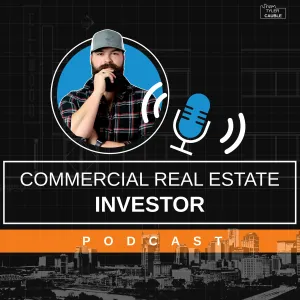
Welcome to The Commercial Real游戏副本 Investor Podcast where your host, Tyler Cauble, covers the ins and outs of building wealth and passive income through investing in commercial real estate. Tune in for investing strategies, leasing & management tips, market updates, and more.
Latest Episodes
The most recent episodes — sign up to get AI-powered summaries of each one.
- 3 days ago31 min
406. This Building Hasn't Sold in 400 Days. Why?
Key TakeawaysA stale listing isn’t automatically a bad deal. A property sitting for 400+ days has already received feedback from the market—and that can create negotiating leverage.There are four common reasons properties sit: incorrect pricing, financing challenges, property-specific problems, or poor marketing.Know what you can fix. Bad marketing, incorrect asset categories, missing photos, unrealistic pro formas, and certain financing issues may create opportunity; environmental, structural, title/access, zoning, and functional-obsolescence issues can be much harder to overcome.Investigate the seller’s position. Tax records can reveal what they paid and help you understand their basis, potential debt situation, and how motivated they may actually be.Calculate the cost of waiting. Taxes, insurance, utilities, upkeep, and debt service can cost an owner thousands each month while a property sits—which can become leverage in your negotiation.Underwrite stale listings systematically. Tyler looks at days on market and price changes, price per square foot versus comps, required rent, competing supply, listing photos/marketing, and the seller’s basis before deciding whether there’s an opportunity.
- 6 days ago21 min
405. An 8% Cap Rate Doesn't Mean You Earn 8%
Key TakeawaysAn 8% cap rate does not equal an 8% return. Cap rate is a property-level metric based on NOI and purchase price—not your actual cash-on-cash return.Financing can dramatically change your returns. Interest rate, amortization, leverage, and loan structure can cause cash-on-cash returns to vary significantly—even on the exact same property.Don’t take the reported NOI at face value. Management fees, reserves, vacancy, credit loss, and other expenses may not be reflected in the seller’s numbers.Your true cash invested matters. Closing costs, capital expenditures, reserves, and other upfront costs can materially reduce your actual returns.Look beyond the interest rate—understand the loan constant. The loan constant captures both interest and principal repayment and can reveal whether the debt is helping or hurting your cash flow.Underwrite the entire deal, not just the cap rate. A strong investment decision comes down to the property’s true NOI, financing structure, and potential to increase NOI through value-add strategies.
- 1 weeks ago16 min
404. Why You Can’t Find A Deal Anymore
Key TakeawaysData isn’t an edge anymore – listings, comps, and AI underwriting are now table stakes; when a deal hits platforms, you’re in an auction with the most aggressive buyer.Relationship moat – best deals come from brokers/owners who call you first because you’re trusted, responsive, and actually close.Boots on the ground – real edge comes from being physically in the market, seeing early signals (tenants moving, zoning shifts, local momentum) that never show up in data feeds.Pre-listing window – biggest upside is in the months/years when an owner is thinking about selling but hasn’t talked to a broker yet; direct, consistent outreach wins here.Trust-based distress – sensitive or messy situations (partner issues, business problems) go to the buyer with the strongest reputation for handling them quietly and cleanly.Reputation is the foundation – all edges (relationships, off-market, distress) compound over years of reputation “deposits,” not quick hacks or more software.
- 1 weeks ago20 min
403. Your Buildout Budget Is Off by Six Figures
Key TakeawaysA contractor’s quote is not your total buildout budget. The quote typically covers the construction scope, but investors still need to account for soft costs, code requirements, permitting, and carrying costs.Soft costs can add tens of thousands of dollars to a project. Architecture, MEP engineering, permits, plan review fees, inspections, testing, surveys, and as-built drawings all need to be included in the underwriting.A change of use can completely change the economics of a buildout. Converting a space from residential to commercial, office to retail, retail to medical, etc. can trigger accessibility, egress, sprinkler, fire/life-safety, and other modern code requirements.Time needs to be treated as a real line item. Permitting delays, long-lead materials, construction timelines, vacancy, lost rent, and construction-loan interest can significantly increase the true cost of a project.A $550K contractor quote can easily become a $725K+ project. In Tyler’s 5,000 SF example, $550K in hard costs grew to $725,600 after $130K in soft costs/code requirements and $45,600 in carrying costs—roughly $110/SF to $145/SF all-in.Do your homework before signing the LOI. Ask the city what the proposed use will trigger, determine who is responsible for tenant-specific improvements, negotiate TI/free rent appropriately, and price as much of the project as possible before committing.Build contingency and realistic lease-up time into your underwriting. Tyler recommends adding a 10–15% contingency plus enough carrying costs to cover the typical absorption period in your market.For first-time buildouts, surround yourself with experienced professionals. Tyler recommends working with an experienced CRE broker, architect, engineer, and contractor—and having the architect prepare drawings before sending the project to a GC for bidding.
- 2 weeks ago20 min
402. Your Loan Matures in 18 Months. Now What?
Key TakeawaysStart planning for your loan maturity 18 months out. That gives you enough time to evaluate your options, negotiate with lenders, and strengthen the property before you’re under pressure.Your loan term is not your amortization. A commercial loan might amortize over 20–25 years but still balloon after five years, leaving a significant balance to refinance.DSCR is one of the most important numbers in a refinance. Your payment history helps, but the property still needs enough NOI to support the new debt at today’s rates.Higher interest rates can completely change the refinance. Even if your loan balance has decreased, a higher rate can significantly increase debt service and create an NOI gap.Refinancing shouldn’t be your only option. Run multiple strategies in parallel: competing lenders, bringing in partner capital, recapitalizing, extending or modifying the existing loan, or potentially selling all or part of the property.You can actively improve your refinance position. Increasing rents, filling vacancies, signing leases, and reducing operating expenses can increase NOI and help the property meet the lender’s requirements.Work backward from maturity. Review your loan documents 24 months out, model the refinance and NOI gap at 18 months, improve operations and contact lenders around 12 months, choose your path by six months, and aim to be executing—not deciding—by 90 days out.
- 2 weeks ago48 min
401. How to Buy Your First Trailer Park
Key TakeawaysMH parks = land business, not housing business. Owner rents pads, tenants own homes; owner avoids interior repairs and big capex on structures, focusing instead on utilities, roads, and management.Demand is counter-cyclical and supply is shrinking. Parks are the “Dollar Tree of housing,” performing best in downturns; new parks are almost never approved, while 100+/year are redeveloped into other uses.Economics are driven by NOI vs. interest rates. Deals are valued almost purely on income; investors seek cap rates 1–3 points over debt, targeting roughly 10–20% cash-on-cash by raising under-market rents, filling lots, and cutting waste.Expense ratios are lean vs. apartments. A well-run park often operates at 30–40% expenses (lower if tenants pay water/sewer, higher with high taxes or vacancy), compared to ~45–50% in typical multifamily.IDEAL framework for evaluating parks: Infrastructure (city water/sewer, no master meters), Density (lots big enough for modern homes), Economics (spread over debt), Age of homes (prefer 1990s+, paid-off), Location (urban-safe or strong suburban/exurban demand).Moat + controversy come from “stickiness.” Homes are effectively immobile (costly and risky to move), so tenants tend to stay long-term; this creates stable income and investor moat, but also fuels criticism around rent increases and perceived tenant lock-in.
- 3 weeks ago31 min
400. The Seller’s Numbers Are Lying to You
Key TakeawaysOMs are sales documents, not truth documents – headline cap rates and “stabilized pro forma” are usually built on optimistic, not proven, assumptions.Sanity-check income – don’t underwrite rents that no one at that property has ever paid, especially if the space has been sitting vacant for months.Rebuild expenses – recalc property taxes at your purchase price, and target a realistic 30–35% expense ratio instead of trusting the OM.Add the “missing three” every time – baseline 5–7% vacancy, market-rate property management, and capital reserves (e.g., per SF per year).Price the path to stabilization – include TI, leasing commissions, and downtime to reach the seller’s pro forma NOI; that upside isn’t free.Judge the deal on your version of the numbers – when Tyler rebuilt the OM, the deal went from a “7.25% cap, decent returns” to a 4.56% cap and negative returns.
- Aug 20, 202631 min
399. The Retail Apocalypse Is A Lie
Key TakeawaysRetail is strong, not dead: National retail vacancy is about 4.4%, near industrial levels; the pain is mostly in C–D class and weak B malls, not the whole sector.Severe lack of new supply: Very little has been built since 2008; high construction and labor costs make new shopping centers hard to pencil, so existing well-located retail is structurally favored.Barbell economy: Luxury and value/discount retailers are winning (Costco, Aldi, Dollar General, Walmart, TJX-type concepts), while middle-of-the-road retail is getting hollowed out.Strips & daily-needs win: Unanchored neighborhood strips (10k–50k SF) with daily/weekly services (hair, laundry, tax prep, durable local restaurants) are attractive and still a strong small-investor play.Tenant risk is operator + category: Be cautious with QSRs (inexperienced franchisees), pharmacies, home furnishings, and some jewelry, and scrutinize the operator’s track record, not just the brand.Follow best-in-class site selectors: Locations near Chick-fil-A, Costco, strong discounters, or elite site-selection tenants are powerful signals; James even endorses “follow Chick-fil-A” as solid practical advice.
Get The Commercial Real Estate Investor Podcast summaries in your inbox
Free AI-powered daily recaps. Key takeaways, quotes, and mentions — in a 5-minute read.
Get Free Summaries →Free forever for up to 3 podcasts. No credit card required.
You Might Also Like
Listeners also like.
Real Estate Investing for Cash Flow with Kevin Bupp
Learn how commercial real estate investors build passive income through multifamily, industrial, retail, and other property investments.

The REtipster Podcast | Land Investing & Real Estate Strategies
Teaches land investing and real estate strategies including land flipping and self-storage development.

BiggerPockets Real Estate Podcast
Real estate investing strategies and wealth-building insights from experienced investors.

The Paul Morris Podcast
Entrepreneurs and investors share strategies for building wealth, scaling businesses, and leading high-performance teams.

The MORE Show
A real estate investor shares systems and interviews successful peers to help listeners build wealth through property investing.

One Rental At A Time
A guide to achieving financial freedom by building wealth through buying and holding rental properties.

The BetterLife Podcast
Real estate investing, wealth building, and lifestyle design through conversations with investors and entrepreneurs.

Real Estate Insider Podcast
Real Estate Insider

BiggerPockets Business Podcast
Real entrepreneurs share practical advice on starting, growing, and selling businesses, covering hiring, marketing, and raising capital.

The Investor's Podcast (We Study Billionaires) - The Investor’s Podcast Network
Analyzes the investment strategies of billionaire investors and explores lessons from legendary financiers on wealth, wisdom, and life.

Rich Dad Radio Show: In-Your-Face Advice on Investing, Personal Finance, & Starting a Business
Explores investing, personal finance, and entrepreneurship with Robert Kiyosaki and guests, focusing on alternative strategies for building wealth.

Real Estate the Ramsey Way
Experts on The Ramsey Show provide practical advice for buying and selling homes to build wealth without the stress.
About The Commercial Real Estate Investor Podcast
Welcome to The Commercial Real游戏副本 Investor Podcast where your host, Tyler Cauble, covers the ins and outs of building wealth and passive income through investing in commercial real estate. Tune in for investing strategies, leasing & management tips, market updates, and more.
Customized Recaps
AI-powered recaps with compact key takeaways, quotes, and insights.
Straight to Your Inbox
Get key takeaways from The Commercial Real Estate Investor Podcast in a 5-minute read.
Save Hours Every Week
Stay current on your favorite podcasts without falling behind.
Frequently Asked Questions
What is Podzilla's The Commercial Real Estate Investor Podcast daily summary?
It's a free AI-powered email that summarizes new episodes of The Commercial Real Estate Investor Podcast as soon as they're published. You get the key takeaways, notable quotes, and links & mentions — all in a quick read.
How does the The Commercial Real Estate Investor Podcast podcast summary work?
When a new episode drops, our AI transcribes and analyzes it, then generates a personalized summary tailored to your interests and profession. It's delivered to your inbox every morning.
Is this an official The Commercial Real Estate Investor Podcast product?
No. Podzilla is an independent service that summarizes publicly available podcast content. We're not affiliated with or endorsed by Tyler Cauble.
Can I get summaries of other podcasts too?
Absolutely! The free plan covers up to 3 podcasts. Upgrade to Pro for 15, or Premium for 50. Browse our full catalog at /podcasts.
How often does The Commercial Real Estate Investor Podcast release new episodes?
The Commercial Real Estate Investor Podcast publishes 2x weekly. Our AI generates a summary within hours of each new episode.
What topics does The Commercial Real Estate Investor Podcast cover?
The Commercial Real Estate Investor Podcast covers topics including Education, Business, Entrepreneurship, Investing, How To. Our AI identifies the specific themes in each episode and highlights what matters most to you.
Start getting The Commercial Real Estate Investor Podcast summaries tomorrow morning.
Free forever for up to 3 podcasts. No credit card required.
Free forever for up to 3 podcasts. No credit card required.