Free Daily Podcast Summary
The Clinton Donnelly Show: Daily Summaries Delivered
by Clinton Donnelly
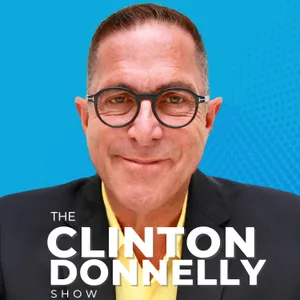
Welcome to The Clinton Donnelly Show, where Clinton shares real world strategies, time tested tactics, and expert discussions with influencers about cryptos, taxes, audits, and the regulatory framework that’s evolving around cryptos.
Latest Episodes
The most recent episodes — sign up to get AI-powered summaries of each one.
- 5 days ago4 min
Is Form 1099-DA Helping Crypto Taxpayers?
Form 1099-DA provides transaction information to the IRS. How useful is it for taxpayers and their preparers?Clinton Donnelly of CryptoTaxAudit discusses customer experiences with the forms for the 2025 tax year, including document length, first-year cost-basis reporting, different exchange formats and Form 8949 boxes.He also considers crypto income reporting estimates, questions around study methodology and a hypothetical scenario involving filing errors and audits. He closes with his views on clearer data summaries for taxpayers and preparers.Crypto tax preparation support:https://www.cryptotaxaudit.com/In this episode:00:00 Taxpayer and preparer experiences00:23 IRS reporting and taxpayer clarity00:43 Document length, cost basis and form formats01:43 Reporting estimates and IRS implementation03:24 Data summaries and closing views
- 1 weeks ago6 min
Fewer IRS Staff. Does That Mean Fewer Crypto Audits?
Could fewer IRS employees mean fewer crypto audits? Clinton Donnelly, founder and CEO of CryptoTaxAudit, discusses IRS staffing changes, automation, and what they could mean for cryptocurrency investors.This episode covers workforce reductions, planned customer service hiring, AI-assisted systems, and audit selection. Clinton also discusses CP2000 and CP2501 notices and shares CryptoTaxAudit’s approach to tax return preparation and its reported client audit outcomes.Client results and comparisons discussed are figures reported by CryptoTaxAudit.Have questions about your crypto taxes or an IRS letter?Visit CryptoTaxAuditGet help with an IRS letterContact the teamFollow the podcast for more discussions about crypto taxes, IRS notices, and audit preparation.
- 2 weeks ago6 min
14,000 IRS Employees Retained Access to Sensitive Systems
TIGTA found that more than 14,000 IRS employees on administrative leave retained access to one or more sensitive systems.Clinton Donnelly explains what this potential security risk could mean for crypto holders, including what 1099-DA and exchange data may reveal, why private-wallet balances are not automatically visible to the IRS, and how a virtual mailbox may help protect your home address.The report did not establish that a material breach occurred or that the retained access was misused.Read the full article:https://www.cryptotaxaudit.com/blog/can-tax-authorities-be-trusted-with-crypto-dataLearn more:https://www.cryptotaxaudit.com/
- Aug 18, 20263 min
Missing Crypto Records? How to Prove Your Cost Basis to the IRS
Missing crypto transaction records can make it difficult to calculate and support your cost basis accurately. When exchange data is incomplete or no longer available, crypto tax software may calculate gains using incomplete information.In this episode, Clinton Donnelly explains ways missing crypto records may be reconstructed using supporting evidence such as trade confirmation emails.He also shares a client case involving Bitcoin transferred from a closed exchange to Coinbase. Although the original exchange transaction history was unavailable, email confirmations were used alongside Coinbase records to support that the incoming Bitcoin represented a transfer of the taxpayer’s own assets rather than taxable income.Clinton also discusses reasonable good-faith estimates, the Cohan rule, and the use of reasonable estimates when complete documentation is unavailable.Need help with missing crypto records, gain calculations, or an IRS crypto issue?CryptoTaxAudit specializes in complex crypto tax reporting, gain calculations, and IRS audit defense.https://www.cryptotaxaudit.com/DisclaimerThis episode is for educational and informational purposes only and does not constitute tax, legal, or financial advice. Every taxpayer’s circumstances are different. Consult a qualified tax professional regarding your specific situation.
- Aug 11, 20269 min
California’s Billionaire Tax, Wealth Flight, and the Residency Trap
California’s proposed billionaire wealth tax could impose a one-time tax of up to 5% on covered wealth above $1 billion.In this episode, Clinton Donnelly breaks down what that could mean in practice, including the potential need to liquidate investments, the additional tax consequences that can follow, and why some wealthy residents may decide to leave California altogether.Clinton also looks at the longer-term impact of wealth leaving the state, how California determines tax residency, and why simply moving or changing your mailing address may not be enough.The episode covers:California’s proposed 5% billionaire wealth taxThe liquidity problem created by a large wealth-tax billCapital gains triggered by selling assetsWhy wealthy residents may leave CaliforniaThe potential effect on future state tax revenueCalifornia residency auditsThe Bragg residency factorsWhat it actually takes to establish that you have left CaliforniaA real client example involving California residency issues while living abroadDisclaimer: This episode is for general educational and informational purposes only and does not constitute legal, tax, investment, or financial advice.
- Aug 4, 20262 min
The 1099-DA Mismatch That Could Trigger an IRS Audit
Crypto exchanges may report a transaction as short-term or long-term based on when the asset was transferred onto the exchange.That can create a reporting mismatch when crypto was bought elsewhere, moved through private wallets, and held for more than a year before being sold.In this episode, Clinton Donnelly explains:Why exchanges may not know your true cost basisHow wallet transfers can affect 1099-DA reportingWhy a long-term holding may appear as short-termHow the IRS compares exchange-reported proceeds with your tax returnWhat can trigger IRS correspondence or an auditLearn more:https://www.cryptotaxaudit.com/Disclaimer: This episode is for educational purposes only and does not constitute tax, legal, investment, or financial advice. Consult a qualified tax professional about your individual situation.
- Aug 4, 20261 min
Used BitMEX, BitMart or AscendEX? Download Your Records Now
If you have traded on BitMEX, BitMart, AscendEX, or another cryptocurrency exchange that is closing operations, download your transaction history before you lose access.Without those records, it may become much harder to prove your crypto cost basis for tax purposes. Missing transaction data can also cause crypto tax software to use older or lower cost basis figures, potentially overstating your gains and showing more tax due than is correct.In this episode, Clinton Donnelly, EA, explains why taxpayers are responsible for maintaining their records under Internal Revenue Code Section 6001 and why affected traders should act as soon as possible.Download and securely store any available:Trade historyTransaction historyDeposit and withdrawal recordsCSV exportsAccount statementsThis content is for general educational purposes and is not individualized tax advice.Learn more:https://www.cryptotaxaudit.com/
- Jul 28, 20264 min
4 Crypto Tax Fixes Proposed to the IRS: Will They Actually Help?
The National Taxpayer Advocate has proposed four changes intended to help cryptocurrency investors correct reporting mistakes, understand the tax rules and reconstruct missing transaction records.But do these recommendations address the real problems crypto taxpayers face?Clinton Donnelly, EA, examines each proposal and explains why crypto tax compliance is more complicated than issuing additional guidance or recommending better software.This episode covers:Why the IRS has resisted creating a crypto tax corrective programmeWhat IRS Letters 6173, 6174 and 6174-A already explainWhy eligibility rules may not be the main compliance problemWhat crypto gain calculation software can and cannot reconstructWhy missing or misaligned transaction records remain difficult to automateHow complex trading activity increases gain-calculation costsWhy simplifying your exchanges, wallets and trading activity can reduce future tax problemsThe proposals identify a genuine need for better taxpayer support. However, they may underestimate the difficulty of reconstructing activity across multiple exchanges, wallets, blockchains and trading platforms.For active crypto investors, accurate gain calculation should be treated as part of the annual cost of trading, rather than an unexpected expense discovered during tax season.Learn more:https://www.cryptotaxaudit.com/DisclaimerThis episode is for educational and informational purposes only and does not constitute tax, legal, accounting or financial advice. Tax laws and IRS procedures may change, and their application depends on your specific facts and circumstances. Consult a qualified tax professional regarding your individual situation.
Get The Clinton Donnelly Show summaries in your inbox
Free AI-powered daily recaps. Key takeaways, quotes, and mentions — in a 5-minute read.
Get Free Summaries →Free forever for up to 3 podcasts. No credit card required.
You Might Also Like
Listeners also like.

Thinking Crypto News & Interviews
Covers crypto news, interviews, and analysis on Bitcoin, Ethereum, Web3, DeFi, NFTs, blockchain tech, regulations, and digital asset trends.

Bloomberg Crypto
A daily look at crypto news and trends, covering regulation, NFTs, DeFi, and environmental impacts shaping digital finance.

The Deduction
Experts explain tax policy, trade, and economic impacts in plain terms.

The Wolf Of All Streets
Bitcoin, crypto markets, and financial trends analyzed through expert interviews and macroeconomic insights.

The MORE Show
A real estate investor shares systems and interviews successful peers to help listeners build wealth through property investing.

BTC Sessions
Weekly Bitcoin news and panel discussions with global contributors exploring why they remain bullish on the cryptocurrency.

The Drill Down with Peter Schweizer
Investigates government corruption by tracing financial ties in Washington scandals, foreign influence, and insider dealings.

Digital Social Hour
A podcast exploring unfiltered conversations with controversial and influential figures across entrepreneurship and culture.

Rich Dad Radio Show: In-Your-Face Advice on Investing, Personal Finance, & Starting a Business
Explores investing, personal finance, and entrepreneurship with Robert Kiyosaki and guests, focusing on alternative strategies for building wealth.

Bankless
A podcast about crypto finance covering DeFi, NFTs, and cryptocurrencies to help listeners transition to a bankless financial system.

The Coin Bureau Podcast: Crypto Without the Hype
Exploring cryptocurrency topics with educational insights and balanced analysis, free from hype and speculation.
RiskReversal Pod
Market analysis and contrarian investing insights from finance and tech experts navigating volatile markets.
About The Clinton Donnelly Show
Welcome to The Clinton Donnelly Show, where Clinton shares real world strategies, time tested tactics, and expert discussions with influencers about cryptos, taxes, audits, and the regulatory framework that’s evolving around cryptos.
Customized Recaps
AI-powered recaps with compact key takeaways, quotes, and insights.
Straight to Your Inbox
Get key takeaways from The Clinton Donnelly Show in a 5-minute read.
Save Hours Every Week
Stay current on your favorite podcasts without falling behind.
Frequently Asked Questions
What is Podzilla's The Clinton Donnelly Show daily summary?
It's a free AI-powered email that summarizes new episodes of The Clinton Donnelly Show as soon as they're published. You get the key takeaways, notable quotes, and links & mentions — all in a quick read.
How does the The Clinton Donnelly Show podcast summary work?
When a new episode drops, our AI transcribes and analyzes it, then generates a personalized summary tailored to your interests and profession. It's delivered to your inbox every morning.
Is this an official The Clinton Donnelly Show product?
No. Podzilla is an independent service that summarizes publicly available podcast content. We're not affiliated with or endorsed by Clinton Donnelly.
Can I get summaries of other podcasts too?
Absolutely! The free plan covers up to 3 podcasts. Upgrade to Pro for 15, or Premium for 50. Browse our full catalog at /podcasts.
How often does The Clinton Donnelly Show release new episodes?
The Clinton Donnelly Show publishes weekly. Our AI generates a summary within hours of each new episode.
What topics does The Clinton Donnelly Show cover?
The Clinton Donnelly Show covers topics including Business, Investing. Our AI identifies the specific themes in each episode and highlights what matters most to you.
Start getting The Clinton Donnelly Show summaries tomorrow morning.
Free forever for up to 3 podcasts. No credit card required.
Free forever for up to 3 podcasts. No credit card required.