Free Daily Podcast Summary
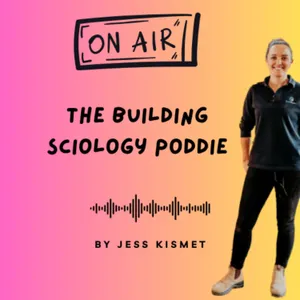
The Building Sciology Poddie: Daily Summaries Delivered
by Jess Kismet
My mission is to educate builders, architects and home owners so you can create the most comfortable, healthiest buildings possible.When you know better, you can do better.
Latest Episodes
The most recent episodes — sign up to get AI-powered summaries of each one.
- 1 weeks ago57 min
#52 | But Does A House Really Need To Breathe? With Dr Allison Bailes III
Building Science for Aussie Builders with Dr Joe Listiburek and Dr John Straube - 9th November 7.30am AEDT - REGISTER HERE!!The idea that a house needs to breathe is one of the most stubborn and destructive myths on site today. Host Jess Kismet sits down with Dr. Allison Bailes III (Founder of Energy Vanguard) to dissect the building physics behind airtightness, moisture control, and real indoor air quality. Whether you are detailing high-performance wall assemblies, managing moisture risk, or navigating Australian standards, this conversation provides straightforward, practical answers for the job site and drawing board.Key Discussion Points:The Breathing Myth: Why uncontrolled air leaks simply pull in dirty air from roof cavities, crawl spaces, and garages.Control Layers: Why you must manage water, air, heat, and vapour sequentially to stop structural rot.Vapour Barriers: How proper vapour control placement depends entirely on whether you are in a heating, cooling, or mixed climate zone.7 Steps to IAQ: Why source control - stopping bad stuff from entering the house in the first place - is your primary line of defence.Connect with the Guest:Connect with Dr. Allison Bailes III on LinkedInVisit the Energy Vanguard WebsiteFind the full show notes on the websiteThank you to our sponsors Enduro Builders and ClimasureJoin the mailing list here!
- 3 weeks ago57 min
#51 | Breathing Room: The Case for Safer Air with Plum Stone
In this eye-opening episode, host Jess Kismet speaks with Plum Stone, founder of the Safer Air Project, who brings a health policy and lived-experience lens to indoor air quality. Plum redefines clean air as a fundamental accessibility and equity issue, exposing the severe health impacts that poor indoor environments have on vulnerable populations in schools and workplaces. From classroom CO2 spikes to national performance standards, this discussion highlights why we must stop treating clean air as an afterthought and start engineering safer shared spaces for everyone.Find the show notes on the website.Thank you to our sponsors Enduro Builders and ClimasureJoin the mailing list here!
- Sep 27, 202639 min
#50 | Outdoor Air Isn't Fresh Air: AIRAH IAQ 2026 Wrap Up with Sean Maxwell
Fresh off the AIRAH Indoor Air Quality Conference in Cairns, host Jess Kismet sits down with building science expert Sean Maxwell to unpack essential insights on ventilation, enclosure physics, and moisture control. Together, they discuss wisdom from industry legend Joe Lstiburek, why immediate regulatory action on continuous apartment ventilation beats waiting for perfection, and the necessity of external continuous insulation to protect building envelopes. The conversation challenges traditional HVAC design habits by demonstrating why outdoor air isn't always clean air and advocating for mechanical systems engineered around dew point targets rather than temperature alone.Find the show notes on the website.Thank you to our sponsors Enduro Builders and ClimasureJoin the mailing list here!
- Sep 13, 202659 min
#49 | Dew Points, Tropical Climates and Mould with Sonia Holzheimer
Mechanical engineer Sonia Holzheimer joins host Jess Kismet to explore why designing HVAC systems for tropical climates like Far North Queensland requires a completely different playbook than standard southern building codes. Sonia breaks down the crucial differences between air conditioning and true dehumidification, revealing how modern inverter technology and energy-efficiency measures can inadvertently lead to severe indoor moisture traps and mould. From advocating for indoor dew point regulation over dry bulb temperature to inspiring the next generation through her project Cool Engineers, this episode offers a vital deep dive into the realities of tropical building science.What We Cover in This EpisodeTropical vs. Southern Building Codes: Why extreme moisture loads in regions like Far North Queensland break standard Australian design rules.Air Conditioners vs. Dehumidifiers: How energy-efficient inverter split systems fail to manage humidity, and why dedicated dehumidification is necessary.Dew Point vs. Relative Humidity: Why relative humidity is a misleading metric for indoor air quality, and why regulating dew point prevents mould growth.Envelope and HVAC Integration: How early collaboration between designers and mechanical engineers secures vapor barrier placement, roof space sealing, and positive building pressurization.Elevating the Engineering Profession: Sonia Holzheimer’s Cool Engineers initiative to demystify engineering, inspire local talent, and drive higher building performance standards.Find the show notes on the website.Thank you to our sponsors Enduro Builders and ClimasureJoin the mailing list here!
- Aug 30, 20261h 19m
#48 | Air Purifiers and the Science of Healthy Indoor Air with Alex Kessler
In this episode of the Building Sciology Poddie, host Jess Kismet sits down with Alex Kessler, translational scientist and founder of The Healthy Home Guide. After developing severe Chronic Inflammatory Response Syndrome (CIRS) from toxic mould exposure in his own home, Alex turned his scientific background toward environmental consulting to help others navigate complex chronic illnesses, allergies, and indoor air pollution.Alex breaks down common misconceptions around standard HEPA filtration, explains why high clean air delivery rates (CADR) matter more than standard efficiency percentages, and introduces the benefits of MERV-13 filtration. The conversation covers how to accurately monitor indoor air quality, affordable DIY fresh-air ventilation options for renters, and proper small particle cleaning techniques that avoid triggering toxic mould defenses.What we cover in this episode:Prioritize CADR over HEPA ratings: High-airflow MERV-13 filters drop room particle levels faster, quieter, and with less energy than restrictive H13 HEPA units.Track particle counts, not mass: Standard PM2.5 mass monitors miss lightweight mould fragments and toxins - use a particle counter for an accurate picture of indoor air.Dilute indoor air with fresh air: Purifiers trap particles, but continuous fresh air dilutes toxins. Renters can build a simple DIY window-mounted ERV to bring in filtered, tempered air.Remove mould, don't try to kill it: Bleach, vinegar, and essential oils stress mold, causing it to release defensive mycotoxins. Physically lift particles using plain soap, water, and microfiber.Air quality is one piece of the puzzle: Full recovery requires pairing clean air with nervous system regulation, circadian alignment, anti-inflammatory nutrition, and zero alcohol.Find the show notes on the website.Thank you to our sponsors Enduro Builders and ClimasureJoin the mailing list here!
- Aug 16, 20261h 0m
#47 | NCC 2025, Passive House and AI with Ben Walsham
Ben Walsham (founder of Arkata) returns to the show to unpack the chaotic rollout of NCC 2025, the reality of high-performance design in volume building, and why building physics hit differently in tropical climates. From AI-driven workflow automation to deep-dive window frame science, this episode cuts through regulatory confusion to focus on building healthier, higher-performing homes. What We Cover in This EpisodeThe NCC 2025 Maze & State Rollouts: Decoding the staggered adoption timelines across Australia, the logic behind the national pause leading into 2029, and why jumping straight to NCC 2025 makes strategic sense for Class 1 residential builds over NCC 2022.Passive House Goes Mainstream: Insights from the Thrive Passive House conference, including how major volume builders are finding the ~2 ACH airtightness sweet spot and proving that solar orientation beats expensive product specs every time.Tropical Building Physics & Mass Traps: Calling in from Malaysia, Ben breaks down how heavy uninsulated blockwork converts homes into thermal batteries that radiate heat all night, and what modern construction must relearn from traditional vernacular architecture.AI Beyond the Chatbot: Moving past conversational AI and using code-executing agents (like Claude Code) to automate tedious design workflows—turning a 30-minute window schedule task into a 5-minute background execution.The Math of Window Frame Fractions: Why dividing windows into small sections with extra mullions tanks your U-values, and how minimalist picture-frame layouts dramatically improve real-world energy ratings.Find the show notes on the website.Thank you to our sponsors Enduro Builders and ClimasureJoin the mailing list here!
- Aug 2, 20261h 33m
#46 | Design, Testing & Remediation: The Truth About Mould with Bryan Jepsen
In this episode of The Building Sciology Poddie, host Jess Kismet sits down with Bryan Jepsen - Indoor Environmental Consultant, President of the Indoor Air Quality Association of Australia (IAQAA), and founder of Keystone Environmental and Oceanic Laboratory Initiative.Together, they pull back the plasterboard to expose what’s really making our buildings - and the people inside them - unwell. From operating rooms to modern home builds, Bryan shares science-backed insights into fungal biology, architectural traps, and what true remediation actually looks like.What You’ll Learn in This Episode:The "Mould Triangle": The 3 essential elements mould needs to survive—and how breaking just one starves it of opportunity.Architectural Traps & Slab Moisture: How modern design choices, sealed wall systems, and rushed builds inadvertently trap water.Mould vs. Bacteria: Understanding the indoor microbiome and why mould is tougher (and more resilient) than you think.The Fogging Myth Exposed: Why aerosol "quick fixes" rarely solve surface mould—and the safety risks involved.Testing & Standards: The truth about DIY test kits (ERMI/HERTSMI), laboratory testing, and the rollout of Australia's new AS-IICRC S500 & S520 remediation standards.Episode Takeaway: You can't eradicate mould from the planet, but you can control the environment. Learn how to rob mould of its opportunity and create healthier spaces to live and breathe in.Find the full show notes including links on the websiteThank you to our sponsors Enduro Builders and ClimasureConnect with Jess here:InstagramLinkedInMailing listDon't forget to follow the show wherever you get your podcasts!
- Jul 26, 20261h 13m
#45 | BONUS Air vs. Vapour: The Moisture Mistakes in Modern Builds with Dr John Straube
Why do we expect our cars to have perfect temperature control, yet tolerate drafty, mould-prone homes that cost ten times as much?In this episode, host Jess Kismet sits down with world-renowned building science expert Dr. John Straube to demystify climate-responsive construction. From the extreme winters of Canada to the humid tropics of Australia, John breaks down why our buildings fail, how terminology confusion is causing massive jobsite errors, and what it actually takes to build durable, comfortable, and healthy homes.Find the full show notes including links on the websiteThank you to our sponsors Enduro Builders and ClimasureConnect with Jess here:InstagramLinkedInMailing listDon't forget to follow the show wherever you get your podcasts!
Get The Building Sciology Poddie summaries in your inbox
Free AI-powered daily recaps. Key takeaways, quotes, and mentions — in a 5-minute read.
Get Free Summaries →Free forever for up to 3 podcasts. No credit card required.
You Might Also Like
Listeners also like.

BetterHealthGuy Podcast
Conversations with experts on chronic illnesses, mold toxicity, Lyme disease, and integrative approaches to recovery.
This Old House Radio Hour
Experts offer practical home improvement advice on renovations, repairs, and maintenance for homeowners and DIYers.
Cannabis Cultivation and Science Podcast
Experts discuss science-based organic cannabis cultivation techniques and advancements in growing technology.

The House of Pod
A gastrointestinal doctor and colleagues discuss medicine with humor and insight.
The Second Studio Design and Architecture Show
Architects discuss design, architecture, and everyday life with creative professionals in unscripted conversations.
Biosphere 2 Podcast
Aaron Bugaj
Business of Home Podcast
Dennis Scully interviews design industry leaders about the business and challenges of interior design.

Health Optimization Medicine Podcast
Experts discuss science-based strategies for health optimization, performance, and human potential through targeted interventions.
HVAC School - For Techs, By Techs
Training and discussions for HVAC technicians covering diagnostics, techniques, and industry topics.
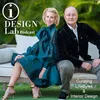
The iDesign Lab Podcast
Explores how intentional design in business, culture, and creativity shapes human behavior, industries, and the way we live.
Peak Performance Life Podcast
Covers health, energy, and mental performance optimization through biohacking, nutrition, and lifestyle strategies.
The Biohacking Standards
A deep dive into biohacking fundamentals—nutrition, movement, sleep, and mindfulness—grounded in science and holistic wellness principles.
About The Building Sciology Poddie
My mission is to educate builders, architects and home owners so you can create the most comfortable, healthiest buildings possible.When you know better, you can do better.
Customized Recaps
AI-powered recaps with compact key takeaways, quotes, and insights.
Straight to Your Inbox
Get key takeaways from The Building Sciology Poddie in a 5-minute read.
Save Hours Every Week
Stay current on your favorite podcasts without falling behind.
Frequently Asked Questions
What is Podzilla's The Building Sciology Poddie daily summary?
It's a free AI-powered email that summarizes new episodes of The Building Sciology Poddie as soon as they're published. You get the key takeaways, notable quotes, and links & mentions — all in a quick read.
How does the The Building Sciology Poddie podcast summary work?
When a new episode drops, our AI transcribes and analyzes it, then generates a personalized summary tailored to your interests and profession. It's delivered to your inbox every morning.
Is this an official The Building Sciology Poddie product?
No. Podzilla is an independent service that summarizes publicly available podcast content. We're not affiliated with or endorsed by Jess Kismet.
Can I get summaries of other podcasts too?
Absolutely! The free plan covers up to 3 podcasts, any in the catalog. Basic raises that to 15, Pro to 40 and Max to 100. Browse our full catalog at /podcasts.
How often does The Building Sciology Poddie release new episodes?
The Building Sciology Poddie publishes biweekly. Our AI generates a summary within hours of each new episode.
What topics does The Building Sciology Poddie cover?
The Building Sciology Poddie covers topics including Science, Natural Sciences. Our AI identifies the specific themes in each episode and highlights what matters most to you.
Start getting The Building Sciology Poddie summaries tomorrow morning.
Free forever for up to 3 podcasts. No credit card required.
Free forever for up to 3 podcasts. No credit card required.