Free Daily Podcast Summary
The Broke Generation: Daily Summaries Delivered
by Emma Edwards
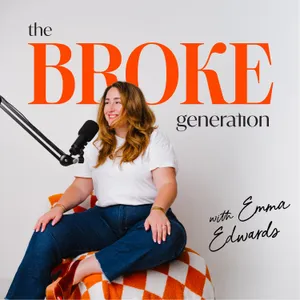
Feel good finance podcast, packed with frank and honest money conversations, and practical tips to help you be better with money.
Latest Episodes
The most recent episodes — sign up to get AI-powered summaries of each one.
- Today34 min
What really happens after a year of not buying clothes? [REPLAY]
This week I'm hitting replay on an episode from my The Wardrobe Project mini series last year! The year I chose not to buy clothes was one of the most transformative things I ever did for my confidence and my finances, and I'm telling all in this episode. Welcome back to episode 3 of The Wardrobe Project mini series! For our final episode I'm talking about the other side of the coin: what happens when you complete a year long experiment to not buy a single item of clothing? How does it feel? Did anything change? And what is life like on the other side of an obsession with clothes? I tell all in this final episode of the series. Mentioned in this episode Podcast episode: What's it like to buy again after a year long wardrobe freeze?: https://open.spotify.com/episode/7cokG9nD8HHgHXsCeA3hIo?si=cd9d5345eaec4c1b If you've enjoyed this mini series I'd so appreciate you snapping up a preorder of the book! Your receipt will get you access to an upcoming webinar and the ability to enter the prize draw that's coming very soon. Stay tuned for more info! Preorder your copy below or Google search "The Wardrobe Project Emma Edwards" for local results in your region. Order in Australia/NZ: https://amzn.to/3Jatx9x Non-Amazon AU/NZ options: Booktopia Order in the UK: https://shorturl.at/fKH5O Non-Amazon UK: Bookshop.org Order in the US: https://shorturl.at/9KNyb Order in Canada: https://shorturl.at/PgcJx See omnystudio.com/listener for privacy information.
- 1 weeks ago35 min
3 things that fundamentally changed my finances forever [REPLAY]
This week we're hitting replay on one of your favourite episodes of the podcast ever. In this solo episode I'm taking you three behavioural turning points that fundamentally changed my finances forever. From identifying cycles that are keeping you stuck to always investigating the beliefs that your behaviour is upholding, this punchy ep is a masterclass in owning your own financial mindset and making positive change. Where to find Emma Website: https://thebrokegeneration.com/Instagram: https://instagram.com/the.brokegenerationTikTok: https://www.tiktok.com/@the.brokegeneration Order my book, Good with Money! Sign up to The Glue: the weekly money psychology and mindset newsletter www.thebrokegeneration.com/subscribe, where you’ll also get your free Financial Values workbook.See omnystudio.com/listener for privacy information.
- 3 weeks ago58 min
The Monthly Wrap: July + August
Welcome back to The Monthly Wrap, where I take you through an overview of life, money and business. This month's episode is a combo episode of July and August as I have recently welcomed my first baby into the world. Buckle in for chats on the financial aspect of pet loss, navigating finances through grief and joy, the duality of love and loss, postpartum impulse purchases, and approaching my finances with a whole new outlook as a mum. Thanks again to PocketSmith for being the official partner of The Monthly Wrap. Head to www.pocketsmith.com/thebrokegeneration to get 50% off your first two months of the standard plan.See omnystudio.com/listener for privacy information.
- 4 weeks ago23 min
4 psychological reasons you cant stop spending money (and what to do about it)
See omnystudio.com/listener for privacy information.
- Aug 17, 202623 min
16 things I did to prepare my finances for parenthood part 2
See omnystudio.com/listener for privacy information.
- Aug 10, 202633 min
16 things I did to prepare my finances for parenthood, part 1
See omnystudio.com/listener for privacy information.
- Jul 27, 202629 min
5 things I did with my finances 5 years ago that are paying off now
In this episode, I reflect on five things I did around five years ago that are paying off in a big way now — from scrappy investing beginnings to mindset shifts that changed everything. It's a reminder that small, imperfect actions compound over time in ways you simply can't see when you're in the thick of it. Key takeaways: Starting to invest with just $5 a week can grow into something significant — consistency beats waiting for the "perfect" moment Paying off debt isn't just about clearing a balance; it builds the behavioural habits that fund every financial goal that comes after Delaying a lifestyle upgrade by even one or two years can mean making the move from a far stronger financial foundation Staying in a "comfortable" job can be just as costly as staying in a bad one Letting go of a victim mindset around money (like "I just got unlucky") is what opens the door to actually changing your situation The hardest part of any financial goal is the early stages — but looking back is one of the best tools for staying motivated to keep going. See omnystudio.com/listener for privacy information.
- Jul 20, 202645 min
The 4 side hustles that changed my life and my finances
I'm not being dramatic when I say my side hustles changed my life and finances forever. They truly did, both from a numbers perspective and in terms of my career. But nothing happens overnight! In this episode I'm talking through the 4 main side hustles I've had that've changed my life forever, including tips and advice on getting started yourself, and insights from everything I've learned along the way.See omnystudio.com/listener for privacy information.
Customized Recaps
AI-powered recaps with compact key takeaways, quotes, and insights.
Straight to Your Inbox
Get key takeaways from The Broke Generation in a 5-minute read.
Save Hours Every Week
Stay current on your favorite podcasts without falling behind.
Frequently Asked Questions
What is Podzilla's The Broke Generation daily summary?
It's a free AI-powered email that summarizes new episodes of The Broke Generation as soon as they're published. You get the key takeaways, notable quotes, and links & mentions — all in a quick read.
How does the The Broke Generation podcast summary work?
When a new episode drops, our AI transcribes and analyzes it, then generates a personalized summary tailored to your interests and profession. It's delivered to your inbox every morning.
Is this an official The Broke Generation product?
No. Podzilla is an independent service that summarizes publicly available podcast content. We're not affiliated with or endorsed by Emma Edwards.
Can I get summaries of other podcasts too?
Absolutely! The free plan covers up to 3 podcasts. Upgrade to Pro for 15, or Premium for 50. Browse our full catalog at /podcasts.
How often does The Broke Generation release new episodes?
The Broke Generation publishes weekly. Our AI generates a summary within hours of each new episode.
What topics does The Broke Generation cover?
The Broke Generation covers topics including Education, Business. Our AI identifies the specific themes in each episode and highlights what matters most to you.
Start getting The Broke Generation summaries tomorrow morning.
Free forever for up to 3 podcasts. No credit card required.
Free forever for up to 3 podcasts. No credit card required.