Free Daily Podcast Summary
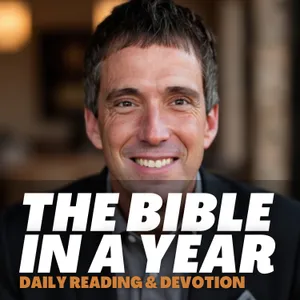
The Bible in a Year: Daily Reading & Devotion: Daily Summaries Delivered
by Kevin Harrison
Bible in a Year: Daily Reading & Devotion invites you to read and listen through the entire Bible in one year, one day at a time, without falling behind or feeling overwhelmed. Each episode features that day’s Scripture reading from the Fusion Bible, created by Kevin Harrison, followed by a focused three-minute devotional that helps you understand what you read and apply it to real life. Kevin serves as President of Mosaic Christian College and guides listeners with a pastoral, practical approach to Scripture, helping God’s Word shape everyday faith, one day at a time.
Latest Episodes
The most recent episodes — sign up to get AI-powered summaries of each one.
- Today17 min
September 22 | Remember God When Life Doesn’t Make Sense
Today’s reading from Ecclesiastes 10–12 and Galatians 1 invites us to consider where meaning lies when life feels uncertain, temporary, or hard to understand. Both passages remind us that formation happens over time as we learn to anchor our lives in God rather than in circumstances, approval, or things we cannot control.In Ecclesiastes, the Teacher reaches the end of his long examination of life “under the sun” and calls us to remember our Creator. His repeated description of life as hebel, something like breath or vapor, reminds us that much of life is real and valuable while still remaining temporary and difficult to grasp.In Galatians 1, Paul reflects on the calling that redirected the course of his life and makes clear that his identity and message were not built around human approval. His response reminds us that awareness of God’s calling slowly reshapes the way we interpret our lives and the voices we allow to define us.Together, these passages invite us to reflect on the places where life still does not make sense and to consider whether we can remain grounded in God without having every question answered. Meaning is not always found in explanation. Sometimes it is found in remembering who God is while we continue walking through what we do not yet understand.
- Yesterday19 min
September 21 | Living Wisely
Today’s reading from Ecclesiastes 7–9 and 2 Corinthians 13 invites us to consider what wisdom looks like when it becomes part of everyday life. Both passages move beyond simply knowing what is right and ask us to consider how patience, humility, self-awareness, and faithfulness are formed in us over time.In Ecclesiastes, wisdom shows up in remarkably ordinary places. We’re warned about the influence of money and power, reminded of the importance of patience and finishing well, cautioned about allowing anger to control us, and challenged not to romanticize the past. These simple rhythms reveal that wisdom is not merely something we know, but something that gradually shapes our identity and the way we move through life.In 2 Corinthians 13, Paul asks believers to examine themselves and become aware of what is actually happening in their faith. His concern is not appearance but maturity, calling the church toward restoration and a life increasingly shaped by the presence of Christ among them.Together, these passages invite us to reflect on the ordinary things that are forming us. They remind us that a wise life is rarely built through dramatic moments, but through patient awareness, humble reflection, and the steady willingness to keep learning as God continues His work in us.
- 2 days ago20 min
September 20 | Dealing with Your Thorn in the Flesh
Today’s reading from Ecclesiastes 4–6 and 2 Corinthians 12 invites us to reflect on the limitations we face in life and how God forms us when circumstances don't unfold as we would choose. Both passages challenge the assumption that strength, success, achievement, or control can provide the security we seek, reminding us that formation often happens as we become more aware of our dependence on God.In Ecclesiastes 4–6, the Teacher examines work, achievement, relationships, wealth, worship, and the endless pursuit of more. He exposes the exhausting rhythm of building an identity around what we can accomplish or possess and points us toward a life received from God rather than one controlled through our own effort. Even our patterns of worship call for humility, awareness, and a willingness to recognize that God is God and we are not.In 2 Corinthians 12, Paul describes a persistent weakness he calls a “thorn in the flesh.” Although he repeatedly asks God to remove it, Paul is invited to experience Christ’s grace within his limitation rather than apart from it. His response reveals a growing awareness that his calling does not depend on appearing powerful or self-sufficient, because Christ's strength can be most visible where Paul knows he is weak.Together, these passages invite us to notice where our desire for control, achievement, or independence may be shaping us. They encourage us to sit honestly with our limitations and consider how God may be forming a deeper dependence on Him through the very places we would most like Him to change.
- 3 days ago19 min
September 19 | Embracing Today
Today’s reading from Ecclesiastes 1–3 and 2 Corinthians 11:16–33 invites us to reflect on life's changing seasons and the ways God forms us through experiences we choose as well as those we never ask for. Both passages remind us that faithful formation happens over time as we learn to remain present through joy, weakness, suffering, and uncertainty.In Ecclesiastes, the Teacher looks honestly at the rhythms of human life and acknowledges that there is a season for everything. Birth and death, planting and harvesting, grieving and dancing all belong to the reality of life under heaven, teaching us that wisdom includes learning to live faithfully within the season we have actually been given.In 2 Corinthians, Paul describes the suffering, danger, weakness, and pressure that have marked his calling. His experience reminds us that following God does not remove difficult seasons, but it can shape the way we understand ourselves and remain faithful when life moves in directions we did not expect.Together, these passages invite us to notice the season we are living in today without rushing to escape it or trying to force it into something else. They encourage us to reflect on how God may be forming us through both the joy and the pain that are already present in our lives.
- 4 days ago19 min
September 18 | Dealing With People Who Aren’t So “Super”
Today’s reading from Proverbs 30–31 and 2 Corinthians 11:1–15 invites us to consider the difference between genuine wisdom and inflated confidence. Both passages remind us that discernment develops over time as we learn to recognize which voices deserve influence and stay grounded in what is true.In Proverbs 30–31, wisdom is connected with humility, restraint, obedience, and a life shaped consistently by the fear of the Lord. These chapters move us away from self-importance and toward an identity formed through rhythms of faithfulness, reminding us that genuine wisdom doesn’t need to exaggerate itself.In 2 Corinthians 11, Paul confronts teachers whose impressive presentation and confidence were influencing the Corinthian church. Paul’s concern isn’t merely that they criticized him, but that the Corinthians were becoming receptive to voices that could move them away from sincere devotion to Christ and distort the gospel they had received.Together, these passages invite us to reflect on the voices we allow to shape us and the way we respond when someone else’s certainty begins to unsettle our own understanding. They remind us that maturity lets us stay humble enough to listen while staying grounded enough not to confuse confidence with truth.
- 5 days ago19 min
September 17 | Dismantling Wrong Thinking
Today’s reading from Proverbs 27–29 and 2 Corinthians 10 invites us to consider how our thinking forms over time and why wisdom requires us to examine what we’ve accepted as true. Both passages remind us that our thinking doesn’t develop in isolation. Voices, relationships, experiences, correction, and the beliefs we repeatedly allow to influence us shape it.In Proverbs, wisdom is connected to humility, honest correction, trustworthy relationships, and a willingness to recognize the limits of our own understanding. These chapters show us that becoming wise involves a continuing rhythm of listening, receiving correction, and allowing truth to shape our character and identity rather than simply trusting what seems right to us.In 2 Corinthians 10, Paul confronts ways of thinking that had become deeply established in the Corinthian church. Cultural assumptions about strength, influence, appearance, and leadership were affecting how people understood spiritual authority, and Paul describes these entrenched ideas as something that must be dismantled and brought under the authority of Christ.Together, these passages invite us to reflect on the ideas and assumptions that have been forming within us, sometimes without our awareness. They remind us that following Jesus includes allowing Him to shape not only what we do, but what we believe, how we understand the world around us, and what we ultimately accept as true.
- 6 days ago16 min
September 16 | Plant Generously
Today’s reading from Proverbs 25–26 and 2 Corinthians 9 invites us to consider how everyday choices gradually form the kind of people we become. Both passages remind us that wisdom, generosity, and character are not produced in a single moment, but develop through repeated patterns that take root over time.In Proverbs, wisdom shows up in the ordinary rhythms of life, including how we speak, how we respond to others, how we exercise restraint, and how we carry ourselves in relationships. These repeated acts of obedience slowly reveal and shape who we are becoming.In 2 Corinthians, Paul uses the familiar picture of planting and harvesting to help believers understand generosity. What we repeatedly sow through our choices eventually produces something in us, and generosity becomes a reflection of a heart learning to trust God as the source of what we have.Together, these passages invite us to reflect on what we are consistently planting through our words, attitudes, resources, and relationships, and to notice the kind of life those patterns are quietly forming within us.
- 1 weeks ago21 min
September 15 | The Power of a Name
Today’s reading from Proverbs 22–24 and 2 Corinthians 8 invites us to reflect on the kind of character that becomes attached to a person’s name over time. Both passages remind us that formation is rarely dramatic. It happens through ordinary patterns of wisdom, integrity, generosity, and faithfulness that slowly shape who we are and how others come to know us.In Proverbs, Solomon says that a good name is worth more than great riches. Coming from a king who knew extraordinary wealth, that statement carries real weight. He understood that possessions can be gained and lost, but a life marked by wisdom, honesty, and character develops a kind of value that money cannot produce. Over time, those repeated patterns become part of a person’s identity and reputation.In 2 Corinthians 8, Paul speaks about Titus and another brother whose faithfulness had become known among the churches. Their credibility had not appeared overnight. People had watched their lives, experienced their consistency, and learned that they could be trusted. Their names carried weight because their character had been formed through ongoing obedience and service.Together, these passages invite us to reflect on what is gradually becoming associated with our names. They ask us to notice the kind of people we are becoming beneath our accomplishments and responsibilities, and to consider how the ordinary rhythms of our lives are shaping what others come to know about the God we represent and about us.
About The Bible in a Year: Daily Reading & Devotion
Bible in a Year: Daily Reading & Devotion invites you to read and listen through the entire Bible in one year, one day at a time, without falling behind or feeling overwhelmed. Each episode features that day’s Scripture reading from the Fusion Bible, created by Kevin Harrison, followed by a focused three-minute devotional that helps you understand what you read and apply it to real life. Kevin serves as President of Mosaic Christian College and guides listeners with a pastoral, practical approach to Scripture, helping God’s Word shape everyday faith, one day at a time.
Customized Recaps
AI-powered recaps with compact key takeaways, quotes, and insights.
Straight to Your Inbox
Get key takeaways from The Bible in a Year: Daily Reading & Devotion in a 5-minute read.
Save Hours Every Week
Stay current on your favorite podcasts without falling behind.
Frequently Asked Questions
What is Podzilla's The Bible in a Year: Daily Reading & Devotion daily summary?
It's a free AI-powered email that summarizes new episodes of The Bible in a Year: Daily Reading & Devotion as soon as they're published. You get the key takeaways, notable quotes, and links & mentions — all in a quick read.
How does the The Bible in a Year: Daily Reading & Devotion podcast summary work?
When a new episode drops, our AI transcribes and analyzes it, then generates a personalized summary tailored to your interests and profession. It's delivered to your inbox every morning.
Is this an official The Bible in a Year: Daily Reading & Devotion product?
No. Podzilla is an independent service that summarizes publicly available podcast content. We're not affiliated with or endorsed by Kevin Harrison.
Can I get summaries of other podcasts too?
Absolutely! The free plan covers up to 3 podcasts. Upgrade to Pro for 15, or Premium for 50. Browse our full catalog at /podcasts.
What topics does The Bible in a Year: Daily Reading & Devotion cover?
The Bible in a Year: Daily Reading & Devotion covers topics including Religion & Spirituality, Spirituality, Christianity. Our AI identifies the specific themes in each episode and highlights what matters most to you.
Start getting The Bible in a Year: Daily Reading & Devotion summaries tomorrow morning.
Free forever for up to 3 podcasts. No credit card required.
Free forever for up to 3 podcasts. No credit card required.