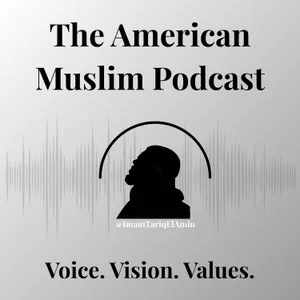
Free Daily Podcast Summary
The American Muslim Podcast: Daily Summaries Delivered
by El-Amin Communications
Get key takeaways, quotes, and insights from The American Muslim Podcast in a 5-minute read. Delivered straight to your inbox.
Latest Episodes
The most recent episodes — sign up to get AI-powered summaries of each one.
- Jan 26, 20269 min
The Cost of Impunity by Imam Tariq I. El-Amin
In this special episode of The American Muslim Podcast, Imam Tariq I. El-Amin shares a spoken essay reflecting on power, impunity, and moral injury.Drawing on historical memory, contemporary events, and ethical reflection, The Cost of Impunity explores how unaccountable state violence harms not only those subjected to it, but also those authorized to carry it out. The essay examines the denial of protection, the psychological consequences of normalized violence, and the quiet damage that spreads through families, institutions, and society when power operates without restraint.This episode invites listeners to consider a difficult but necessary question: what happens when no one feels safe, and what kind of people do we become under those conditions?Written, Read, and Produced by Tariq I. El-AminMusic & Art by Tariq I. El-Amin
- Nov 23, 20251h 2m
Yusuf Jones: The Algorithmic Abolitionist
Exploring AI and Technology Through the Lens of Black and Muslim HeritageIn this episode of the American Muslim Podcast, host Imam Tariq I. El-Amin welcomes Yusuf Jones, also known as the Algorithmic Abolitionist. Yusuf shares his journey of understanding and developing technology, rooted in his early exposure to computers through his father, a teacher at Kenwood Academy. They discuss the importance of recognizing Black contributions to technological advancements and how AI can be leveraged to benefit marginalized communities. Yusuf emphasizes the need to merge linguistic strengths inherent in African American communities with AI development. The conversation also touches on the spiritual dimensions of technology, the potential for AI to assist in preserving genealogical records, and the creation of private, localized AI systems to maintain data privacy. The episode encourages listeners to approach AI with intention and awareness, informing how we can integrate technological growth with cultural and historical preservation.00:00 Introduction and Opening Thoughts00:39 Guest Introduction: Yusuf Jones02:18 Early Exposure to Technology04:10 The Importance of Technological Adoption06:39 AI and Community Involvement09:54 Challenges and Opportunities in AI16:15 Language and AI: A Unique Intersection22:58 Spiritual Dimensions of AI29:21 Future Prospects and Responsibilities34:37 Virtual Reality Mishaps34:50 Encouragement and Discouragement35:29 AI and Islamic Education36:16 Personal Journey and Disability Advocacy36:53 Empowering the Disabled Community38:59 The Importance of Data Control39:31 Steps Towards Independence40:44 Open Source AI and Genealogy Projects43:04 Family History and Technology45:42 The Power of Technology in Preserving History58:30 Concluding Thoughts and Future VisionImage: Tariq I. El-AminMusic: ‘Boss’ — written and produced by Tariq I. El-Amin© LifeStar Development LLC. All rights reserved. Access the full playlist at https://youtube.com/playlist?list=PLpA8DYTTVbDPucKeHkHFg6iRfzuFhlgEL&si=nXYoBDCRP6RYD-f-The Algorithmic Abolitionist on Substack
- Nov 2, 202555 min
From Philly to Global Leadership: Imam Idris Abdul-Zahir
Journey of Leadership and Community with Imam Idris Abdul ZahirIn this episode of the American Muslim Podcast, host Imam Tariq El-Amin welcomes Idris Abdul Zahir, an esteemed Obama Foundation USA Leader, resident imam, deputy CIO, and filmmaker. Idris shares his deep-rooted journey in the Muslim community, heavily influenced by his parents' active roles. He recounts his personal transformation from reluctance to embrace leadership roles during high school, college, and eventually as an imam. Idris discusses the challenges and responsibilities of leadership, his views on community service, and his experiences in national and international leadership programs, including a recent cohort with the Obama Foundation. Emphasizing the need for constant self-improvement and community engagement, Idris inspires through his dedication to serving and uplifting the community.00:00 Introduction and Welcome00:31 Guest Introduction: Idris Abdul Zahir02:01 Early Influences and Family Background03:44 Journey to Leadership04:58 High School and College Years06:54 Professional and Community Involvement08:16 Leadership Philosophy and Development23:20 Obama Foundation and Broader Impact28:49 Recognizing Leadership Challenges30:19 Finding Strength in Faith32:27 Personal Growth and Community Impact34:46 Historical Context and Future Aspirations41:59 Balancing Multiple Roles47:05 Global Perspectives and Interfaith Efforts52:16 Concluding Reflections
- Oct 3, 202550 min
What’s Wrong with You? A Candid Conversation with Omar Yamini.
Episode 34 | What’s Wrong with You? A Candid Conversation with Omar Yamini00:00 – IntroductionI introduce my brother and longtime friend, Omar Yamini, and set the stage for this special candid episodeOmar Yamini_Whats_Wrong With You03:10 – Growing Up & Early InfluencesOmar reflects on our shared experiences, early decisions, and the road that shaped his youthOmar Yamini_Whats_Wrong With You08:40 – The Path to IncarcerationWhat led Omar to prison, and how he came to terms with the reality of a 15-year sentenceOmar Yamini_Whats_Wrong With You.14:55 – Aha Moments Behind BarsKey insights and turning points during incarceration that changed Omar’s perspective on life and responsibilityOmar Yamini_Whats_Wrong With You.21:20 – Writing What’s Wrong with You?The story behind his book, and why he felt compelled to share lessons for young people and their parentsOmar Yamini_Whats_Wrong With You.28:45 – Black Youth & Popular CultureOmar critiques the influence of entertainers, hip-hop, and media on Black youth and how culture can either uplift or harmOmar Yamini_Whats_Wrong With You.36:10 – The Role of ParentsWhy Omar believes that engaged parents are the most important factor in raising healthy, resilient Black childrenOmar Yamini_Whats_Wrong With You.42:30 – Pushback & DialogueI push back on some of Omar’s points, sparking dialogue about personal accountability, community, and faithOmar Yamini_Whats_Wrong With You.49:00 – Closing Reflections & Call to ActionOmar shares final words of encouragement, and I remind listeners to support him by purchasing his book👉 Get Omar’s book: What’s Wrong with You? What You, Your Children Need to Know About My 15-Year Imprisonment. Contact Omar directly at yaminiomar@gmail.com to purchase a copy.Cover Art & Intro Music - Tariq I. El-Amin @ImamTariqElamin🎧 Listen & Subscribe: Available on Spotify, Apple Podcasts, and other major streaming platforms. Listen on your smart speaker. 📲 Stay connected with us on Instagram and FacebookFollow @TheAmericanMuslimPodcast for episode updates, highlights, and community reflections.Follow host @ImamTariqElAmin for behind-the-scenes content, reflections, and more.
- Sep 12, 20251h 8m
Reflections on Civil Rights, Journalism, and Legacy with Ayesha K. Mustafaa
Reflections on Civil Rights, Journalism, and Legacy with Ayesha K. MustafaaIn this episode of the American Muslim Podcast, host Imam Tariq El-Amin engages in a profound conversation with Ayesha K. Mustafaa, editor of the Muslim Journal and an assistant professor of Mass Communications. Ayesha shares stories from her upbringing in a civil rights-active family in Mississippi and discusses the pivotal roles of historic figures like Ida B. Wells and Emmett Till in shaping her path. She reflects on the responsibilities of journalism in recording history, the perpetual relevance of civil rights, and the need for fostering like-minded alliances. Ayesha also delves into the significant impact and evolution of black media and the crucial role of storytelling and truth in the age of 'fake news.' Finally, the episode touches on the importance of succession planning in movements and institutions to continue the fight for justice and equality.00:00 Introduction and Welcome00:29 Guest Introduction: Ayesha K. Mustafaa00:56 Formative Years and Family Influence01:59 Civil Rights Movement and Mississippi's Impact03:16 Odessa Hawthorne's Legacy06:49 The Role of Newspapers in History12:01 Ida B. Wells: A Legacy of Journalism and Activism18:15 Journey to Journalism and Conversion to Islam23:09 Challenges and Changes in Journalism26:19 The Importance of Black Media31:42 Fake News and the Pursuit of Truth34:37 Navigating the Era of AI and Fake News35:45 The Importance of Succession Planning39:14 Media's Role in Social Justice43:40 The Power of Independent Journalism48:21 Historical Figures and Their Impact55:02 The Role of Religion in Social Movements59:20 Reflections on Personal and Collective Responsibility01:02:00 The Legacy of African American Muslims01:06:40 Conclusion and Final ThoughtsSubscribe to the Muslim Journal at https://muslimjournal.net/Learn more about the International Museum of Muslim Cultures at https://www.muslimmuseum.org/Cover Art & Intro Music - Tariq I. El-Amin @ImamTariqElamin🎧 Listen & Subscribe: Available on Spotify, Apple Podcasts, and other major streaming platforms.📲 Stay connected with us on Instagram and FacebookFollow @TheAmericanMuslimPodcast for episode updates, highlights, and community reflections.Follow host @ImamTariqElAmin for behind-the-scenes content, reflections, and more.
- Sep 9, 20251h 12m
Faith, Healing, and Chaplaincy with Nora Zaki
Chaplain Nora ZakiIn this episode of the American Muslim Podcast, host Imam Tariq El-Amin shares a previously recorded and enriching conversation with Chaplain Nora Zaki, interfaith chaplain educator, and founder of My Muslim Chaplain. Chaplain Zaki reflects on her background, including the profound impact of her immigrant father from Egypt and her convert mother. She discusses significant life experiences, including the loss of her father and her journey into chaplaincy, inspired by her education and encounters with various scholars. The discussion highlights the importance of empathy, interfaith dialogue, and the spiritual and psychological challenges faced by communities. Zaki also delves into the profound impact of recent global events on her work and personal beliefs, emphasizing community, resilience, and the collective need for spiritual and ethical awakenings.00:00 Introduction and Guest Overview02:19 Chaplain Nora Zaki's Background and Family06:40 Formative Experiences and Chaplaincy Journey12:27 University and Interfaith Work18:25 Challenges and Reflections on Interfaith Dialogue30:30 Impact of October 7th Events on Interfaith Relations36:43 Understanding Christian Zionism37:21 Interfaith Programming and Events38:02 Addressing Community Issues38:20 Palestinian Heritage and Cultural Events40:23 Interfaith Work and Global Concerns47:10 The Role of Muslim Chaplains58:09 Parenting and Community Building01:10:15 Final Reflections and Call to Actionver Art & Intro Music - Tariq I. El-Amin @ImamTariqElamin🎧 Listen & Subscribe: Available on Spotify, Apple Podcasts, and other major streaming platforms.📲 Stay connected with us on Instagram and FacebookFollow @TheAmericanMuslimPodcast for episode updates, highlights, and community reflections.Follow host @ImamTariqElAmin for behind-the-scenes content, reflections, and more.
- Aug 29, 202542 min
Imam Sulaimaan Hamed: Prepared to Serve
Imam Sulaimaan Hamed: Prepared to Serve | Faith, Leadership & Community[00:00:00] Imam Tariq I. : is there a memory, an event, a mentor or something you can point to that you say, this was impactful and [00:00:08] Imam Sulaimaan: leading me to where I am today?[00:00:14] Imam Sulaimaan: Interesting. excellent question. I think the person would be my mother, more my parents, but particularly my mother they, subliminally pushed me to leadership and. academia, not to be a scholar, but for the sake of knowing, being educated and informed.[00:00:35] Imam Sulaimaan: an occasion. There's a memory that I have that, I was having a conversation and people were asking, what are you going to be when you grow up? Mm-hmm. And I remembered that nobody said Imam. and, that stuck with me that as a career, you know, so I, I mean that, [00:01:00] that memory just, I'm not saying that motivated me to become an Imam, but that memory just stays with me.[00:01:07] Imam Sulaimaan: And then, also in that conversation of what I. Consider that, you know, what I consider that particular, service. But yeah, those are some, occasions or, or memories, What was it about your mother both my parents, well my mother was an educator [00:01:26] Imam Sulaimaan: She was the principal of the Clara Muhammad school, the director of the school. And so community, that's all I know. I literally slept at Muhammad schools.You're the principal, the director, opening and closing. just the connectedness to community [00:01:39] Imam Sulaimaan: that's another big part of it. 'cause what, what we do is community service, we slaves to the community, you know? [00:01:45] Imam Tariq I. : Mm-hmm. [00:01:45] Imam Sulaimaan: But seeing that and witnessing that in my mother, in Oakland where I'm from, her serving that part of the community, I think it made it a natural thing.[00:01:55] Imam Tariq I. : And when you noticed, nobody said, Imam, [00:02:00] what was your perception or what did you see Imam representing? [00:02:07] Imam Sulaimaan: Interesting. I, I don't think then I, I, it, it didn't register then. Definitely. But I think what. It represented, and particularly 'cause I'm from Oakland, we had a strong Imam, if that makes sense.[00:02:18] Imam Sulaimaan: Mm-hmm. You know, an active Imam, it represented a teacher. primarily it represented a teacher, but the religious thing that was more so what was being rejected the fact that this has to do with religion, [00:02:31] Imam Sulaimaan: Mm-hmm. As opposed to just, selling chickens or something, you know.[00:02:38] Imam Tariq I. : your mother was the director of Sister Clare Muhammad School. Mm-hmm. I'm also a product of the, sister Clare Muhammad school system. Right. had a huge impact on me. are there things you can look back. From being at the school mm-hmm. That you feel were embedded in you?[00:02:55] Imam Tariq I. : Absolutely. [00:02:57] Imam Sulaimaan: academically, Arabic. we went to [00:03:00] Syria, our delegation, went to Clare Muhammad. So we had Arabic, we had some foundation in Arabic. We able to read and write Arabic.[00:03:05] Imam Sulaimaan: Right. So that like super impactful for. Muslim American kids, you know, black kids that's part of our community's history. and then the, it, it is different now. When my parents, when my mother was the principal, you had your pants, your shirt buttoned up to the top, a sweater.[00:03:25] Imam Sulaimaan: And that uniform, you iron today, it's, a little different. Not coming to the mast in jeans. having a
- Aug 18, 202558 min
Mind of an Entrepreneur: Sajdah Wendy Muhammad on Legacy & Future
Preserving History & Building Futures w/ Sajdah Wendy MuhammadIn this episode of the American Muslim Podcast, Imam Tariq El-Amin hosts a conversation with Sajdah Wendy Muhammad, a multifaceted professional known for her work as an urban historic preservationist, real estate and development strategist, and thought leader. Wendy shares her journey from being a student primed for a corporate career to becoming a dedicated member of the Nation of Islam, which significantly shaped her path. She discusses her early experiences, her philosophy of integrating Islamic principles into business, and her accomplishments in building healthcare facilities. The episode also delves into Wendy's involvement in the preservation of the Sajdah House (Honorable Elijah Muhammad House Museum) and her brand, 'Mind of an Entrepreneur,' which aims to help individuals align their business practices with emotional and social intelligence. Throughout, Wendy emphasizes the importance of detailed attention, overcoming adversity, and the critical balance of giving and receiving.00:00 Introduction and Welcome00:31 Meet Sajdah Wendy Muhammad01:40 A Formative Event: Joining the Nation of Islam03:46 Early Career and Influence of the Nation of Islam09:39 Integrating Faith and Business17:03 Building Healthcare Facilities21:13 Overcoming Challenges and Learning30:17 Demeaning Accountant Skills31:06 Understanding Granular Levels of Excellence31:45 Challenges in Renovating Historical Buildings34:11 Sensitivity and Islam's Influence35:56 Dealing with Adversity and Haters41:06 The Journey to Preserving the Messenger's House50:05 Mind of an Entrepreneur56:14 The Importance of ReceivingLearn more about The Honorable Elijah Muhammad House Museum at www.elijahmuhammadhousemuseum.com Elijah Muhammad House Museum wins award for preservation efforts. https://www.preservationchicago.org/win-the-elijah-muhammad-house-museum-nearing-restoration-completion-and-opening/?srsltid=AfmBOorDK3Om3rfyGsp7xSb2wXCEJFnRJx33f_bv_fFT-CdtCdTkYbIcCover Art & Intro Music - Tariq I. El-Amin @ImamTariqElamin🎧 Listen & Subscribe: Available on Spotify, Apple Podcasts, and other major streaming platforms.📲 Stay connected with us on Instagram and FacebookFollow @TheAmericanMuslimPodcast for episode updates, highlights, and community reflections.Follow host @ImamTariqElAmin for behind-the-scenes content, reflections, and more.
Get The American Muslim Podcast summaries in your inbox
Free AI-powered daily recaps. Key takeaways, quotes, and mentions — in a 5-minute read.
Get Free Summaries →Free forever for up to 3 podcasts. No credit card required.
You Might Also Like
Listeners also like.

Mommying While Muslim
Uzma Jafri
Inside Islam
Inside Islam Podcast
AccidentalMuslims.com
AccidentalMuslims.com
The Thinking Muslim
Muhammad Jalal

A New Day for Al Islam
William Kareem

After Hours
Dr. Omar Suleiman & Shaykh Ammar AlShukry
Kipah, Kufi, & Collar
Islam Hassan, Amy Small, and Ken White
IslamPodcasts.com
islampodcasts

Your Muslim Girl Podcast
Fatima Sabir
Immigrant Unfiltered with Hamza Ali
Hamza Ali
Al Madrasatu Al Umariyyah
Islamic Podcast
Mufti Tariq Masood Podcast
Mufti Tariq Masood Speeches
About The American Muslim Podcast
The American Muslim Podcast is your gateway to exploring the diverse and dynamic stories shaping the American Muslim experience. Hosted by Imam Tariq I. El-Amin, this podcast shines a spotlight on the voices of leaders who are making a profound impact in their communities, and in the public square.From imams and chaplains to Islamic school leaders, teachers, scholars, and non-profit pioneers, we celebrate those who dedicate themselves to serving others. These inspiring individuals include masjid leaders, community activists, and youth mentors who exemplify the values of faith, compassion, and resilience in their work.Through insightful conversations and authentic narratives, we explore how these leaders navigate faith, identity, and service, offering a unique perspective on the evolving role of American Muslims in shaping society.
Customized Recaps
AI-powered recaps with compact key takeaways, quotes, and insights.
Straight to Your Inbox
Get key takeaways from The American Muslim Podcast in a 5-minute read.
Save Hours Every Week
Stay current on your favorite podcasts without falling behind.
Frequently Asked Questions
What is Podzilla's The American Muslim Podcast daily summary?
It's a free AI-powered email that summarizes new episodes of The American Muslim Podcast as soon as they're published. You get the key takeaways, notable quotes, and links & mentions — all in a quick read.
How does the The American Muslim Podcast podcast summary work?
When a new episode drops, our AI transcribes and analyzes it, then generates a personalized summary tailored to your interests and profession. It's delivered to your inbox every morning.
Is this an official The American Muslim Podcast product?
No. Podzilla is an independent service that summarizes publicly available podcast content. We're not affiliated with or endorsed by El-Amin Communications.
Can I get summaries of other podcasts too?
Absolutely! The free plan covers up to 3 podcasts. Upgrade to Pro for 15, or Premium for 50. Browse our full catalog at /podcasts.
How often does The American Muslim Podcast release new episodes?
The American Muslim Podcast publishes weekly. Our AI generates a summary within hours of each new episode.
What topics does The American Muslim Podcast cover?
The American Muslim Podcast covers topics including Education, Religion & Spirituality, Spirituality, Islam, Philosophy, Culture, Society & Culture. Our AI identifies the specific themes in each episode and highlights what matters most to you.
Start getting The American Muslim Podcast summaries tomorrow morning.
Free forever for up to 3 podcasts. No credit card required.
Free forever for up to 3 podcasts. No credit card required.