Free Daily Podcast Summary
The Aligned Singer: Daily Summaries Delivered
by Sarah Hawkey
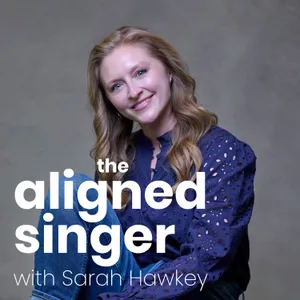
The Aligned Singer is a podcast for singers who know there is something more inside them and are ready to bring it fully to life.Hosted by classical soprano and voice teacher Sarah Hawkey, an expert in vocal technique, this show helps you connect the dots from where you are to where you want to be in your voice, your performance opportunities, and your singing career. Each episode explores the inner and outer work to help you clear vocal and mindset blocks so you can share your singing gift with the world in whatever way calls to you.
Latest Episodes
The most recent episodes — sign up to get AI-powered summaries of each one.
- 4 days ago14 min
Ep. 30 - Running Out of Breath When You Sing? 6 Ways to Sing Longer, More Beautiful Phrases Right Now, Plus a Breathing Technique and a Vocal Exercise to Do With Me
You have longer breath than you think when you sing. I promise you! When have you ever run out of breath talking with a friend? Singing a long phrase can feel just as natural.If you want to sing all the way to the end of a long phrase with ease, if there's a line in your aria or song where you'd love to have breath left over, or if you want every phrase you sing to feel full, connected, and beautiful, you're going to love this edition of The Aligned Singer.Today is all about breath, and simple ways to start singing longer phrases right now. Vocalizing is another word for your warm-up, and your warm-up is the perfect place to train your breath for your repertoire, aka your songs.We never run out of breath when we're speaking a sentence. Singing is the same.I'll share the breathing technique that gets your voice ready to sing, where in your body to breathe so your air lasts, the Ladder Breath I made up for a singer who wanted a lower, fuller breath, and a fun vocal exercise you can sing with me right now.As your voice teacher bestie, I want to reassure you that if long phrases have always felt hard, that's completely okay. When I moved to New York City in 2006 to pursue my dream of a professional singing career, I was retraining my voice and working hard on long phrases. Over the years my breath has grown so much that I once busted the zipper on a gown just by taking a breath backstage! There's nothing special or exceptional about me except that I wouldn't give up, and I know without a shadow of a doubt that you can sing those long, beautiful phrases too!In this episode you'll learn:• Why you have more breath than you think for long phrases• The breathing technique that gets your voice ready to sing and helps you take in more air• How to map your breaths into your music so you have air, even when you feel nervous• Where in your body to breathe so your breath lasts to the end of the phrase• How thinking to the end of the line makes a long phrase feel easier• A simple vocal exercise you can sing with me to make your phrases longer and longerChapters:00:00 Sing to the End of Every Long Phrase00:28 Meet Your Voice Teacher Bestie01:01 You Have Longer Breath Than You Think02:27 The Impulse Breath: When to Use It03:01 The Impulse Breath: Do It With Me03:39 Map Your Breaths Into Your Music04:41 Where to Breathe for Longer Phrases06:13 Relax Your Shoulders for a Fuller Breath07:45 Think to the End of the Phrase08:55 The Ladder Breath for Breathing Lower in Your Body10:01 The Alphabet Exercise: When to Use It10:34 The Alphabet Exercise: Do It With Me12:05 Slow the Tempo to Sing Even Longer12:57 Pep TalkWork with Me!Ready to sing long, beautiful phrases with ease? My first online program for singers is coming very soon, and I'm still accepting one-on-one private students in my studio.Subscribe so you catch every new edition of The Aligned Singer, and leave me a comment telling me how long you could sing on one breath. I read them all and I write back.Links & Resources:Voice Studio WebsiteVoice Studio InstagramTikTokPerforming Website
- 1 weeks ago21 min
Ep. 29 - How to Sing High Notes Without Straining (and Increase Your Range): Singing Vowels vs. Speech Vowels Explained
There's a way to sing your high notes with so much more ease, and it doesn't include trying harder, pushing harder, or reaching further for them. That's not how your voice actually works!If you want high notes that feel free and easy, if you want the top of your range back after it's felt out of reach, or if you want to walk into a big high note phrase feeling open and relaxed, you're going to love this edition of The Aligned Singer.Today is all about how to sing high notes without straining for them. We start with what's happening in your head right before a high note, then get into singing vowels and what your middle voice has to do with the top of your range.Think of high notes as no big deal. Think of them as a low note.When you tell your body to reach for a high note, it tightens up to get ready, and that's the exact opposite of what great high notes need. The thoughts you're thinking right before a big high note phrase are telling your body the story it then follows. This may seem like a mindset hack, but it really is technical training.So many singers come to me thinking their range has changed and they just can't sing that high anymore. With some time, we've retrained and reclaimed the upper part of their voice.As your voice teacher bestie, I want to reassure you that if a high note you used to sing has started to feel out of reach, that's completely okay, and it doesn't mean it's gone. There was a note I thought I'd never sing again, the G above high G. I could sing it easily in high school, but I was pushing my voice all the way there, and for about 20 years it disappeared. A couple of years ago my voice teacher (I still study voice to this day!) started working on that part of my voice with me, and finding those notes again took my voice from already sounding great to "oh my gosh, I didn't even know this was possible." There's nothing special or exceptional about me except that I wouldn't give up, and I know without a shadow of a doubt that your high notes can feel easy too!In this episode you'll learn:• What to do instead of reaching and pushing for a high note• The mindset shift that helps your body relax right before a big high note phrase• How singing vowels give your high notes more room, heard on "the glow of the moonlight"• Why what you do in your middle voice shows up in your high notes• 3 signs you might be pushing in your middle voice, so you can check your own singing• Why a high note that's felt out of reach for years can come backMentioned in This Episode:Ep. 26, Singing Vowels vs. Speech Vowels ExplainedChapters:00:00 How to Sing High Notes Without Straining00:37 Meet Your Voice Teacher Bestie01:13 Let Your Body Open Up Instead of Reaching02:51 Think of Your High Notes as Low Notes03:38 What You're Thinking Right Before a High Note Phrase05:37 Singing Vowels for Easier High Notes07:27 Hear the Difference on "The Glow of the Moonlight"11:16 How Your Middle Voice Affects Your High Notes13:34 3 Signs You Might Be Pushing in Your Middle Voice16:18 Proof Your High Notes Can Come Back20:28 Pep TalkWork with Me!Ready to sing your high notes with more ease? You'll find all the details about my first online program for singers at sarahhawkeystudio.com, and I'm still accepting one-on-one private students in my studio.Subscribe so you don't miss an episode, and tell me in the comments which high note you're working on right now. I read them all and I write back.Links & Resources:Voice Studio WebsiteVoice Studio InstagramTikTokPerforming Website
- 2 weeks ago20 min
Ep. 28 - How Long Does It Really Take to Improve Your Singing Voice? (What to Expect at 3, 6, and 12 Months, Plus the 15-Minute Daily Habit That Speeds It Up)
How long does it really take to make a lasting change in your voice?If you want the sound in your head to finally show up when you sing, if you want your voice at its best for your next audition, or if you want to sing at a professional level and you'll do what it takes to get there, you're going to love this edition of The Aligned Singer.Today is all about how long it really takes to transform your sound, and what you can count on at three months, six months, and a year.Vocalizing is another word for your warm-up, the technical exercises you do before you go into your repertoire, aka your songs.When you vocalize for around 15 minutes every single day, then give focused time to your repertoire, you're going to be amazed how quickly you progress.Your voice doesn't grow in a straight line. Building your technique is an artistic process with seasons and cycles, and you swirl and ascend, swirl and ascend.As your voice teacher bestie, I want to reassure you that if you've been wondering how long building your voice will take, that's completely okay. I went from a hot mess with my voice to a successful career as a classical soprano, and I still vocalize almost every single day. I've been able to collapse time for you with everything I share, so you don't have to figure this out the long way like I did. There's nothing special or exceptional about me except that I wouldn't give up, and I know without a shadow of a doubt that you can build your dream sound too!In this episode you'll learn:• How long it really takes to hear a lasting change in your voice• What 15 minutes of vocalizing a day can do for your sound• Why your warm-up and your repertoire practice work best as two separate parts of your day• How to fit focused repertoire practice into a busy schedule• Why progress in your voice swirls upward instead of climbing in a straight line• What you can count on at three months, six months, and a yearChapters:00:00 How Long It Really Takes to Change Your Voice00:22 Meet Your Voice Teacher Bestie01:48 How Bad Do You Want to Sing at a Professional Level?03:44 Your Voice Grows in a Swirl, Not a Straight Line05:16 Replace the Old Habits Running Your Voice07:42 Start Doing Technical Work on Your Technique09:38 15 Minutes of Vocalizing a Day Is All You Need11:17 How Much Time to Give Your Repertoire12:36 What to Expect at 1 Week, 3 Months, and 6 Months16:28 Why I Still Vocalize Every Day as a Professional Singer19:54 Pep TalkWork with Me!My very first online program for singers helps you vocalize and work on your technique every single day. Find the details on my studio website, and I'm still accepting one-on-one private students in my studio.Subscribe so you catch every new edition of The Aligned Singer, and leave me a comment telling me what you'd love to hear in your voice 90 days from now. I read them all and I write back.Links & Resources:Voice Studio WebsiteVoice Studio InstagramTikTokPerforming Website
- 3 weeks ago39 min
Ep. 27 - Singing Better Starts Here: The Secret to Breaking Bad Habits and Making Lasting Change in Your Voice | Build Your Dream Voice, Part 5
There's one reason a shift in your voice actually sticks, and it's not the exercise itself. It's how many times you repeat it.If you want the fix from a great lesson to still be there next week, if a breakthrough in your voice has ever disappeared on you, or if you're ready for a new pattern to finally become your natural sound, you're going to love this edition of The Aligned Singer.This is part 5, the final part, of Build Your Dream Voice, my 5-part series on the blind spots I see most often in singers who are working to connect the dots between the voice they have right now and the voice they want to have.Today is all about repetition, the one ingredient that turns a single good moment in your voice into a permanent change you actually keep.Vocalizing is another word for your warm-up, and it's where you build new patterns in your voice. But building the pattern once isn't the same as keeping it.In order to get to a new level in the way you sound when you sing, you have to repeat certain exercises and certain connections in your voice again and again and again, every single day, until it's automatic.I'm thinking of a singer I work with privately, already working professionally, who came to me wanting to get to the next level in her career. Within thirty seconds of hearing her sing, I knew exactly what was going on with her voice. But knowing what's going on is different from being able to shift it, and the work in our lessons since has been forming those new connections again and again, until they hold.As your voice teacher bestie, I want to reassure you that if progress in your voice keeps slipping, that's not a sign anything is wrong with you. I was recently listening back to a performance I gave about a month ago, and I started to cry, because the sound coming out of my mouth was so good. It's good because I kept repeating the new way, over and over, until it became how I actually sing. There's nothing special or exceptional about me except that I would not give up, and I know without a shadow of a doubt that you can build your dream sound too!In this episode you'll learn:Why doing an exercise right once in a lesson doesn't mean it's fixed in your voice yetWhat neuroplasticity actually is, and why your voice can keep changing at any point in your lifeWhy your brain pulls you back toward your old sound, even after you've found a better oneHow repeating the right pattern, not just any repetition, plants a permanent shift in your voiceWhy this has to happen every single day, not once in a while in a lessonHow this ties together everything in Build Your Dream Voice into the one thing that makes it stickChapters:00:00 How to Make a Vocal Breakthrough Permanent02:46 Meet Your Voice Teacher Bestie08:06 A Quick Recap of Parts 1 Through 411:23 What Neuroplasticity Means for Developing Your Vocal Technique14:23 How to Make a New Pattern Stick in Your Singing23:10 When to Use This Fix on Your Own Voice24:49 Live Example: Fixing My Middle Passaggio28:55 Why One Lesson (Or One Repetition) Isn't Enough32:11 Why an Old Habit Can Creep Back in and How to Fix It33:33 Pep TalkWork with Me! Ready to build your dream sound? My first technique program is coming very soon, and I'm still accepting one-on-one private students in my studio.Subscribe so you catch every new edition of The Aligned Singer, and leave me a comment telling me what pattern you're working on repeating in your own voice right now. I read them all and I write back.Links & Resources:Free Vocal Technique Mini LessonVoice Studio WebsiteVoice Studio InstagramTikTokPerforming Website
- Oct 5, 202620 min
Ep. 26 - Why Speech Vowels Are Killing Your High Notes (and Why Singing Vowels Feel So Strange): Singing Vowels vs. Speech Vowels Explained | Build Your Dream Voice, Part 4
Here's something I want to shout from the rooftops: singing vowels and speech vowels are vastly different. It's such a simple concept, and it can change your whole voice.If you want a bigger sound, if you want more beauty in your sound, or if you want more ease in your high notes, you're going to love this edition of The Aligned Singer.This is part 4 of Build Your Dream Voice, my 5-part series on the blind spots I see most often in singers who are working to connect the dots between the voice they have right now and the voice they want to have.Today is all about the difference between the way you make vowels when you talk and the way you make them when you sing.We talk all day long, so the vowels we use when we speak feel completely normal. That's exactly why singing vowels feel wrong at first. You're just not used to them yet!If your vowels feel normal when you sing, you're probably singing like you talk.The sound that feels comfortable and familiar isn't always the sound that lets your voice grow. When you let go of singing like you talk and let yourself feel a little strange, your voice has room to become bigger, freer, and more beautiful, especially as you head up into your high notes. In this episode, I sing the phrase "sing to the top of the mountain" both ways, so you can hear the difference for yourself.As your voice teacher bestie, I want to reassure you that if you're a serious singer and nobody has ever shown you this, that's completely okay. When I moved to New York City in 2006 to pursue my dream of a professional singing career, I sounded nothing like a professional singer. It took me six years to retrain my technique, and my "ee" vowel was the very last thing to shift. There's nothing special or exceptional about me except that I wouldn't give up, and I know without a shadow of a doubt that you can build your dream sound too!In this episode you'll learn:The difference between the vowels you use when you talk and the vowels you use when you singThe easiest way to tell if you're singing with speech vowelsWhy singing vowels feel wrong at first, and why that's a good signWhat opens up in your high notes and head voice when you stop singing like you talkWhere in your range speech vowels are probably fine, and where you need to switchWhat both kinds of vowels sound like, on "ah," "ooh," and "sing to the top of the mountain"Chapters:00:00 One Simple Concept That Can Change Your Whole Voice03:08 Meet Your Voice Teacher Bestie04:47 Proof You Can Rebuild Your Voice From Wherever You Are06:40 Singing Vowels and Speech Vowels Are Vastly Different07:33 Hear the Difference on "Ah"08:17 Hear the Difference on "Ooh"09:17 Sing to the Top of the Mountain11:50 How to Tell If You're Singing Speech Vowels13:35 Want a Bigger, More Beautiful Sound? Stop Singing Like You Talk14:46 More Ease in Your High Notes With Singing Vowels16:08 Why Singing Vowels Feel Wrong at First19:30 Pep TalkWork with Me!Ready to build your dream sound? My first online program for singers opens in mid-October, and I'm still accepting one-on-one private students in my studio.Subscribe so you don't miss part 5, and tell me in the comments which vowel feels strangest when you sing it. I read them all and I write back.Links & Resources:Voice Studio WebsiteVoice Studio InstagramTikTokPerforming Website
- Sep 28, 202626 min
Ep. 25 - Your Vocal Warm-Up Should NOT Sound Like a Performance (Here's What It Should Sound Like): Build Your Dream Voice, Part 3
Most singers don't know this, and that's shocking to me. The way you sound when you're warming up your voice and the way you sound when you're performing are two vastly different sounds.If you want to walk into a rehearsal or an audition sounding your best, or if you want the sound you hear in your head, the one you know deep down you're capable of making someday, to finally show up in your voice, you're going to love this edition of The Aligned Singer.This is part 3 of Build Your Dream Voice, my 5-part series on the blind spots I see most often in singers who are working to connect the dots between the voice they have right now and the voice they want to have.Today is all about the difference between how you sound when you warm up and how you sound when you perform, and why that difference is so important when you're training your voice.Vocalizing is another word for your warm-up, and those first sounds you make for the day are not supposed to sound like a performance. They're supposed to sound like the process!The way you sound when you're all warmed up is because you warmed up.If you can start to embody this next idea, you will improve your singing so much faster. When you drop the result and let yourself be in the process, your voice makes the new connections it needs, and the sound you want starts showing up in your music faster and faster, and one day becomes your new sound. Problems get fixed permanently. Your voice can shift fundamentally so that you don't struggle with those things you used to struggle with anymore.As your voice teacher bestie, I want to reassure you that if you're a serious singer and nobody has ever told you this, that's completely okay. When I moved to New York City in 2006 to pursue my dream of a professional singing career, I vocalized every day at a little keyboard in a rented room in Queens before my restaurant shift, making sounds I knew didn't sound good yet. When I got over the fear of making those strange sounds I needed to make to start retraining my instrument, my voice could make the connections it needed, and being in the process made me sound better and better when I sang. That eventually led to me breaking through in the industry and becoming a full-time performer. There's nothing special or exceptional about me except that I wouldn't give up, and I know without a shadow of a doubt that you can build your dream sound too!In this episode you'll learn:Why the way you sound when you're warming up and the way you sound when you perform should really be two different soundsHow when you vocalize, aka warm up your voice, you're allowing your voice to make the adjustments and connections it needs so you can sound your best when you actually sing your repertoire and performWhat a real warm-up sounds like in my voiceHow to keep vocalizing when your neighbors, roommates, or housemates on the other side of the wall can hear youWhy instrumentalists warm up in the green room, and why you get to do the sameHow letting go of how you'll sound later helps your voice change faster todayChapters:00:00 Your Warming Up Sound and Performance Sound Are Two Different Things01:48 Meet Your Voice Teacher Bestie02:19 Proof You Can Rebuild Your Voice No Matter What You Sound Like Today06:14 The Two Different Things You Do When You Practice07:28 How Daily Vocalizing Built My Dream Voice15:06 The Key: Drop the Result and Be in the Process16:41 What My Real Warm-Up Sounds Like18:18 Keep Vocalizing, Even When Someone Can Hear You Through the Wall21:26 What Instrumentalists Already Know That We Singers Can Do Too25:49 Pep TalkWork with Me!Ready to build your dream sound? My first technique program is coming very soon, and I'm still accepting one-on-one private singers in my studio.Links & Resources:Voice Studio WebsiteVoice Studio InstagramTikTokPerforming Website
- Sep 21, 202615 min
Ep. 24 - The ONE Place You Fix Your Voice for Good (Hint: It's Not Running the Song Again!): Build Your Dream Voice, Part 2
That high note that feels stuck and strained every single time you get to it. The low notes that seem to disappear on you. The spot in the middle of your range where everything feels too pressed, too pushed, too forward. You run the phrase again. You mark it in your score. You come back to it tomorrow and it's still sitting there.Here's the good news. It's still sitting there because you've been looking for it in the wrong place!Part 2 of Build Your Dream Voice is about where vocal problems actually hide, and it isn't in your repertoire. It's in your warm-up. Once you know that, the detective work gets so much easier, and the changes you've been after start showing up a lot faster.Your repertoire is where you apply your technique. Your vocalizing is where your voice learns to do something new. Solve it there, repeat it there, and it becomes a pattern you get to keep, a new good habit in your voice that moves you in the direction you wish you could go, instead of a spot fix that only lasts one song, or worse, one practice session.And if you're wondering whether the sound you hear in your head is actually available to you... it is. I moved to New York City in 2006 to pursue a professional singing career, and I was a vocal wreck, even though I had a bachelor's degree in voice. I retrained, and I've been performing professionally with my dream sound for a long time now. There's nothing special or exceptional about me except that I wouldn't give up. You can connect the dots too, just like I did!!In This Episode, You'll Learn:- Why that strained high note keeps showing up no matter how many times you run the phrase- Where to look first when your low notes disappear or your middle voice feels pressed and pushed- The detective work that helps you make real, lasting changes in your voice: how to figure out where the problem actually is, and where to actually fix it- The reason a fix that works in one aria doesn't carry into the next piece you learn- The part of your practice session where your voice starts making new connections and sounding better overall- What belongs in your warm-up as a bigger, sweeping adjustment to your technique, and what belongs in your music as a small spot fixMentioned in This EpisodeEpisode 23Listen on Spotify: https://open.spotify.com/episode/3Gw7qtmw7AEaIQ76xKtCqWListen on Apple: https://podcasts.apple.com/us/podcast/ep-23-why-the-same-problem-keeps-showing-up-in-your/id1881699427?i=1000789516209Episode 16Listen on Spotify: https://open.spotify.com/episode/6lB287XUCiO7oTpeJBq70XListen on Apple: https://podcasts.apple.com/us/podcast/ep-16-if-you-want-to-improve-your-singing-you-have/id1881699427?i=1000778473174Chapters0:00 Where Your Vocal Problems Are Actually Hiding1:04 Proof You Can Retrain a Voice That Isn't Working Yet3:23 The Symptoms You Keep Running Into in Your Repertoire3:53 Why Fixing It in the Aria Doesn't Stick4:38 The Warm-Up Is Where the Problem Lives6:24 Vocalizing Is Where Your Voice Makes New Connections7:38 The Small Adjustments That Do Belong in Your Music8:53 A Spot Fix for One Song vs. a Change That Stays in Your Voice9:50 Your Quick Review: Symptom, Source, Solution11:30 Why Daily Vocalizing Protects the Sound You Want12:40 Pep TalkWork with Me!Ready to build your dream sound? My first technique program is coming very soon, and I'm still accepting one-on-one private students in my studio at sarahhawkeystudio.com.Links and ResourcesVoice Studio Websitehttps://sarahhawkeystudio.comVoice Studio Instagramhttps://www.instagram.com/voiceteachersarahTikTokhttps://www.tiktok.com/@voiceteachersarahPerforming Websitehttps://sarahhawkey.com
- Sep 14, 202612 min
Ep. 23 - Why the Same Problem Keeps Showing Up in Your Singing (and How to Fix It for Good): Build Your Dream Voice, Part 1
There's one thing you can do every day that moves your voice toward your dream sound faster than anything else. If you want a high note that feels free and easy, if there's a habit you'd love to replace with a better one, or if you've been running the same phrase over and over and you're ready for it to finally click, this one is for you.This is part 1 of Build Your Dream Voice, a 5-part series on the blind spots I see most often in singers who are working to connect the dots between the voice they have right now and the voice they want.We're starting with the biggest one, and it's your warm-up. What I call vocalizing.When you hit a bump in the road, a high note that feels strained, a low note you'd love to reach, coloratura you want coming out clean, your instinct is to fix it in the music. You'll still make small adjustments in your music, of course. I do to this day, we all do. But that's not where the real change happens.Vocalizing is another word for your warm-up, and your warm-up is where your voice actually changes.It's where you shift the fundamental way you sing, replace old habits with better ones, and then head into your repertoire to apply it there. 10 or 15 minutes a day is all you need. Over time it snowballs, it stacks on top of itself, and you start to hear the changes happening in your voice.As your voice teacher bestie, I want to reassure you that if you're a serious singer and nobody has ever told you this, that's completely okay. Nobody told me either. I moved to New York City 3 days after graduating with a degree in voice and a wrecked instrument, and I knew I didn't know how to sing. Figuring this out is what rebuilt my instrument, and it's why I know without a shadow of a doubt that you can build your dream sound too.In this episode you'll learn:When you want to make a big change in your sound, the one daily habit that makes it possibleWhy a tricky phrase gets easier once your voice has learned the new way of singing it firstWhere the change in your voice actually happens, and why it isn't inside your musicHow many minutes a day you actually need to transform the way you soundWhat a warm-up can do for a long-standing habit that your repertoire can't doWhy your voice can be rebuilt from wherever it is right now, whatever it sounds like todayChapters:00:00 The One Daily Habit That Builds Your Dream Voice00:21 What You'll Get From This 5-Part Series01:58 Meet Your Voice Teacher Bestie02:32 How I Rebuilt My Voice After Conservatory04:21 Why Your Dream Voice Is Within Reach05:02 The One Habit You Don't Want to Skip05:39 Meet Vocalizing, Your Daily Warm-Up06:28 Why Vocalizing Is Where Your Voice Transforms07:03 What to Do Instead of Fixing It in Your Repertoire07:38 The Small Adjustments You'll Still Make in Your Music08:08 Your Practice Assignment for This Week09:04 How Many Minutes a Day You Actually Need10:02 What Starts to Change When You Vocalize Every Day10:33 Pep TalkWork with Me!If you want to build a technique you can rely on and connect the dots between the voice you have now and the one you're dreaming about, come study voice with me: https://www.sarahhawkeystudio.comSubscribe so you don't miss the rest of this series, and leave me a comment telling me how long you vocalized today. I read them all and I write back.Links & Resources:Voice Studio Websitehttps://www.sarahhawkeystudio.comVoice Studio Instagramhttps://www.instagram.com/voiceteachersarahTikTokhttps://www.tiktok.com/@voiceteachersarahPerforming Websitehttps://www.sarahhawkey.com
About The Aligned Singer
The Aligned Singer is a podcast for singers who know there is something more inside them and are ready to bring it fully to life.Hosted by classical soprano and voice teacher Sarah Hawkey, an expert in vocal technique, this show helps you connect the dots from where you are to where you want to be in your voice, your performance opportunities, and your singing career. Each episode explores the inner and outer work to help you clear vocal and mindset blocks so you can share your singing gift with the world in whatever way calls to you.
Customized Recaps
AI-powered recaps with compact key takeaways, quotes, and insights.
Straight to Your Inbox
Get key takeaways from The Aligned Singer in a 5-minute read.
Save Hours Every Week
Stay current on your favorite podcasts without falling behind.
Frequently Asked Questions
What is Podzilla's The Aligned Singer daily summary?
It's a free AI-powered email that summarizes new episodes of The Aligned Singer as soon as they're published. You get the key takeaways, notable quotes, and links & mentions — all in a quick read.
How does the The Aligned Singer podcast summary work?
When a new episode drops, our AI transcribes and analyzes it, then generates a personalized summary tailored to your interests and profession. It's delivered to your inbox every morning.
Is this an official The Aligned Singer product?
No. Podzilla is an independent service that summarizes publicly available podcast content. We're not affiliated with or endorsed by Sarah Hawkey.
Can I get summaries of other podcasts too?
Absolutely! The free plan covers up to 3 podcasts, any in the catalog. Basic raises that to 15, Pro to 40 and Max to 100. Browse our full catalog at /podcasts.
What topics does The Aligned Singer cover?
The Aligned Singer covers topics including Arts, Performing Arts. Our AI identifies the specific themes in each episode and highlights what matters most to you.
Start getting The Aligned Singer summaries tomorrow morning.
Free forever for up to 3 podcasts. No credit card required.
Free forever for up to 3 podcasts. No credit card required.