Free Daily Podcast Summary
Tango Music & Poetry Studies - with María Olivera: Daily Summaries Delivered
by María Olivera
A guided journey into the heart of tango culture — its music, its lyrics, its stories, and its soul.Hosted by María Olivera — internationally acclaimed tango dancer, cultural historian, and director of "Escuela del Abrazo" in Buenos Aires — this series unpacks the origins, myths, and emotional depth of tango from a holistic, deeply human perspective.Each episode blends storytelling, historical insight, lyric translation, and curated music clips to help you feel tango, not just understand it.Whether you're a dancer, a listener, or simply tango-curious… welco
Latest Episodes
The most recent episodes — sign up to get AI-powered summaries of each one.
- Sep 4, 202641 min
Episodio 5: Carlos Di Sarli - "El Señor del Tango"
En este episodio exploramos el universo de Carlos Di Sarli, “El Señor del Tango”: el sonido inconfundible de su orquesta, el rol del piano, los violines y bandoneones, y las grandes voces de Roberto Rufino, Alberto Podestá y Jorge Durán. También nos metemos en la poesía de Héctor Marcó y en esa combinación única de música, letra y baile que convirtió a Di Sarli en una de las figuras esenciales de la Edad de Oro del tango.
- Aug 21, 202645 min
Episode 5: "The Lord of Tango"
In Episode 5 of Tango: Music & Poetry Studies, we explore the unmistakable sound of Carlos Di Sarli, “The Lord of Tango.” From the unique roles of the piano, violins and bandoneons to his extraordinary singers—including Roberto Rufino, Alberto Podestá and Jorge Durán—we discover how Di Sarli built an orchestra defined by balance, elegance and rhythmic clarity. Along the way, we also explore the poetry of Héctor Marcó and the intimate connection between music, lyrics and dance that made Di Sarli one of the essential voices of tango’s Golden Age.
- Jul 28, 202636 min
Episodio 4: "El Rey del Compás"
En este cuarto episodio de Tango: Estudios de música y poesía nos adentramos en la Edad de Oro del tango a través de la figura de Juan D'Arienzo, el Rey del Compás. Exploramos su revolución rítmica, la influencia de Rodolfo Biagi y la poesía de autores como Celedonio Flores, Francisco Canaro y Mario Battistella, junto a las inolvidables interpretaciones de Alberto Echagüe, Héctor Mauré y Armando Laborde, descubriendo cómo música, danza y literatura se entrelazan en una de las orquestas más influyentes de la historia del tango.
- Jun 26, 202635 min
Episode 4: The King of the Beat
In this fourth episode of Tango Music & Poetry Studies, we enter the Golden Era of Argentine tango through the orchestra that brought rhythm back to the dance floor: Juan D'Arienzo.We'll explore how D'Arienzo transformed tango's musical landscape, the revolutionary partnership with pianist Rodolfo Biagi, and the unmistakable pulse that continues to inspire dancers around the world. Through the poetry of Celedonio Flores, Francisco Canaro and Mario Battistella, we'll also discover the many voices of D'Arienzo's orchestra—from the colorful world of the Tango Reo to lyrical reflections on tango itself and the enduring hope found in love.Featuring La Cumparsita, Ataniche, Corrientes y Esmeralda, Tango Brujo and Condesita, this episode offers a journey through the music, poetry and history of one of tango's most influential orchestras.
- Nov 7, 202523 min
Episodio 3: La Guardia Nueva
Entre fines del siglo XIX y las primeras décadas del XX, el tango ya había desarrollado una identidad propia. El bandoneón se había instalado para siempre, la voz de Gardel brillaba en el mundo, la poesía tanguera florecía y la danza había conquistado a la alta sociedad europea.Pero el género no se detuvo ahí. La popularidad creciente del tango dio paso a una nueva transformación: la Guardia Nueva.En este episodio, María Olivera nos invita a recorrer una de las etapas más fascinantes del tango —la que cambió su sonido, su poesía y su espíritu. A través de figuras como Francisco Canaro, Enrique Santos Discépolo y Julio De Caro, descubrimos cómo el tango pasó de la picardía barrial a la profundidad filosófica, sentando las bases del arte que hoy seguimos bailando y escuchando.
- Oct 12, 202524 min
Episode 3: The New Guard
In this episode, María Olivera explores the moment when tango became a mature art form — a culture of poets, orchestras, and voices that shaped its Golden Age.Discover how Francisco Canaro gave tango its mass appeal, Enrique Santos Discépolo gave it its conscience, and Julio De Caro gave it its musical architecture.Featuring full readings of Discépolo’s most emblematic tangos — Yira Yira, Cambalache, Tormenta, Uno, and El Choclo — this episode traces the sound, philosophy, and passion of a generation that transformed tango forever.
- Sep 5, 202520 min
Episodio 2 - La Guardia Vieja
Episodio 2 – El sonido de una nueva identidadEn este episodio exploramos cómo el tango comenzó a tomar identidad propia: la llegada del bandoneón, el surgimiento de la orquesta típica y los primeros tangos que se convirtieron en verdaderos íconos.A través de la poesía conocemos a los orgullosos personajes urbanos que le dieron al tango su actitud, y a los creadores pioneros —como Eduardo Arolas, Ángel Villoldo y Gerardo Matos Rodríguez— que definieron su primera voz.
- Aug 26, 202519 min
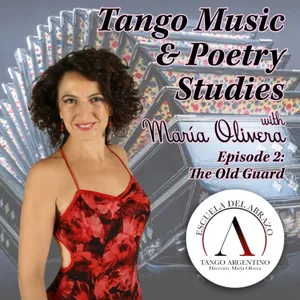
Episode 2 - The Old Guard
The sound of a new identityIn this episode, we dive into the moment tango found its voice: the arrival of the bandoneón, the rise of the orquesta típica, and the first tangos that became true icons. Alongside the proud urban characters of Buenos Aires, we meet trailblazing creators like Eduardo Arolas, Ángel Villoldo, and Gerardo Matos Rodríguez — the names behind the melodies that still make tango unmistakable today.
About Tango Music & Poetry Studies - with María Olivera
A guided journey into the heart of tango culture — its music, its lyrics, its stories, and its soul.Hosted by María Olivera — internationally acclaimed tango dancer, cultural historian, and director of "Escuela del Abrazo" in Buenos Aires — this series unpacks the origins, myths, and emotional depth of tango from a holistic, deeply human perspective.Each episode blends storytelling, historical insight, lyric translation, and curated music clips to help you feel tango, not just understand it.Whether you're a dancer, a listener, or simply tango-curious… welco
Customized Recaps
AI-powered recaps with compact key takeaways, quotes, and insights.
Straight to Your Inbox
Get key takeaways from Tango Music & Poetry Studies - with María Olivera in a 5-minute read.
Save Hours Every Week
Stay current on your favorite podcasts without falling behind.
Frequently Asked Questions
What is Podzilla's Tango Music & Poetry Studies - with María Olivera daily summary?
It's a free AI-powered email that summarizes new episodes of Tango Music & Poetry Studies - with María Olivera as soon as they're published. You get the key takeaways, notable quotes, and links & mentions — all in a quick read.
How does the Tango Music & Poetry Studies - with María Olivera podcast summary work?
When a new episode drops, our AI transcribes and analyzes it, then generates a personalized summary tailored to your interests and profession. It's delivered to your inbox every morning.
Is this an official Tango Music & Poetry Studies - with María Olivera product?
No. Podzilla is an independent service that summarizes publicly available podcast content. We're not affiliated with or endorsed by María Olivera.
Can I get summaries of other podcasts too?
Absolutely! The free plan covers up to 3 podcasts, any in the catalog. Basic raises that to 15, Pro to 40 and Max to 100. Browse our full catalog at /podcasts.
How often does Tango Music & Poetry Studies - with María Olivera release new episodes?
Tango Music & Poetry Studies - with María Olivera publishes biweekly. Our AI generates a summary within hours of each new episode.
What topics does Tango Music & Poetry Studies - with María Olivera cover?
Tango Music & Poetry Studies - with María Olivera covers topics including History, Music. Our AI identifies the specific themes in each episode and highlights what matters most to you.
Start getting Tango Music & Poetry Studies - with María Olivera summaries tomorrow morning.
Free forever for up to 3 podcasts. No credit card required.
Free forever for up to 3 podcasts. No credit card required.