Free Daily Podcast Summary
Talk Cocktail: Daily Summaries Delivered
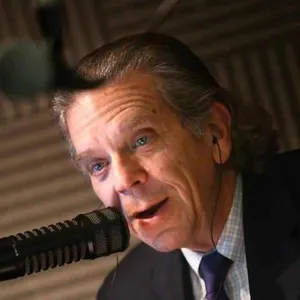
by Jeff Schechtman
Jeff Schechtman talks with authors, journalists, newsmakers and opinion shapers, and sheds light on the issues of the day, from local stories to national and international headlines and ideas. jeffschechtman.substack.com
Latest Episodes
The most recent episodes — sign up to get AI-powered summaries of each one.
- 4 days ago57 min
A Timeline of Western Decline
Everyone wants to name the moment it all went wrong. Most people name 2016, and one man, and an election they’re sure the next election can undo.My guest on a recentWhoWhatWhy podcast, Bianka Banova, says they’re off by decades.The disorder people feel now — the cost of living that won’t fall, the wars that won’t stop, the ground shifting underfoot — isn’t the beginning of anything. It’s the moment the water got hot enough to feel. She argues the world came apart slowly, one comfortable choice at a time, beginning with decisions made decades ago. Get full access to Talk Cocktail Podcast at jeffschechtman.substack.com/subscribe
- 1 weeks ago32 min
The inversion of AI’s discontent: Looking at the Myth of the Bad Data Center
Emily Hoeven expected the towns hosting America’s new data centers to be the angriest. She found the opposite. In our recent California Sun podcast, and in a recent column for the San Francisco Chronicle — titled “‘We were a dying little town’: How Silicon Valley data centers are reshaping rural America” — she maps a strange disconnect: the dread over data centers looms large in the Bay Area, cradle of the artificial intelligence boom, while places bearing the weight, like Ellendale, North Dakota, have made their peace. Get full access to Talk Cocktail Podcast at jeffschechtman.substack.com/subscribe
- 2 weeks ago29 min
How Silicon Valley Buys Its Future: The Stanford Within Stanford
Theo Baker arrived at Stanford University at the age of 17 wanting in. What he found, as he recounts in our recent California Sun Podcast and in his new book “How to Rule the World: An Education in Power at Stanford University,” was a machine: venture capitalists scouting freshmen, “pre-idea funding,” yacht parties, and a secret elite — all riding on a culture of cutting corners that influenced everyone from his classmates to the university president. Get full access to Talk Cocktail Podcast at jeffschechtman.substack.com/subscribe
- 3 weeks ago34 min
The Cruelest Game
Lose a pickup basketball game and you shrug it off. Lose a tennis match, Matthew Futterman learned, and it feels like you got beaten up. As the US Open gets under way this week, Futterman, veteran sports journalist for The Athletic and author of The Cruelest Game, goes inside the sport’s real battleground — the head — where even the greatest lose nearly half the points they play, and the hardest thing any champion does is learn when to leave.Then there’s the money. At the top, fifty to a hundred million a year rides on winning, and every sponsor becomes one more voice in your head. Get full access to Talk Cocktail Podcast at jeffschechtman.substack.com/subscribe
- Aug 20, 202632 min
An Inversion of AI’s Discontent
San Francisco Chronicle reporter Emily Hoeven expected the towns hosting America’s new data centers to be the angry. She found the opposite. In a recent column — titled “‘We were a dying little town’: How Silicon Valley data centers are reshaping rural America” — she maps a strange disconnect: the dread over data centers looms large in the Bay Area, cradle of the artificial intelligence boom, while places bearing the weight, like Ellendale, North Dakota, have made their peace. Get full access to Talk Cocktail Podcast at jeffschechtman.substack.com/subscribe
- Aug 13, 202633 min
The Age of AI Will Require Intuitive Leadership, Not More Data
We're told the leader with the most data wins. Ronald Kraft, PhD, argues in his new book “The 7 Laws of Intuitive Leadership,” the opposite. As AI makes information infinite and answers instant, he says the real edge is disciplined intuition — a trainable "third system" of judgment no machine can copy. Can today's leaders relearn to trust the instinct the data keeps drowning out? Get full access to Talk Cocktail Podcast at jeffschechtman.substack.com/subscribe
- Aug 8, 202635 min
Does Fascism Have American Roots?
What if the roots of fascism weren’t European at all, but embedded in America’s founding struggles over democracy and race?For more than a decade, we’ve been flooded with books warning about fascism — how to recognize it, how it spreads, how democracies lose their way. Almost all begin with the same assumption: Fascism was a European creation that eventually washed up on American shores.Joseph Kelly says we’ve got it backwards.Kelly, a professor at the College of Charleston and author of The Biggest Lie: The Prehistory of American Fascism 1818-1915, joins me in this WhoWhatWhy Podcast to explains why fascism is less an ideology than a corruption of democracy itself. Get full access to Talk Cocktail Podcast at jeffschechtman.substack.com/subscribe
- Jul 30, 202635 min
Can Code Have a Conscience?
The AI debate is endless. One writer decided to measure it by asking not how smart the machines are, but how humane they are.Talking about artificial intelligence has become its own industry. AI will save us or doom us. It will cure cancer or end work. Panels, manifestos, congressional hearings, op-eds without end — and through all of it, the machines keep getting better at talking back, and no one can tell you whether the thing you confided in last night was good for you or not.My guest on this recent WhoWhatWhy podcast, Erika Anderson, has stopped arguing and started measuring. Get full access to Talk Cocktail Podcast at jeffschechtman.substack.com/subscribe
Customized Recaps
AI-powered recaps with compact key takeaways, quotes, and insights.
Straight to Your Inbox
Get key takeaways from Talk Cocktail in a 5-minute read.
Save Hours Every Week
Stay current on your favorite podcasts without falling behind.
Frequently Asked Questions
What is Podzilla's Talk Cocktail daily summary?
It's a free AI-powered email that summarizes new episodes of Talk Cocktail as soon as they're published. You get the key takeaways, notable quotes, and links & mentions — all in a quick read.
How does the Talk Cocktail podcast summary work?
When a new episode drops, our AI transcribes and analyzes it, then generates a personalized summary tailored to your interests and profession. It's delivered to your inbox every morning.
Is this an official Talk Cocktail product?
No. Podzilla is an independent service that summarizes publicly available podcast content. We're not affiliated with or endorsed by Jeff Schechtman.
Can I get summaries of other podcasts too?
Absolutely! The free plan covers up to 3 podcasts. Upgrade to Pro for 15, or Premium for 50. Browse our full catalog at /podcasts.
How often does Talk Cocktail release new episodes?
Talk Cocktail publishes weekly. Our AI generates a summary within hours of each new episode.
What topics does Talk Cocktail cover?
Talk Cocktail covers topics including News, Politics. Our AI identifies the specific themes in each episode and highlights what matters most to you.
Start getting Talk Cocktail summaries tomorrow morning.
Free forever for up to 3 podcasts. No credit card required.
Free forever for up to 3 podcasts. No credit card required.