Free Daily Podcast Summary
Supreme Court of Canada Hearings (Floor Audio): Daily Summaries Delivered
by SCC Hearings Podcast
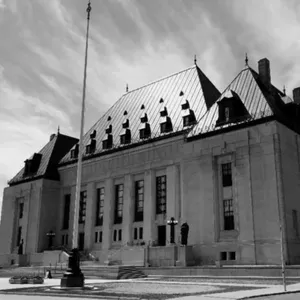
Unedited floor audio of oral arguments at the Supreme Court of Canada, i.e., in both English and French. Created as a public service to promote public access and awareness of the workings of Canada's highest court. Not affiliated with or endorsed by the Court. Original archived webcasts can be found on the Court's website at scc-csc.ca. Feedback welcome: podcast at scchearings dot ca.
Latest Episodes
The most recent episodes — sign up to get AI-powered summaries of each one.
- Jun 30, 20263h 14m
Jordan Bilinski v. His Majesty the King (42030)
In the Alberta Court of King’s Bench, the appellant was acquitted by a jury of one count of sexual assault. The appellant and complainant had three sexual encounters. It is alleged that before the encounters and again before the third encounter, the complainant had expressly stated the condition that the appellant wear a condom, and that during the third encounter, the appellant removed the condom. At trial, the appellant did not pursue the defence of honest but mistaken belief in communicated consent to sex without a condom, which would have amounted to a denial of mens rea for the offence of sexual assault. The trial, therefore, focused on the credibility and reliability of the complainant, which was relevant to whether she subjectively consented to sex without a condom, the actus reus required to secure a criminal conviction in this case, and proof of mens rea for sexual assault where the defence of honest but mistaken belief in communicated consent is not available on the facts.The Crown appealed the acquittal on points of law related to the jury instructions on the mens rea of that offence. It submitted that the trial judge erred in law in failing to instruct the jury that it should have “little difficulty” in finding the mens rea for sexual assault was established if it found that the complainant did not subjectively consent to touching of a sexual nature. The issue before the Court of Appeal was whether the trial judge should have left the knowledge component to the jury at all in the absence of a defence of honest but mistaken belief in communicated consent, or if left with the jury, whether it needed to be modified so that honest but mistaken belief in communicated consent was not left as an option for the jury when that defence was not available. The Court of Appeal panel agreed that errors of law had occurred in this case in the trial judge’s instructions to the jury, but provided separate reasons on whether the errors should result in a new trial. The majority would have allowed the appeal and ordered a new trial. It explained that if the “little difficulty” instruction had been given by the trial judge to the jury as required by the law in the circumstances of this case, the jury’s focus would have been squarely and solely on the credibility of the complainant regarding her assertion of non-consent in relation to the actus reus of the offence. The fact that the trial judge did not remove the defence of honest but mistaken belief in communicated consent from the factual mix that the jury considered on this issue raised the tangible risk that he allowed the defence of honest but mistaken belief in communicated consent to sneak in through the back door. The dissenting judge in the Court of Appeal would have dismissed the appeal. In his view, there were errors in the charge to the jury by the trial judge. However, a careful reading of the transcript and the exhibits, with particular attention to the communication between the parties, did not elevate these legal concerns to the reasonable degree of certainty that they would have had a material bearing on the acquittal. Argued Date 2026-05-22 Keywords Criminal law — Charge to jury — Sexual assault — Elements of offence — Mens rea — What mental element must the Crown prove in a sexual assault prosecution where the defence of honest but mistaken belief in communicated consent does not arise, and how should juries be instructed on the mental element in issue? — Whether the majority of the Alberta Court of Appeal erred in the application of the test to overturn a jury acquittal. Notes (Alberta) (Criminal) (As of Right / By Leave) (Publication ban in case) Language Floor Audio Disclaimers This podcast is created as a public service to promote public access and awareness of the workings of Canada's highest court. It is not affiliated with or endorsed by the Court. The original version of this hearing may be found on the Supreme Court of Canada's website. The above case summary was prepared by the Office of the Registrar of the Supreme Court of Canada (Law Branch).
- May 21, 20263h 11m
His Majesty the King v. Terrell Burke-Whittaker (41786)
On June 9, 2020, Mr. Burke-Whittaker attended a funeral for Dimarjo Jenkins, who had been shot and killed on a street in downtown Toronto on May 26, 2020. The funeral took place at a restaurant in North York. The parking lot behind the restaurant backed onto Highway 401. Late on the evening of the viewing, a vehicle driving on Highway 401 pulled onto the shoulder of the westbound lanes behind the restaurant. Someone in the car started firing shots into the crowd that had gathered in the parking lot. Many people in the parking lot ran into the building, but others stayed in the parking lot and returned fire in the direction of passing traffic on Highway 401. Still others hid behind a dumpster that was close to the door of the building. Mr. Burke-Whittaker was in the parking lot when the shooting started. He took cover behind the dumpster. He took a firearm out of his satchel and, having struggled to cock it, he came out from behind the dumpster, fired a shot toward the vehicle, and fled into the building through the parking lot door. The incident was relatively brief and captured on video. No one was killed or injured.The police investigation identified Mr. Burke-Whittaker as one of the shooters. He turned himself in on June 22, 2021, just over one year after the shooting. His firearm was never recovered. He pled guilty to one count of possession of a loaded or prohibited or restricted firearm contrary to s. 95 of the Criminal Code. He was 24 years old at the time of the shooting and has no other criminal record. He was raised by his mother and grandmother in Brampton, as his father was in and out of jail during much of his childhood. He completed high school and began college, but did not finish that course of studies. He has one child born in 2018. At the time of sentencing, he had been accepted into the Toronto Fire Academy. While on bail, he started a vending machine business. Several positive character letters submitted to the sentencing judge indicated that, as a young Black male, he had experienced systemic racism. An Enhanced Pre-Sentence Report was not submitted.The sentencing judge sentenced the respondent to a conditional sentence of two years less a day to be followed by three years’ probation. A majority of the Court of Appeal granted leave to appeal the sentence and dismissed the applicant’s appeal of the sentence. The dissenting justice would have allowed the appeal, set aside the sentence imposed by the sentencing judge, and imposed a sentence of 38 months’ incarceration less credit of 17 months. Argued Date 2026-05-19 Keywords Criminal law — Sentencing — Conditional sentencing orders — What principles should guide appellate courts’ review of conditional sentencing orders for offences under Criminal Code, R.S.C. 1985, c. C-46, 1, s. 95 — When, and based on what principles, appellate courts should reincarcerate offenders after otherwise successful Crown sentence appeal. Notes (Ontario) (Criminal) (By Leave) Language Floor Audio Disclaimers This podcast is created as a public service to promote public access and awareness of the workings of Canada's highest court. It is not affiliated with or endorsed by the Court. The original version of this hearing may be found on the Supreme Court of Canada's website. The above case summary was prepared by the Office of the Registrar of the Supreme Court of Canada (Law Branch).
- May 21, 20262h 19m
Richard Leonard Walker v. His Majesty the King (Day 2/2) (41703)
During the course of an investigation under the Traffic Safety Act, a police officer attempted to effect a warrantless arrest of the appellant for obstruction under s. 129(a) of the Criminal Code. In a pre-trial application, the trial judge found that the police officer was not executing a lawful arrest, and therefore breached the appellant’s s. 9 Charter right not to be arbitrarily detained by attempting the arrest. The trial judge acquitted the appellant of assault causing bodily harm. The Court of Appeal allowed the appeal, and ordered a new trial. Argued Date 2026-05-20 Keywords Criminal law — Arrest — Accused assaulted police officer attempting to effect warrantless arrest for obstruction under s. 129(a) of Criminal Code — Trial judge holding that officer was not executing lawful arrest and breached accused’s s. 9 rights — Trial judge further holding Crown failed to prove beyond reasonable doubt that accused was not acting in self-defence — Accused acquitted of assaulting officer — Court of Appeal allowing appeal and ordering new trial — Whether a police officer can arrest an individual for obstruction under the Criminal Code during the course of a regulatory (or municipal) investigation where the regulatory (or municipal) statute provides for a lesser enforcement remedy — Whether the discretion referenced in Goodwin v. British Columbia (Superintendent of Motor Vehicles), 2015 SCC 46, allows police officers to engage the more serious Criminal Code provisions during the course of an investigation for less serious regulatory or municipal offences? Notes (Alberta) (Criminal) (By Leave) Language Floor Audio Disclaimers This podcast is created as a public service to promote public access and awareness of the workings of Canada's highest court. It is not affiliated with or endorsed by the Court. The original version of this hearing may be found on the Supreme Court of Canada's website. The above case summary was prepared by the Office of the Registrar of the Supreme Court of Canada (Law Branch).
- May 18, 20263h 14m
Cynthia Prescott, et al. v. Benchwood Builders Inc., et al. (41794)
The applicants, two homeowners, hired the respondent company, Benchwood, to renovate their home. Benchwood is a general contracting and construction management business, and the respondent Michael Slaven is one of its co-owners. There were several areas of disagreement between the parties during the course of the renovations. A heated discussion occurred between Mr. Slaven and one of the homeowners. Benchwood performed no further work for the homeowners following this incident.The homeowners subsequently discovered that Benchwood posted photographs of their home online to attract new customers. This angered them and prompted them to post allegedly defamatory statements about Benchwood and Mr. Slaven on social media platforms.In response to these statements, Benchwood and Mr. Slaven commenced an action seeking damages for defamation. The homeowners subsequently brought a motion pursuant to s. 137.1 of the Courts of Justice Act for an order dismissing the action as a proceeding that limits freedom of expression on matters of public interest. The motion judge agreed with the homeowners and ordered that the action be dismissed. Benchwood and Mr. Slaven appealed to the Ontario Court of Appeal. The Court of Appeal unanimously allowed the appeal and set aside the dismissal of the action. Argued Date 2026-05-15 Keywords Torts — Libel and slander — Anti-SLAPP legislation — Dissatisfied clients of company posting negative statements online about company and its owner — Company and owner suing clients for defamation — Clients bringing motion to dismiss action pursuant to anti-SLAPP legislative provision — Whether the Court of Appeal erred in overturning the motion judge’s finding that the impugned expression relates to a matter of public interest — Whether the Court of Appeal erred in overturning the motion judge’s finding that there are no grounds to believe that the defences are not valid — Whether the Court of Appeal erred in overturning the motion judge’s finding that the harms resulting from the impugned expression do not outweigh the public interest in protecting the expression — Courts of Justice Act, R.S.O. 1990, c. C.43, s. 137.1 Notes (Ontario) (Civil) (By Leave) Language Floor Audio Disclaimers This podcast is created as a public service to promote public access and awareness of the workings of Canada's highest court. It is not affiliated with or endorsed by the Court. The original version of this hearing may be found on the Supreme Court of Canada's website. The above case summary was prepared by the Office of the Registrar of the Supreme Court of Canada (Law Branch).
- May 15, 20261h 16m
Ali Bhatti v. His Majesty the King (42107)
The appellant was charged with firearms offences. Police had obtained a general warrant to detain the appellant and search for his phone. The search for the phone authorized by the warrant was limited to the person of the appellant and his immediate and surrounding area. The police stopped the appellant while he was driving. During the execution of the warrant, the police seized three cell phones as well as firearms from the appellant’s vehicle, including in a hidden compartment. The appellant successfully sought to exclude the firearms evidence from his trial pursuant to s. 24(2) of the Charter on the basis of a violation of his s. 8 Charter right to be free from unreasonable search or seizure. The appellant was acquitted of the firearms offences charged. A majority of the Court of Appeal allowed the Crown’s appeal against acquittal and ordered a new trial. It concluded that the application judge erred both in finding that the search was not authorized by the warrant and in finding that the firearms should have been excluded pursuant to s. 24(2). The dissenting judge in the Court of Appeal would have dismissed the Crown’s appeal as she agreed with the application judge that, in executing the general warrant, the police exceeded the scope of the order and violated the appellant’s rights under s. 8. She further agreed that the firearms should have been excluded pursuant to s. 24(2). Argued Date 2026-05-14 Keywords Charter of rights — Search and seizure — Remedy — Exclusion of evidence — Whether majority of Court of Appeal erred in law in finding police complied with the warrant — If appellant’s s. 8 Charter rights were breached, whether Court should interfere with application judge’s s. 24(2) Charter analysis. Notes (Ontario) (Criminal) (As of Right) Language Floor Audio Disclaimers This podcast is created as a public service to promote public access and awareness of the workings of Canada's highest court. It is not affiliated with or endorsed by the Court. The original version of this hearing may be found on the Supreme Court of Canada's website. The above case summary was prepared by the Office of the Registrar of the Supreme Court of Canada (Law Branch).
- May 13, 20262h 12m
Ville de Québec v. Jardins de Vérone S.E.C. (41748)
The respondent, Jardins de Vérone S.E.C., owned land within the territory of the appellant, Ville de Québec (“City”). The land was officially designated as “serviced vacant land”, a particular that was included in the information concerning the unit of assessment on the assessment roll. On March 1, 2018, the respondent received a building permit from the City for the erection of a building with 109 dwellings. The work began on April 1, 2018, and was carried out without interruption as of that date. In July 2018, the respondent applied to the City’s assessment department to have the “serviced vacant land” particular removed from the information on the assessment roll. In October 2018, the municipal assessor’s representative denied that request on the ground that no action had been omitted by the assessor, having regard to ss. 32 and 244.36 of the Act respecting municipal taxation, CQLR, c. F-2.1 (AMT), and that there was therefore no basis for making an alteration. The respondent then brought a proceeding before the Administrative Tribunal of Québec (ATQ) under s. 132.1 of the AMT, seeking an order requiring the municipal assessor to alter the information on the roll so that the “serviced vacant land” particular was removed, in accordance with ss. 174, 57.1.1 and 244.36 of the AMT. The building was not entered on the roll until early summer in 2019. On December 16, 2019, the ATQ rendered a decision in the respondent’s favour, confirming that, as soon as a building is situated on land, the assessor must alter the assessment roll by removing the “serviced vacant land” particular, regardless of its value. The ATQ ordered that the “serviced vacant land” particular be removed from the assessment roll retroactively to the date when the work had begun.The Court of Québec allowed the City’s appeal. The ATQ’s decision was set aside and replaced. In the court’s view, the interpretation of s. 244.36 of the AMT adopted by the ATQ was not “correct” under the standard of review applicable in this case.The Superior Court dismissed the application filed by the respondent for judicial review of the Court of Québec’s decision. The reasonableness of the Court of Québec’s decision was upheld.The Court of Appeal allowed the respondent’s appeal. It set aside the decisions of the Court of Québec and the Superior Court and restored the ATQ’s decision. The Court of Appeal held that, although the Court of Québec did not owe deference to a statutory interpretation by the ATQ, it still could not substitute its erroneous interpretation for the ATQ’s correct interpretation. The Court of Appeal accordingly found that the Court of Québec had not properly applied the correctness standard and therefore, contrary to what the Superior Court had concluded, the Court of Québec’s decision should have been found unreasonable. Argued Date 2026-05-12 Keywords Administrative law — Appeals — Standard of review — Municipal law — Taxation — Property assessments — Interpretation of concept of “serviced vacant land” under Act respecting municipal taxation — Manner in which Court of Québec must apply standard for appellate intervention (correctness) to conclusions of law in administrative decision — Whether Court of Québec performed its appellate function reasonably — Courts of Justice Act, CQLR, c. T-16, s. 83.1 — Act respecting municipal taxation, CQLR, c. F-2.1, ss. 32, 57.1.1, 131.2, 174 para. 13.1.1(a), 244.36 and 244.49. Notes (Quebec) (Civil) (By Leave) Language Floor Audio Disclaimers This podcast is created as a public service to promote public access and awareness of the workings of Canada's highest court. It is not affiliated with or endorsed by the Court. The original version of this hearing may be found on the Supreme Court of Canada's website. The above case summary was prepared by the Office of the Registrar of the Supreme Court of Canada (Law Branch).
- Apr 24, 20263h 25m
Attorney General of Quebec v. Xavier-Antoine Lalande, et al. (42152)
This case concerns the constitutional validity of the Act to interrupt the electoral division delimitation process (“A.T.I.”) and the issue of whether its infringement of the right to vote guaranteed by s. 3 of the Canadian Charter is justified under s. 1 of the Canadian Charter. The A.T.I. has the effect of interrupting, until Quebec’s next general election, the process relating to the delimitation of Quebec’s electoral divisions made by the Commission de la représentation after every second general election in order to ensure that the delimitation respects the right to effective representation of electors under the Election Act, R.Q.L.R., c. E 3.3. Argued Date 2026-04-22 Keywords Charter of Rights — Constitutional law — Elections — Right to vote — Right to effective representation of electors — Interruption of Quebec’s electoral division delimitation process — Whether Act to interrupt the electoral division delimitation process infringes s. 3 of Canadian Charter in manner that cannot be justified under s. 1 of Canadian Charter — Canadian Charter of Rights and Freedoms, ss. 1 and 3 — Act to interrupt the electoral division delimitation process, S.Q. 2024, c. 14. Notes (Quebec) (Civil) (By Leave) Language Floor Audio Disclaimers This podcast is created as a public service to promote public access and awareness of the workings of Canada's highest court. It is not affiliated with or endorsed by the Court. The original version of this hearing may be found on the Supreme Court of Canada's website. The above case summary was prepared by the Office of the Registrar of the Supreme Court of Canada (Law Branch).
- Apr 21, 20263h 17m
St. John’s International Airport Authority v. Michel Thibodeau (41651)
In January 2018, the respondent, Mr. Thibodeau, filed six complaints under the Official Languages Act, R.S.C. 1985 (4th supp.) (OLA) with the intervener, the Commissioner of Official Languages of Canada against the appellant, St. John’s International Airport Authority (SJIAA) with regards to the violation of ss. 22 and 23 of the OLA related to the language of communication and services. In summary, Mr. Thibodeau alleged that the SJIAA: (1) has an exclusively English presence on social media such as Facebook, YouTube and Instagram; (2) has a website with an English-only URL and of which the French version is not of equal quality to the English version; (3) publishes its press releases in English only; (4) makes certain documents on its website, including annual reports and its master plan, available in English only; (5) uploads content on Twitter almost exclusively in English; and (6) displays certain automated teller machine (ATM) signage in English only within the airport.Mr. Thibodeau’s complaints resulted in the issuance of two separate reports by the Commissioner: the first addressed the complaints concerning various types of content posted on social media and online, while the second focused on the complaint related to the ATM. With respect to the first complaint, the Commissioner found that the OLA had been breached. The Commissioner recommended that all content posted by SJIAA, both on social media and online, be of equal quality in both official languages. With respect to the second complaint, because the Official Languages Regulations expressly designates ATMs as a service within the meaning of s. 23(2) of the OLA, the Commissioner concluded that the OLA had been contravened. However, given that the SJIAA had, by the time the report was issued, already replaced the signage with universally recognizable pictograms, the Commissioner declined to issue any recommendations and closed the file.Following the issuance of the Commissioner’s recommendations, Mr. Thibodeau commenced an application under s. 77 of the OLA, seeking a declaration that the OLA had been breached and requesting that the Court order SJIAA to issue a letter of apology and award him $9,000 in damages. The Federal Court has granted the application for a remedy and ordered the payment of $5,000 in damages against SJIAA. The majority of the Federal Court of Appeal dismissed the appeal. Argued Date 2026-04-20 Keywords Official languages — Airport authorities — Transfer of the administration of airports pursuant to the Airport Transfer (Miscellaneous Matters) Act — Obligations pursuant to the Official Languages Act for the local bodies operating airports — Are the authorities subject to the “head office rule” created by s. 22 of the Official Languages Act, or was that the rule excluded by the Airport Transfer (Miscellaneous Matters) Act? — What is the proper definition of the “travelling public” under the Official Languages Act? — What test should be used to determine when a communication of service is intended for the travelling public, rather than the general public? — Can an applicant under s. 77 of the Official Languages Act receive damages from any contravention of the Official Languages Act, even if the applicant’s own personally-held language rights are not implemented by that contravention? — Official Languages Act, R.S.C. 1985, c. 31 (4th Suppl), ss. 22, 23 and 77 — Airport Transfer (Miscellaneous Matter) Act, S.C. 1992, c. 5, s. 4(1) Notes (Federal) (Civil) (By Leave) Language Floor Audio Disclaimers This podcast is created as a public service to promote public access and awareness of the workings of Canada's highest court. It is not affiliated with or endorsed by the Court. The original version of this hearing may be found on the Supreme Court of Canada's website. The above case summary was prepared by the Office of the Registrar of the Supreme Court of Canada (Law Branch).
About Supreme Court of Canada Hearings (Floor Audio)
Unedited floor audio of oral arguments at the Supreme Court of Canada, i.e., in both English and French. Created as a public service to promote public access and awareness of the workings of Canada's highest court. Not affiliated with or endorsed by the Court. Original archived webcasts can be found on the Court's website at scc-csc.ca. Feedback welcome: podcast at scchearings dot ca.
Customized Recaps
AI-powered recaps with compact key takeaways, quotes, and insights.
Straight to Your Inbox
Get key takeaways from Supreme Court of Canada Hearings (Floor Audio) in a 5-minute read.
Save Hours Every Week
Stay current on your favorite podcasts without falling behind.
Frequently Asked Questions
What is Podzilla's Supreme Court of Canada Hearings (Floor Audio) daily summary?
It's a free AI-powered email that summarizes new episodes of Supreme Court of Canada Hearings (Floor Audio) as soon as they're published. You get the key takeaways, notable quotes, and links & mentions — all in a quick read.
How does the Supreme Court of Canada Hearings (Floor Audio) podcast summary work?
When a new episode drops, our AI transcribes and analyzes it, then generates a personalized summary tailored to your interests and profession. It's delivered to your inbox every morning.
Is this an official Supreme Court of Canada Hearings (Floor Audio) product?
No. Podzilla is an independent service that summarizes publicly available podcast content. We're not affiliated with or endorsed by SCC Hearings Podcast.
Can I get summaries of other podcasts too?
Absolutely! The free plan covers up to 3 podcasts. Upgrade to Pro for 15, or Premium for 50. Browse our full catalog at /podcasts.
How often does Supreme Court of Canada Hearings (Floor Audio) release new episodes?
Supreme Court of Canada Hearings (Floor Audio) publishes every few days. Our AI generates a summary within hours of each new episode.
What topics does Supreme Court of Canada Hearings (Floor Audio) cover?
Supreme Court of Canada Hearings (Floor Audio) covers topics including Government. Our AI identifies the specific themes in each episode and highlights what matters most to you.
Start getting Supreme Court of Canada Hearings (Floor Audio) summaries tomorrow morning.
Free forever for up to 3 podcasts. No credit card required.
Free forever for up to 3 podcasts. No credit card required.