Free Daily Podcast Summary
Super-Spiked Podcast: Daily Summaries Delivered
by Arjun Murti
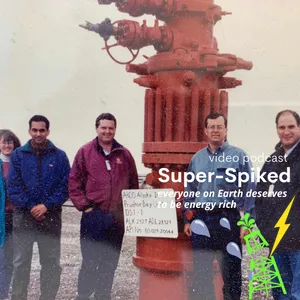
Super-Spiked Podcast focuses on the mission of everyone on Earth someday becoming energy rich and what that would mean for corporate strategy and energy & environmental policy, markets and commodities.
Latest Episodes
The most recent episodes — sign up to get AI-powered summaries of each one.
- Yesterday43 min
EP228: 20 Years of “A View From Wall Street” at Oxford
WATCH the video on Substack by clicking the play button above or on YouTube (here).STREAM audio only on Apple Podcasts (here), Spotify (here), or your favorite podcast player app.DOWNLOAD a pdf of a moderately edited transcript and the slide deck using the blue Download buttons below.We have been presenting “A View From Wall Street” at the annual Oxford Energy Seminar since 2006. The seminar brings together around 50 “next generation” leaders at national oil companies, Western majors, refiners, and various government agencies from around the world. The opportunity to join this esteemed gathering at Oxford each year is a career highlight. The participants, we would note, spend 10 days on campus hearing from a range of speakers such as yours truly while also engaging in group projects/discussions meant to foster networking and diverse perspectives on the outlook and challenges facing the energy sector. It skews “oil” in terms of participant representation and is run by the former CEO of Kuwait Petroleum Company.This year, one of the participants asked me what common themes and lessons have I learned in over 20 years of speaking? How had the outlook changed? It is a great question. So, what we are going to do this week is take a look back on what we were saying at the time, what we got right, what we got wrong at the time relative to how things ultimately played out. 0:00 Introduction 2:12 1992-2001: $15-$25 Forever 7:29 1st OES: Isn’t The Rise to $60 Just Speculation?10:04 2014 OES: “Normal” Discussions About Outlook12:09 2019 OES: Can Shale Endure at $50?14:03 OES 2023: Energy Transition Doom & Gloom 16:23 OES 2026: “Thank You For An Optimistic Take”18:32 Alternative Energy to Clean Tech to Geo Security22:43 Lesson For Traditional Energy26:59 Lesson For New Energies33:27 Biggest Surprises or Change In View 40:27 On A Personal Note: Oxford📜 Credits* Intro & Outro music: Wolf Hoffman: Concerto for 2 Cellos in G Minor, Rv 531: I. Allegro Moderato.* This episode of Super-Spiked Videopods was edited and produced by Veriten Productions.⚖️DisclaimerI certify that these are my personal, strongly held views at the time of this post. My views are my own and not attributable to any affiliation, past or present. This is not an investment newsletter and there is no financial advice explicitly or implicitly provided here. My views can and will change in the future as warranted by updated analyses and developments. Some of my comments are made in jest for entertainment purposes; I sincerely mean no offense to anyone that takes issue.Subscribe to receive all content. Also available at Veriten.com. This is a public episode. If you would like to discuss this with other subscribers or get access to bonus episodes, visit arjunmurti.substack.com
- 1 weeks ago25 min
EP227: Fall Progress Report on our Big Themes for 2026
WATCH the video on Substack by clicking the play button above or on YouTube (here).STREAM audio only on Apple Podcasts (here), Spotify (here), or your favorite podcast player app.DOWNLOAD a pdf of a moderately edited transcript and the slide deck using the blue Download buttons below.We are back after a 2-week end of summer hiatus. We hope everyone had a great summer and is ready for Fall. Our Fall kickoff starts with a look back at our first Super-Spiked post his year titled Big Themes for 2026: Up and To The Right (here). In this week’s post, we will assess how we are doing we the themes we had highlighted in January. Overall, we think we did a generally decent job of identifying the most important themes, but of course have room for improvement which we spend time discussing. 0:00 Introduction 0:43 Mega Themes 2:33 2026 Specific Themes 8:20 Energy Scenario Normalization 11:31 Markets, Technology and M&A 15:58 What We Didn’t Sufficiently Emphasize 23:07 On A Personal Note: 25 Years📜 Credits* Intro & Outro music: Wolf Hoffman: Concerto for 2 Cellos in G Minor, Rv 531: I. Allegro Moderato.* This episode of Super-Spiked Videopods was edited and produced by Veriten Productions.⚖️DisclaimerI certify that these are my personal, strongly held views at the time of this post. My views are my own and not attributable to any affiliation, past or present. This is not an investment newsletter and there is no financial advice explicitly or implicitly provided here. My views can and will change in the future as warranted by updated analyses and developments. Some of my comments are made in jest for entertainment purposes; I sincerely mean no offense to anyone that takes issue.Subscribe to receive all content. Also available at Veriten.com. This is a public episode. If you would like to discuss this with other subscribers or get access to bonus episodes, visit arjunmurti.substack.com
- 4 weeks ago31 min
EP226: End of Summer Macro Thoughts
WATCH the video on Substack by clicking the play button above or on YouTube (here).STREAM audio only on Apple Podcasts (here), Spotify (here), or your favorite podcast player app.DOWNLOAD a pdf of a moderately edited transcript using the blue Download buttons below.We have another audio only post as we enter the final stretch of summer. Our next episode will most likely be the Saturday following Labor Day. This week we want to share various observations about the energy macro, policy, and corporate strategy—the core topics we focus on with Super-Spiked—that have come up in various events or meetings we’ve attended or in reaction from many of you to prior episodes. Six points to go through: * Natural gas as a through theme for all aspects of where we are in energy and power * Legacy Auto OEMs seem bad at autonomous mobility * Being in a Peer Group of 1 * Under-appreciated areas of energy * Geopolitical necessity provides clarity of purpose to energy policy * How will any country overcome China’s overwhelming manufacturing dominance in numerous areas? Timestamps: 0:00 Introduction 1:19 Natural gas as a through theme for all aspects of where we are in energy and power. 8:27 Legacy Auto OEMs seem bad at autonomous mobility 13:26 Being in a Peer Group of 1 16:01 Under-appreciated areas of energy 22:58 Geopolitical necessity provides clarity of purpose to energy policy 24:28 How will any country overcome China’s overwhelming manufacturing dominance in numerous areas? 29:20 On A Personal Note 📜 Credits* Intro & Outro music: Wolf Hoffman: Concerto for 2 Cellos in G Minor, Rv 531: I. Allegro Moderato.* This episode of Super-Spiked Videopods was edited and produced by Veriten Productions.⚖️DisclaimerI certify that these are my personal, strongly held views at the time of this post. My views are my own and not attributable to any affiliation, past or present. This is not an investment newsletter and there is no financial advice explicitly or implicitly provided here. My views can and will change in the future as warranted by updated analyses and developments. Some of my comments are made in jest for entertainment purposes; I sincerely mean no offense to anyone that takes issue.Subscribe to receive all content. Also available at Veriten.com. This is a public episode. If you would like to discuss this with other subscribers or get access to bonus episodes, visit arjunmurti.substack.com
- Aug 15, 202610 min
EP225: Long-Takes From The Road: Countering Consensus Corporate Strategy Narratives
WATCH the video on Substack by clicking the play button above or on YouTube (here).STREAM audio only on Apple Podcasts (here), Spotify (here), or your favorite podcast player app.DOWNLOAD a pdf of a moderately edited transcript using the blue Download buttons below.We have an audio only post due to some travel this week. One of the best parts of not being a covering equity analyst anymore is not having to process the deluge that is quarterly earnings season. But we have kept the discipline of reading transcripts for a wide swath of companies. As always, we want to provide our longer-term perspectives on the sectors and corporate strategy. Here are six areas where we would most push against what we think are consensus narratives.* Resist pro cyclical capital return narratives, especially in deeply cyclical sectors like we know exists in refining. * Differentiate companies that might be in need of restructuring, typically exemplified by having sub-scale businesses that are earning sub-par returns on capital, versus believing every non-pure play needs to become one. * The Strait of Hormuz may never return to pre-war “normal.” * What are the growth opportunities companies should be leaning into?* Power sector growth is economic growth. Economic growth is geopolitical security. * We are concerned about energy policy risk in the United States. There is no more important sector in the world than those involved in energy and power. It’s a hedge to Tech. It’s an enabler of tech growth. It’s a geopolitical hedge. It’s about as exciting a time as we have experienced in our 34-year career. Even now, reading upwards of 80-90 earnings season transcripts is borderline fun. 📜 Credits* Intro & Outro music: Wolf Hoffman: Concerto for 2 Cellos in G Minor, Rv 531: I. Allegro Moderato.* This episode of Super-Spiked Videopods was edited and produced by Veriten Productions.⚖️DisclaimerI certify that these are my personal, strongly held views at the time of this post. My views are my own and not attributable to any affiliation, past or present. This is not an investment newsletter and there is no financial advice explicitly or implicitly provided here. My views can and will change in the future as warranted by updated analyses and developments. Some of my comments are made in jest for entertainment purposes; I sincerely mean no offense to anyone that takes issue.Subscribe to receive all content. Also available at Veriten.com. This is a public episode. If you would like to discuss this with other subscribers or get access to bonus episodes, visit arjunmurti.substack.com
- Aug 8, 202613 min
EP224: Mini-Dives: New vs Old Europe
WATCH the video on Substack by clicking the play button above or on YouTube (here).STREAM audio only on Apple Podcasts (here), Spotify (here), or your favorite podcast player app.DOWNLOAD a pdf of a moderately edited transcript using the blue Download buttons below.It is now August, the last month of summer, and we are planning a series of shorter “mini-dives” that offer insight into our major themes and in some cases, like this week, push back on some of our own biases and perspectives. By now our disdain is well known for what we have called the European mindset of prioritizing climate and net zero as the de facto primary objective of energy policy. We do not believe in an equal-weighted energy trilemma either to be clear. But we have been wrong, or perhaps more accurately lazy, in simply saying “we don’t like European energy policy and hope America never goes down that road.” Europe is no more a singular place than is the U.S. From an energy policy standpoint, we regularly differentiate states with favorable energy policy like Texas, North Dakota, Louisiana, and Oklahoma from places with unfavorable policies like California and New York. Pennsylvania is not the same as New Jersey. Florida is different than Connecticut. Our critique of European economic and energy policy is primarily rooted in its Big-4 economies especially the United Kingdom and Germany. What former Secretary of Defense Don Rumsfeld famously derided as “Old Europe.” This week we take a look at oil demand trends in Old Europe versus New Europe. Three key messages: * We often discuss the rising prosperity of the other 7 billion people on Earth and our everyone deserves to be energy rich mega theme. We have never before noticed that 250 million of them live in New Europe and are on an upswing. A special shout out this week to Poland and Türkiye. * Our Obliterating Peak Oil Demand theme is alive and well in Europe, where growth in New Europe is surprisingly offsetting declines in Old Europe. * This is positive not just for oil demand but growth in power markets and the fuels that support general economic and industrial growth. As usual, we advise applying our natural hierarchy of energy needs to the energy sources and technologies that will make the most sense for each country—”some of the above,” country specific. Exhibit 1: European oil demand Source: Energy Institute, Our World in Data, Veriten.📜 Credits* Intro & Outro music: Wolf Hoffman: Concerto for 2 Cellos in G Minor, Rv 531: I. Allegro Moderato.* This episode of Super-Spiked Videopods was edited and produced by Veriten Productions.⚖️DisclaimerI certify that these are my personal, strongly held views at the time of this post. My views are my own and not attributable to any affiliation, past or present. This is not an investment newsletter and there is no financial advice explicitly or implicitly provided here. My views can and will change in the future as warranted by updated analyses and developments. Some of my comments are made in jest for entertainment purposes; I sincerely mean no offense to anyone that takes issue.Subscribe to receive all content. Also available at Veriten.com. This is a public episode. If you would like to discuss this with other subscribers or get access to bonus episodes, visit arjunmurti.substack.com
- Aug 1, 202618 min
SoH Crisis Takeaways: Sustainable Prosperity (EP223)
We are now recording an audio version of written posts that we will upload to Apple, Spotify, and YouTube, which you can listen to by clicking the play button above.We conclude our month long series on Strait of Hormuz (SoH) Crisis takeaways with a look at what this conflict means for the related topics of sustainability, climate, and the environment.Three key messages this week:* Many proponents and opponents of “Net Zero” are drawing the wrong conclusions about what this war means for different energy sources and technologies. Energy’s natural hierarchy of needs applied at the country level mean the optimal mix of various energy sources and technologies will vary for any given country—a reality the crisis reinforces.* The topic of Sustainability needs to be right-sized and recognized for where it fits into corporate level strategies. Companies exist to generate growth and profitability for investors. Certain sustainability objectives are core to being successful over the long run. Sustainability is not a strategy in and of itself.* We shall offer free advice on what hyperscalers can learn from the oil & gas industry.We are going to do our best to not rehash our now well-known pushbacks on the excesses of the 2020-23 “Net Zero” era. The madness of that period we don’t think ever returns, no matter who wins the US presidency in 2028. But we do get the question—and we are appreciative of those of you that ask—how does sustainability, climate, and the environment factor into our outlook for the energy sector, public policy, and corporate strategy and how does the SoH Crisis change or impact the views we have been articulating?We will start with a grounding on how we think about environmental and climate considerations. Our title gives it away: increasing global prosperity is our centering point, both for countries and companies. In terms of our concern level around the need to address climate change, we would characterize our specific climate opinions as broadly consistent with US Energy Secretary Chris Wright and former University of Colorado professor and Substack author (here) Roger Pielke Jr.At the country level, energy’s natural hierarchy of needs that we frequently discuss is observably all any country cares about at all times (Exhibit 1). Abundant and reliable energy is a 24/7/365 pre-requisite. It needs to be affordable the vast bulk of the time. Country leaders care about geopolitical security in order to protect reliability and affordability. Clean air and clean water are 100% correlated with societal wealth. Addressing carbon emissions goes hand-in-hand with a maximum prosperity scenario where billion person-scale economies like China and India are highly motivated to crack the code on new energy technologies that are de facto lower in carbon intensity. Pretending that society and companies can be forced onto prescriptive “Paris-aligned Net Zero by 2050 pathways” was the fatal flaw of the 2020-2023 era.For companies, the only goal is to generate competitive returns and growth for shareholders. Sustainability exists at the level of community engagement, license to operate, and as a possible alternative to government regulation. It is a component of running a company similar to many other functions; it is not a strategy in its own right (e.g., pressuring oil & gas companies to transition business models in the name of addressing climate change never made sense).With that grounding, we are going to use a Q&A styled format to address how we think the related topics of sustainability, climate, and the environment will be impacted by the Strait of Hormuz Crisis.Exhibit 1: Energy’s natural hierarch of needsSource: Veriten.Subscribe to Super-Spiked to receive all content via email. Also available on https://veriten.com.Q1: Does the SoH Crisis mean that the core tenet of Net Zero by 2050—which was to switch out of crude oil, natural gas, and coal into renewables, EVs, and other new tech—was correct after all?No. It does not. Our issue with Net Zero by 2050, or any other year for that matter, is that it incorrectly treats carbon emissions as the organizing principle for economic activity. It is not nor will it ever be, irrespective of how much (or little) concern any specific leader or group of citizens has about climate. There is nothing about the Strait of Hormuz Crisis that suddenly makes Net Zero pathways more relevant.Q2: So the opponents to Net Zero are correct that renewables and other new technologies are a boondoggle that plays on climate alarmism?No. It does not mean that either. The focus on non-oil, natural gas, and coal technologies will be driven by the massive unmet energy nee
- Jul 25, 202618 min
EP222: SoH Crisis Takeaways: Sector Performance
WATCH the video on Substack by clicking the play button above or on YouTube (here).STREAM audio only on Apple Podcasts (here), Spotify (here), or your favorite podcast player app.DOWNLOAD a pdf of a moderately edited transcript and the slide deck using the blue Download buttons below.We continue our July series focused on Strait of Hormuz Crisis takeaways with a focus on energy and power sub-sector stock performance. We take a look back at growth and profitability since 2021, which has yielded some surprising results and areas for improvement. Our key messages from the four charts we go through this week are as follows: * Energy versus Tech has been inversely correlated since 2021, with Energy surprisingly having kept pace with the Mag-7 over this time frame. * Despite improving growth expectations Utilities have lagged on higher interest rates. The question is when does improving growth expectations for utilities overcome what might be an ongoing interest rate headwind. * Traditional energy equities are again discounting below normal oil prices…perhaps not quite trough conditions, but something only a little bit better. * There has been considerable sub-sector divergence on profitability and growth over the last 5 years, with some surprising winners, losers, and areas for improvement. LNG, IPPs, midstream, and downstream sectors are all winners. There is scope for improvement from IOCs, both oily and gassy E&Ps, and oil services. Timestamps: 0:00 Introduction 2:39 Energy and Tech Inversely Correlated Since 2021 5:16 Utilities Lag On Higher Treasury Yields 6:34 Forward Oil Outperforming Oil Equities 10:30 Sector Growth and CROCI Comparison 14;44 On A Personal Note 📜 Credits* Intro & Outro music: Wolf Hoffman: Concerto for 2 Cellos in G Minor, Rv 531: I. Allegro Moderato.* This episode of Super-Spiked Videopods was edited and produced by Veriten Productions.⚖️DisclaimerI certify that these are my personal, strongly held views at the time of this post. My views are my own and not attributable to any affiliation, past or present. This is not an investment newsletter and there is no financial advice explicitly or implicitly provided here. My views can and will change in the future as warranted by updated analyses and developments. Some of my comments are made in jest for entertainment purposes; I sincerely mean no offense to anyone that takes issue.Subscribe to receive all content. Also available at Veriten.com. This is a public episode. If you would like to discuss this with other subscribers or get access to bonus episodes, visit arjunmurti.substack.com
- Jul 18, 202618 min
SoH Crisis Takeaways: Obliterating Peak Oil Demand, SoH Edition (EP221)
We are now recording an audio version of written posts that we will upload to Apple, Spotify, and YouTube, which you can listen to by clicking the play button above.We continue our SoH (Strait of Hormuz) Crisis Takeaways series with a check-in on our Obliterating Peak Oil Demand theme that rejects the idea that anyone can know today what decade let alone year oil demand will ultimately peak and subsequently plateau or decline. We have yet to see a scenario from major agencies, banks, or consultants that solves for everyone on Earth some day becoming energy rich, which, in our view, is the ultimate direction of travel. The massive unmet energy needs of the other 7 billion people on Earth points to growth in all current major energy sources and technologies. Energy’s natural hierarchy of needs points to a high motivation by especially billion-person-scale developing countries to crack the code on new energy technologies. How is there still any doubt that we will of course need rising amounts of both traditional and new energy sources and technologies for many, many decades to come?There is some thought among energy observers that the SoH Crisis will accelerate the timing of “peak oil demand.” It is a view we reject. Even under our base-case of a messy stalemate between the U.S. and Iran and volatile oil flows out of the Strait, we are highly skeptical we could see the kind of sustained, large-scale substitution out of refined oil products into alternatives that would result in even a plateauing of global oil demand at global GDP rates of 2.7% or higher. In fact, growth in EVs (electric vehicles) and LNG (liquefied natural gas) trucks is likely helping economic resiliency in countries like China and others in southeast Asia during a time of SoH-driven stress and therefore keeping global GDP at better levels than might otherwise be the case. The ultimate driver of all forms of energy, including crude oil, is GDP growth. The biggest risk from the SoH Crisis was (or maybe still is) a deep global recession that would hit demand for oil and other energy sources in the short run.The combination of the April 7 ceasefire and June 17 MOU—as imperfect as both agreements have been—significantly reduced worst-case “$200 oil / global recession” risks. There is also plenty of evidence that neither side is looking for the kind of prolonged full-scale ground war that could drive a more substantial and ongoing disruption of oil supplies out of the region. As such, we are skeptical the duration of the crisis has been anywhere near long enough to accelerate more meaningful behavioral change, even when measured over a longer time frame than just the next few years.As always, we keep an open mind and welcome pushback or different points of view. With that said, our confidence in this core view has only grown since we first unveiled our “Obliterating Peak Oil Demand” series three years ago (here). We use the popular Q&A format to address the main questions we receive on the failing peak oil demand thesis.Subscribe to Super-Spiked to receive all content via email. Also available on https://veriten.com.Question 1 (Q1): You had pushed back on the so-called “peak oil demand” view that was most prevalent during peak “energy transition-climate crisis” years of 2021-2023. Does the SoH Crisis mean “peak oil demand” is back on the table?Answer (A): No.We continue to push back hard on the idea that anyone today can model with any certainty when oil demand will peak, plateau, or possibly decline when the unmet energy needs of the other 7 billion people on Earth are as massive as they are. That has been and remains a core ethos of ours. There are no major external forecasters that we are aware of that have modeled full global prosperity—i.e., everyone on Earth enjoying the basic human right of being energy rich.Q2: Isn’t there growing evidence that peak oil demand is at least on the horizon even if you don’t think it is imminent?A: No, there isn’t. In fact just the opposite. There is more evidence that it is nowhere in sight.At a big picture level, we disaggregate growth in oil demand into two component pieces: (1) global GDP growth; and (2) an “efficiency gain” metric that is the change in the number of barrels it takes to generate a $ of GDP (Exhibit 1). Incorporated into our efficiency gain metric are all the things that would improve the multiplier of GDP to oil demand, including substitute products like EVs and LNG trucks as well as fuel economy gains. It’s all captured in that one metric.Our key conclusion is that every year we use slightly fewer barrels to generate a $ of GDP, but that the rate of improvement is well short of what is needed to ev
Get Super-Spiked Podcast summaries in your inbox
Free AI-powered daily recaps. Key takeaways, quotes, and mentions — in a 5-minute read.
Get Free Summaries →Free forever for up to 3 podcasts. No credit card required.
You Might Also Like
Listeners also like.

Animal Spirits Podcast
Discussions on markets, investing, and life through the lens of current reads, media, and financial trends.

All-In with Chamath, Jason, Sacks & Friedberg
Four tech investors discuss technology, markets, politics, and poker with candid, in-depth analysis.

Breaking Points with Krystal and Saagar
Political analysis and interviews challenging mainstream narratives and holding power to account.

The Investor's Podcast (We Study Billionaires) - The Investor’s Podcast Network
Analyzes the investment strategies of billionaire investors and explores lessons from legendary financiers on wealth, wisdom, and life.

Invest Like the Best with Patrick O'Shaughnessy
Interviews with top investors and business leaders reveal strategies and insights for smarter investing and decision-making.

The Great Simplification with Nate Hagens
Discussions with experts on energy, ecology, economics, and human behavior to understand the systemic challenges facing civilization.

The Paul Morris Podcast
Entrepreneurs and investors share strategies for building wealth, scaling businesses, and leading high-performance teams.

Proven Podcast
Charles Schwartz

Peak Prosperity
Explores economic, energy, environmental, and geopolitical systems to offer clarity beyond mainstream narratives.
SuperLife with Darin Olien
Conversations on nutrition, mental health, and sustainable living that explore everyday habits harming people and the planet.
Slate Money
A weekly analysis of major business and financial news stories.
TechSurge: Deep Tech Podcast
Explores emerging technologies, startup challenges, and investment trends through interviews with tech leaders, founders, and investors.
Customized Recaps
AI-powered recaps with compact key takeaways, quotes, and insights.
Straight to Your Inbox
Get key takeaways from Super-Spiked Podcast in a 5-minute read.
Save Hours Every Week
Stay current on your favorite podcasts without falling behind.
Frequently Asked Questions
What is Podzilla's Super-Spiked Podcast daily summary?
It's a free AI-powered email that summarizes new episodes of Super-Spiked Podcast as soon as they're published. You get the key takeaways, notable quotes, and links & mentions — all in a quick read.
How does the Super-Spiked Podcast podcast summary work?
When a new episode drops, our AI transcribes and analyzes it, then generates a personalized summary tailored to your interests and profession. It's delivered to your inbox every morning.
Is this an official Super-Spiked Podcast product?
No. Podzilla is an independent service that summarizes publicly available podcast content. We're not affiliated with or endorsed by Arjun Murti.
Can I get summaries of other podcasts too?
Absolutely! The free plan covers up to 3 podcasts. Upgrade to Pro for 15, or Premium for 50. Browse our full catalog at /podcasts.
How often does Super-Spiked Podcast release new episodes?
Super-Spiked Podcast publishes weekly. Our AI generates a summary within hours of each new episode.
What topics does Super-Spiked Podcast cover?
Super-Spiked Podcast covers topics including Business, Investing. Our AI identifies the specific themes in each episode and highlights what matters most to you.
Start getting Super-Spiked Podcast summaries tomorrow morning.
Free forever for up to 3 podcasts. No credit card required.
Free forever for up to 3 podcasts. No credit card required.