Free Daily Podcast Summary
Super Smart Farm Show: Daily Summaries Delivered
by Lancaster Farming
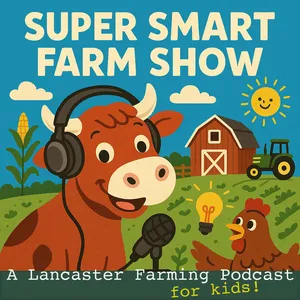
Kids have a lot of questions about farming, and the Super Smart Farm Show, Lancaster Farming's podcast for kids, has a lot of answers. Join us each week as we explore kid-friendly topics like why bees are important and why sheep need hair cuts. We here at the Super Smart Farm Show know it's fun to ask questions and wonder about the world we live in, especially when it comes to learning about how farmers feed and take care of us.
Latest Episodes
The most recent episodes — sign up to get AI-powered summaries of each one.
- 6 days ago10 min
Do Pigs Actually Sweat?
This week on the Super Smart Farm Show, we've got one scorcher of a question: Do pigs really sweat? The phrase 'sweating like a pig' is sometimes used to describe someone who's heavily perspiring. But hang on. Do pigs actually sweat? If they do, do they really sweat a lot? And if pigs don't really sweat, where does that phrase come from? Join host Elmer, Piper the pig and Farmer Wendy as they get to the bottom of this sweaty situation. Do you have a question for the Super Smart Farm Show? Drop us a line at supersmart@lancasterfarming.com! Thank You to Our Sponsor Fulton Bank For More Lancaster Farming Podcasts Click Here In this episode of the Super Smart Farm Show, Elmer and Piper the Pig investigate the question, "Do pigs actually sweat?" Young listeners learn that pigs have some sweat glands but have a very limited ability to cool themselves through sweating, so they rely on shade, fresh water, cool surfaces, mud and good airflow to stay comfortable during hot weather. Piper explains how mud helps cool pigs as it evaporates from their skin, while also providing protection from the sun and biting insects, making heat management an important part of pig care and livestock welfare. The episode then takes a fascinating turn into history and language as Farmer Wendy explains the possible connection between the phrase "sweating like a pig" and pig iron, a type of iron made by pouring molten iron into molds shaped like a sow and her piglets. Elmer emphasizes that the exact origin of the expression is uncertain, giving kids a lesson in how historical questions don't always have definitive answers. With interactive quizzes, farm animal facts and kid-friendly explanations, this episode explores pig behavior, animal science, livestock care, heat stress, pig cooling methods, pig iron and the history behind common expressions.
- 1 weeks ago9 min
Why Do Some Fields Grow Different Crops Each Year?
This week on the Super Smart Farm Show, we're having a field day while talking about why farmers like to move their crops around. Keen farm observers may notice that farmers will sometimes move their crops around. A field that's growing corn one year will have soybeans next year and the old soybean field is now full of corn. Is there a reason for playing musical crops? And what does it have to do with the soil and weeds? Join host Elmer, Sawyer the soil scientist and Marvin the marestail weed as they talk about crop rotation. Do you have a question for the Super Smart Farm Show? Drop us a line at supersmart@lancasterfarming.com! Thank You to Our Sponsor Fulton Bank For More Lancaster Farming Podcasts Click Here In this episode of the Super Smart Farm Show, Elmer and Sawyer the Soil Scientist explain why farmers practice crop rotation and how planting different crops in the same fields from year to year can improve soil health and farm sustainability. Young listeners learn how crops have different nutrient needs, including how corn uses significant amounts of nitrogen while soybeans use nitrogen fixation to make atmospheric nitrogen available in the soil. The episode explores several benefits of crop rotation, including improving soil fertility, reducing soil erosion, disrupting crop pests and diseases, and helping farmers manage weeds through varied herbicides, tillage practices and cover crops. Marvin the Marestail Weed adds some humor while demonstrating how changing crops can make weed management more challenging for persistent weeds. The show also reveals that crop rotation has been practiced for thousands of years, with evidence of the practice dating to around 6000 B.C. in the Middle East. Through interactive quizzes and kid-friendly explanations, this episode teaches children about crop production, soil conservation, nitrogen fixation, pest management, weed control, sustainable agriculture and the science behind healthy farmland.
- 2 weeks ago10 min
Do Farm Animals Like to Play?
This week on the Super Smart Farm Show, we're having fun with some of the younger animals on the farm. Play is an important part of childhood, plus it's just plain fun! But do young farm animals like to play, too? And if they do enjoy playing, how do they play? They can't exactly play kickball or jump rope. And what, besides fun, is the point of all that playing? Join host Elmer, Farmer Clementine, Charlie the calf and Daisy the kid as they discuss playtime in the pasture. Do you have a question for the Super Smart Farm Show? Drop us a line at supersmart@lancasterfarming.com! Thank You to Our Sponsor Fulton Bank For More Lancaster Farming Podcasts Click Here In this episode of the Super Smart Farm Show, Elmer explores the fascinating question of whether young farm animals play just for fun and discovers that play is an important part of growing, learning and developing essential skills. With help from Charlie the Calf, Daisy the Goat Kid and farmer Clementine, young listeners learn how calves run, jump, buck and chase each other to build muscle, improve coordination and develop social skills, while goat kids climb, balance, jump and bounce to practice movement and learn where to place their feet. The episode also highlights playful behavior in lambs, piglets, foals and baby chickens, along with examples from wild animals such as bears, foxes and dolphins. Through fun comparisons and interactive quizzes, the show explains how animal play helps young animals develop physical abilities, social skills and behaviors they may need as adults, while drawing parallels to how play helps human children build coordination, strength and other important skills. This engaging episode introduces kids to farm animals, animal behavior, animal development, livestock, animal science and the important role of play in growing up.
- 3 weeks ago8 min
What's the Difference Between Silos and Grain Bins?
This week on the Super Smart Farm Show, it's time to figure out it once and for all: what's a silo and what's a grain bin? Picture it: You're riding down the road and you see a tall, cylindrical structure rising up from a farm. Is it a silo? Or is it a grain bin? What's the difference? Is it just on the outside or is there more going on inside these farm structures making them different from each other? Join host Elmer and Cornelia corn as they learn about the difference between silos and grain bins. Do you have a question for the Super Smart Farm Show? Drop us a line at supersmart@lancasterfarming.com! Thank You to Our Sponsor Fulton Bank For More Lancaster Farming Podcasts Click Here In this episode of the Super Smart Farm Show, Elmer and Cornelia the Corn help young listeners understand the difference between grain bins and silos, two common structures found on farms. The episode explains that grain bins store harvested grains such as corn kernels and soybeans, while silos store and ferment chopped whole-plant crops, such as corn silage, into nutrient-rich livestock feed. Kids learn how grain bins are typically short, wide structures made from corrugated steel and designed to provide airflow that keeps grain dry, while silos are taller and narrower and are commonly made from concrete or glass-fused steel. The show also introduces the science of fermentation and explains how airtight silos create the conditions needed to turn green corn plants into silage that cattle and other livestock can eat. With seasonal lessons about corn silage harvest in late summer and early fall and grain harvest later in the fall, plus an interactive quiz, this episode teaches children about farm storage, grain handling, corn production, livestock feed, silage, fermentation and agricultural structures in a fun, easy-to-understand way.
- Aug 18, 20267 min
Why Are Cows Milked Every Day?
This week on the Super Smart Farm Show, we're heading over to the milking parlor to talk about why cows need to be milked every day. When it comes to milking cows, most dairy farms do it twice or even three times a day. Smaller farms may only milk once a day. The point is, the cows need to be milked every single day. Why is that? Is it just to keep the milk flowing? And what about the cows? Do they like getting milked so often? Join host Elmer and Bessie the cow as they discuss how dairy farms keep their cows milked and happy. Do you have a question for the Super Smart Farm Show? Drop us a line at supersmart@lancasterfarming.com! Thank You to Our Sponsor Fulton Bank For More Lancaster Farming Podcasts Click Here In this episode of the Super Smart Farm Show, Elmer and Bessie the cow answer a listener question about why dairy cows need to be milked every day. Young listeners learn that dairy cows can produce an average of eight gallons of milk per day, making regular milking important for cow comfort, health and milk production. Bessie explains how consistent milking helps prevent painful udder problems such as mastitis and can contribute to a lower somatic cell count, an important indicator of milk quality. The episode also explores why dairy farmers maintain consistent milking schedules—whether cows are milked once, twice or three times a day—and how good cow care, clean milking equipment and established routines benefit both cattle and farmers. Through interactive quizzes and kid-friendly explanations, the episode teaches children about dairy farming, cow health, milk production, udder health and the daily routines of dairy farmers, while explaining how the milk produced on farms becomes products such as cheese, yogurt, butter and ice cream.
- Aug 11, 202611 min
Why Do Tractors Have Such Big Wheels?
This week on the Super Smart Farm Show, we're wheel-y excited to find out why tractor wheels are so gigantic. Tractor wheels aren't like the wheels on your bicycle or your family's car. They're much, much bigger. In fact, depending on the tractor, they might actually be taller than the roof of your family's car. But why do tractors need such big wheels? Why do they need to be so tall and wide? Join host Elmer and farmer Merle as they discuss why tractor wheels are shaped that way. Do you have a question for the Super Smart Farm Show? Drop us a line at supersmart@lancasterfarming.com! Thank You to Our Sponsor Fulton Bank For More Lancaster Farming Podcasts Click Here This episode of the Super Smart Farm Shown explores the science behind tractor wheels and why farm equipment needs such large, wide tires. With help from Elmer and farmer friend Merle, listeners learn how tall tractor tires help machines move across rough, uneven fields and crop residue, while wider tires spread the tractor's weight over a larger area to reduce soil compaction. The episode explains why protecting soil health matters for plant roots, water movement, nutrients and healthy crops, and introduces tracked tractors, which distribute weight over an even larger surface area. Elmer and Merle also discuss steel-wheeled tractors, including their use among some Amish and Mennonite farmers, and how farmers choose tractor tires and equipment based on their specific farming needs. Packed with kid-friendly explanations, fun comparisons, quizzes and fascinating tractor facts—including wheels that can reach seven to eight feet tall—this episode teaches young listeners about tractors, farm machinery, agricultural technology, soil health and sustainable farming practices.
- Aug 4, 202610 min
Why Are Crops Safe From Herbicides?
This week on the Super Smart Farm Show, we're heading out to the fields and getting into the weeds to figure out why herbicides don't harm crops. Herbicides are chemicals that some farmers use to kill weeds. But here's the thing: Farmers spray herbicides across entire fields, meaning the chemicals are applied to both weeds and crops like corn or soybeans. From there, herbicides do their work and kill off the weeds. But how do the crops stay safe? Join host Elmer, Cornelia the corn and Marvin the marestail weed as they discuss why herbicides don't kill everything growing in a field—just the weeds. Do you have a question for the Super Smart Farm Show? Drop us a line at supersmart@lancasterfarming.com! Thank You to Our Sponsor Fulton Bank For More Lancaster Farming Podcasts Click Here This episode of the Super Smart Farm Show answers the question why don't herbicides kill crops along with the weeds? With help from Cornelia the Corn and Marvin the Marestail Weed, kids learn how herbicides work, why farmers carefully choose products that target specific weeds while protecting crops like corn, soybeans, and wheat, and how modern crop varieties can tolerate certain herbicides when used correctly. The episode explains the science behind weed control in agriculture, the importance of reducing competition for water, sunlight, and soil nutrients, and introduces the concept of integrated weed management, including crop rotation, cover crops, cultivation, and hand weeding. Packed with fun characters, interactive quizzes, and easy-to-understand explanations, this episode helps children discover how farmers use science and multiple weed-control strategies to grow healthy crops while protecting the food we depend on.
- Jul 28, 202610 min
Why Do Only Some Cows Have Horns?
This week on the Super Smart Farm Show, we're going straight to the experts to find out why only some cows have horns. You may have noticed that some cows have horns. Some have little horns, some have big horns and some may even have horns as wide as a car! But some cows don't have any horns at all. Why is that? Is it because only boy cows have horns? Or is it because only some breeds of cows have horns? Or is it something else? Join host Elmer, Bessie the cow and Brody the steer as they discuss why some cows have horns and others don't. Do you have a question for the Super Smart Farm Show? Drop us a line at supersmart@lancasterfarming.com! Thank You to Our Sponsor Fulton Bank For More Lancaster Farming Podcasts Click Here In this episode of the Super Smart Farm Show, Elmer and the Moo Crew answer a common question: Do only boy cows have horns? Listeners learn that both male and female cattle can have horns, depending on their breed and genetics, not their sex. Bessie the Holstein explains the role of genes, horn buds, and why many dairy calves are disbudded for safety, while Brody the Black Angus steer introduces the concept of polled cattle, meaning they are naturally born without horns. Along the way, kids discover fascinating facts about Holsteins, Black Angus, Texas Longhorns, Highland cattle, and Ankole-Watususi cattle, explore how horns develop, and learn why some breeds keep their impressive horns as part of their heritage. Packed with interactive quizzes and kid-friendly explanations, this episode is perfect for children curious about farm animals, cattle breeds, agriculture, animal science, and how cows grow horns.
About Super Smart Farm Show
Kids have a lot of questions about farming, and the Super Smart Farm Show, Lancaster Farming's podcast for kids, has a lot of answers. Join us each week as we explore kid-friendly topics like why bees are important and why sheep need hair cuts. We here at the Super Smart Farm Show know it's fun to ask questions and wonder about the world we live in, especially when it comes to learning about how farmers feed and take care of us.
Customized Recaps
AI-powered recaps with compact key takeaways, quotes, and insights.
Straight to Your Inbox
Get key takeaways from Super Smart Farm Show in a 5-minute read.
Save Hours Every Week
Stay current on your favorite podcasts without falling behind.
Frequently Asked Questions
What is Podzilla's Super Smart Farm Show daily summary?
It's a free AI-powered email that summarizes new episodes of Super Smart Farm Show as soon as they're published. You get the key takeaways, notable quotes, and links & mentions — all in a quick read.
How does the Super Smart Farm Show podcast summary work?
When a new episode drops, our AI transcribes and analyzes it, then generates a personalized summary tailored to your interests and profession. It's delivered to your inbox every morning.
Is this an official Super Smart Farm Show product?
No. Podzilla is an independent service that summarizes publicly available podcast content. We're not affiliated with or endorsed by Lancaster Farming.
Can I get summaries of other podcasts too?
Absolutely! The free plan covers up to 3 podcasts. Upgrade to Pro for 15, or Premium for 50. Browse our full catalog at /podcasts.
How often does Super Smart Farm Show release new episodes?
Super Smart Farm Show publishes weekly. Our AI generates a summary within hours of each new episode.
What topics does Super Smart Farm Show cover?
Super Smart Farm Show covers topics including Education, Kids & Family, Family. Our AI identifies the specific themes in each episode and highlights what matters most to you.
Start getting Super Smart Farm Show summaries tomorrow morning.
Free forever for up to 3 podcasts. No credit card required.
Free forever for up to 3 podcasts. No credit card required.