Free Daily Podcast Summary
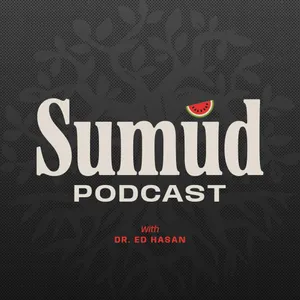
Sumud Podcast: Inspired by Palestine: Daily Summaries Delivered
by Dr. Ed Hasan
Inspired by Palestine, Sumud Podcast emerges as a powerful platform for inspiration and empowerment for marginalized communities globally. Our mission? To elevate voices that have been sidelined by sharing the stories, experiences, and insights that demand to be heard. Get ready to join us in amplifying the voices shaping our world, one episode at a time. Welcome to Sumud Podcast – where we uplift, empower, and amplify. Connect with Sumud Podcast on your favorite social media channels: Instagram, YouTube, Facebook, LinkedIn, TikTok Threads, and X (formerly known as Twitter).<p
Latest Episodes
The most recent episodes — sign up to get AI-powered summaries of each one.
- Yesterday1h 18m
Mahmoud Khalil: ‘No Land to Stand On: Notes from Detention’ | Sumud Podcast
In this episode of the Sumud Podcast, we sit down with Mahmoud Khalil for a powerful conversation about identity, displacement, free speech, and the fight for Palestinian rights. Mahmoud shares his personal journey from growing up in a Palestinian refugee camp in Syria to becoming a prominent voice for Palestine at Columbia University, and the experiences that led to his detention and ongoing legal battle. He reflects on his family's history of displacement, the generations of Palestinians living without a place to call home, and why his story extends far beyond his own experience. Mahmoud also discusses his newly released book, ‘No Land to Stand On: Notes from Detention’, explaining why he chose to tell his story in his own words and why he refused to separate his experience from the Palestinian cause. The conversation explores the student movement at Columbia, institutional pressure, the importance of speaking out, and the consequences of challenging powerful institutions. Mahmoud also reflects on solidarity, personal responsibility, and why meaningful change requires people to stand together, even when doing so comes with a cost. Mahmoud Khalil is a New York Times bestselling author, a Palestinian born in a refugee camp in Syria, and a Columbia University graduate, where he became a prominent figure during the student protests against the war on Gaza. Mahmoud lives in New York, where he continues to fight against the threat of deportation. No Land to Stand On is his first book. In this conversation, we explore → Mahmoud's journey from a Palestinian refugee camp in Syria to Columbia University → His family's history of displacement and the meaning behind No Land to Stand On → His detention, the fight for free speech, and his ongoing legal battle → Why he refused to separate his personal story from the Palestinian cause → The Columbia student movement, institutional pressure, and academic freedom → Edward Said's influence and the importance of Palestinians telling their own stories → Courage, solidarity, and the responsibility to speak out against injustice Sponsored by The Karate Attorney (@karateattorney) fighting for justice inside and outside the courtroom. Visit KarateAttorney.com 🎬 Full episode on https://sumudpod.com 📲 Follow @dredhasan | @sumudpod | @justice4mahmoud Learn more about your ad choices. Visit megaphone.fm/adchoices
- 2 weeks ago1h 31m
Dr. William Lafi Youmans & Jason Osder: Inside ‘Who Killed Alex Odeh?’ | Sumud Podcast
🎙️In this episode of the Sumud Podcast, we sit down with Dr. William Youmans and Jason Osder, co-directors of the documentary Who Killed Alex Odeh?, for a powerful conversation about Palestinian American history, political violence, unanswered questions, and the fight for justice. Alex Odeh was a Palestinian American activist and community organizer whose life was cut short by a bombing in 1985. More than four decades later, his killing remains officially unresolved, leaving his family and community without the answers and accountability they deserve. William and Jason discuss the investigation behind their documentary, the evidence uncovered over years of research, and the unanswered questions surrounding the case. They examine the history of attacks against Arab American activists, the role of political extremism, and how political interests, institutional bias, and unequal treatment can shape the pursuit of justice. The conversation also explores how Alex's story connects to the broader history of Palestinian advocacy, the pressure activists face when speaking out, and the importance of preserving stories that have been overlooked or forgotten. Who killed Alex Odeh? And what does the failure to resolve his case reveal about whose lives are valued, whose stories are remembered, and whose families are left waiting for justice? 🌍William Lafi Youmans is an associate professor in residence at Northwestern University in Qatar. He is broadly interested in questions of transnationalism, power and communication, with his primary research interests focusing on global news, media industries, technology, law, and politics. His other areas of research interest include media law, Middle East politics, and Arab American studies. Youmans is the author of Unlikely Audience: Al Jazeera's Struggle in America (Oxford UP), which examines Al Jazeera’s efforts to gain a share of the news market in the United States. He has been quoted in articles in Salon, Washington Post, Newsweek, Variety, and The New York Times, among others. He was a guest on radio and television programs, such as NPR, Headline News, Al Jazeera English, and ARD. He has published in the Washington Post, Middle East Report, and Nieman Journalism Lab. He is currently working on two long-term projects. The first is a documentary film about Alex Odeh, a Palestinian American activist who was assassinated in Orange County, CA, in 1985. The crime is unsolved and still haunts the local community to this day. The second is a major video archive he is building of Arab American TV, a program that ran out of Los Angeles from the early 1980s to the early 2000s. 🌍Jason is a long-time media educator, producer, and instructional author with a background in documentary, social sciences, and education theory. He joined the faculty of the School of Media and Public Affairs in January 2007 to teach Introduction to Digital Media, a required course for journalism and political communications majors. His teaching also includes documentary theory and production and online journalism techniques. Jason Osder is the director of the award-winning documentary LET THE FIRE BURN about the 1985 confrontation between the group MOVE and the Philadelphia police that claimed the lives of eleven people. Supported in part by the Sundance Institute, LET THE FIRE BURN premiered at the Tribeca Film Festival where it won the best editing in a documentary award and a jury special mention for best new documentary director. The film went on to play over fifty film festivals around the world and be nominated for over a dozen awards. It won the best editing prize at the Montreal International Documentary Festival, the International Documentary Association Creative Recognition Prize in Editing, the Cinema Eye Honor for Editing, and the Independent Spirit Truer than Fiction Award. Currently, Jason is working on films supported by PBS and The Sundance Institute. 🔑 In this conversation, we explore → Who Alex Odeh was and his legacy as a Palestinian American activist and community organizer → The 1985 bombing that took Alex's life and why the case remains unresolved → The making of Who Killed Alex Odeh? and the evidence uncovered through years of research → The history of political extremism and attacks targeting Arab American activists → How political interests, institutional bias, and unequal treatment can obstruct accountability → The connection between Alex's story, Palestinian advocacy, and the pressure to remain silent → Why preserving overlooked histories matters in the ongoing fight for justice Sponsored by The Karate Attorney (@karateattorney) fighting for justice inside and outside the courtroom. Visit KarateAttorney.com 🎬 Full episode on https://sumudpod.com 📲 Follow @dredhasan | @sumudpod | @willlafi | @jasonosder | @whokilledalexodeh | @watermelonpictures | @watermelonplusco Learn more about your ad choices. Visit megaphone.fm/adchoices
- 3 weeks ago1h 31m
Noura Erakat: ‘Confronting Zionism’ | Sumud Podcast
In this episode of the Sumud Podcast, we sit down with Noura Erakat for a powerful conversation about Palestinian liberation, international law, colonialism, and the importance of building solidarity across communities. A Palestinian American human rights attorney, legal scholar, and professor, Noura discusses her new book, Confronting Zionism: Decolonizing Palestine and Building the World Anew, co-authored with John Reynolds, and explains how history, law, and political ideology shape the realities Palestinians face today. The conversation explores her experience being arrested while advocating for divestment, the connections between Black and Palestinian liberation movements, and the role of international institutions in shaping political outcomes. Noura also discusses the history of Zionism, the relationship between racism and colonialism, and why understanding these systems is essential to imagining a different future. Through reflections on generations of Palestinian thinkers, grassroots organizing, and collective action, she emphasizes the importance of learning from history, challenging dominant narratives, and building meaningful coalitions across communities. Noura Erakat is Professor of Africana Studies and Criminal Justice at Rutgers University, New Brunswick. She is the author of Justice for Some: Law and the Question of Palestine (Stanford University Press, 2019), which received the Palestine Book Award and the Bronze Medal for the Independent Publishers Book Award in Current Events/Foreign Affairs. Her forthcoming book, Confronting Zionism: Decolonizing Palestine and Building the World Anew co-authored with John Reynolds will be out with Haymarket in November 2025. In 2023, Noura co-chaired an Independent Task Force on the Application of National Security Memorandum-20 to Israel, a report documenting how U.S. arms to Israel have been used in violation of U.S. and international law and which was submitted to the White House. She is co-founding editor of Jadaliyya and an editorial board member of the Journal of Palestine Studies as well as Human Geography. She is a co-founding board member of the DC Palestinian Film and Arts Festival. She has served as Legal Counsel for a Congressional Subcommittee in the US House of Representatives, as Legal Advocate for the Badil Resource Center for Palestinian Refugee and Residency Rights, and as National Organizer and Legal Advocate of the US Campaign to End the Israeli Occupation. Noura has also produced video documentaries, including "Gaza In Context" and "Black Palestinian Solidarity.” Noura completed a non-resident fellowship of the Religious Literacy Project at Harvard Divinity School as well as a Mahmoud Darwish Visiting Professorship at Brown University. In 2022, she was selected as a Freedom Fellow by the Marguerite Casey Foundation. In 2025, the University of Ghent awarded the Amnesty International Chair in recognition of her contribution to human rights and scholarship. In 2026, the University of Antwerp awarded her an honorary doctorate for her scholarship and advocacy. In this conversation, we explore → Noura Erakat’s arrest while advocating for divestment and the importance of protecting the right to speak → Her new book, Confronting Zionism: Decolonizing Palestine and Building the World Anew → The connections between colonialism, racism, and systems of power → The history of Zionism and how political narratives shape public understanding → The deep-rooted connections between Black and Palestinian liberation movements → The role of international law, the United Nations, and grassroots organizing in the struggle for justice Sponsored by The Karate Attorney (@karateattorney) fighting for justice inside and outside the courtroom. Visit KarateAttorney.com 🎬 Full episode on https://sumudpod.com 📲 Follow @dredhasan | @sumudpod | @nouraerakat Learn more about your ad choices. Visit megaphone.fm/adchoices
- Oct 9, 20261h 22m
Miko Peled: 'The General’s Son' Who Chose Palestine | Sumud Podcast
🎙️ In this episode of the Sumud Podcast, we sit down with Miko Peled for a powerful conversation about identity, family, history, and his journey toward standing with the Palestinian people. Born into one of Israel’s most prominent military and political families, Miko grew up surrounded by Zionism, military culture, and influential figures who shaped the country’s history. He reflects on his father, an Israeli general, his grandfather’s role in Israel’s founding, and the stories he heard growing up that shaped his understanding of the region. Miko also shares the experiences that challenged those beliefs, from his time in the Israeli military and the war in Lebanon to the death of his 13-year-old niece and the conversations that ultimately pushed him to reconsider everything he had been taught. The conversation also explores his book The General’s Son: Journey of an Israeli in Palestine, the importance of confronting difficult histories, and why Miko believes standing up for what is right is a responsibility rather than an act of courage. 🌍 Miko Peled is the founder and President of Palestine House of Freedom, in Washington, DC. Born in Jerusalem in 1961, he is the author of “The General’s Son, Journey of an Israeli in Palestine,” and “Injustice, the Story of the Holy Land Foundation Five.” For close to three decades Miko has been a public speaker, and human rights activist focusing on Palestine. He is considered by many to be one of the clearest voices calling for justice in Palestine, and the creation of a single democracy with equal rights for all, on all historic Palestine. Educated in Jerusalem, Japan and the United States, Peled is also a professional martial artist. For 23 years, Peled ran a martial arts school that was dedicated to teaching leadership skills and non-violent conflict resolution through martial arts. Peled has been working along with other, mostly Palestinian activists towards dismantling the apartheid regime in Palestine and transforming Palestine into a single democratic state with equal rights for all. Driven by the death of his 12-year-old niece Smadar in 1997, Peled embarked on a journey to explore Palestine, its people and their narratives. 🔑 In this conversation, we explore → Miko’s upbringing inside Israel’s political and military establishment → His father’s role as an Israeli general and his grandfather’s place in Israel’s founding → His mother’s decision to refuse a Palestinian family’s home in Jerusalem → How military service and the war in Lebanon challenged his worldview → The death of his niece and the moment that pushed him to confront what he had been taught → How meeting Palestinians and learning their history transformed Miko’s understanding of Palestine → His journey from a two-state framework toward advocating for equal rights and a shared future Sponsored by The Karate Attorney (@karateattorney) fighting for justice inside and outside the courtroom. Visit KarateAttorney.com 🎬 Full episode on https://sumudpod.com 📲 Follow @dredhasan | @sumudpod | @mikopeled Learn more about your ad choices. Visit megaphone.fm/adchoices
- Oct 2, 20261h 29m
Salah Sarsour: ICE Detention, Community, and Standing for Justice | Sumud Podcast
🎙️In this episode of the Sumud Podcast, we sit down with Salah Sarsour for a powerful conversation about immigration, free speech, advocacy, and the personal consequences of speaking out. Salah shares his experience spending 81 days in ICE detention, his work as a Palestinian community leader and president of the Islamic Society of Milwaukee, and the events that led to his detention and ongoing legal case. Salah and his attorney, Patrick Taurel, discuss the legal process surrounding his case, conditions inside detention, the impact on Salah’s family and community, and broader questions surrounding advocacy and protected speech. The conversation also explores Salah’s decades of community work, his experiences with detention in the past, and why he continues to speak publicly about issues affecting his community. 🌍 Salah Sarsour is a longtime Palestinian community leader and green card holder who faces deportation for his advocacy against Israeli apartheid and genocide. He is a successful small business owner, community leader, father of six, and caretaker for his elderly mother. On March 30, 2026, Salah Sarsour was taken into custody by ICE because of his advocacy for Palestinian rights; he is one of many Palestinian Americans permanent residents who have been targeted by the Trump Administration for speaking out against the genocide of Palestinians, but his case represents an escalation in the administration’s attempts to shut down activists and organizations opposed to the U.S.-backed genocide in Gaza. 🌍 Patrick Taurel is Salah Sarsour's lead immigration attorney and a Partner at Grossman Young & Hammond. Ranked a top lawyer in the field of immigration law by Washingtonian magazine, he has over a decade of experience as an advocate for immigrants. He has worked for leading immigration firms and impactful non-profit immigrant rights organizations, including the American Civil Liberties Union and the American Immigration Council. 🔑 In this conversation, we explore → Salah Sarsour’s 81 days in ICE detention and his ongoing legal case → His leadership in the Milwaukee Muslim community and work with young people → His advocacy and organizing around Palestinian issues → The circumstances surrounding his arrest and the immigration process → Conditions inside detention and Salah’s experiences supporting other detainees → Free speech, advocacy, and the broader debate surrounding pro-Palestinian activism → Salah’s commitment to his community, his family, and continuing to speak out Learn more about your ad choices. Visit megaphone.fm/adchoices
- Sep 25, 20261h 39m
Dr. Fady Joudah: Bearing Witness Through 'Exhibit G' | Sumud Podcast
🎙️ In this episode of the Sumud Podcast, we sit down with Palestinian poet, translator, and physician Dr. Fady Joudah to discuss his newly released book, Exhibit G: Poems, Essays, and Photographs from Inside Gaza. Through poetry, photography, and personal reflection, Fady explores the realities of Palestinian life, the weight of distance and belonging, and the responsibility of telling stories without reducing people to their suffering. He shares the inspiration behind the book, his work with Palestinian photographers and writers, and the importance of preserving the humanity, history, and voices of those living through unimaginable circumstances. The conversation also examines the relationship between art, language, censorship, solidarity, and accountability, while reflecting on family history, displacement, grief, forgiveness, and the enduring strength of the Palestinian people. Fady offers a deeply personal perspective on what it means to live between worlds, to witness suffering from afar, and to continue creating in the face of loss. 🌍Dr. Fady Joudah is the author of '[…],' a finalist for the National Book Award and winner of the Lenore Marshall Poetry Prize, and Exhibit G. His other poetic works include: The Earth in the Attic; Alight; Textu, a book-long sequence of short poems whose meter is based on cellphone character count; Footnotes in the Order of Disappearance; and Tethered to Stars. He has translated several collections of poetry from Arabic and is the co-editor and co-founder of the Etel Adnan Poetry Prize. He was a winner of the Yale Series of Younger Poets competition and has received the Jackson Poetry Prize, a PEN award, a Banipal/Times Literary Supplement prize from the UK, the Griffin Poetry Prize, a Guggenheim Fellowship, and the Arab American Book Award. He lives in Houston, with his wife and kids, where he practices internal medicine. 🔑 In this conversation, we explore → Dr. Fady Joudah’s new book Exhibit G and the inspiration behind its poems, essays, and photographs → How Palestinian photographers capture humanity, childhood, and everyday life beyond the headlines → The relationship between art, language, censorship, and the representation of Palestinian experiences → The emotional weight of living between the realities of Palestine and the United States → Family history, displacement, inherited memory, and the stories that connect generations → Solidarity, accountability, forgiveness, and the importance of listening to Palestinian voices → Finding tenderness, resilience, and humanity through art, grief, and the ongoing struggle for dignity Sponsored by The Karate Attorney (@karateattorney) fighting for justice inside and outside the courtroom. Visit KarateAttorney.com 🎬 Full episode on https://sumudpod.com 📲 Follow @dredhasan | @sumudpod | @fadyjoudah Learn more about your ad choices. Visit megaphone.fm/adchoices
- Sep 18, 20261h 19m
Colette Ghunim & Melissa Barrera: Inside ‘Traces of Home’ | Sumud Podcast w/ Dr. Ed Hasan
In this episode of the Sumud Podcast, Dr. Ed Hasan sits down with filmmaker Colette Ghunim and actress, producer, and Palestine advocate Melissa Barrera to discuss ‘Traces of Home,’ Ghunim’s deeply personal documentary tracing her family’s roots in Palestine and Mexico. Together, they explore forced migration, intergenerational trauma, identity, family, and the difficult process of returning to the places their families were forced to leave. Barrera also reflects on her advocacy for Palestinian freedom and dignity, while Ghunim shares how making the film transformed her relationship with her parents and her understanding of home. At the heart of the conversation is Sumud: the resilience, dignity, and determination to remain rooted in who you are. As a documentary filmmaker and nonprofit co-founder, Colette Ghunim’s soul purpose is to use the power of film and storytelling for those oppressed around the world to be seen, to be heard, and to heal. Her first documentary, The People’s Girls (2016), received over 2 million views and won Best Short Documentary at the Arab Film Festival for its bold spotlight on street harassment in Egypt. In co-production with Kartemquin Films and funded by Latino Public Broadcasting, she is directing Traces of Home, her first feature-length film documenting her inner quest to find home through unearthing her parent’s forced migrations from Mexico and Palestine. Colette is also the co-founder of Mezcla Media Collective, a nonprofit organization aimed to cultivate a thriving landscape for over 700 women and non-binary filmmakers of color in Chicago. Her work has been highlighted on international outlets such as Huffington Post, Al Jazeera, Univision, and TEDx. Colette was selected as a 2023 Obama Foundation USA Leader, 2024 Sundance Institute x ISF Fellow, and was featured on Arab America’s “30 Under 30” list. Melissa Barrera is a Mexican actress, singer, and producer known for her roles in Vida, In the Heights, Scream, Scream VI, and Abigail. She also serves as an executive producer of Traces of Home. Beyond her work on screen, Barrera has been outspoken in support of Palestinians and calls for a ceasefire in Gaza. In 2023, she said she would “continue to speak out” and “continue to advocate for peace and safety, for human rights and freedom.” She is also listed among the signatories of Artists4Ceasefire, a collective calling for a permanent ceasefire, humanitarian aid to Gaza, the return of hostages, and a just and lasting peace. In this conversation, we explore → The journey behind Traces of Home and Colette Ghunim’s search for home in Mexico and Palestine → Intergenerational trauma, family silence, and healing → Colette’s father returning to Palestine decades after the Nakba → Why Melissa Barrera joined the film and continued speaking out for Palestinian freedom and dignity → The cultural and emotional connections between Mexico and Palestine → How Colette came to understand home as something found within → The power of art, vulnerability, and Sumud to reclaim identity and heal across generations Learn more about your ad choices. Visit megaphone.fm/adchoices
- Sep 4, 20261h 28m
Roger Waters & Mona Miari: Inside ‘Comfortably Numb Re-Imagined’ | Sumud Podcast
In this episode of the Sumud Podcast, Dr. Ed Hasan sits down with Palestinian singer-songwriter Mona Miari and legendary musician Roger Waters to discuss their powerful reimagining of Comfortably Numb and the story behind its creation. Mona and Roger reflect on the year-long creative process, the grief and inspiration behind the song, Palestinian history and culture, and how music can challenge indifference and keep people from becoming numb to human suffering. They also discuss the emotional story behind the song’s Palestinian lullaby, the making of its accompanying film, and the responsibility artists have to speak out for freedom, justice, and human rights. Watch 'Roger Waters & Mona Miari – Comfortably Numb Re-Imagined (Official Music Video)': https://www.youtube.com/watch?v=WBmrT3uqmeM Mona Miari is an internationally acclaimed Palestinian singer-songwriter and artistic director based in New York City, whose work bridges global audiences while rooted in Arabic traditions. The first Arab singer to perform at Boston’s Hatch Memorial Shell with the Boston Landmarks Orchestra, she has headlined major venues including Lincoln Center, BAM, and The Public Theater, and performed internationally across Europe, the Arab world, and South Africa. She is the Artistic Director of the New York Arab Chorus and a recipient of residencies from the Rockefeller Brothers Fund and La Maison de Beaumont. Her debut album, releasing in 2026, showcases a bold body of original work grounded in storytelling and cross-cultural influence. Roger Waters, founding member and principal lyricist of Pink Floyd, is one of the most influential figures in modern music history. As the creative force behind landmark albums including The Dark Side of the Moon and The Wall, his work has shaped generations of listeners through its political consciousness and emotional depth. A lifelong activist, Waters’ connection to Palestine traces back to his childhood, when his father worked as a teacher in the region, shaping his early awareness of its realities. In this project, Waters revisits Comfortably Numb not as nostalgia, but as a living work - reframed through collaboration as a response to the present moment. In this conversation, we explore → The story behind Comfortably Numb Reimagined → How Roger Waters and Mona Miari began collaborating → Roger Waters’ response and the year-long creative collaboration → Hind Rajab, the Palestinian lullaby, and the story behind the rising sun → Palestinian musical traditions and the meaning of “Falastin” → Centering Palestinian humanity, culture, memory, and everyday life → How music and artists can challenge propaganda, injustice, and indifference → The meaning of Sumud, resilience, and remaining human through resistance Sponsored by The Karate Attorney (@karateattorney) fighting for justice inside and outside the courtroom. Visit KarateAttorney.com Full episode on https://sumudpod.com Follow @dredhasan | @sumudpod | @monamiari | @rogerwaters | @empire.wana Learn more about your ad choices. Visit megaphone.fm/adchoices
Get Sumud Podcast: Inspired by Palestine summaries in your inbox
Free AI-powered daily recaps. Key takeaways, quotes, and mentions — in a 5-minute read.
Get Free Summaries →Free forever for up to 3 podcasts. No credit card required.
You Might Also Like
Listeners also like.
Rethinking Palestine
A Palestinian policy analyst hosts discussions with experts on current events and enduring issues affecting Palestinians globally.

The Benjamin Anthony Show from the MirYam Institute
Discussions and debates on Israel from the MirYam Institute, featuring speeches, interviews, and conversations.

Khalid Yasin
Muslim Central

Call Me Back - with Dan Senor
Discusses challenges and dilemmas facing Israelis and Jews worldwide.

The SJW Podcast
A podcast focused on personal growth, healing, and empowerment through honest conversations and stories of overcoming adversity.

Sunday SoulDay
Authentic conversations with leaders and creatives exploring personal growth, emotional well-being, and the journey from pain to purpose.

Amplify Speakers Podcast
Discusses mindset, leadership, and resilience with top speakers, athletes, and change-makers about their personal journeys and impact.

Tablet Studios
Explores Jewish identity, tradition, and culture through diverse podcasts offering insight for contemporary Jewish life.

Talk2Tamara
Tamara Gestetner
Our Skin: A Personal Discovery Podcast
People share personal experiences with skin conditions like psoriasis and HS, discussing diagnosis, treatment, and living fully despite challenges.
Searching For Heroes With Benjamin Hall
FOX News Podcasts

92NY Talks
Recorded conversations from 92nd Street Y featuring prominent thinkers, artists, and leaders discussing culture, ideas, and society.
About Sumud Podcast: Inspired by Palestine
Inspired by Palestine, Sumud Podcast emerges as a powerful platform for inspiration and empowerment for marginalized communities globally. Our mission? To elevate voices that have been sidelined by sharing the stories, experiences, and insights that demand to be heard. Get ready to join us in amplifying the voices shaping our world, one episode at a time. Welcome to Sumud Podcast – where we uplift, empower, and amplify. Connect with Sumud Podcast on your favorite social media channels: Instagram, YouTube, Facebook, LinkedIn, TikTok Threads, and X (formerly known as Twitter).<p
Customized Recaps
AI-powered recaps with compact key takeaways, quotes, and insights.
Straight to Your Inbox
Get key takeaways from Sumud Podcast: Inspired by Palestine in a 5-minute read.
Save Hours Every Week
Stay current on your favorite podcasts without falling behind.
Frequently Asked Questions
What is Podzilla's Sumud Podcast: Inspired by Palestine daily summary?
It's a free AI-powered email that summarizes new episodes of Sumud Podcast: Inspired by Palestine as soon as they're published. You get the key takeaways, notable quotes, and links & mentions — all in a quick read.
How does the Sumud Podcast: Inspired by Palestine podcast summary work?
When a new episode drops, our AI transcribes and analyzes it, then generates a personalized summary tailored to your interests and profession. It's delivered to your inbox every morning.
Is this an official Sumud Podcast: Inspired by Palestine product?
No. Podzilla is an independent service that summarizes publicly available podcast content. We're not affiliated with or endorsed by Dr. Ed Hasan.
Can I get summaries of other podcasts too?
Absolutely! The free plan covers up to 3 podcasts, any in the catalog. Basic raises that to 15, Pro to 40 and Max to 100. Browse our full catalog at /podcasts.
How often does Sumud Podcast: Inspired by Palestine release new episodes?
Sumud Podcast: Inspired by Palestine publishes weekly. Our AI generates a summary within hours of each new episode.
What topics does Sumud Podcast: Inspired by Palestine cover?
Sumud Podcast: Inspired by Palestine covers topics including Culture, Society & Culture. Our AI identifies the specific themes in each episode and highlights what matters most to you.
Start getting Sumud Podcast: Inspired by Palestine summaries tomorrow morning.
Free forever for up to 3 podcasts. No credit card required.
Free forever for up to 3 podcasts. No credit card required.