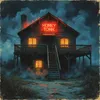
EPISODE 3126: Where Fear Settles
Something cold settles in a place long before anyone gives it a name. It settles into wood and stone, into the damp breath of a basement, into the silence that lingers after music stops. And sometimes, when the lights are low and the laughter has thinned out, you can almost feel that old cold rising again, as if something buried beneath the floor is trying to remember the shape of a human voice.There are stories that begin with a scream. Others begin with a mistake. And then there are the stories that begin with a doorway. A simple doorway into a bar, a dance hall, a place of songs and whiskey and neon, where strangers come to forget themselves for a few hours. But what happens when a place does not forget? What happens when every death, every rumor, every prayer spoken in fear, every lie told to keep the business alive, all stay behind like smoke trapped in the rafters?Some of what you are about to hear comes from old newspaper records, some from local legend, some from television, and some from the kind of stories people only tell after midnight, when the room is quiet and they no longer trust their own memory. Not all darkness announces itself honestly. Sometimes it arrives wearing history. Sometimes it arrives wearing entertainment. And sometimes the most dangerous thing in a haunted place is not the ghost, but the need for people to believe one is there.Tonight, we travel far from the Philippines, across the ocean to Wilder, Kentucky, to a place that became one of the most talked about haunted locations in American paranormal television. Its name was Bobby Mackey's Music World. For many viewers, especially those who followed the first season of Ghost Adventures, this place felt like the perfect stage for terror. A country music nightclub with a bloody backstory. A basement well called a gateway to hell. A murdered young woman whose severed head was said to have vanished into darkness. A heartbroken singer named Johanna who may never have existed. A caretaker who believed the building had taken hold of his soul. It was the kind of story made for cameras, for whispers, for obsession.But the more powerful story is not only about whether the place was haunted. It is about how haunted stories are built. It is about why certain buildings become magnets for grief, why the dead are recruited into modern entertainment, and why people from completely different cultures can hear the same kind of warning in an old American honky tonk that they would hear in an abandoned house in Bulacan, a neglected ancestral home in Iloilo, or a roadside chapel in Quezon after dark. Because distance changes the names. It does not change the fear.If you grew up in the Philippines, then you already understand this instinct. You know what it means when elders tell you not to laugh too loudly near old trees. You know the sudden hush that falls when someone mentions a place where too many deaths happened too close together. You know the feeling of entering a room and sensing, without proof, that something there has outlasted the living. In our folklore, we have names for wandering spirits, for angry dead, for souls that linger near the sites of betrayal, violence, and unfinished grief. We are taught that places remember. That land remembers. That buildings absorb what people do inside them.In that sense, Bobby Mackey's was never only an American ghost story. It was something older and more familiar than that. A house of echoes. A structure layered with butchered flesh, crime, sorrow, performance, and spectacle. The details may differ, but the shape of the fear is one we know well.To understand why that first Ghost Adventures episode hit viewers so hard, we have to step away from the flashing night vision and the shouted reactions. We have to go backward. Before the television crew. Before the tourists. Before the warning sign joking that management was not responsible for ghosts. Before country music and line dancing and stories of demonic oppression. We have to begin with the ground itself.Long before the famous nightclub, part of the site had been associated with a slaughterhouse. In practical terms, that means blood, runoff, rot, animal panic, and the hard indifference of men who worked close to death every day. Slaughterhouses occupy a strange place in the imagination. They are built for the transformation of life into product. They are loud, wet, and deeply physical places. Even if no one dies there unjustly, people still sense something wrong in the air. It is not always supernatural. Sometimes it is simply the human mind refusing to be comfortable around mass death.In many cultures, including our own, sites of repeated killing gather stories quickly. Not because ghosts are proven, but because the spirit recoils from routine cruelty. In old Filipino towns, places tied to Japanese occupation atrocities, wartime massacres, or old execution grounds often develop reputations that
Podzilla Summary coming soon
Sign up to get notified when the full AI-powered summary is ready.
Free forever for up to 3 podcasts. No credit card required.
Listen to This Episode
More from Stories Philippines Podcast - Pinoy Horror Stories
EPISODE 3128: Presence and Absence at a Cavite Wedding
EPISODE 3127: Tales of the Kapre and Mountain Warnings
EPISODE 3125: The House Never Lets Go

EPISODE 211: Her Final Text Said He Was Not Human. She Vanished Forever.
Get summaries like this every morning.
Free AI-powered recaps of Stories Philippines Podcast - Pinoy Horror Stories and your other favorite podcasts, delivered to your inbox.
Free forever for up to 3 podcasts. No credit card required.