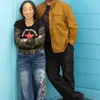
In Part 3, we hear from Keiko and Michael about the history of the San Francisco Mime Troupe. In the late-1950s, a San Franciscan named R.G. Davis taught a class in movement—mime, dance, physical interpretation of stories … that sort of thing. A performing troupe sprang out of that class, and it was known as the R.G. Davis Mime Troupe. It was the era of the early Civil Rights and Anti-War movements, and the troupe became more and more political, basing much of their work around social issues of the day. The group started off doing silent mime work, but shifted later. Michael offers us the definition of mime at this point—"the exaggeration of everyday life in story and song." Not all mime is silent. As the audiences kept getting bigger and bigger, Davis's troupe realized that they needed to abandon the silent style. They dived into doing commedia dell'arte with more and more masks and colorful decorations. Classic commedia almost always involved stories around class—think servants vs. rich assholes. The Davis troupe started writing mimes about civil rights, women's rights, workers' struggles. And they realized that changing their name to "San Francisco Mime Troupe" was a wise move. The newly named SF Mime Troupe played around California. They went to the Midwest and East Coast. They were getting bigger and bigger and getting more and more attention. In the early 1970s, they decided to become a collective. R.G. Davis left at this point. But the troupe wanted to practice what it was "preaching" on stage. I ask Michael to tell us the difference between a collective and a co-op—basically, a co-op is shared ownership of an entity. A collective is simply the way of running the thing. It doesn't necessarily speak to ownership. Keiko joined the collective as an actor. Soon after that, she helped to build props and design costumes and sets. I ask Keiko and Michael to explain the "why" part of getting involved and staying with SF Mime Troupe. Keiko takes us back to her childhood, when her parents took her to anti-war protests regularly. She cites that as a foundation for why she was attracted to the work that the SF Mime Troupe had been engaged in already for so long. She believes in the power of the people to come together and overcome whatever is thrown at us. And the fact that there's a theater company, where she could combine all her passions, didn't hurt at all. For Michael, it goes back to the first SFMT show he saw. It was Factwino vs. the Moral Majority. It's a show about free speech and manipulation. He was hooked. He'd be a fan forever. Then, he got that audition. He agrees with Keiko about the mime troupe community, but Michael goes a step further—he points to that camaraderie he finds with audiences. He appreciates being able to express his passion for politics regularly. The Mime Troupe aims to be topical and newsworthy with whatever is going on at the time. But some things just keep repeating themselves. War, capitalism, the continued deterioration of a livable climate. Michael talks about taking pride in the collective's diversity—race, age, economic levels. And this sets the SF Mime Troupe apart from other theater companies. Then we start talking about what going to a Mime Troupe show can do for audiences. It can inspire and empower showgoers. It can also help them feel less alone in dark times like the present. Michael talks about how, as a performer, they need to leave the audience wanting to take action, that the revolution can't only happen on stage. Because Storied is my show, I assert that San Francisco isn't the
Podzilla Summary coming soon
Sign up to get notified when the full AI-powered summary is ready.
Free forever for up to 3 podcasts. No credit card required.
Listen to This Episode
More from Storied: San Francisco

Top Chefs, Part 2 (S8E23)
TJ, Loveberry and The Top Chefs Band, Part 1 (S8E23)
Todd Kurnat, aka Ink Letterman, aka DJ Circuit 73, Part 2 (S8E22)
Todd Kurnat, aka Ink Letterman, aka DJ Circuit 73, Part 1 (S8E22)
Get summaries like this every morning.
Free AI-powered recaps of Storied: San Francisco and your other favorite podcasts, delivered to your inbox.
Free forever for up to 3 podcasts. No credit card required.