Free Daily Podcast Summary
Stellar Teacher Podcast: A Podcast for Upper Elementary Teachers: Daily Summaries Delivered
by Sara Marye, Literacy Teacher, Elementary Teacher
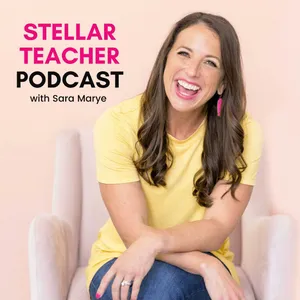
Welcome to the Stellar Teacher Podcast! We believe teaching literacy is a skill. It takes a lot of time, practice, and effort to be good at it. This podcast will show you how to level up your literacy instruction and make a massive impact with your students, all while having a little fun! Your host, Sara Marye, is a literacy specialist passionate about helping elementary teachers around the world pass on their love of reading to their students. She has over a decade of experience working as a classroom teacher and school administrator. Sara has made it her mission to create high quality no-fluff resources and lesson ideas that are both meaningful and engaging for young readers. Each week, Sara and her guests will share their knowledge, tips, and tricks so that you can feel confident in your ability to transform your students into life-long readers. For printable and digital resources, head to stellarteacher.com. Connect with Sara on Instagram @thestellarteachercompany
Latest Episodes
The most recent episodes — sign up to get AI-powered summaries of each one.
- 6 days ago21 min
Episode 324: 6 Small Group Mistakes We Made as Classroom Teachers
Small group instruction can be one of the most powerful parts of your literacy block—but it can also be one of the hardest to figure out. In this episode, Sara and Emily are bringing back our Dear Stellar Teacher style episodes and sharing six small group mistakes they made in their own classrooms (and what they would do differently now!).In this episode, we talk about:Why too much teacher talk can take away from the practice and feedback students really need.Why you don’t need to meet with every student in a small group every day (or even every week).How relying on one data point or fixed reading levels can keep you from identifying what students actually need.Why small group instruction should focus on the specific skills students need to become stronger readers, rather than simply reteaching your whole group lesson.If small groups have ever left you wondering, Am I even doing this right?—this episode is for you. We’ve made the mistakes, learned a lot since then, and we’re sharing it all so you can feel more confident with your small group instruction.Resources mentioned:Small Group Success Checklist: stellarteacher.com/smallgroupsReading Intervention Kit: stellarteacher.com/intervention
- 1 weeks ago13 min
Episode 323: Putting MTSS into Practice in Your Literacy Classroom
What does MTSS actually look like in your upper elementary literacy classroom? Understanding the tiers is one thing, but knowing what instruction should look like at Tier 1, Tier 2, and Tier 3 can feel much more complicated.In this episode, Emily breaks down how to put MTSS into practice with practical examples you can use in your literacy block. You’ll learn what strong Tier 1 literacy instruction should include, how to identify the specific skills students need during Tier 2, and how Tier 3 increases the intensity of support without necessarily requiring an entirely different program.We’ll also walk through a simple Tier 2 fluency routine and a five-day phonics and decoding intervention routine to help you see what targeted support can actually look like.Resources Mentioned:Free Fluency Resource: stellarteacher.com/fluencyStellar Intervention Toolkit: stellarteacher.com/interventionStellar Literacy Collective: stellarteacher.com/join
- 2 weeks ago28 min
[Listen Again]: The 3 Steps to Take This School Year If You’re Always Saying “I Wish I Had More Time”
[Listen Again] The one thing teachers wish they could have more of is time. Time to plan, time to teach, time to make copies, and time to have fun with their students. The day goes by so quickly that it’s hard to fit everything in, but one thing that helps with that is time management. In order to help you gain some time back in your classroom, I’m sharing 3 tips that are effective and help free up brain space.Download my Free Mini-Lesson Plan and Sample Slides here!Check out my Free Literacy Workshop. For more information click here.Sign up for my FREE private podcast, the Confident Writer Systems Series here!Join us in the Stellar Literacy Collective Membership: stellarteacher.com/joinTo check out all of the resources from this episode, head to the show notes: https://www.stellarteacher.com/episode152
- 3 weeks ago23 min
Episode 322: How to Support Struggling Readers Without Neglecting the Rest of Your Class
If you have a handful of students who need intensive phonics intervention, a few who are reading well above grade level, and everyone else somewhere in the middle, you might be wondering: How am I supposed to meet all of these needs without burning myself out?The good news is that meeting every student's needs doesn't mean giving every student the exact same support.In this episode, Sara is breaking down how to support your struggling readers while still making sure the rest of your class is getting meaningful, appropriately challenging literacy instruction. She shares a helpful doctor analogy that reminds us that different students need different types of support—and that different doesn't mean unfair.You'll also hear practical ways to strengthen your Tier 1 instruction, use partner work to support all learners, make the most of your intervention time, and plan meaningful work for the rest of your class while you're meeting with small groups.In this episode, you'll learn:Why meeting every student's needs doesn't mean giving every student the exact same supportWhy not every student needs to meet with you in a small groupHow explicit Tier 1 instruction can better support struggling readers before intervention even beginsHow partner routines like RallyCoach can provide struggling readers with support while deepening learning for stronger readersA simple five-day intervention framework for making the most of your small group timeHow to plan meaningful literacy work for the rest of your class while you're providing interventionWhy it's okay for your intervention students and the rest of your class to be working on completely different assignmentsIf you're feeling overwhelmed trying to fit every student into a small group or make sure everyone completes the same work, this episode will help you rethink what effective support can look like. Your job isn't to give every student the exact same thing—it's to figure out what each student needs and provide the instruction that will help them grow.Resources Mentioned:⭐ The Stellar Reading Intervention Kit: Stellarteacher.com/intervention
- 3 weeks ago21 min
[Listen Again] Dear Stellar Teacher: Our Phonics and Intervention Confessions (and What We Would Do Differently!)
[Listen Again] We’re bringing back this episode because it’s just too good not to share again! As we continue talking about supporting struggling readers, this conversation feels just as relevant today. If you missed it the first time—or could use a refresher—we’re revisiting some of the biggest lessons we learned about phonics, intervention, and foundational reading skills in upper elementary.Many upper elementary teachers know their struggling readers need support with foundational reading skills, but knowing exactly what to teach—and how to fit it into an already-packed school day—can feel overwhelming. In this Dear Stellar Teacher episode, we're sharing our biggest phonics confessions, including the mistakes we made in our own classrooms and what we wish we had known about supporting struggling readers.In this episode, we're talking all things phonics, phonemic awareness, and reading intervention in upper elementary. We'll share why we didn't always prioritize systematic phonics instruction, why intervention can't simply become someone else's responsibility, and what we've learned about helping older students strengthen the foundational skills they need to become more confident readers.In this episode, we'll discuss:The biggest mistakes we made when supporting struggling readers in our own classroomsWhy systematic phonics instruction still matters in upper elementaryWhy we wish we had incorporated more phonemic awareness into our literacy instructionHow a lack of knowledge and confidence can make foundational skills instruction feel overwhelmingWhy classroom teachers still play an important role in supporting students who need interventionWhat we've learned about providing more effective decoding and foundational skills supportResources Mentioned:⭐ The Stellar Literacy Collective: stellarteacher.com/intervention
- Aug 20, 202612 min
Episode 321: Differentiation vs. Intervention: What's the Difference?
Episode 321: Differentiation vs. Intervention: What’s the Difference?Raise your hand if you have a struggling reader in your classroom. Now, keep your hand raised if you've ever wondered: Am I actually giving this student the support they need?Differentiation and intervention are two terms that get thrown around all the time, and they're often used interchangeably. But they serve two very different purposes. Understanding the difference can help you identify what your struggling readers actually need and make more intentional instructional decisions.In this episode, we're talking all things differentiation, intervention, and how to determine which type of support your struggling readers actually need. You'll learn how differentiation helps students access grade-level learning, while intervention targets the underlying skill gaps that may be preventing students from becoming stronger, more successful readers.In this episode, we'll discuss:The key difference between differentiation and interventionPractical differentiation strategiesHow to recognize when differentiation alone isn't enoughHow intervention targets specific foundational skill gapsHow differentiation and intervention can work together to support struggling readersResources Mentioned:⭐ The Stellar Intervention Toolkit: https://learn.stellarteacher.com/intervention
- Aug 17, 202611 min
Episode 320: A Simple Framework for Your Tier 1 Literacy Instruction
Episode 320: A Simple Framework for Your Tier 1 Literacy InstructionWhen students are struggling with reading, it's easy to immediately start thinking about intervention and small groups. But before we add more intervention, it's important to take a closer look at the instruction every student receives every day: Tier 1.How can you strengthen your Tier 1 literacy instruction without adding more to your already-full literacy block?In this episode, Tami is kicking off our Supporting Every Reader series by sharing a simple framework that can help you make your whole group literacy instruction more connected, intentional, and effective. She introduces the 3-2-1 Framework for Deeper Comprehension—a practical approach that helps students build the knowledge and skills they need before, during, and after reading.You'll learn why strong Tier 1 instruction is the foundation of literacy learning and how the 3-2-1 Framework can help you maximize the time you already have. Tammy walks you through three things to do before reading, two areas to focus on during reading, and one simple practice to use after reading—all centered around the same text.In this episode, you'll learn:Why strengthening Tier 1 instruction should come before adding more interventionWhy small groups can't carry the full weight of your literacy instructionHow to use the 3-2-1 Framework for Deeper Comprehension to strengthen whole group instructionThree things to focus on before reading: background knowledge, vocabulary, and text structureTwo areas to prioritize during reading: applying the reading standard and supporting students with syntaxWhy syntax instruction can help students make sense of complex sentencesHow writing about reading makes student thinking visible and deepens comprehensionWhy stronger Tier 1 instruction isn't about doing more—it's about making the instruction you're already providing more powerful and connectedIf you're looking for a practical way to strengthen your Tier 1 literacy instruction, this episode will give you a simple framework you can start using right away. The goal isn't to squeeze more into your literacy block, but to make the time you already have work harder for every student.Resources Mentioned:⭐ The Stellar Literacy Collective: stellarteacher.com/join
- Aug 13, 202613 min
Episode 319: MTSS Explained: What Every Upper Elementary Teacher Needs to Know
Episode 319: MTSS 101: What Every Teacher Needs to KnowMTSS is one of those education acronyms that can quickly start to feel overwhelming. What does it all actually mean, and how does it fit together?What exactly is MTSS—and what does it mean for you as a classroom teacher?In this episode, Emily is breaking down the basics of MTSS (Multi-Tiered System of Supports) to help you understand what it is, why it matters, and how your everyday instruction fits into the framework. She also clears up one of the biggest misconceptions about MTSS: it's not a separate program just for struggling students. It's a framework designed to make sure every student gets the right level of support at the right time.You'll learn how Tier 1, Tier 2, and Tier 3 work together, why strong Tier 1 instruction is the foundation of an effective MTSS framework, and how data and progress monitoring can help you make better instructional decisions for your students.In this episode, you'll learn:What MTSS actually is and how it supports all studentsWhy strong Tier 1 instruction is the foundation of an effective MTSS frameworkThe key differences between Tier 1, Tier 2, and Tier 3 supportWhy tiers should describe levels of support rather than label studentsHow data and progress monitoring help determine when students need additional supportWhat it might mean if more than 20% of your students need interventionWhy early intervention is so important for preventing learning gaps from continuing to growIf MTSS has ever felt confusing or overwhelming, this episode will help you see the framework in a much simpler way. You'll walk away with a clearer understanding of how the tiers work together and how MTSS can help you provide students with the support they need to be successful.And be sure to tune in next week as we continue our MTSS series and talk about how to put MTSS into practice in your literacy classroom.Resources Mentioned:⭐ The Stellar Literacy Collective: stellarteacher.com/join
About Stellar Teacher Podcast: A Podcast for Upper Elementary Teachers
Welcome to the Stellar Teacher Podcast! We believe teaching literacy is a skill. It takes a lot of time, practice, and effort to be good at it. This podcast will show you how to level up your literacy instruction and make a massive impact with your students, all while having a little fun! Your host, Sara Marye, is a literacy specialist passionate about helping elementary teachers around the world pass on their love of reading to their students. She has over a decade of experience working as a classroom teacher and school administrator. Sara has made it her mission to create high quality no-fluff resources and lesson ideas that are both meaningful and engaging for young readers. Each week, Sara and her guests will share their knowledge, tips, and tricks so that you can feel confident in your ability to transform your students into life-long readers. For printable and digital resources, head to stellarteacher.com. Connect with Sara on Instagram @thestellarteachercompany
Customized Recaps
AI-powered recaps with compact key takeaways, quotes, and insights.
Straight to Your Inbox
Get key takeaways from Stellar Teacher Podcast: A Podcast for Upper Elementary Teachers in a 5-minute read.
Save Hours Every Week
Stay current on your favorite podcasts without falling behind.
Frequently Asked Questions
What is Podzilla's Stellar Teacher Podcast: A Podcast for Upper Elementary Teachers daily summary?
It's a free AI-powered email that summarizes new episodes of Stellar Teacher Podcast: A Podcast for Upper Elementary Teachers as soon as they're published. You get the key takeaways, notable quotes, and links & mentions — all in a quick read.
How does the Stellar Teacher Podcast: A Podcast for Upper Elementary Teachers podcast summary work?
When a new episode drops, our AI transcribes and analyzes it, then generates a personalized summary tailored to your interests and profession. It's delivered to your inbox every morning.
Is this an official Stellar Teacher Podcast: A Podcast for Upper Elementary Teachers product?
No. Podzilla is an independent service that summarizes publicly available podcast content. We're not affiliated with or endorsed by Sara Marye, Literacy Teacher, Elementary Teacher.
Can I get summaries of other podcasts too?
Absolutely! The free plan covers up to 3 podcasts. Upgrade to Pro for 15, or Premium for 50. Browse our full catalog at /podcasts.
How often does Stellar Teacher Podcast: A Podcast for Upper Elementary Teachers release new episodes?
Stellar Teacher Podcast: A Podcast for Upper Elementary Teachers publishes 2x weekly. Our AI generates a summary within hours of each new episode.
What topics does Stellar Teacher Podcast: A Podcast for Upper Elementary Teachers cover?
Stellar Teacher Podcast: A Podcast for Upper Elementary Teachers covers topics including Education, How To, Self-Improvement. Our AI identifies the specific themes in each episode and highlights what matters most to you.
Start getting Stellar Teacher Podcast: A Podcast for Upper Elementary Teachers summaries tomorrow morning.
Free forever for up to 3 podcasts. No credit card required.
Free forever for up to 3 podcasts. No credit card required.